

Comfort Meets Durability
In the realm of outdoor gear, few choices are as personal and consequential as the selection of footwear. The right pair can transform a grueling trek into a journey of discovery, while the wrong pair can turn a simple walk into an ordeal. At the heart of this decision lies a fundamental duality: the quest for immediate, enveloping comfort versus the demand for long-term, unyielding durability. For too long, these have been presented as opposing forces, a trade-off where one must be sacrificed for the other. This perspective is not only outdated but fundamentally flawed. Modern design, material science, and biomechanical understanding have converged to prove that true excellence in footwear is found precisely where comfort and durability intersect. This is not a compromise, but a synthesis. Whether you are a weekend wanderer on gentle trails or a seasoned backpacker facing rugged peaks, your foundation—your shoes for hiking and walking—should not force you to choose between a blissful stride and a resilient one. They must deliver both, inseparably.
The Anatomy of Comfort: More Than Just a Soft Feeling
Comfort in footwear is a complex, multi-sensory experience that extends far beyond initial softness. Scientifically, it is the minimization of negative stimuli (pressure, friction, heat) and the optimization of positive support for the body’s biomechanics. From a first-person perspective, comfort is what you forget: the absence of a blister forming on your heel, the lack of a hot spot on your metatarsals, the non-existent ache in your arches after ten miles. It is the freedom for your mind to engage with the landscape, not with your feet. Key components architect this experience. The midsole, often made from advanced compounds like polyurethane or specialized EVA (Ethylene-Vinyl Acetate), provides cushioning that attenuates impact forces with each step. As noted in biomechanics literature from institutions like the University of Calgary, proper cushioning reduces peak loading rates on joints, a critical factor in long-term musculoskeletal health. The insole or footbed contours to the plantar surface, offering arch support that aligns the foot’s natural structure, preventing overpronation or supination—common culprits of fatigue and injury. The upper’s construction, utilizing engineered meshes and seamless overlays, must accommodate the foot’s volume and shape without constriction, allowing for natural swelling that occurs during prolonged activity. Breathability, governed by material permeability, manages moisture and temperature, creating a stable microclimate. When these elements coalesce, comfort becomes a dynamic, protective state, not a static feature. It is the science of making the foot feel heard, supported, and liberated, mile after mile.

The Fabric of Durability: Engineering for the Long Haul
If comfort is the experience, durability is the promise kept. Durability is the capacity of a product to withstand wear, pressure, or damage over time. For shoes for hiking and walking, this is a relentless test against abrasion, flexion, moisture, and the unpredictable elements of the trail. An objective analysis reveals that durability is engineered from the ground up. The outsole is the first line of defense. High-quality rubber compounds, such as Vibram® or similar proprietary formulations, are prized for their balance of grip and longevity. The lug pattern is not merely for traction; its depth and design are calculated to resist shearing forces and maintain integrity as rubber slowly wears away. The rand, a protective bumper that wraps around the toe and sometimes the heel, is a critical but often overlooked component. It acts as a sacrificial layer, absorbing scuffs and impacts that would otherwise compromise the upper’s seams and fabric. Speaking of the upper, durability here is a tale of materials and construction. Full-grain leather has been a traditional bastion of toughness, offering excellent abrasion resistance. However, modern synthetic fabrics like Cordura® nylon or thermoplastic polyurethane (TPU) overlays provide comparable toughness with significant savings in weight and drying time. The stitching and bonding techniques—such as welded seams versus traditional sewn seams—eliminate needle holes that can become points of water ingress or tear initiation. As legendary outdoor educator and author Andrew Skurka has emphasized in his gear critiques, “Durability isn’t about being indestructible on day one; it’s about degrading gracefully and predictably over hundreds of miles.” A durable shoe is a reliable partner, its resilience building trust with every challenging step you take together.
The Synergy Point: Where Materials and Design Converge
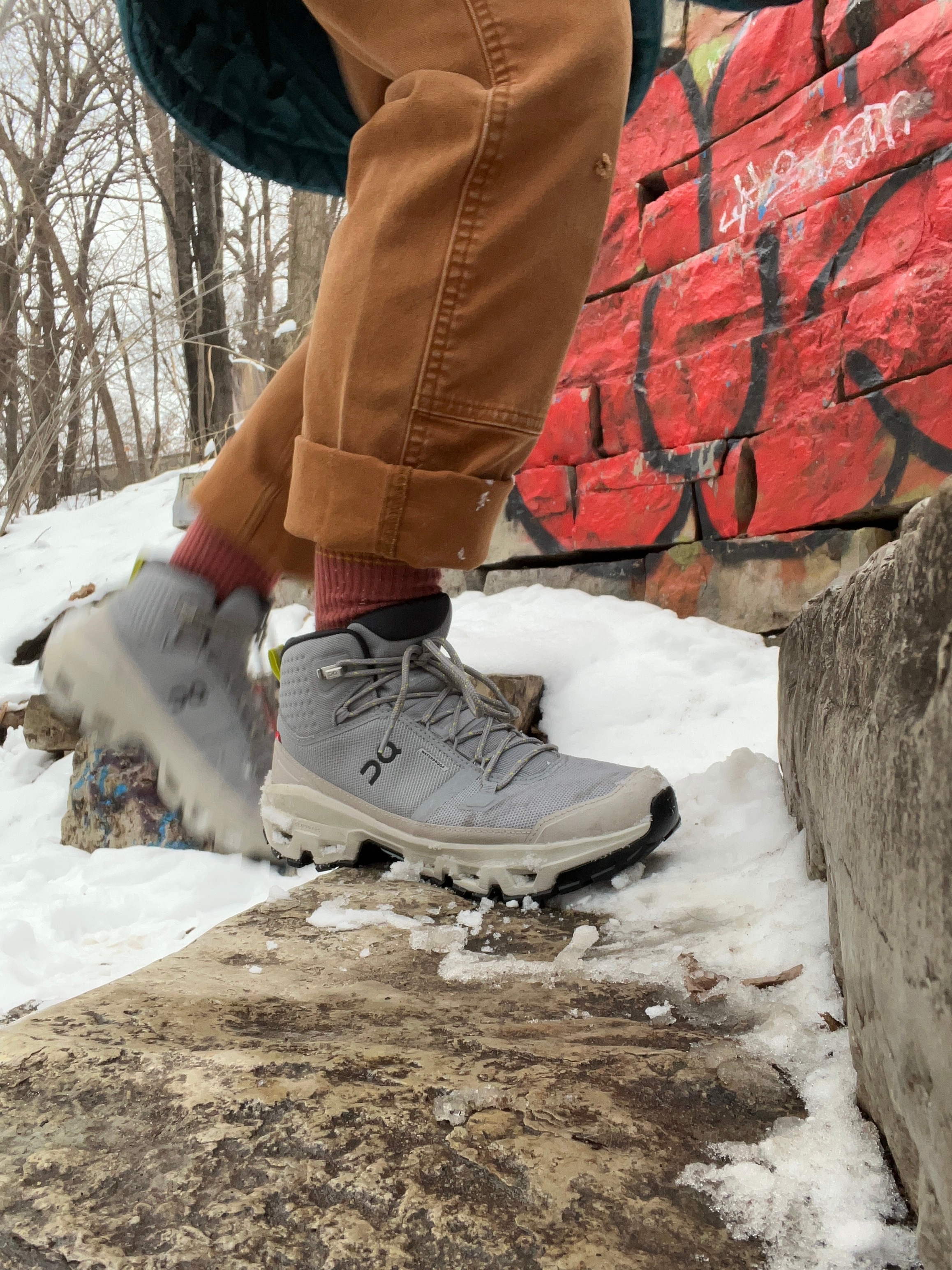
The magic happens not in isolation, but at the intersection. Contemporary footwear design has moved beyond the old paradigm. Consider the evolution of the hiking shoe. It is no longer a stiff, heavy boot by default nor a flimsy sneaker clone. It is a hybrid, leveraging targeted materials to serve specific functions. A shoe might employ a breathable, durable mesh in the upper’s main body for comfort, while using strategically placed TPU film or microfiber suede in high-wear zones (like the toe box and medial side) for durability. The midsole might dual-density foam: a softer layer for cushioning underfoot, fused to a firmer, more resilient layer at the perimeter for stability and longevity. This is applied biomechanics. Research from sports science departments often highlights the importance of “functional footwear” that adapts to activity demands. For the user, this synergy manifests as a shoe that feels broken-in from the first wear yet shows minimal signs of wear after the first season. It means the comfort does not compress into oblivion after 100 miles, and the tough exterior does not translate into a stiff, unforgiving ride. This convergence is the hallmark of premium shoes for hiking and walking. Brands that master this are not selling a piece of gear; they are offering a sustained experience of confidence and well-being in the outdoors.
Navigating Your Choice: A Framework for Selection
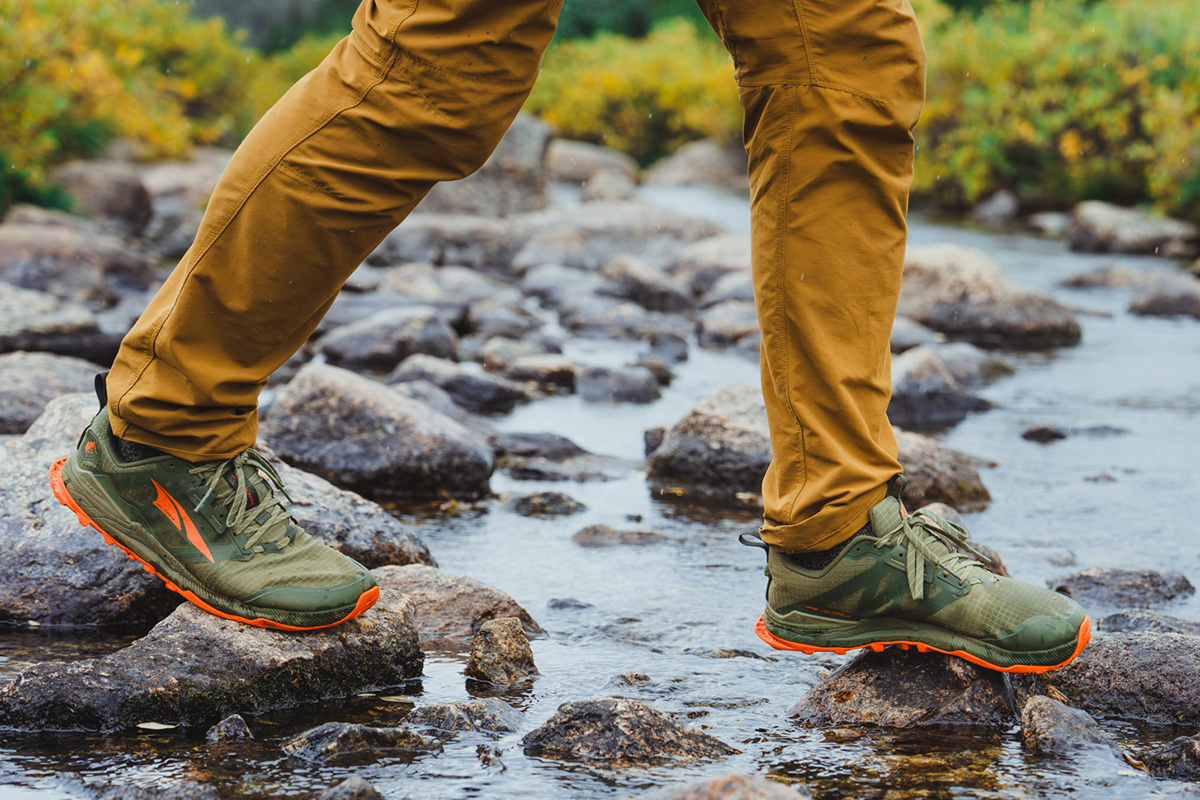
Understanding this synergy empowers you, the adventurer, to make an informed choice. Your selection should be a deliberate match for your personal terrain, physiology, and ambition. Begin by honestly assessing your primary use. Are your journeys long-distance backpacking trips with a heavy load over rocky alpine passes, or are they day hikes and extended walks on well-maintained trails? The former may lean towards the durability end of the spectrum, perhaps a sturdy boot with ample ankle support and a robust sole. The latter can fully embrace the comfort-focused, lighter-weight shoes for hiking and walking. Next, fit is non-negotiable. Your foot is unique. Brands have distinct “lasts” (the foot-shaped form around which a shoe is built), affecting volume, width, and toe box shape. Renowned websites like Switchback Travel consistently advise trying on shoes in the afternoon when feet are naturally swollen, wearing the socks you intend to hike in, and ensuring about a thumbnail’s space ahead of your longest toe. This prevents downhill jam and blister formation. Finally, consider the technological claims. Look for objective explanations of the midsole foam (is it compression-molded EVA or a higher-rebound compound like Pebax?), the waterproof membrane (if needed, understanding that it trades some breathability for protection), and the rubber compound of the outsole. These are not marketing jargon; they are the blueprints of the comfort-durability pact.
Investing in Your Foundation: The Value Beyond Price
In a world of fast fashion and disposable goods, high-performance footwear stands as an antithesis. It is an investment in your physical foundation and your experiential joy. The initial price point of a quality pair that truly unites comfort and durability may be higher, but its total cost of ownership is often lower. A well-constructed shoe that lasts for 800 miles, providing consistent protection and support, offers far greater value than two pairs of inferior shoes that fail—and potentially cause injury—at 300 miles each. As the old adage, often echoed by seasoned guides, goes: “There’s no such thing as bad weather, only unsuitable clothing.” This wisdom extends directly to footwear. Your shoes for hiking and walking are the most intimate piece of your “clothing” for the trail. They are the interface between your body and the earth. Compromising on this interface compromises the entire journey. Therefore, view the purchase not as an expense, but as an allocation of resources towards guaranteed comfort, sustained performance, and the priceless ability to fully immerse yourself in the walk, the climb, the view, and the moment, without a single distracting thought for what is on your feet.
:max_bytes(150000):strip_icc()/VWFit-hiking-shoes-versus-walking-shoes-7548411-152aaaad90024603b172fdf65bb0c157.jpg)
The pursuit of the perfect stride outdoors is not a choice between comfort and durability. It is a demand for both, forged together through intelligent design and material innovation. The modern outdoor enthusiast should accept nothing less than footwear that cradles the foot in plush, adaptive comfort while being clad in an armor of resilient, trustworthy materials. This is the standard that elevates a simple shoe into a essential tool for exploration. When your foundation is secure, every path becomes an invitation. Seek out those shoes for hiking and walking that embody this union, and step forward with the assurance that every mile ahead will be met with both ease and strength.
