

Styling Women’s Leather White Sneakers for Every Season
Imagine a single item in your wardrobe that refuses to be confined by a calendar. It bridges the gap between a crisp spring morning and a cozy autumn evening, between summer’s casual ease and winter’s layered sophistication. This isn’t a fantasy of minimalist fashion gurus; it’s the tangible reality of the women’s leather white sneakers. More than just footwear, they are a sartorial keystone, a blank canvas upon which endless personal style narratives can be written. Their power lies not in fleeting trends, but in a foundational design principle: versatile neutrality paired with enduring structure. To understand their perennial reign is to unlock a simpler, more confident approach to dressing, one that works relentlessly, day after day, season after season.
The Unmatched Versatility of a Neutral Foundation
The supremacy of white as a fashion neutral is not a modern invention but a principle rooted in color theory and art history. In design, white is considered an achromatic color, meaning it lacks hue and exists as pure lightness. This absence of color is precisely its strength. Scientifically, white reflects all wavelengths of visible light, making it the ultimate complementary backdrop. In practice, this translates to an unparalleled ability to harmonize. A pair of women’s leather white sneakers does not compete with a floral summer dress; it grounds it. It doesn’t clash with the deep jewel tones of a winter sweater; it provides crisp contrast. This principle is echoed by style authorities globally. As fashion historian and curator Dr. Valerie Steele has often noted in interviews and publications for The Museum at the Fashion Institute of Technology, the rise of the white sneaker represents a democratization of style—a move towards pieces that prioritize adaptability and personal expression over rigid formality. They act as a visual “reset,” allowing the wearer’s choice of clothing, not the shoe, to take center stage. From the polished ensembles on Parisian runways to the effortless street style captured in Tokyo’s Harajuku district, the white leather sneaker serves as the common, unifying thread. Its versatility is objective, observable, and repeatedly validated by its global, cross-cultural adoption.

Spring & Summer: Effortless Lightness and Breathable Style
As the world thaws and brightens, the women’s leather white sneakers transition seamlessly from a closet staple to a daily essential. The key here is the material: leather. Contrary to some assumptions, high-quality leather, especially full-grain or perforated varieties, offers significant breathability. The natural fibers allow for air circulation, preventing the stifling feel common with synthetic materials in heat. Stylistically, they are the perfect counterbalance to warm-weather fabrics. Pair them with a flowing midi skirt and a simple linen tank top; the sneakers add a grounded, modern edge that prevents the look from becoming overly romantic or delicate. With cropped wide-leg trousers or tailored shorts, they create a silhouette that is both sharp and relaxed, ideal for everything from a weekend brunch to a casual Friday at the office. For summer dresses, particularly those with bold prints or vibrant colors, the white sneaker is the ultimate stabilizer. It tempers the vibrancy, adding a layer of contemporary cool that sandals often cannot provide. This application isn’t mere opinion; it’s a strategy visible in the wardrobes of style icons like actress and entrepreneur Jessica Alba, who is frequently photographed off-duty in white sneakers paired with everything from denim to dresses, embodying a philosophy of practical, chic motherhood and professional life. The look says “I am put-together, but I am also ready for anything the day brings”—a quintessential spring and summer mindset.

Autumn & Winter: Structured Layering and Textural Contrast
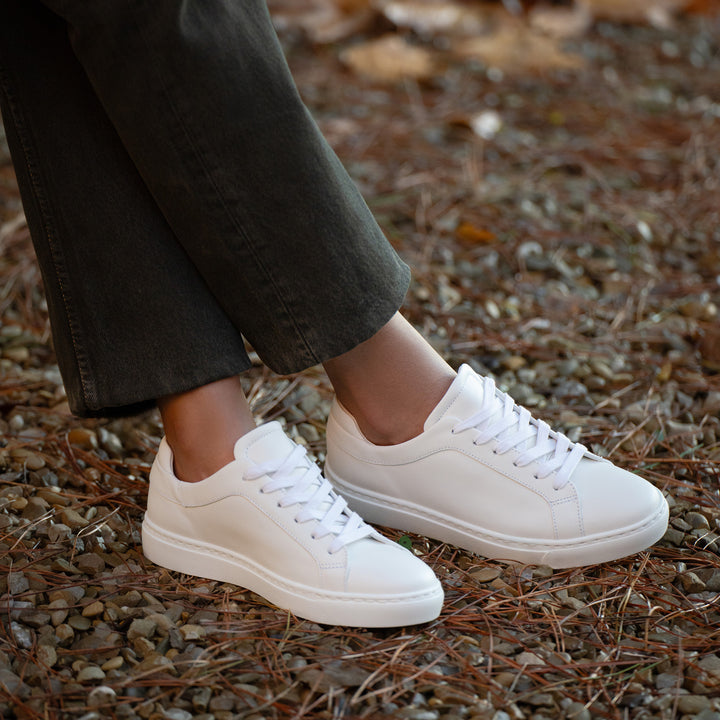
When temperatures drop, the functional and aesthetic role of the white leather sneaker evolves brilliantly. Here, its clean lines and structured form become assets for mastering layered looks. The common pitfall of winter dressing is a descent into bulkiness or monochromatic darkness. A pristine pair of women’s leather white sneakers cuts through that heaviness with visual precision. Think of them as the punctuation mark at the end of a complex sentence. They provide a finishing point for outfits built with thick knits, wool coats, and denim. The contrast between the soft, textured fabrics of autumn/winter and the smooth, defined silhouette of the leather sneaker creates a dynamic tension that is inherently stylish. Tuck your favorite skinny jeans or leggings into warm socks and pair them with the sneakers for a look that is both cozy and streamlined. Under the hem of a straight-leg or bootcut trouser, they offer a flash of crisp white that breaks up the vertical line in a refreshing way. This styling technique is a staple in the Nordic fashion philosophy, known as “Scandinavian minimalism,” which prioritizes functional, high-quality pieces in a neutral palette. Websites like Copenhagen Street Style and Styleby frequently highlight how Scandinavian women use white sneakers year-round, proving their utility isn’t diminished by colder climates. The leather upper also offers a practical advantage: it provides a more robust barrier against light rain and wind compared to canvas or knit sneakers, and is easier to wipe clean from slush or salt stains, making it a surprisingly resilient choice.
Investment Logic: The Cost-Per-Wear Equation
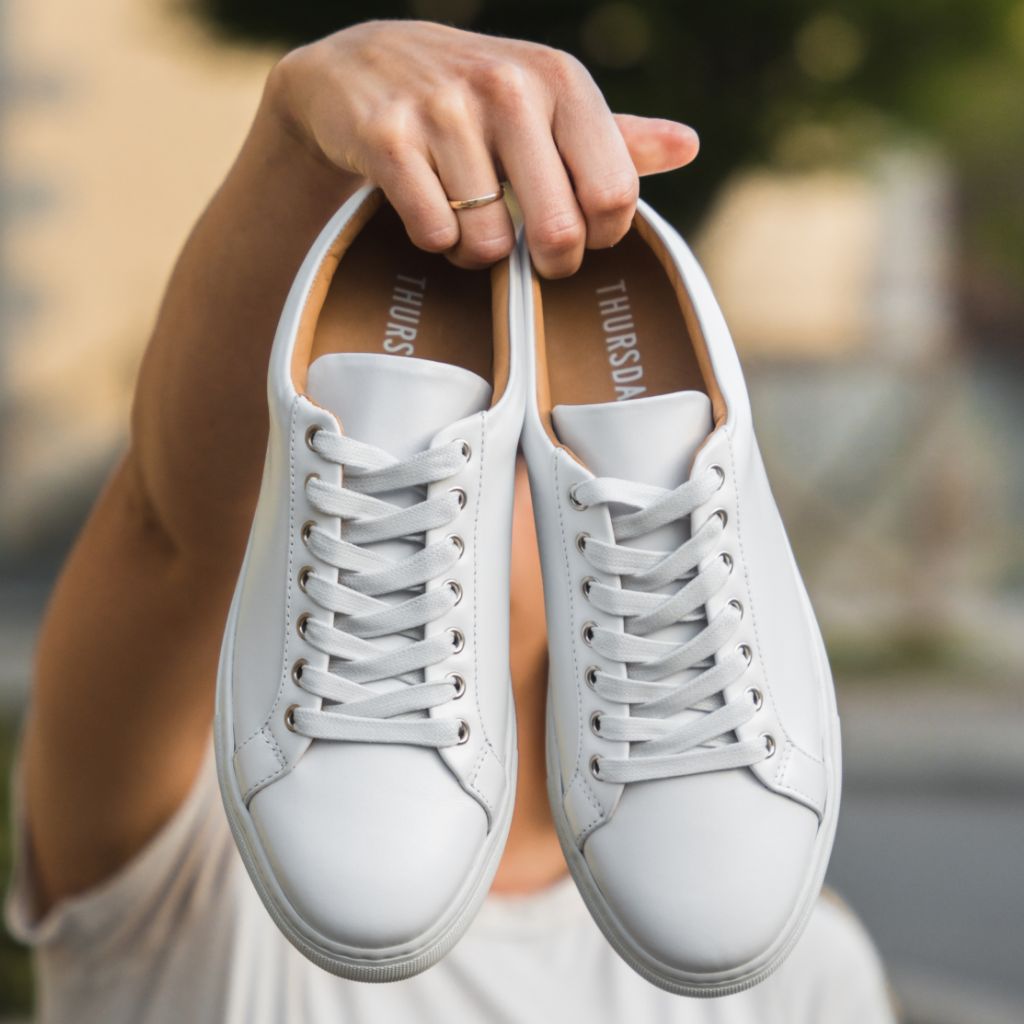
Moving beyond aesthetics, let’s engage in a pragmatic financial analysis. Fast fashion promotes a cycle of buying cheap, trendy items that are discarded after a few wears. The true cost of this cycle is high, both for your wallet and the environment. This is where the investment logic of a quality pair of women’s leather white sneakers becomes irrefutable. The concept is “cost-per-wear,” a metric used by personal finance experts and sustainable fashion advocates alike. You divide the price of an item by the number of times you realistically wear it. A $50 trendy shoe worn ten times has a cost-per-wear of $5. A $200 well-constructed leather sneaker, worn twice a week across three seasons for two years, is worn over 150 times, yielding a cost-per-wear of approximately $1.33. The leather sneaker, therefore, becomes the more economical choice over time. The justification for the higher initial price lies in the materials and construction. Full-grain leather molds to your foot, increasing comfort, and develops a unique patina over time, telling the story of your journeys. Quality stitching, a cushioned insole made from memory foam or ortholite, and a durable rubber outsole are features that ensure longevity. Brands like Nothing New explicitly build their identity on this principle, using recycled materials and offering resole programs to extend the life of the shoe indefinitely. As sustainability thought leader and author Elizabeth L. Cline argues in her works like The Conscious Closet, investing in versatile, durable staples is the single most effective action a consumer can take towards a more sustainable and economically sensible wardrobe.
“The most sustainable garment is the one already in your closet. The second most sustainable is a high-quality, versatile staple you will wear for years. A great white leather sneaker isn’t a purchase; it’s a partnership with your future self.”
Professional Knowledge: Anatomy of a Quality Sneaker
To make an informed investment, you need to understand what you’re buying. Let’s deconstruct the anatomy of a superior white leather sneaker. The Upper: This is the visible part. Look for terms like “full-grain” or “top-grain” leather. Full-grain is the highest quality, using the outermost layer of the hide, which is the strongest and most durable. It will age beautifully. Avoid “genuine leather,” which is a lower-grade classification often referring to split leather that may be coated and less breathable. The Lining: A lined sneaker, often with soft calfskin or a moisture-wicking textile, enhances comfort, prevents rubbing, and improves the shoe’s internal structure. The Insole: This is where comfort is engineered. Look for removable, cushioned insoles with arch support. Materials like OrthoLite® are popular for their long-lasting cushioning and breathability. The Midsole: Typically made from EVA (ethylene-vinyl acetate) or polyurethane, this layer provides shock absorption. A well-crafted midsole balances softness for comfort with firmness for stability. The Outsole: This is the point of contact with the ground. A rubber outsole, especially one with a subtle tread pattern, offers essential grip and durability. Brands like M.Gemi often highlight their Italian craftsmanship, focusing on precisely these components—the buttery-soft leather uppers and flexible, yet supportive, soles that feel broken-in from the first wear. This knowledge empowers you to move beyond brand names and assess the intrinsic value of the product.
Your Style, Your Narrative
Ultimately, the power of these sneakers is transferred to you, the wearer. They are a tool for self-expression. They can be the cornerstone of a minimalist, capsule wardrobe, as championed by influencers and platforms like The Concept Wardrobe. They can be the unexpected element in a hyper-feminine outfit, challenging traditional style codes—a juxtaposition famously embraced by fashion houses like Chanel, which has frequently paired tweed suits with sneakers on the runway. They can be personalized with colorful laces, or kept classically pristine. In an era where fashion is increasingly viewed as a personal language, the white leather sneaker is a versatile and eloquent word in your vocabulary. It speaks of practicality without sacrificing polish, of comfort without conceding style, and of an intelligent approach to consumption. It is a silent nod to the understanding that true style isn’t about having the most options, but about having the right ones—options that work in harmony with your life, your values, and your ever-evolving story. So, step into them. Let them carry you through your daily routines and your special moments, becoming not just a part of your outfit, but a part of your journey.
