Discover the Best Podiatrist Recommended Walking Shoes for All-Day Comfort
Your feet are your foundation, carrying you through thousands of steps each day. Yet, so often, they are an afterthought, crammed into footwear chosen for style over substance, leading to a cascade of discomfort that can ripple up through your entire body. The quest for all-day comfort isn’t merely about avoiding sore feet at the end of a shift or a long walk; it’s a fundamental investment in your mobility, posture, and overall well-being. This is where the specialized insight of podiatry becomes invaluable. Moving beyond marketing buzzwords and fleeting fashion trends, podiatrist recommended walking shoes are engineered based on a deep understanding of biomechanics, common pathologies, and the precise support the human foot requires to function optimally under load. This guide delves into the science of why these recommendations matter, translating professional podiatric knowledge into actionable criteria you can use, and highlights specific models that embody these principles, helping you step into unparalleled comfort.
The Science of the Stride: Why Podiatric Insight is Non-Negotiable
To understand the critical importance of podiatrist recommended walking shoes, one must first appreciate the complex engineering of the human foot. It is a marvel of natural design, comprising 26 bones, 33 joints, and over 100 muscles, tendons, and ligaments. According to biomechanics literature from institutions like the University of Calgary’s Human Performance Lab, the foot must perform two opposing functions: it must be a flexible adaptor upon ground contact to absorb shock and conform to terrain, and then transform into a rigid lever to propel the body forward efficiently. A shoe that disrupts this natural gait cycle can lead to inefficiency and injury. Podiatrists, as doctors of podiatric medicine (DPM), diagnose and treat conditions stemming from this disruption—plantar fasciitis, metatarsalgia, bunions, and tendonitis. Their recommendations, therefore, are not about aesthetics but about intervention and prevention. They analyze factors like arch type (pes planus vs. pes cavus), pronation (the natural inward roll of the foot), and weight distribution. A statement often echoed by experts on platforms like Quora and in professional journals is that over-the-counter insoles are often a temporary patch, while a properly constructed shoe provides the permanent architectural support the foot needs. Thus, a podiatrist recommended walking shoe serves as essential biomechanical equipment, much like a helmet for a cyclist, designed to protect and enhance performance.

Deconstructing Comfort: The Five Pillars of a Podiatrist-Approved Shoe
Comfort in a walking shoe is a multidimensional concept, built upon several non-negotiable pillars that podiatrists consistently emphasize. First is Arch Support. The arch acts as the foot’s natural shock absorber. Inadequate support can lead to the stretching of the plantar fascia ligament, a primary cause of heel pain. A proper shoe will have firm, contoured support that matches your arch height, preventing collapse and distributing pressure. Second is Heel Counter Rigidity. The heel counter is the hard cup at the back of the shoe. A study cited in the Journal of Foot and Ankle Research highlights its role in controlling rearfoot motion. A firm, well-padded heel counter stabilizes the calcaneus (heel bone), preventing excessive pronation or supination and providing a secure, stable base. Third is Toe Box Geometry. The forefoot needs space to splay naturally upon weight-bearing. A cramped, tapered toe box, as often criticized by podiatrists on social media platforms, can compress nerves (leading to neuromas), exacerbate bunions, and restrict circulation. A podiatrist recommended walking shoe will feature a deep, wide toe box that allows toes to lie flat and move freely. Fourth is Midfoot Stability and Torsional Rigidity. The shoe should not twist easily along its longitudinal axis. This torsional rigidity, often provided by a shank or sturdy midsole material, protects the foot’s intricate structure from twisting forces during the transition from heel-strike to toe-off. Finally, the fifth pillar is Strategic Cushioning. Cushioning is not about softness everywhere; it’s about targeted shock absorption. Modern materials like EVA, polyurethane, and proprietary gels (like ASICS’ GEL or Brooks’ DNA LOFT) are engineered to dissipate impact forces at the heel and forefoot, the primary strike zones, without compromising the necessary stability elsewhere in the shoe.
Beyond the Brand: How to Audit Any Shoe Like a Podiatrist
Armed with the knowledge of the five pillars, you can move beyond brand loyalty and perform a simple, effective audit on any walking shoe. Start with the “Flex Test.” Hold the shoe by the heel and toe and try to bend it. It should flex cleanly at the ball of the foot (where your metatarsophalangeal joints bend), not in the middle. A bend in the arch indicates a lack of support. Next, perform the “Twist Test.” Grip the shoe at both ends and gently wring it. A quality walking shoe will resist twisting, confirming good torsional rigidity. Then, examine the heel counter. Squeeze it between your thumb and fingers. It should feel firm and unyielding, not soft and collapsible. Inspect the interior for a contoured, molded footbed that provides obvious arch support, not a flat, flimsy insole. Finally, check the toe box by removing the insole and placing your foot on it. Your toes should not overhang the edges. As renowned podiatrist Dr. Jacqueline Sutera has stated in various media interviews, “Your shoe is your foundation. If your foundation is unstable, everything above it will be unstable.” This hands-on audit empowers you to identify podiatrist recommended walking shoes regardless of the label, turning you into an informed consumer of foot health.

Walking Through the Aisles: Categories and Champions for Different Needs
Not all walks are created equal, and neither are all feet. The universe of podiatrist recommended walking shoes is thoughtfully segmented to address specific needs and environments. For the individual with High Arches (Pes Cavus), the challenge is shock absorption, as a highly arched foot is a rigid lever that poorly dissipates force. Shoes for this foot type need maximum cushioning, a curved or semi-curved last to match the foot’s shape, and often a softer midsole. Brands like HOKA, with their meta-rocker geometry and profuse cushioning, are frequently cited by podiatrists for this purpose. Conversely, for those with Flat Feet or Overpronation, the priority is motion control and stability. These shoes feature a straight last, a firm midsole with a medial post (a denser material on the inner side), and a robust heel counter to limit excessive inward roll. Models from Brooks (the Adrenaline GTS line) and New Balance (the 1540 series) are stalwarts in this category. For the Neutral Walker with an efficient gait, a stability shoe with moderate guidance and balanced cushioning, such as the Brooks Ghost or ASICS GT-2000, offers protection without over-correction. Furthermore, the rise of Everyday Wellness Shoes has been significant. Brands like Oofos and HOKA Recovery Sandals, while not for long-distance walking, are podiatrist-approved for post-activity recovery, providing therapeutic comfort that reduces stress on joints, a concept supported by recovery literature in sports medicine.
The Investment in Your Foundation: Where Value Meets Expertise
It is a common misconception that podiatrist recommended walking shoes command a prohibitively high price. While the initial investment is often higher than that of a discount department store pair, the long-term value equation is overwhelmingly positive. Consider the cost of professional treatment for plantar fasciitis: physical therapy sessions, orthotics, night splints, and potential lost productivity due to pain. A premium walking shoe, typically ranging from $120 to $160, acts as preventive medicine. Moreover, the market is dynamic, with direct-to-consumer brands and frequent sales events making top-tier technology more accessible. Many reputable running specialty stores and online retailers offer end-of-season discounts, bundle deals with insoles, or loyalty programs. The key is to view the purchase not as a discretionary expense but as a non-negotiable investment in your foundational health. As the ancient proverb, often referenced in wellness circles, reminds us: “The man who moves a mountain begins by carrying away small stones.” Investing in the right shoes is the essential first stone in building a lifetime of pain-free mobility.
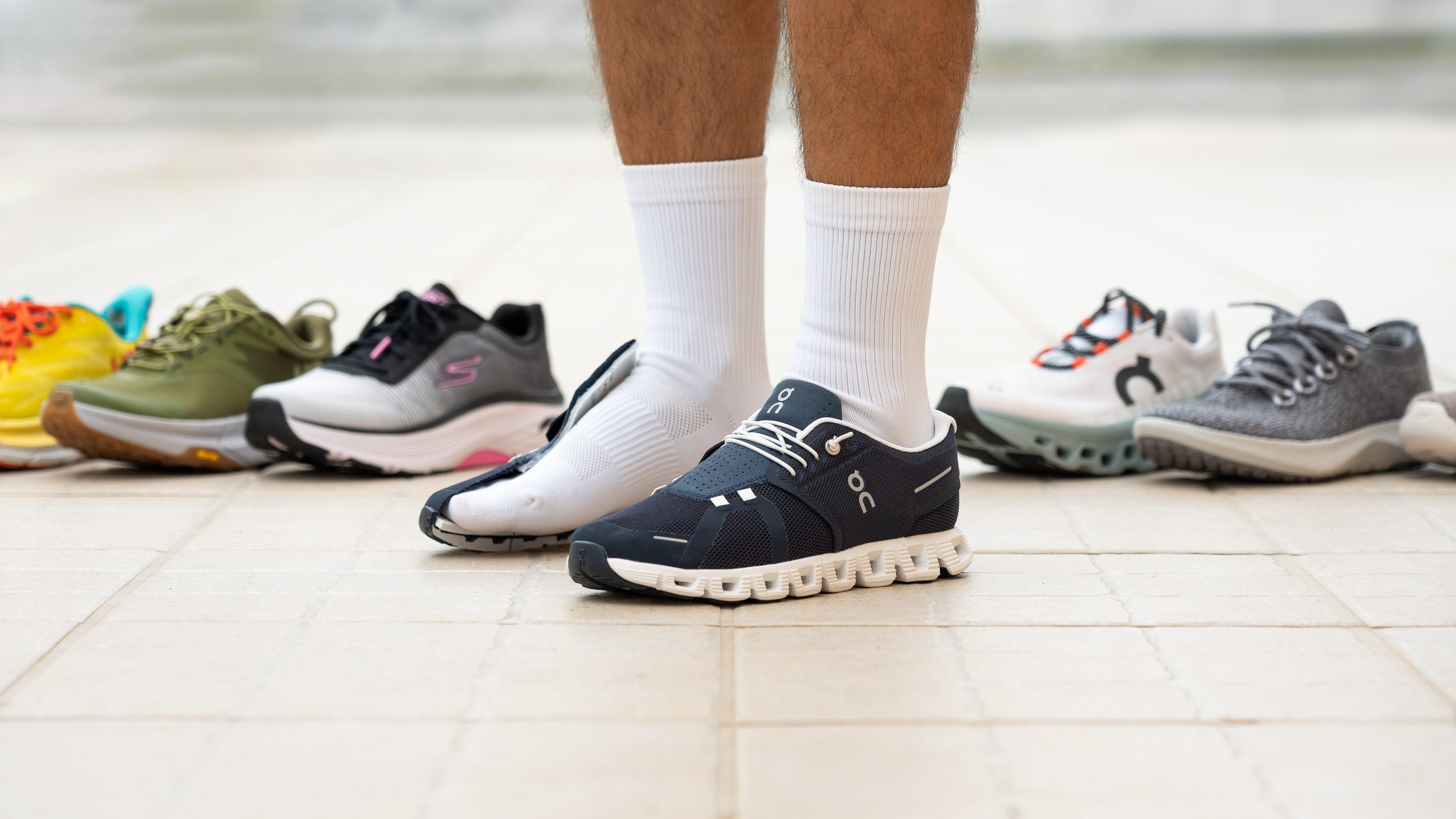
:max_bytes(150000):strip_icc()/podiatrist-recommended-walking-shoes-e1b90077185d4e6cadbf6327c4d17db7.jpg)
Stepping Forward: Integrating Knowledge into Your Next Step
The journey to all-day comfort begins with a single, informed step. It requires shifting your perspective from seeing shoes as mere fashion accessories to recognizing them as the most critical piece of functional gear you use daily. The principles outlined here—the biomechanical science, the five-pillar audit, the category-specific guidance—demystify what makes a shoe truly supportive. This knowledge liberates you to make choices that align with the wisdom of podiatric medicine. Remember that your feet change over time; they are not static. Weight fluctuations, age, and activity levels all alter their needs. Therefore, the process of selecting podiatrist recommended walking shoes is an ongoing dialogue with your own body. Listen to its feedback. Seek out specialty stores with trained fitters who can analyze your gait. Try on shoes in the afternoon when your feet are naturally slightly swollen. Your goal is not just to find a shoe that feels comfortable in the first five minutes in the store, but one that provides unwavering support and comfort at the 10,000th step of your day. That is the true hallmark of a shoe worthy of a podiatrist’s recommendation and, more importantly, your trust.