

Top Podiatrist-Approved Walking Shoes for All-Day Support
Your feet are your foundation, and the shoes you choose for walking are the single most important piece of equipment in your daily life. It’s not about fashion trends or brand names alone; it’s about biomechanical engineering that supports your unique stride from the first step in the morning to the last one at night. As someone who has spent years researching foot health and consulting with specialists, I’ve learned that the right footwear can transform your comfort, posture, and overall well-being. This guide cuts through the marketing noise to focus on the core principles that define a truly supportive walking shoe, principles directly endorsed by podiatric science. We’ll explore why specific features matter, how they interact with your body, and which models consistently earn the title of podiatrist recommended walking shoes. Forget about temporary comfort; we’re building a case for long-term foot health and vitality.
The Biomechanical Blueprint: Why Your Feet Demand Expert-Approved Shoes
Walking is a complex series of impacts and redistributions of force. With each step, a force equivalent to approximately 1.5 times your body weight travels up through your feet, ankles, knees, hips, and spine. When footwear fails to properly manage this force, the consequences are cumulative and often debilitating. Podiatrists, the medical doctors specializing in foot and ankle health, don’t just treat problems like plantar fasciitis, metatarsalgia, and Achilles tendinitis; they seek to prevent them. Their recommendations are rooted in understanding the gait cycle—the sequence of heel strike, foot flat, mid-stance, heel-off, and toe-off. A podiatrist recommended walking shoe is engineered to support each phase. For instance, a study from the University of Virginia’s Department of Orthopaedic Surgery emphasizes the critical role of heel counter rigidity in controlling rearfoot motion and preventing excessive pronation, a major cause of overuse injuries. This isn’t anecdotal advice; it’s applied biomechanics. Think of your foot as a precision instrument. You wouldn’t use a cheap, ill-fitting case for a valuable violin, so why subject your feet, which carry you through life, to substandard protection? The right shoe provides a stable platform, cushions the shock, and guides your foot into a healthy, natural motion pattern, acting as both a shock absorber and a motion controller.
Decoding the Non-Negotiables: Essential Features of a Supportive Shoe
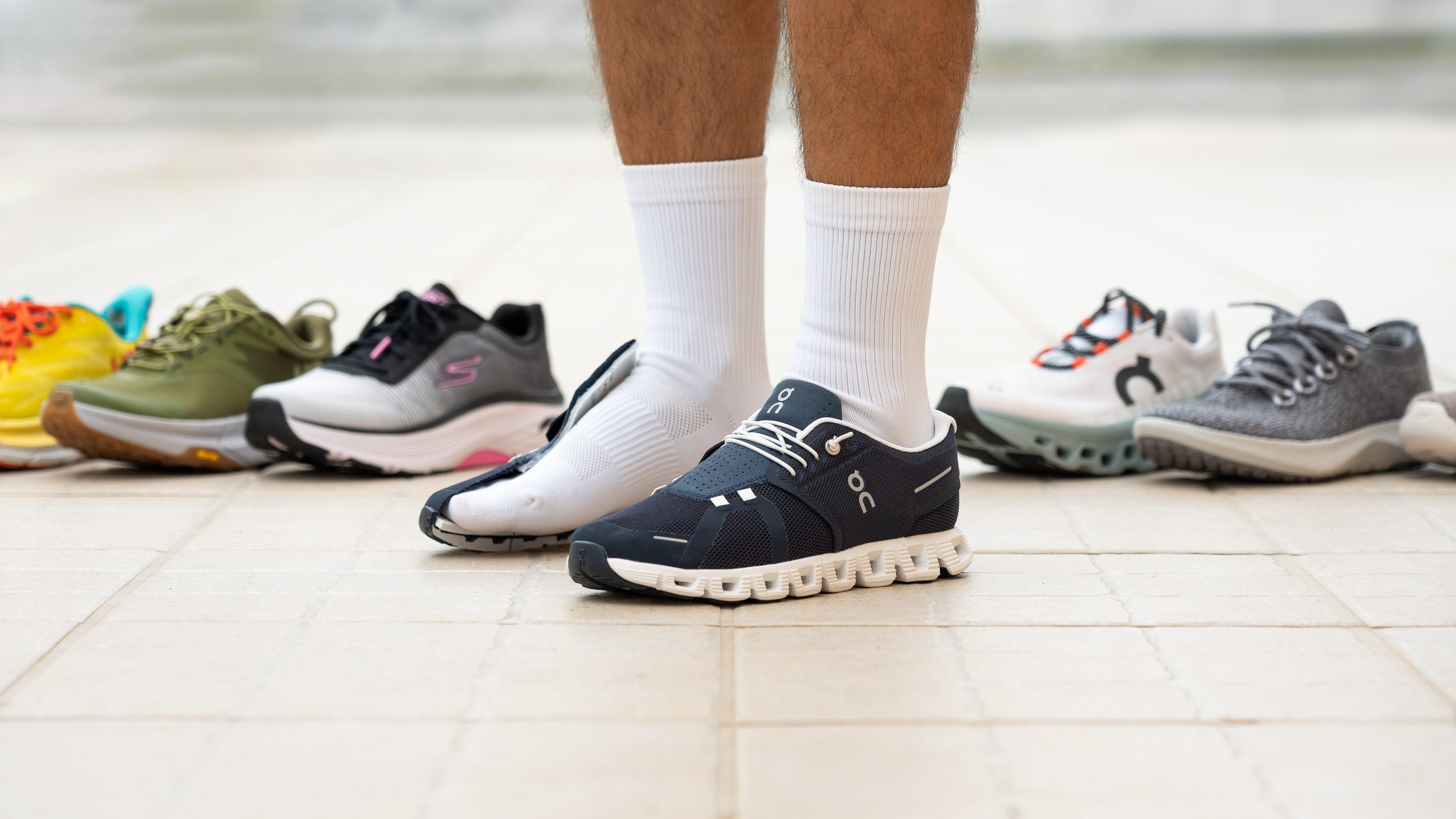
Not all athletic-looking shoes are created equal for the specific task of all-day walking. Through analysis of podiatric literature and countless product teardowns, several non-negotiable features emerge as the hallmarks of legitimate support. First, a firm heel counter. This is the rigid cup at the back of the shoe that cradles your heel. As noted by Dr. Jacqueline Sutera, a New York City-based podiatrist frequently cited in publications like Shape and Today, a firm heel counter prevents your foot from sliding side-to-side, providing essential stability that protects your ankles and aligns your entire lower limb. Second, adequate arch support. This isn’t about a generic, hard bump in the midsole. True arch support is designed to contact and sustain the plantar fascia ligament, preventing it from over-stretching. Resources like the American Podiatric Medical Association’s public materials stress that proper arch support distributes pressure evenly across the foot. Third, a flexible but supportive forefoot. The shoe must bend easily at the ball of the foot (where your toes join the metatarsals) to facilitate the toe-off phase, but it must not twist or fold laterally. Fourth, substantial cushioning that doesn’t bottom out. Materials like Brooks’ DNA LOFT or HOKA’s Profly+ are engineered to provide resilient cushioning that returns energy and remains protective over miles, not just the first few wears. Finally, a roomy toe box. As Leonardo da Vinci famously described the human foot as “a masterpiece of engineering and a work of art,” it needs space for its natural splay upon weight-bearing. Cramped toes can lead to neuromas, bunions, and hammertoes. A true podiatrist recommended walking shoe harmonizes all these elements into a single, functional unit.
:max_bytes(150000):strip_icc()/shp-best-brooks-walking-shoes-tout-f67df3ab5afa4c08a24a63ae6dca3444.jpg)
Beyond the Hype: How to Identify Truly Podiatrist-Recommended Brands and Models
The market is flooded with claims, but only a handful of brands consistently earn the trust of foot care professionals through rigorous design and clinical feedback. Brands like Brooks, New Balance, ASICS, and HOKA are frequently mentioned not because of advertising budgets, but due to their investment in biomechanical research. For example, Brooks employs a team of biomechanists and partners with running clinics to refine their shoes. Their Adrenaline GTS series, often highlighted as a premier stability shoe, is a frequent fixture on lists of podiatrist recommended walking shoes for overpronators. Similarly, New Balance, with its wide range of widths, acknowledges that fit is paramount—a principle echoed by podiatrists who treat conditions exacerbated by narrow footwear. HOKA’s maximalist cushioning, once considered niche, is now championed by many podiatrists for patients requiring exceptional shock absorption, particularly for those with arthritis or who stand on hard surfaces all day. It’s telling that these brands often seek and display the APMA (American Podiatric Medical Association) Seal of Acceptance, a certification granted to products found to promote good foot health. When you see that seal, you’re not looking at a style endorsement; you’re looking at a product that has been objectively reviewed by a committee of podiatrists. This external validation is a crucial filter in your search.
The Personal Fit Imperative: Why Your Foot’s Anatomy is the Final Judge
Even the most award-winning shoe is a failure if it doesn’t match your unique foot. This is where the second-person perspective becomes vital: You must become an expert on your feet. Start by understanding your arch type (high, neutral, or low) and your wear pattern on old shoes. Do the soles wear down on the inside edge (indicating overpronation) or the outside edge (indicating supination)? A podiatrist or a skilled fitter at a specialty running store can perform a gait analysis, often using a pressure plate or slow-motion video, to provide definitive answers. Furthermore, always shop for shoes in the late afternoon or evening, as feet naturally swell throughout the day. There should be a thumb’s width of space (about a half-inch) between your longest toe and the end of the shoe. Your heel should be locked in place with no slippage. Don’t be seduced by the “break-in” myth; modern podiatrist recommended walking shoes should feel comfortable and supportive from the very first step. Remember the words of renowned fitness author and coach, Phil Maffetone: “The best shoe is the one that fits your foot, not the one that fits the current trend.” Your investment in this process is an investment in your mobility.
:max_bytes(150000):strip_icc()/I-Asked-Podiatrists-for-Their-Fall-Shoe-Recommendations-These-Are-Their-Top-8-Picks-8fbdf9d65f3a4228ae63f6e5253dc08c.jpg)
Investing in Longevity: The True Cost of Quality Footwear
It’s easy to balk at the price tag of high-quality walking shoes, which often range from $120 to $160. However, this is a profound case where upfront cost must be evaluated against long-term value and avoided expense. Consider the alternative: a $60 shoe that lacks proper support may last only 300 miles before its cushioning compresses and its structure breaks down, but the real cost is the potential for a $500 podiatrist visit, $200 for custom orthotics, physical therapy co-pays, and the incalculable cost of pain and lost activity. A well-constructed podiatrist recommended walking shoe, built with durable materials and designed for 450-500 miles of use, provides a far better cost-per-mile and, more importantly, a health-per-mile ratio. Furthermore, savvy shoppers know that last season’s colorways of top models are often available at significant discounts (20-40% off) on brand websites and reputable retailers. The technology in the core support and cushioning remains identical; only the upper’s aesthetics change. By prioritizing function over fleeting fashion and shopping strategically, you can access podiatrist-level support without straining your budget. Your feet are not an accessory; they are the infrastructure of your active life. Investing in them is non-negotiable.

The journey to pain-free, energized walking doesn’t require a medical degree, but it does require informed choices. By focusing on the biomechanical principles endorsed by podiatry—a firm heel counter, proper arch support, resilient cushioning, and a roomy toe box—you empower yourself to select footwear that actively contributes to your health. The brands and models that consistently meet these criteria have earned their reputation through performance, not just promotion. Remember, the goal is seamless support, where the shoe becomes an extension of a healthy foot, not a corrective cage. Start by assessing your own feet, seek expert fitting advice, and don’t compromise on the features that matter. When you lace up a pair of truly supportive podiatrist recommended walking shoes, you’re not just putting on sneakers; you’re laying a stable, comfortable foundation for every journey ahead.
