

How to Style Womens Gucci Sneakers for Effortless Chic
Effortless chic isn’t about following every trend; it’s a cultivated aesthetic of appearing polished yet relaxed, intentional yet nonchalant. At the heart of this modern sartorial philosophy lies a powerful tool: the luxury sneaker. More specifically, women’s Gucci sneakers have transcended their athletic origins to become a cornerstone of contemporary elegance. They represent a unique fusion of high craftsmanship, iconic design, and versatile attitude. This article delves into the art of styling these iconic pieces, moving beyond mere possession to masterful integration into a wardrobe that speaks of confidence and refined taste.
The Foundation: Understanding the “Effortless Chic” Ethos
Before we explore styling, we must deconstruct the ethos we aim to embody. “Effortless chic,” a term often attributed to the timeless style of figures like Jane Birkin and Carolyn Bessette-Kennedy, is frequently misunderstood. It does not imply a lack of effort. As fashion historian and author of “The Psychology of Fashion,” Dr. Carolyn Mair, notes, “The perception of effortlessness often requires considerable cognitive and aesthetic effort. It’s about curation, not carelessness.” This philosophy aligns with the French concept of “je ne sais quoi“—an indefinable quality that is inherently stylish. From a sociological perspective, sociologist Pierre Bourdieu’s theory of cultural capital suggests that effortless style acts as a non-verbal signal of ingrained taste and cultural knowledge. Styling women’s Gucci sneakers successfully, therefore, is about leveraging their design capital—the interlocking Gs, the bee motifs, the rich materials—not as loud status symbols, but as integral, almost intuitive, components of a personal uniform. The sneaker itself, with its balance of comfort and luxury, is the perfect physical metaphor for this ideal: it is both pragmatic and prestigious.
Deconstructing the Icons: A Guide to Key Gucci Sneaker Silhouettes
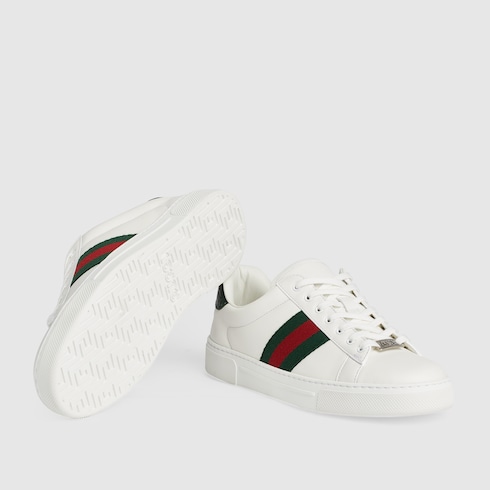
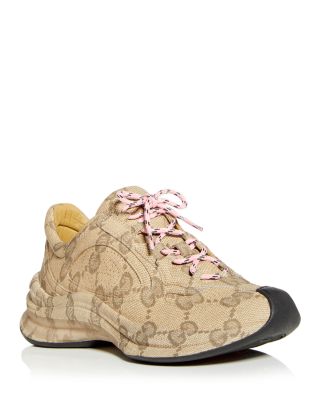
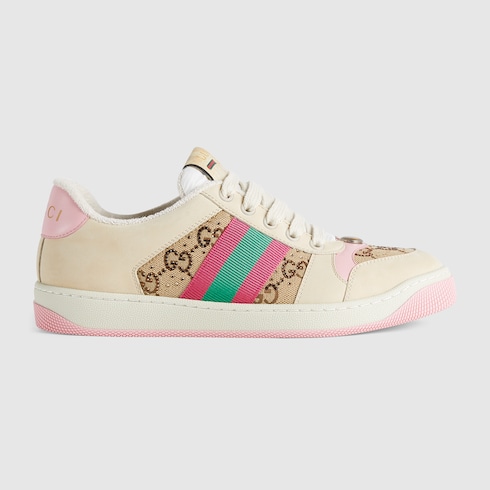
Not all women’s Gucci sneakers are created equal, and understanding their design language is crucial for intentional styling. The Ace sneaker, with its minimalist leather upper and distinctive embroidered motifs (like the tiger, bee, or heart), is a modern classic. It offers a clean, low-profile canvas that references tennis shoes, evoking a sporty heritage feel. In contrast, the Rhyton sneaker presents a bold, chunky silhouette inspired by 1980s basketball aesthetics. Its exaggerated sole and distressed logo treatment embody an ironic, retro-luxury vibe, a concept explored in fashion academia as “nostalgia mode.” The GG Crystal Screener, adorned with sparkling crystals, deliberately blurs the line between daywear and evening glamour, challenging traditional footwear categories. As fashion critic Sarah Mower once observed in Vogue, “Gucci’s success under Alessandro Michele has been in creating pieces that feel both archival and wildly new, inviting personal interpretation.” Each silhouette communicates a different nuance. Choosing the Ace might speak to a love for understated, quirky detail, while the Rhyton aligns with a more assertive, streetwear-inflected confidence. This knowledge isn’t pedantic; it’s the toolkit that allows you to match the shoe’s inherent character with your desired stylistic statement.
Principle 1: The Art of Contrast and Balance
The most potent application of women’s Gucci sneakers lies in strategic contrast. Their inherent casualness becomes a style superpower when paired with items traditionally considered “formal” or “delicate.” Imagine a fluid, midi-length silk slip dress—the epitome of romance and fragility. Paired with stark stilettos, the look is conventionally evening. But introduce a pristine pair of white leather Gucci Aces, and the ensemble is instantly transformed. The contrast between the ethereal silk and the structured, sporty leather creates a dynamic tension that is deeply modern and chic. This principle is rooted in postmodern fashion theory, which celebrates the mixing of codes and the deconstruction of sartorial rules. Similarly, a tailored, sharp-shouldered blazer and wide-leg trouser set, which could lean severe, is grounded and humanized by the presence of chunky women’s Gucci sneakers like the Rhyton. The balance shifts from boardroom power to creative-director-off-duty ease. The key is to avoid matching the sneaker’s casualness with equally casual pieces from head to toe (e.g., sneakers with sweatpants and a hoodie), which can default to simple loungewear. Instead, use the sneaker as the intentional “cool” element that relaxes an otherwise polished outfit.
Principle 2: Monochromatic Mastery and Texture Play
For those who favor a sleek, unified aesthetic, integrating Gucci sneakers into a monochromatic outfit is a masterstroke. An all-black ensemble—comprising a black turtleneck, black leather pants, and a black coat—achieves a new dimension when the footwear is a black leather Gucci sneaker with crystal embellishments. The look remains cohesive and elongated, but the intricate details of the sneakers (the crystals, the web stripe) become the focal point, adding luxury and interest at the foundation. This approach leverages the Gestalt principle of visual perception, where the mind first perceives the unified whole before appreciating the distinctive parts. Furthermore, playing with texture is essential. Pair the smooth leather of an Ace sneaker with the nubby weave of a tweed blazer, the softness of a cashmere sweater, or the ruggedness of raw-denim jeans. As Tim Gunn, renowned fashion consultant and author, famously advocates, it’s about “making it work” through considered juxtaposition. The sneaker becomes a textural anchor, its material quality echoing and contrasting with the fabrics around it, creating a rich, tactile experience that elevates the entire outfit beyond mere clothing into a composed look.
Principle 3: Letting the Sneakers Lead: The Statement Ensemble
Sometimes, the most effortless move is to let the star piece shine. If your women’s Gucci sneakers are particularly ornate—think the fully crystal-embellished Screeners or the brightly embroidered Aces—build a supporting outfit that acts as a neutral backdrop. A simple, well-cut pair of dark wash jeans and a crisp white button-down shirt provide the perfect canvas. This “minimalist base, maximalist accent” formula is a staple of styling wisdom from platforms like Who What Wear and The Zoe Report, which emphasize the power of one statement accessory. The outfit’s simplicity ensures you look put-together and intentional, while the sneakers inject personality and luxury. This approach also aligns with the economic concept of the “cost-per-wear” investment; a bold sneaker can revitalize a wardrobe of basic staples endlessly, providing both professional knowledge on wardrobe building and a form of discounted price in terms of long-term value. You’re not buying a new outfit; you’re leveraging an existing foundation in a new, exciting way through a single, powerful addition.
Beyond the Outfit: The Finishing Touches of Attitude
True effortless chic is completed not by another accessory, but by attitude. Wearing luxury sneakers with high-end pieces requires a certain nonchalance. It’s the confidence to walk into a fine dining restaurant in your Rhyton sneakers and a beautiful dress, owning the choice completely. This sentiment is echoed by countless style icons on platforms like YouTube and Twitter. Model and influencer Alexa Chung often speaks of the importance of “looking like you didn’t try too hard,” which is essentially about comfort in one’s own choices. Furthermore, consider the practical finishing touches: the state of your sneakers (keep them clean), the choice of socks (invisible no-shows for a streamlined look, or a bold patterned sock peeking over the collar for a touch of prep), and how you carry yourself. As the famous quote often misattributed to Coco Chanel but rooted in her philosophy goes, “Elegance is refusal.” In this context, it can mean the refusal to be overly coordinated, the refusal to let clothes wear you, and the conscious choice to prioritize personal comfort and expression over rigid formality. Your Gucci sneakers are a part of you, not a costume.
The Sustainable Style Investment
In an era of conscious consumption, viewing women’s Gucci sneakers as a long-term style investment is both economically and ethically savvy. Unlike fast-fashion footwear, a well-crafted pair from Gucci is designed for durability, using superior materials and construction techniques. This aligns with the “slow fashion” movement advocated by institutions like the London College of Fashion’s Centre for Sustainable Fashion. By choosing a timeless design—perhaps the classic Ace with a simple web stripe—you invest in a versatile workhorse that will remain relevant for years, transcending seasonal micro-trends. This is where professional knowledge translates directly to value: understanding which silhouettes and decorations have longevity protects your investment. While the initial outlay is significant, the cost-per-wear over a decade diminishes dramatically compared to repeatedly purchasing lower-quality alternatives. It is a discounted price paid in foresight and style intelligence. The sneaker becomes a staple, a reliable component of your personal brand, reducing the need for constant new purchases and contributing to a more considered, sustainable wardrobe ecosystem.

Mastering the art of styling women’s Gucci sneakers is ultimately about embracing a modern paradigm of luxury—one that values comfort, personality, and intelligent juxtaposition as much as it does heritage and craft. It is not merely wearing a branded item; it is deploying a design object with intention, history, and aesthetic power. By applying the principles of contrast, monochromatic harmony, and statement-making, and grounding it all in an attitude of confident ease, you transform the sneaker from a simple shoe into the cornerstone of a genuinely effortless chic identity. The goal is achieved when the sneakers feel less like an addition to your outfit and more like an authentic extension of your personal style narrative.
