

The Ultimate Fashion Statement
Fashion is more than clothing; it is a language, a declaration of identity, and a canvas for personal narrative. In this intricate dialogue of style, certain pieces transcend their material form to become icons, symbols of an era, and testaments to craftsmanship. Among these, the sneaker has undergone a radical evolution, shifting from purely athletic gear to a cornerstone of high fashion. This journey from the gym to the runway encapsulates a broader cultural shift, where luxury and leisure intertwine. Today, we explore this phenomenon, not through abstract trends, but through a singular, powerful object: women’s Gucci sneakers. These are not merely shoes; they are the ultimate fashion statement, a synthesis of heritage, artistry, and audacious self-expression.
From Court to Couture: The Sneaker’s Ascent
The story begins far from the marbled floors of luxury boutiques. The sneaker’s origins are utilitarian, born for sport and physical activity. However, its infiltration into everyday wear and subsequent elevation to a luxury item is a tale of cultural appropriation in the most positive sense. As Dr. Elizabeth Semmelhack, Senior Curator of the Bata Shoe Museum, notes in her research, “The sneaker’s rise mirrors the 20th century’s casualization of dress and the breaking down of sartorial hierarchies.” This democratization found its apex in the late 20th and early 21st centuries, when fashion houses, once guardians of formalwear, turned their gaze to streetwear. Gucci, under the transformative vision of Creative Director Alessandro Michele from 2015 onward, didn’t just adopt the sneaker; he re-consecrated it. Michele’s approach, often described as “maximalist” or “romantic,” treated the sneaker as a precious artifact. He embedded it with the house’s rich iconography—the bee, the tiger, the web stripe, the interlocking GG. This act of alchemy transformed a universal staple into a coveted luxury good. A pair of women’s Gucci sneakers became a wearable piece of the brand’s nearly century-old narrative, a direct line from Florentine craftsmanship to global street style.
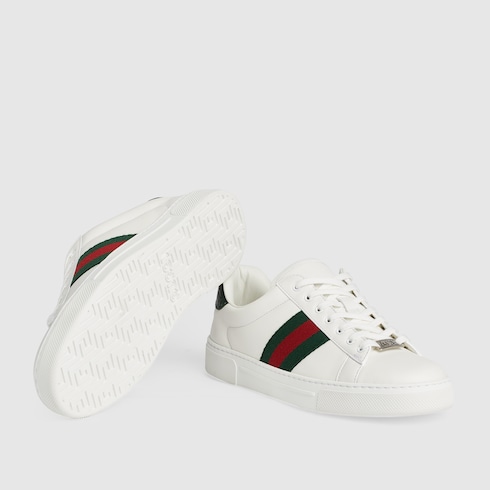
The Anatomy of an Icon: Deconstructing the Gucci Sneaker
To understand the statement, one must examine its components. What separates a luxury sneaker from its mass-market counterpart? The answer lies in materials, construction, and symbolic detail. Scientifically, the choice of leather is paramount. Full-grain or calfskin leathers, vegetable-tanned and hand-finished, offer durability, a unique patina over time, and a sensory richness that synthetic materials cannot replicate. The construction often involves Blake or Goodyear welting techniques, allowing for resoling and extended life—a nod to sustainable luxury. But beyond the technical, it’s the design language that speaks volumes. Take the iconic Gucci Ace sneaker. Its clean, minimalist silhouette serves as a blank canvas for embroidery: a crystalline bee, a radiant snake, or the classic red and green web stripe. Each symbol is not random; the bee, for instance, has been a Gucci motif since the 1970s, symbolizing nobility and industriousness. This layering of meaning invites conversation. As fashion critic Sarah Mower stated in Vogue, “Michele’s Gucci is about coded club membership. The sneaker is the most accessible initiation.” When you wear a pair of women’s Gucci sneakers, you are not just wearing a shoe; you are wearing a story, a piece of artisanal history, and a badge of aesthetic affiliation. The statement is one of informed connoisseurship.
The Psychology of the Statement: Why We Choose These Symbols
The desire for a luxury item like this is rarely just about utility. It engages with complex psychological drivers: identity signaling, the quest for authenticity, and the “halo effect” of branded goods. From a sociological perspective, Thorstein Veblen’s theory of “conspicuous consumption” finds a modern, nuanced expression here. However, today’s consumer is more sophisticated. As explored in publications from Harvard Business Review, modern luxury consumption is often about “self-expression” and “experience” rather than mere status display. A women’s Gucci sneaker allows the wearer to navigate multiple worlds. It pairs effortlessly with both a tailored suit and vintage jeans, signaling a fluency in both high fashion and street culture. This versatility is a powerful tool for personal branding. Furthermore, in an age of digital omnipresence, these highly recognizable items function perfectly in the economy of social media. They are instantly identifiable in a photograph, generating cultural capital and fostering a sense of community among those who “get” the reference. The statement is, therefore, multidimensional: it communicates taste, economic capital, cultural knowledge, and a deliberate blurring of traditional style boundaries.
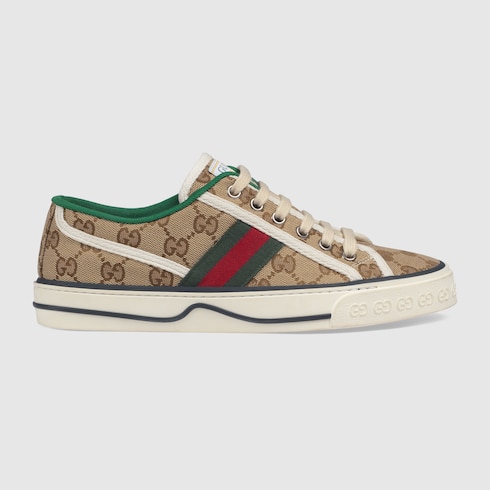
Beyond the Logo: The Statement in Context
To view these sneakers solely as logo-driven is to miss a significant part of their narrative power. Their true statement emerges in how they are styled and contextualized by the wearer. This is where fashion becomes personal. Consider the Gucci Tennis 1977 model—a retro-inspired design that echoes the brand’s archives. Its statement is one of nostalgia and timelessness, a conscious rejection of fast fashion’s ephemeral cycles. Styling it with a simple linen dress and unstructured blazer creates a look that is both intelligent and insouciant. Alternatively, the chunky, distressed Rhyton sneaker makes a bolder, more ironic statement. It plays with notions of “ugly chic” and deconstructed luxury, challenging classic ideals of elegance. This aligns with viewpoints from platforms like Quora and industry analyses, where fashion enthusiasts argue that the most powerful style statements often involve an element of contradiction or subversion. By choosing a specific model of women’s Gucci sneakers, the wearer aligns herself with a particular aesthetic philosophy, whether it’s romantic revivalism or postmodern irony. The shoe becomes the foundational piece from which an entire outfit’s narrative flows.
A Voice from the Industry: The Designer’s Intent
To grasp the intended statement, one must consider the creator’s vision. Alessandro Michele’s own words, frequently cited in interviews from Business of Fashion and The New Yorker, provide crucial insight. He describes his work not as designing clothes, but as creating “emotional uniforms” for a “beautiful, fractured world.” His Gucci is a cabinet of curiosities, a celebration of the eclectic and the personal. The sneaker, in this vision, is the democratic heart of the collection. It is the item that grounds his fantastical, historically-referenced designs in the reality of everyday life. In a memorable statement from a 2017 interview, he said:
“I don’t believe in the seasonal. I believe in stories. The sneaker is a perfect page in our story because it belongs to everyone, yet we can write our own poem on it.”
This philosophy clarifies the ultimate statement: individuality within a shared legacy. When you purchase a pair of women’s Gucci sneakers, you are not buying into a monolithic trend. You are selecting a vessel for your own story, a chapter in Gucci’s ongoing narrative that you co-author with your personal style.
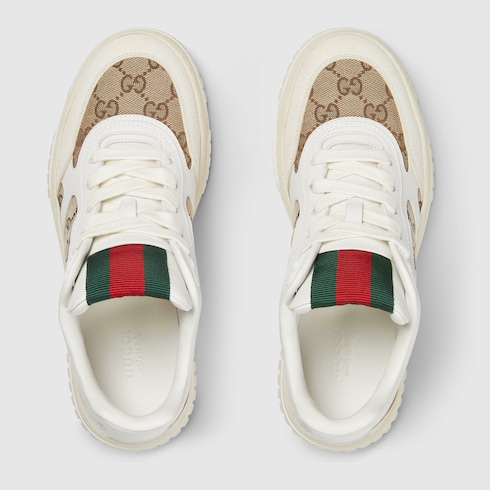
The Informed Investment: Knowledge and Value
Making the ultimate fashion statement is also an act of informed consumption. Understanding the value proposition is key. Beyond the initial price tag, which reflects design pedigree, material cost, and artisanal labor, lies the concept of cost-per-wear and long-term value. A well-constructed luxury sneaker, cared for properly, can last for years, even decades, outliving countless pairs of disposable fast-fashion footwear. This aligns with a growing consumer movement towards mindful, investment-based fashion. Resources from authoritative university literature on sustainable consumer behavior highlight this shift towards “fewer, better things.” Furthermore, the savvy shopper knows the value of strategic acquisition. While full-price purchases guarantee access to the latest collections, the secondary market and seasonal sales offer opportunities. For instance, end-of-season sales or authorized retailer promotions can provide access to iconic styles like the Gucci Ace or Rhyton at a discounted price, making the statement of luxury more accessible. The true statement here is one of wisdom: it’s about prioritizing enduring quality and symbolic resonance over fleeting novelty, and knowing how to navigate the market to align with your budget.
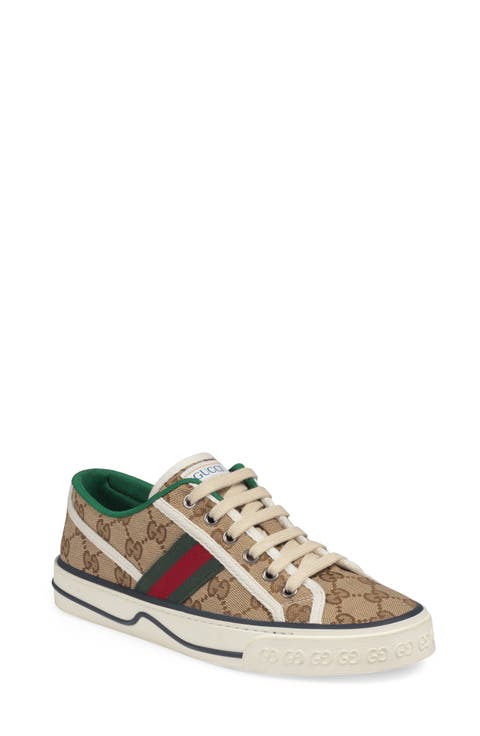
The ultimate fashion statement is never a shout; it is a nuanced, layered conversation. It speaks of history and the present, of collective identity and fierce individuality, of artisanal respect and personal flair. A pair of women’s Gucci sneakers embodies this complex dialogue. It is a testament to how far the sneaker has traveled and how deeply luxury has evolved to meet us in our everyday lives. It is not an end in itself, but a beginning—a foundational piece that empowers the wearer to craft her own sartorial narrative with confidence, knowledge, and a touch of poetic rebellion. The statement is made with every step.
