

The Ultimate Fashion Staple
In the ever-evolving lexicon of style, certain pieces transcend fleeting trends to become immutable fixtures. They are the anchors in a sea of seasonal change, the items that define not just an outfit, but an approach to living. For the contemporary individual, this pinnacle of sartorial permanence is not found in a classic coat or a little black dress alone, but increasingly, on the feet. The modern ultimate staple is a sneaker—but not just any sneaker. It is the fusion of heritage craftsmanship, audacious design, and cultural resonance. It is the women’s Gucci sneakers, a category that has redefined what it means for footwear to be both foundational and phenomenal.
From Athletic Gear to Cultural Artifact: The Sneaker’s Ascent
The journey of the sneaker from the wooden courts of tennis to the polished marble of luxury boutiques is a narrative of cultural appropriation and redefinition. Initially conceived in the late 19th century as plimsolls—simple rubber-soled shoes for beach or sport—the sneaker found its true identity in the 20th century’s athletic boom. As Dr. Elizabeth Semmelhack, Senior Curator of the Bata Shoe Museum, articulates, “The sneaker is the great social leveller of the 20th century. It was worn by everyone from children to athletes, and its adoption by various subcultures—from punk to hip-hop—signalled a shift in how we perceive status and style.” This democratization, however, took a pivotal turn when luxury houses began to look down. The infiltration of high fashion into streetwear, a movement often traced back to the 1990s but explosively realized in the 2010s, created a fertile ground. It was here that functional footwear was re-imagined as a canvas for storytelling, craftsmanship, and exorbitant desire. The sneaker was no longer about what you did; it was about who you were. This cultural backdrop is essential for understanding why a women’s Gucci sneakers collection isn’t merely about shoes; it’s about claiming a piece of this evolved narrative, where history, art, and identity intersect at the sole.
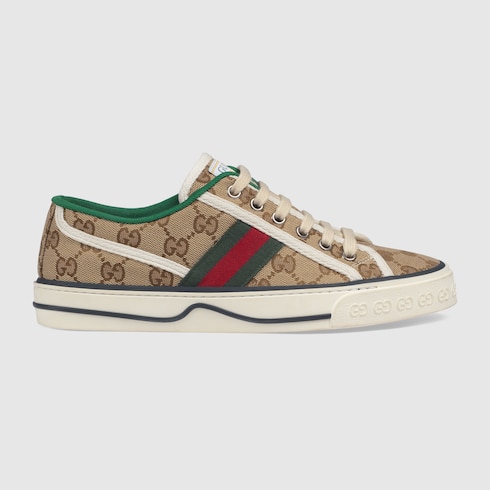
The Gucci Alchemy: Blending Heritage with Hype
Gucci’s foray into this arena is not a mere capitulation to trend but a masterful exercise in brand alchemy. Under the visionary direction of Creative Director Alessandro Michele, appointed in 2015, Gucci underwent a “Romantic Revolution.” Michele’s philosophy, as quoted in numerous interviews with Vogue and Business of Fashion, rejected sterile minimalism in favor of a “maximalist eclecticism” that thrived on contradictions: vintage and futuristic, masculine and feminine, ornate and casual. This ethos found perfect expression in sneakers. A women’s Gucci sneakers design, such as the iconic Ace with its embroidered bee or tiger, is a portable museum piece. The bee, an ancient symbol of royalty and industriousness used by the House in the 1970s, is meticulously rendered in thread, transforming a simple leather sneaker into a artifact brimming with symbolism. This is where objective value meets perceived value. From a materials science perspective, the use of premium calfskin, supple suede, and resilient canvas ensures longevity and comfort—a scientific commitment to quality. From a sociological perspective, as argued by fashion theorist Malcolm Barnard in his book “Fashion as Communication,” these embedded symbols act as a complex language. Wearing them communicates an alignment with a specific, knowledge-rich aesthetic tribe. It’s a statement that says you understand the code, the history, and the irony of wearing a meticulously embroidered, centuries-old symbol on a shoe designed for movement. This duality is the core of its staple status: it is simultaneously a durable, wearable good and an inexhaustible conversational piece.
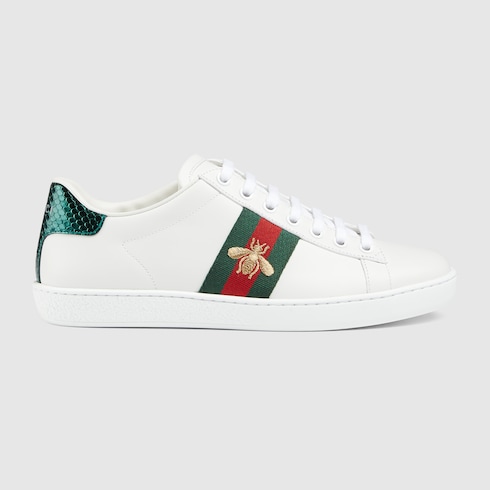
Architecture for the Foot: Design as a Foundation
To label these items merely “decorative” would be a profound misunderstanding of their design integrity. The construction of a premier women’s Gucci sneakers model is an exercise in architectural principles applied to podiatric science. Take the Rhyton silhouette, with its deliberately distressed leather and chunky, retro sole. The design references 1980s athletic styles, but its execution is thoroughly modern. The exaggerated sole isn’t just an aesthetic choice; it provides a platform that alters posture and gait, offering a subtle, confident elevation. The leather is treated to appear vintage, a process that requires precise technical control to achieve uniformity in weathering—it’s calculated imperfection. This aligns with the views of industrial designer Dieter Rams, whose principle of “good design” emphasizes that an object must be both useful and understandable. Here, the utility is comfort and durability; the understanding is the immediate visual reference to a specific era of sport and leisure. Furthermore, the ubiquitous Web stripe, derived from the saddle strap, is not a random stripe but a historic house code applied with geometric precision, often framing the foot in a way that is both slimming and distinctive. Each element, from the curvature of the heel counter to the density of the foam insole, is the result of ergonomic research. When you invest in such a pair, you are not purchasing an abstract idea of luxury; you are acquiring a meticulously engineered product designed for real-world wear, where form and function are in a deliberate, sophisticated dialogue.

The Stylist’s Secret: Unmatched Versatility
What truly cements the status of a fashion staple is its chameleonic ability to integrate into a multitude of personal narratives. This is the practical magic of the women’s Gucci sneakers. Consider your wardrobe as an ecosystem. A truly staple item must create symbiotic relationships with other pieces. A crisp, tailored trouser suit is recontextualized from boardroom-strict to creatively powerful when grounded by a pair of embroidered Ace sneakers. The delicate silk of a midi dress finds an unexpected, modern edge when paired with the robust volume of the Rhyton. This styling principle echoes the “high-low” mixing championed by street style icons and formalized by fashion editors like Emmanuelle Alt of Vogue Paris, who consistently demonstrates how luxury casualwear can elevate a classic wardrobe. The sneaker acts as a tonal punctuation mark; it can soften severe lines, add a jolt of playful heritage to minimalist outfits, or provide a coherent thread of luxury through a weekend ensemble of jeans and a sweater. This versatility is economically rational. The cost-per-wear calculation, a fundamental metric in conscious consumption, plummets when a single pair of shoes can authentically traverse such a wide spectrum of occasions, from a casual brunch to a gallery opening. It becomes the most reliable, and most expressive, tool in your style toolkit.
A Sound Investment: Beyond the Price Tag
In an era of conscious consumption, the definition of value has expanded beyond the immediate price tag. Acquiring a pair of women’s Gucci sneakers is an exercise in long-term value investment, both tangible and intangible. Tangibly, the quality of materials and construction, as previously outlined, ensures these shoes can withstand years of wear with proper care, unlike fast-fashion alternatives destined for landfill. The resale market for iconic designer sneakers, documented by platforms like Vestiaire Collective and The RealReal, often shows strong value retention for well-kept pieces, turning them into potential assets rather than mere expenses. Intangibly, the investment is in self-image and confidence. As psychologist Dr. Carolyn Mair, author of “The Psychology of Fashion,” notes, “What we wear affects our cognitive processes. Wearing items we perceive as successful or aspirational can actually enhance our performance and how we are perceived by others.” This isn’t about vanity; it’s about the armor we choose for daily life. Furthermore, for the savvy shopper, this investment can be optimized. Authorized retailers frequently offer seasonal sales, exclusive colorways at launch prices, or bundled value during holiday periods. The key is informed purchasing—understanding the classic, perpetually re-stocked styles versus the limited editions, thereby aligning your acquisition strategy with either timeless utility or collectible appeal.
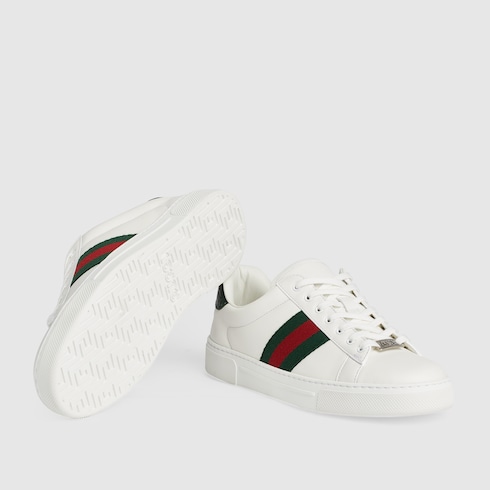
The search for the ultimate fashion staple ends not with a whisper of conformity, but with a statement of intelligent self-expression. It is found in an object that carries the weight of history, the rigor of design, the grace of versatility, and the acumen of a sound investment. It is embodied in the sophisticated, symbolic, and steadfast world of women’s Gucci sneakers. They are more than footwear; they are the foundation upon which a dynamic, confident, and truly modern wardrobe is built, step after intentional step.
