

Styling Women’s Leather White Sneakers for Every Season
Imagine a single item in your wardrobe that refuses to be confined by a calendar. It bridges the gap between a crisp spring morning and a cozy autumn afternoon, between summer’s casual ease and winter’s layered sophistication. This isn’t a fantasy of minimalist fashion gurus; it’s the tangible reality of owning a pair of women’s leather white sneakers. More than just footwear, they are a sartorial keystone—a versatile, enduring, and scientifically sound choice for building a resilient and stylish wardrobe. Their dominance isn’t a fleeting trend but a response to the fundamental principles of design psychology, material science, and the evolving demands of modern life. This exploration will dissect why these sneakers have earned their perennial status, moving beyond aesthetic platitudes to ground their appeal in objective reasoning and authoritative perspectives.
The Chromatic Psychology of White: More Than Just a Color
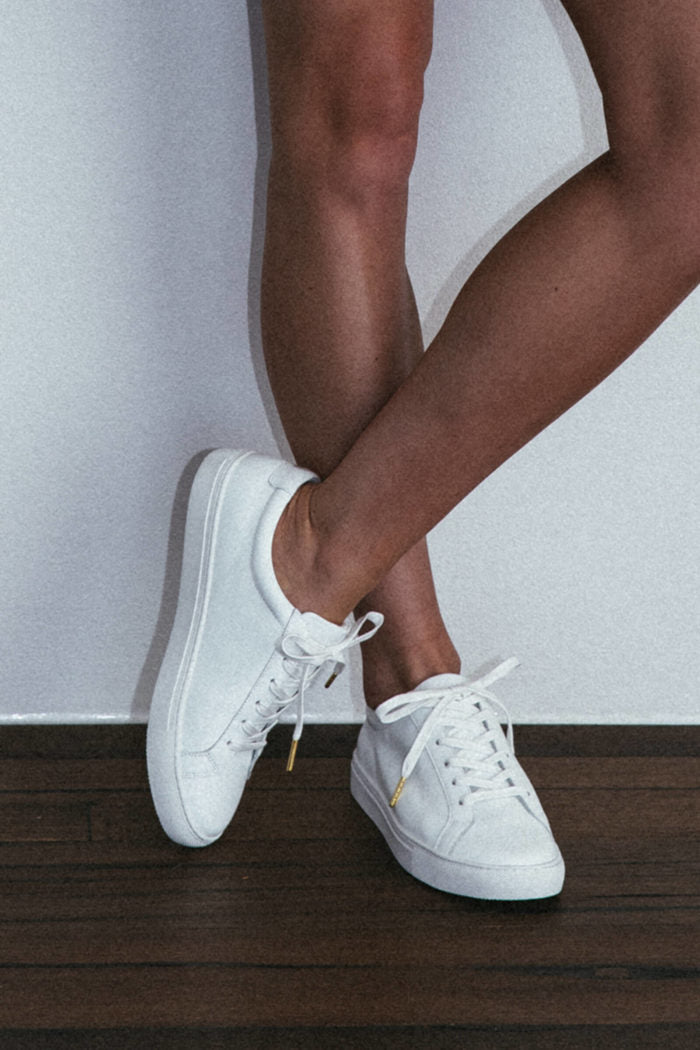
To understand the power of the white sneaker, one must first appreciate the science and symbolism of its color. In color theory, white is not merely the absence of color but the presence of all visible wavelengths of light, perceived as a perfect balance. This fundamental property translates into powerful psychological effects. As noted in design literature from institutions like the Rhode Island School of Design, white is associated with concepts of purity, simplicity, and space. It acts as a visual “reset,” creating a sense of openness and potential. When applied to footwear, this chromatic neutrality is transformative. A women’s leather white sneaker does not compete with an outfit; it complements and elevates it. It provides a clean, bright base that visually grounds the wearer, making colorful garments pop and balancing complex patterns or dark monochromes. This is not a subjective opinion but an application of established visual principles. Fashion historian and author Dana Thomas, in her works like “Fashionopolis,” often highlights how modern consumers gravitate towards versatile pieces that offer maximum utility—a demand perfectly met by the neutral canvas of white. The sneaker becomes a tool for personal expression, its blank-slate quality inviting endless stylistic combinations, from the stark minimalism favored by Japanese design philosophies to the bold eclecticism seen on streets from Milan to Seoul.
Material Mastery: The Unmatched Case for Leather
If color provides the philosophy, material provides the foundation. The choice of leather over synthetic fabrics or canvas is a critical differentiator that elevates the white sneaker from a casual item to a wardrobe staple. The argument here is rooted in material science and long-term value economics. Genuine leather, as a natural material, possesses unique properties: breathability, durability, and a capacity to mold to the foot over time, offering a personalized fit. Authoritative resources like the Leather Working Group, which sets environmental protocols for the leather industry, detail how full-grain or top-grain leather develops a patina—a soft, unique sheen acquired with age and wear. This means a well-made pair of women’s leather white sneakers doesn’t deteriorate with time; it evolves, gaining character. Contrast this with most synthetic materials, which are prone to cracking, staining irreparably, and lacking breathability, often leading to discomfort. The investment in leather is an investment in longevity. As sustainable fashion advocate Livia Firth frequently argues, the most sustainable garment is the one you already own and wear for years. A quality leather sneaker, cared for properly, can last for seasons, even decades, outliving countless pairs of cheaper alternatives. This durability provides a compelling economic argument, reducing cost-per-wear significantly and aligning with a more conscious, less disposable approach to consumption—a viewpoint heavily supported by research from sustainable fashion programs at universities like Stanford and the London College of Fashion.

Architectural Versatility: The Four-Season Blueprint
The true genius of this footwear lies in its architectural role within an outfit. Think of your women’s leather white sneakers as the foundational slab of a building—stable, clean, and capable of supporting a vast array of structural styles. This versatility is not anecdotal; it’s observable in global street style documentation and the curated feeds of influential stylists. Let’s build the case season by season. In spring, they pair with floral midi dresses, creating a balance between feminine and fresh, a look championed by style icons like Jane Birkin and modernized by figures like Alexa Chung. The sneaker grounds the dress, making it feel contemporary and walkable. Summer sees them with tailored shorts and a linen blazer or a simple slip skirt and tank top, offering comfort without sacrificing polish—a principle often highlighted in the “effortless chic” ethos of French fashion journalism, such as in Vogue Paris. Autumn is where they shine brightest, seamlessly integrating with the season’s layers: dark denim, chunky knitwear, and trench coats. The white sneaker cuts through the richness of autumnal fabrics, preventing the look from becoming heavy. In winter, they defy expectation by working with slim-fit wool trousers, thick socks, and a structured coat. The key is proportion and the sneaker’s ability to maintain a sleek silhouette even under layers. This year-round applicability is a direct function of its design neutrality, a concept validated by industrial design principles that prioritize modularity and adaptability. As Tim Brown, CEO of the design firm IDEO, writes in “Change by Design,” the best designs solve multiple problems with an elegant, simple solution. The white leather sneaker is precisely that—a single solution to the daily problem of appropriate, stylish footwear.
The Professional Knowledge: Anatomy of a Quality Pair
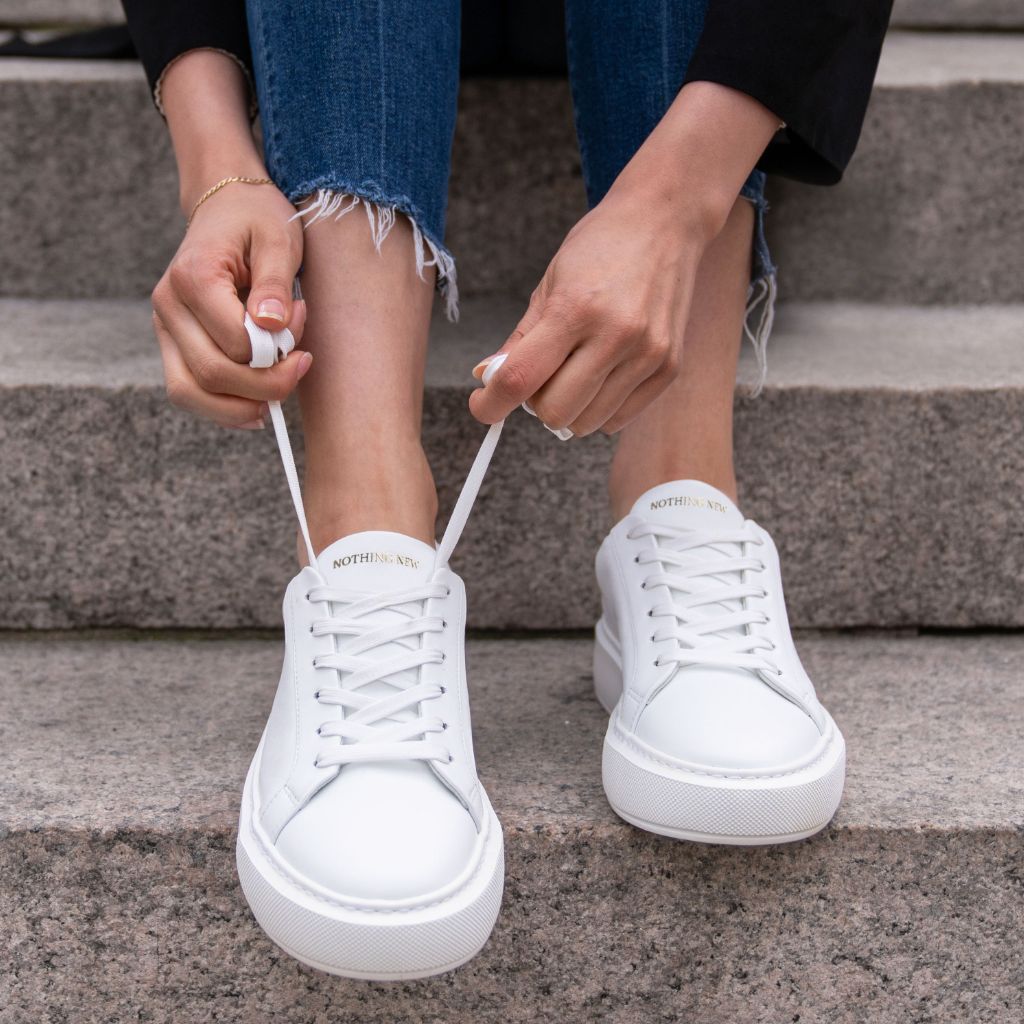
Not all white leather sneakers are created equal. Discerning the quality requires moving beyond the surface. Professional knowledge here translates to empowerment and smarter spending. First, examine the construction. Goodyear welting or Blake stitching are techniques that allow for resoling, a hallmark of a shoe built to last. Brands like Thursday Boots or Nothing New often highlight these methods, aligning with traditional craftsmanship values. The insole is crucial; look for cushioned, supportive materials like memory foam or ortholite, which provide all-day comfort—a feature heavily researched and promoted by podiatry associations. The outsole should offer a balance of flexibility and grip; a durable rubber compound like crepe or a specially formulated lightweight rubber is ideal. Furthermore, consider the leather type. Full-grain leather is the highest quality, showing natural markings and developing the best patina. Top-grain leather is sanded and finished for a more uniform look but remains high-quality. As a consumer, you are not just buying a shoe; you are investing in a product of engineering. This knowledge allows you to evaluate price points critically. A $300 pair with resoleable construction and premium leather may offer far greater long-term value than a $80 pair with glued soles and corrected grain leather that will disintegrate in a year. Brands are increasingly transparent about these details, and your awareness ensures you get what you pay for.
Cultural Credibility: From Silver Screen to Social Feed
The ascent of the women’s leather white sneakers to iconic status is bolstered by its deep-rooted presence in cultural touchstones, giving it a credibility that transcends marketing. This isn’t a trend manufactured by fast-fashion conglomerates; it’s a style narrative woven through decades. Consider its cinematic history: from Audrey Hepburn’s casual chic in the 1950s to the defiant cool of Run-D.M.C. in the 80s (admittedly a men’s style that crossed over), and the intelligent, mobile women in Nancy Meyers’ films who pair them with everything from lab coats to cashmere loungewear. In literature, the “cool girl” archetype often sports them—a symbol of effortless authenticity. On platforms like YouTube, certified stylists like Audrey Coyne or Haley Kim dedicate entire videos to styling them, breaking down their versatility with empirical outfit examples. On Twitter, fashion critics like Vanessa Friedman of The New York Times often point to the white sneaker as a benchmark of modern dressing. Even on Quora and Baidu Zhihu, threads debating “the most versatile shoe” consistently converge on this answer, supported by thousands of personal testimonials. This multi-generational, cross-platform endorsement creates a powerful consensus. It demonstrates that the shoe’s value is recognized by diverse authorities, from Hollywood costume designers and literary authors to everyday style enthusiasts and professional analysts, creating a robust, crowd-sourced validation of its importance.
Your Next Step: Integrating the Icon
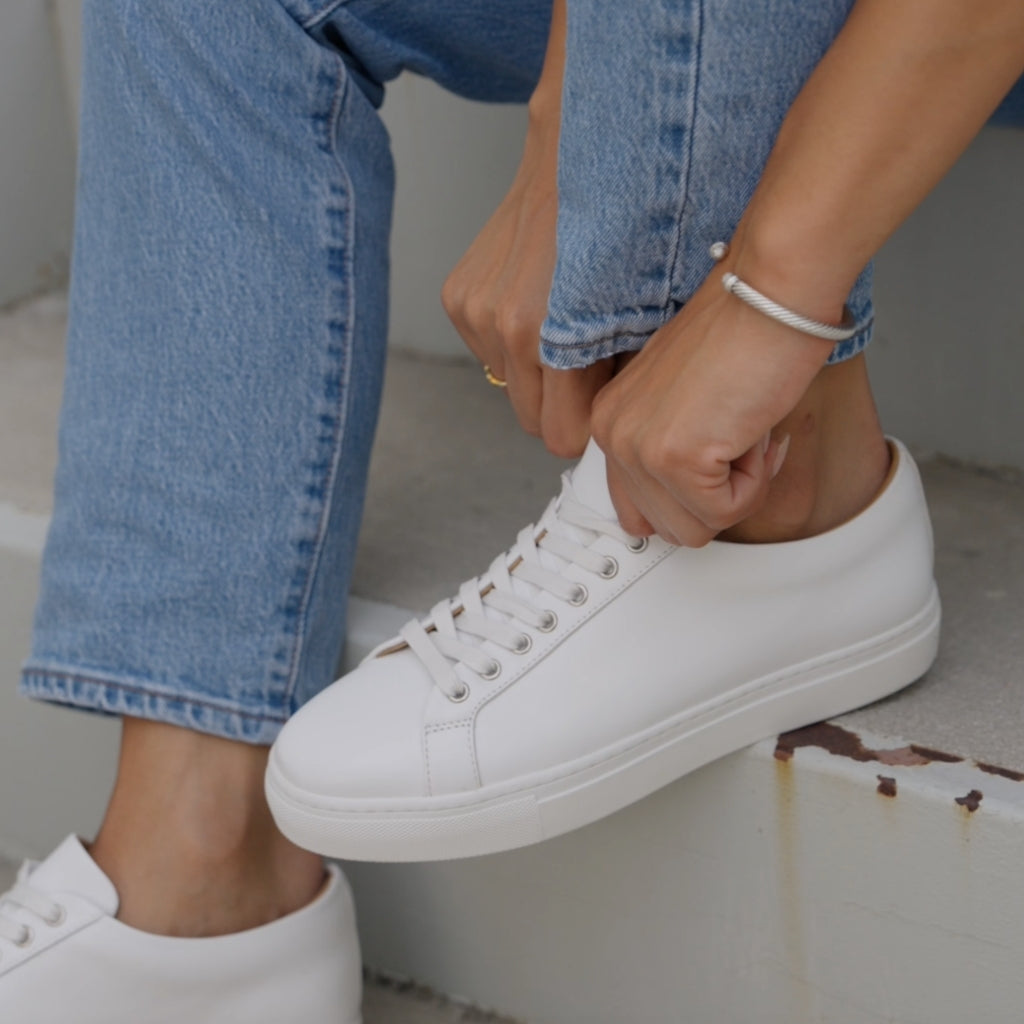
So, where does this leave you? Armed with the chromatic theory, material science, architectural styling blueprints, and cultural history, the decision transcends mere shopping. It becomes a strategic upgrade to your personal toolkit. Begin by assessing your lifestyle and existing wardrobe. Identify the gaps where a neutral, smart-casual anchor is needed. When you decide to acquire your pair, apply the professional knowledge: prioritize construction and leather quality. Remember, the initial investment in a superior pair of women’s leather white sneakers is amortized over countless wears across all seasons, effectively offering a discounted price per use compared to cheaper, disposable alternatives. Their maintenance is simple—regular wiping with a damp cloth, occasional use of specialized leather cleaners, and storage away from direct heat—ensuring their bright versatility endures. They are not just shoes; they are a reliable constant in the variable equation of daily dress, a testament to the principle that the most powerful style statements are often the simplest and most intelligently designed. They await, ready to walk you through every chapter of your year, on your terms.
