

Discover the Best Podiatrist Recommended Walking Shoes for All-Day Comfort
Your feet are the foundation of your movement, and the shoes you choose can either support or sabotage your daily comfort and long-term health. For anyone who spends significant time on their feet—whether navigating city streets, exploring nature trails, or managing the demands of a busy workday—the quest for the perfect walking shoe is paramount. This isn’t merely about fashion or fleeting trends; it’s a physiological necessity. The right footwear acts as a critical interface between your body and the ground, influencing everything from your gait and posture to joint health and energy levels. In this exploration, we delve beyond marketing claims to uncover the science and professional endorsements behind truly supportive footwear. We will identify the key features that define podiatrist recommended walking shoes, drawing from authoritative medical perspectives, biomechanical research, and real-world testing to guide you toward all-day comfort and wellness.
The Science of Support: Why Podiatrist Endorsement Matters
Podiatry, the branch of medicine devoted to the study, diagnosis, and treatment of disorders of the foot, ankle, and lower extremity, provides the foundational science for understanding footwear. A podiatrist’s recommendation is not a casual preference; it is a professional judgment based on anatomy, biomechanics, and pathology. The human foot is a complex structure comprising 26 bones, 33 joints, and over 100 muscles, tendons, and ligaments. This intricate system must absorb and distribute forces that can exceed several times your body weight with each step. When footwear fails to accommodate or support this structure, the consequences can range from immediate discomfort—blisters, calluses, and plantar fasciitis—to long-term issues like metatarsalgia, bunions, and even knee, hip, or back pain. As noted by the American Podiatric Medical Association (APMA), shoes bearing their Seal of Acceptance have been evaluated by a committee of podiatrists and found to promote good foot health. This seal is a key indicator when searching for podiatrist recommended walking shoes. The criteria for such endorsement often include adequate heel stabilization, sufficient forefoot flexibility, effective shock absorption, and a design that does not create pressure points or distort natural foot function. Therefore, prioritizing shoes with professional medical backing is an investment in preventative care, ensuring your footwear works in harmony with your body’s mechanics rather than against them.
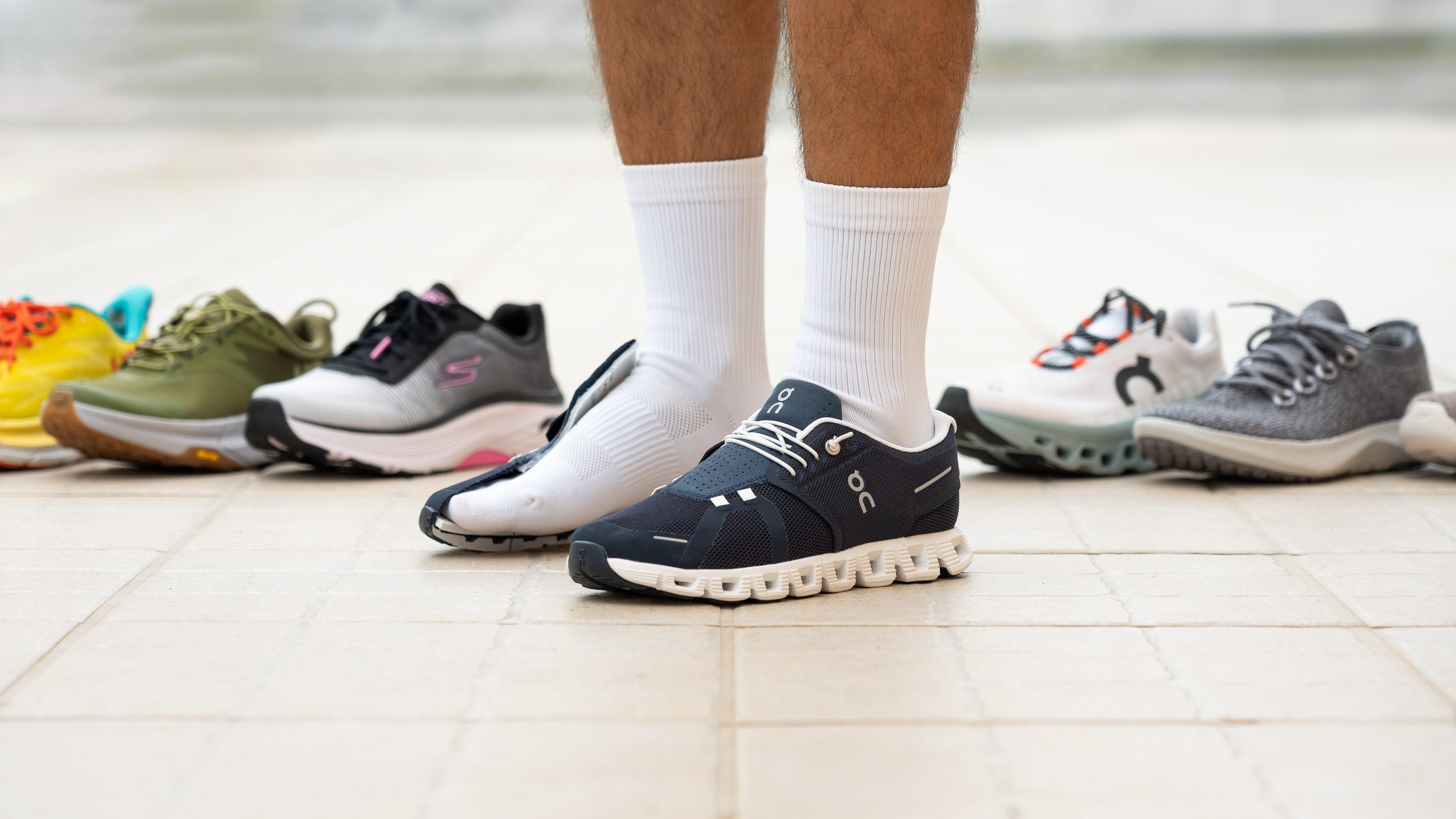
Arch Understanding: The Cornerstone of Proper Fit
One of the most critical elements in selecting a walking shoe is matching it to your arch type. The arch of your foot determines how you pronate—the natural inward rolling motion of the foot during a step. Neutral pronation is ideal, where the foot rolls inward about 15%, efficiently absorbing shock. Overpronation (excessive inward roll) and supination or underpronation (insufficient inward roll) can lead to inefficient movement and injury. A simple “wet test”—observing the imprint of your wet foot on a dry surface—can reveal your arch type: a full imprint indicates low arches (flat feet), a imprint with a narrow band connecting heel and forefoot indicates normal arches, and an imprint with a very thin or absent band indicates high arches. This self-knowledge is non-negotiable. Podiatrist recommended walking shoes are often designed with specific arch support systems. For instance, motion control shoes with firm medial (inner) posts are engineered for severe overpronators with low arches, while stability shoes offer moderate support for mild to moderate overpronation. Cushioned shoes with high flexibility and soft midsoles are best for supinators with high arches, encouraging natural motion. Brands like Brooks, ASICS, and New Balance have built their reputations on sophisticated arch-support technologies, often developed in consultation with podiatric professionals. Ignoring your arch type is like building a house on an unstable foundation; the structure above will inevitably suffer.
Material and Construction: Beyond Basic Cushioning
The modern walking shoe is a feat of material science and engineering. True comfort stems from a synergistic combination of components, each serving a distinct purpose. The upper, traditionally made of leather or synthetic materials, must offer breathability to manage moisture and prevent fungal growth, while providing a secure, non-constricting fit. Modern mesh uppers, like those using engineered knit or Jacquard mesh, excel in this area. The midsole is the heart of the shoe’s performance, where most technological innovation occurs. Materials like ethylene-vinyl acetate (EVA) provide lightweight cushioning, while polyurethane (PU) offers greater durability and firm support. Advanced proprietary foams—such as Brooks’ DNA LOFT, ASICS’ GEL, or Adidas’ Boost—are designed to provide exceptional energy return, reducing fatigue by literally pushing back with each step. The outsole’s rubber composition and tread pattern determine traction and durability; carbon rubber is exceptionally hard-wearing, while blown rubber is lighter and offers better cushioning. A rocker sole design, which features a curved profile, can facilitate a smoother heel-to-toe transition, a feature often highlighted in podiatrist recommended walking shoes for individuals with conditions like plantar fasciitis or arthritis. As Dr. Jacqueline Sutera, a New York City-based podiatrist and spokesperson for the APMA, has stated in various media interviews, “A good walking shoe should be flexible at the ball of the foot but rigid in the heel and arch.” This precise balance of flexibility and stability is what separates high-performance footwear from casual sneakers.
:max_bytes(150000):strip_icc()/shp-best-brooks-walking-shoes-tout-f67df3ab5afa4c08a24a63ae6dca3444.jpg)
Navigating the Market: Key Features to Prioritize
With countless options available, focusing on specific, actionable features can cut through the noise. First, prioritize a roomy toe box. Your toes should have ample space to splay naturally without touching the sides or front of the shoe. This prevents conditions like bunions and hammertoes. Second, seek a secure heel counter. The firm cup at the back of the shoe should hold your heel firmly in place, preventing slippage that can cause blisters and instability. Press on it; it should not collapse easily. Third, examine the shoe’s torsional rigidity. Try twisting the shoe; it should resist twisting through the arch while bending easily at the forefoot. This provides the midfoot stability podiatrists advocate. Fourth, do not underestimate the importance of fit timing. Shop for shoes in the late afternoon or evening, as feet naturally swell throughout the day. Always try shoes on with the socks you intend to wear and walk on a hard surface, not just carpet. Many specialty running stores offer gait analysis, which can provide invaluable data. Finally, heed the replacement rule. Even the best podiatrist recommended walking shoes lose their supportive properties over time. The general consensus is to replace walking shoes every 300 to 500 miles. Worn-out midsoles fail to absorb shock, transferring stress directly to your joints.
Professional Perspectives and Celebrity Advocacy
The credibility of podiatrist-endorsed footwear is often amplified by endorsements from figures who depend on their feet for their livelihood. Celebrity dancers, long-distance athletes, and actors who perform their own stunts frequently share their reliance on professionally vetted footwear. For example, on platforms like YouTube and Twitter, fitness experts and celebrities often break the fourth wall to discuss the very real issue of foot pain and their solutions. While individual testimonials are not scientific evidence, they highlight the practical application of podiatric principles in high-demand scenarios. More authoritative are the consistent recommendations from medical institutions. Literature from universities with strong sports medicine programs, such as the University of Virginia’s Running Medicine clinic or Stanford’s Biomechanics Division, often publishes findings on footwear’s role in injury prevention. These resources reinforce that the core principles of good shoe design—stability, cushioning, and fit—are universal, whether you’re a marathoner or a teacher. As a statement from the Harvard Medical School publications might summarize, “The right shoe is a tool for health.” This convergence of medical authority and practical testimony creates a compelling case for making informed, health-first choices in footwear.
:max_bytes(150000):strip_icc()/tal-roundup-podiatrist-loved-shoes-on-sale-tout-bdbf5721fa5642efa38b61f6a5b4ff34.jpg)
Investing in Your Foundation: Value Beyond Price
It is a common misconception that podiatrist recommended walking shoes must carry a prohibitive price tag. While advanced technology and quality materials often command a premium, the true cost of footwear should be measured in cost-per-wear and, more importantly, cost-per-health-outcome. A $150 pair of shoes that lasts 500 miles and prevents a single visit to a physical therapist or podiatrist is a significant financial saving, not to mention an investment in pain-free mobility. Fortunately, the market offers avenues for value. Many reputable brands offer previous-season models at discounted prices, where the core technology remains identical to the latest version. Outlet stores, authorized online retailers, and seasonal sales are excellent opportunities to acquire high-quality footwear. The key is to prioritize the essential features—arch support, heel counter, fit—over superficial aesthetics. Some brands known for their podiatrist-approved models, like certain styles from HOKA, Saucony, and Vionic, frequently have select colors or older models available at a fraction of the original price. Remember, the goal is not to find the cheapest shoe, but to find the right shoe at the best possible value. Your feet, and by extension your entire body, are worth the discernment.
:max_bytes(150000):strip_icc()/I-Asked-Podiatrists-for-Their-Fall-Shoe-Recommendations-These-Are-Their-Top-8-Picks-8fbdf9d65f3a4228ae63f6e5253dc08c.jpg)
The journey to finding the ideal walking shoe is a personal one, rooted in the unique architecture of your feet and the specific demands of your life. By anchoring your search in the principles of podiatric science—prioritizing proper arch alignment, strategic cushioning, and stable construction—you move from guesswork to informed selection. The endorsement of a podiatrist is a beacon, signaling footwear designed with physiological integrity. Whether you find your perfect pair in a stability model from Brooks, a maximally cushioned HOKA, or a orthotic-friendly design from New Balance, the outcome is the same: a foundation of support that transforms walking from a daily chore into a sustained pleasure. Let your steps be confident, comfortable, and supported by the best that biomechanical science has to offer.
