

Ask ten women what counts as the best office shoes for women and you will get ten answers, and every one of them will be correct for the person giving it. The accountant who walks twenty minutes from the train and then sits at a desk until six has a completely different problem from the floor manager who is on her feet for nine hours, and both of them have a different problem from the lawyer who needs to look expensive in a conference room where the temperature is always sixty-eight degrees. Shoe shopping advice usually ignores this. It hands you a list of five styles and calls it a day, as if a commute, a job description, and a body were interchangeable details.
They are not. The office is one of the few places left where you have to be taken seriously and also survive the day, and footwear is where those two demands collide hardest. Too soft and you look like you gave up. Too sharp and you are limping by four o’clock, which nobody respects either. The useful question is not “which shoe is most professional” but “which shoe holds up for my specific eight hours without asking my feet to pay for it.” That reframing changes the answer for almost everyone, and it is where we should start if you are rebuilding a work rotation from scratch or replacing a pair that has finally given out. Have a browse through the women’s shoes range while you read, because the categories and the reasoning below are meant to be used together.
Start With the Day You Actually Have, Not the Dress Code on Paper
Write down your last five working days and be honest about them. How many minutes were spent walking? How many hours standing? Were there stairs, wet pavements, a parking garage with a ramp, a client lunch where you sat on a low sofa? This sounds fussy, but it predicts shoe failure better than any style guide. A shoe that is comfortable for a two-block walk and eight hours of sitting can be genuinely painful for a job that involves a warehouse floor, and the reverse is also true: a chunky supportive sole that saves your back on concrete can look heavy and out of place in a boutique design studio.
Most office jobs fall into three rough patterns, and each one wants something different. The seated day, where you are at a desk or in meetings with short walks between, tolerates almost any heel under about three inches because the load is intermittent. The mixed day, roughly half sitting and half moving through an office, a campus, or a shop floor, rewards a low block heel or a structured flat with a real insole. The standing day, which includes retail management, hospital administration, teaching, and event work, is where heels become a genuine hazard and where cushioning and a rocker or flexible forefoot matter more than silhouette.
Nobody tells you to buy three separate wardrobes, and you do not need to. What you need is one pair that matches your dominant pattern and one pair that covers the outlier day, which is usually the day you have a presentation or a client visit and want to look a notch sharper than usual. Once you have named those two scenarios, half the shoes in any shop window are immediately irrelevant, and the search for the best office shoes for women narrows to a handful of realistic contenders, and the remaining choices become much easier to judge on the things that actually matter: fit, weight, sole construction, and whether the upper will survive being worn three times a week for a year. That last point is where most cheap purchases fail, and it is worth more attention than it usually gets.
The Heel Height Conversation Nobody Wants to Have
Heel height is the single most consequential number on the box, and it is also the one most often chosen by look rather than by tolerance. The mechanics are not mysterious. Raising the heel shifts load onto the forefoot and changes the angle of the ankle, the knee, and eventually the lower back. The biomechanics of high-heeled shoes have been studied for decades, and the consistent finding is that the higher and thinner the heel, the more pressure concentrates under the ball of the foot and the harder the calf and ankle have to work to stay stable. That does not make heels dangerous. It makes them a tool with a dose.
For office wear, the practical sweet spot for most women sits between one and two and a half inches, with a heel base wide enough to stop the ankle from rolling on carpet edges and grating. A kitten heel at one and a half inches gives you the visual line of a heel with almost none of the associated fatigue, and it reads as deliberately elegant rather than dowdy, especially in a pointed or almond toe. A low block heel at two to two and a half inches is the workhorse: stable enough for a train platform, formal enough for a boardroom, and forgiving enough that you are not counting the minutes until you can take them off.
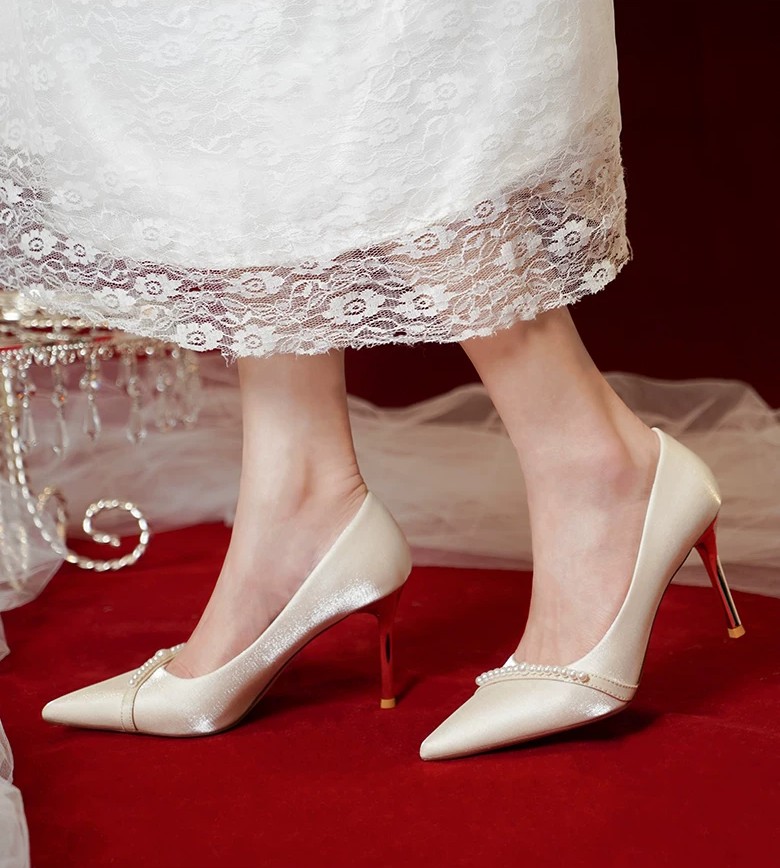
Above three inches, you are choosing a shoe for a specific hour rather than a specific day, and that is fine as long as you are clear about it. The mistake is buying a four-inch stiletto as your everyday pair and then wondering why your feet ache by Wednesday. If your role genuinely requires that height, and some do in fashion, media, and client-facing luxury, the mitigation is straightforward: keep a second pair under the desk, alternate days, and choose a slightly thicker heel and a padded forefoot over a needle-thin one. The other thing worth knowing is that heel height interacts with toe shape. A high heel in a narrow pointed toe is a double squeeze on the forefoot. A high heel with a wider toe box is meaningfully more tolerable over a long day, which is a detail most shoppers never consider until their toes tell them about it.
Loafers, Oxfords, and the Case for Borrowing From Menswear
The loafer is the most reliable answer to the question of what to wear to an office that has relaxed its dress code but not its expectations. It is closed, so it works in winter and in air conditioning. It has a clean line, so it reads as considered rather than casual. It has a low, wide heel by construction, which means stability comes free. A good penny loafer or horsebit loafer in black, oxblood, or a deep brown will carry you through most offices in the English-speaking world without a second thought, and it pairs with tailored trousers, midi skirts, and straight-leg denim alike.
Oxfords and derbies take the same logic one step more formal. The distinction matters when you are buying: an oxford has a closed lacing system and a sleeker profile, which suits suits and structured tailoring, while a derby has open lacing and a slightly roomier fit, which is kinder to a wider foot and reads a touch more relaxed. Either works in an office, and either will look wrong if the sole is too thin and the leather too stiff, so check both before you commit. A leather sole is elegant and slippery on wet tile; a rubber or lug sole is safer and, in most modern offices, entirely acceptable.
The one thing to watch with menswear-inspired shapes is proportion. A chunky lug-sole loafer with a heavy apron front can visually shorten the leg and swallow a petite frame, while an ultra-slim flat loafer can look flimsy on a taller woman with a longer stride. Try them with the trousers you actually wear rather than whatever you happen to have on in the shop, because hem length changes everything. A cropped wide-leg trouser wants a shoe with some visual weight at the toe. A slim tapered trouser wants something lower profile so the line stays clean.
There is also a practical argument that rarely gets made. Loafers and oxfords, being closed and structured, hold their shape longer than soft flats, which means they tend to look presentable for more seasons before the toe collapses or the lining wears through. If you are buying one pair to do a lot of work, that durability is worth paying for. Check the stitching at the welt, press the heel counter to see whether it holds, and bend the shoe at the ball to confirm it flexes where your foot does rather than snapping stiffly in the middle.
Flats That Don’t Read as a Compromise
Flat shoes spent a decade being treated as the thing you changed into, not the thing you wore, and that reputation was only partly deserved. The problem was never the lack of a heel. It was that most flat shoes were built with almost no structure: a thin sole, no shank, no arch support, and an upper so soft that the foot slid forward with every step. Wear that for nine hours and of course your feet hurt. The fix is not to abandon flats but to buy better ones, with a real footbed, a slight heel lift at the back, and a sole thick enough to absorb pavement.
Ballet flats are the classic and remain the easiest to style, but the ones worth owning have a slightly extended vamp, a padded insole, and a toe box that does not pinch the little toe. Pointed flats are the sharpest option and look fantastic with tailoring, though they need a little more length in the toe to avoid pressure, and they are unforgiving on a wide forefoot. Mary Janes, which have come back repeatedly for good reason, add a strap that keeps the heel seated, which matters enormously if you have a narrow heel that slips out of ordinary flats. That strap is not decoration. It is a fit solution.
The flat that most often gets overlooked in office wardrobes is the structured skimmer with a rubber sole and a defined heel counter. It looks plain on the shelf and indispensable on the third week of wear, because it goes with everything and does not need to be thought about. If you commute by train or on foot, a flat with a sole that grips on wet stone is not a luxury; a fall on a station stairs is a serious thing, and smooth leather soles are genuinely dangerous in rain.
There is also the question of what flat shoes do to the line of a trouser. A true flat shortens the visible leg by an inch or two compared with even a modest heel, which is why flat wearers often prefer a slightly cropped hem or a shoe with a lower-cut vamp that shows more of the top of the foot. Neither trick is complicated, and both make the difference between looking intentional and looking like you forgot something. Try one pair of well-made flats with your actual work trousers before deciding that flats are not for you; more often than not, the old pair was simply too thin.
Fit Signals That Matter More Than the Box Label
Shoe sizing is a rough guide at best, and every brand’s size runs slightly differently, so the only reliable test for the best office shoes for women is how the shoe behaves on your foot after ten minutes of walking. Start at the toe box. Your toes should be able to spread and wiggle, and the widest part of your foot should sit at the widest part of the shoe rather than being squeezed into a taper. A too-narrow toe box does not break in over time, whatever the salesperson says. It causes pressure, and sustained pressure on the joint at the base of the big toe is one of the recognised contributors to bunion formation.
Next, the heel. A heel that slips up and down more than a few millimetres will rub, and rubbing becomes a blister, and a blister becomes the reason you never wear the pair again. Some slight movement is normal in a leather-lined shoe that will soften, but a heel that lifts clear off the ground when you walk is a fit problem, not a break-in problem. If you have a narrow heel and a wider forefoot, look for a lace-up, a strap, or a brand that sells width options, rather than accepting a compromise that will hurt in two places instead of one.
Then the support underneath. Press your thumb into the insole at the arch. If it gives instantly with no resistance, there is nothing there and your arch will do all the work itself. A removable insole is a strong buying signal because it lets you swap in an orthotic or a cushioned insert without changing the shoe’s fit. Check the flex point too: the shoe should bend where your toes bend, at the ball, not in the middle of the arch. A shoe that folds in half at the centre is a shoe with no shank, and it will feel tired and twisted by mid-afternoon.
Finally, consider width as a category rather than an afterthought. Plenty of offices are carpeted and temperature-controlled, but plenty are not, and feet swell over the course of a day, particularly in warm rooms or after a salty lunch. A shoe that fits perfectly at nine in the morning can be tight by four. Buying for the end of the day, or at least trying shoes on in the afternoon, is one of the simplest things you can do to avoid a pair that only works for the first three hours. The general guidance on foot pain from the NHS makes the same point in clinical terms: well-fitting footwear is the first intervention, not the last resort.
Materials, Weather, and the Nine-Hour Test
Upper material decides how a shoe ages and how it feels in July and January, and it is the part of the best office shoes for women that shoppers judge last and regret first. Full-grain leather moulds to the foot and breathes reasonably well, which is why it remains the default for office footwear; it also shows scuffs, so it needs a little attention. Patent leather looks sharp and wipes clean but does not stretch, so it must fit perfectly from day one. Suede is soft and forgiving but hates rain and road salt. Knit and mesh uppers are light and breathable and excellent for long commutes, but they collapse over time and rarely hold a formal line.
Linings matter as much as the outside and get a fraction of the attention. A leather lining manages moisture and reduces odour far better than a synthetic one, and it is one of the clearest markers of a shoe built to last. If you plan to wear the pair barefoot, which most women do with flats and loafers in summer, the lining is doing constant work and cheap material will show it within a season. Socks and no-show liners are a reasonable alternative, and a thin merino liner solves both sweat and blister problems without adding bulk.
The nine-hour test is the only evaluation that really counts. Before you commit, wear the pair at home on carpet for a full working day, ideally on a day when you are up and down rather than sitting still. Note where you feel pressure at hour two, hour five, and hour eight. Discomfort that appears at hour two and gets worse is a return. Discomfort that appears briefly and fades is usually a seam softening. This single habit will save you more money than any sale, because it catches the pairs that would otherwise sit in the cupboard with the tags still on.
Weather deserves a word too, especially for anyone commuting on foot. Leather soles on wet pavement have almost no grip, and smooth synthetic soles are not much better. A rubber outsole with a shallow tread pattern is the practical choice for anyone walking more than a few minutes outdoors, and it costs nothing in looks on a loafer or a low block heel. If you live somewhere with real winters, keeping one pair of weatherproof shoes by the door and one pair of good office shoes at your desk is a strategy that preserves both your feet and your better footwear.
A Three-Pair Rotation Beats a Closet Full of Maybe
If you want a short answer to the whole question, it is this: three pairs, chosen well, will cover more of your working life than fifteen pairs chosen impulsively. Pair one is the workhorse, matched to your dominant day, in a neutral that goes with most of your wardrobe. Pair two is the sharp pair, kept for presentations, client meetings, and anything where you want a little more authority, and in a shape you can genuinely walk in. Pair three is the bad-weather and long-commute pair, comfortable, grippy, and unglamorous, doing the job that would otherwise destroy the other two.
Rotating also extends lifespan in a way that surprises people. Leather absorbs moisture during the day and needs roughly twenty-four hours to dry out properly. Wearing the same pair every day means the lining never fully dries, which accelerates odour, cracking, and heel collapse. Alternating between two pairs can effectively double the useful life of both, which changes the economics considerably. A hundred and fifty dollars spent on a pair worn twice a week for three years is a better deal than sixty dollars spent three times on pairs that last a season each.
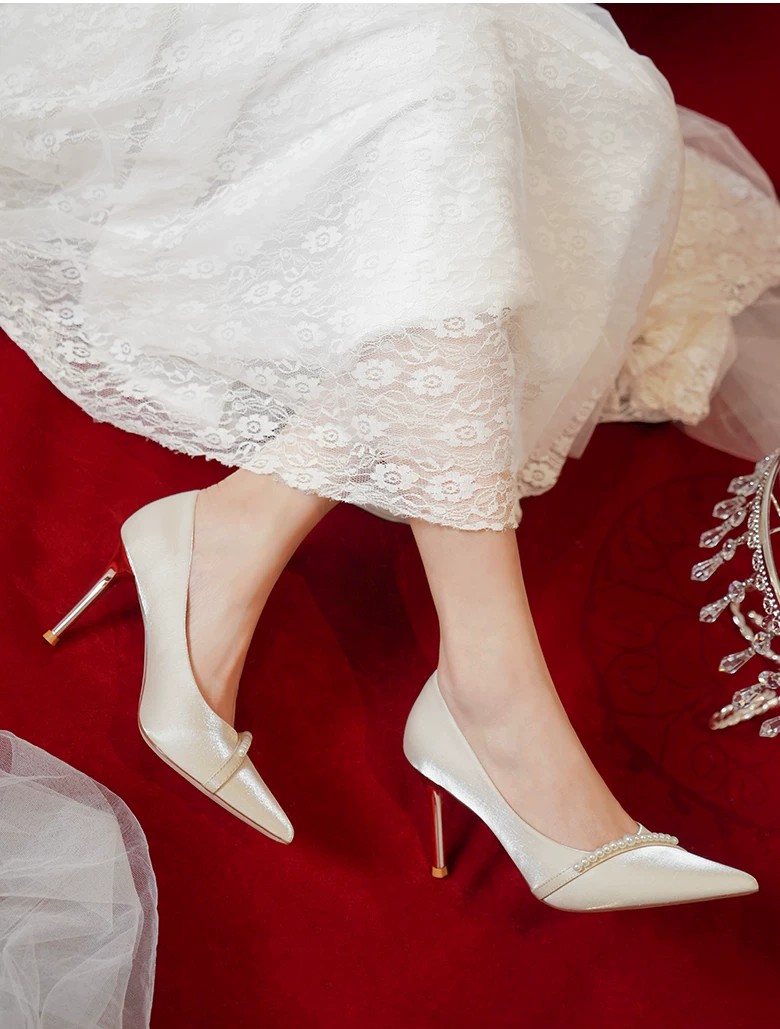
When you are filling the sharp slot, think about the specific silhouette your wardrobe already leans toward. If you wear a lot of tailoring, a pointed-toe heel for women extends the leg line under a straight or wide trouser and looks deliberate rather than generic. If your office is more creative than corporate, a low block heel in a warmer tone or a subtle texture does the same job with less formality. The point is coherence: the shoe should look like it belongs to the same wardrobe as everything above the ankle, not like it was bought for a single outfit.
It is also worth resisting the urge to buy several pairs at once at the start of a season. Buy one, wear it for three weeks, and let it tell you what your feet actually need. You will learn more from that month than from any amount of browsing, and the second purchase will be sharper as a result. This is unglamorous advice in a category that runs on impulse, but it is the difference between a wardrobe that works every morning and a pile of shoes you keep meaning to sell.
What to Check Before You Pay for the Best Office Shoes for Women
Run through a short list in the shop and you will avoid most regrets. Bend the shoe at the ball and confirm it flexes there. Press the insole at the arch and confirm there is something under your thumb. Walk on a hard floor, not carpet, and listen for the slap that signals a loose fit. Check the heel counter by squeezing it; if it folds easily, it will not hold your heel. Look at the stitching where the upper meets the sole, because that joint is what fails first on cheap construction, and confirm the sole is stitched or at least firmly bonded rather than spot-glued.
Then think about the next twelve months rather than the next twelve days. Does this pair work with at least three outfits you own? Will it survive your commute in the rain? Is the heel height something you would tolerate on a bad day, not just a good one? If the answer to any of those is no, the shoe is a costume rather than a tool, and office footwear needs to be a tool first. There is nothing wrong with a costume now and then, as long as it is not the pair you depend on.
Finally, give yourself permission to prioritize comfort openly. The best office shoes for women are not the ones that look most serious in a photograph. They are the ones you forget you are wearing somewhere around the third meeting, when your attention is on the work rather than your feet. That is a low-drama standard and an achievable one, and it is worth more than any list of trends. Buy fewer pairs, check the construction, wear them at home for a day, and rotate them. Your feet will hold up, your posture will hold up, and the shoes will still be there next year, which is more than can be said for most of what gets bought in a hurry.
