

Most shoe shopping advice assumes your foot is average. Width charts quietly disagree with that assumption: a “medium” last is built around a B or M width, and anyone who has ever felt a leather vamp press down across the top of the foot knows exactly how small that middle ground is. Wide width flat dress shoes for women solve a specific, stubborn problem — you need the polished look of a closed-toe flat for work, weddings, and dinners, but the pair has to accommodate a broader forefoot without gaping at the sides or sliding off the heel. That combination is rarer than it should be, which is why so many shoppers end up buying a half size up and living with the slippage. The fix is not a bigger size; it is a better understanding of how width is labeled, how flats are constructed, and which details signal a last that was actually designed for a wider foot. Once you know what to look for, the women’s shoes section stops feeling like a lottery and starts reading like a spec sheet.
What “Wide Width” Actually Means on a Size Chart
Width letters are not standardized across brands, and that single fact explains most of the confusion. In US women’s sizing, a medium is usually marked B, a wide is D, and an extra-wide is EE, sometimes written as WW. In men’s sizing the same letters mean something different — a men’s D is a medium — which is why unisex or men’s-conversion charts can send you two widths off course. UK and EU systems often skip width letters entirely and build the extra room into the last itself, so a UK 6 labeled “standard” may fit like a US 7 wide. The labels are a starting point, not a promise. The Brannock device, the metal slider you see in shoe shops, measures heel-to-toe length, arch length, and width separately, and it has been the reference tool since the 1920s; the history of shoe sizing systems is a useful reminder that these numbers were built for manufacturing consistency rather than for individual feet.
There is a second layer of confusion in how retailers use the word “wide.” Some brands cut a genuinely wider last, adding volume across the ball and the instep. Others simply add material at the seams, which gives you a wider footprint without more interior room — the shoe looks roomier from above but still pinches at the widest part of the forefoot. A third group labels a shoe wide when it runs large overall, so you get length you did not need and width you cannot use. The practical test is to look for a stated last width in the product description, not just a badge on the listing. If a page says “D width last” or “wide fit with a roomier toe box,” that is a construction claim you can evaluate. If it only says “wide” in the marketing copy, treat the claim as unverified until you read the reviews from shoppers who describe their own foot shape, not just their star rating.
Why Flats Are Harder to Fit Than Sneakers
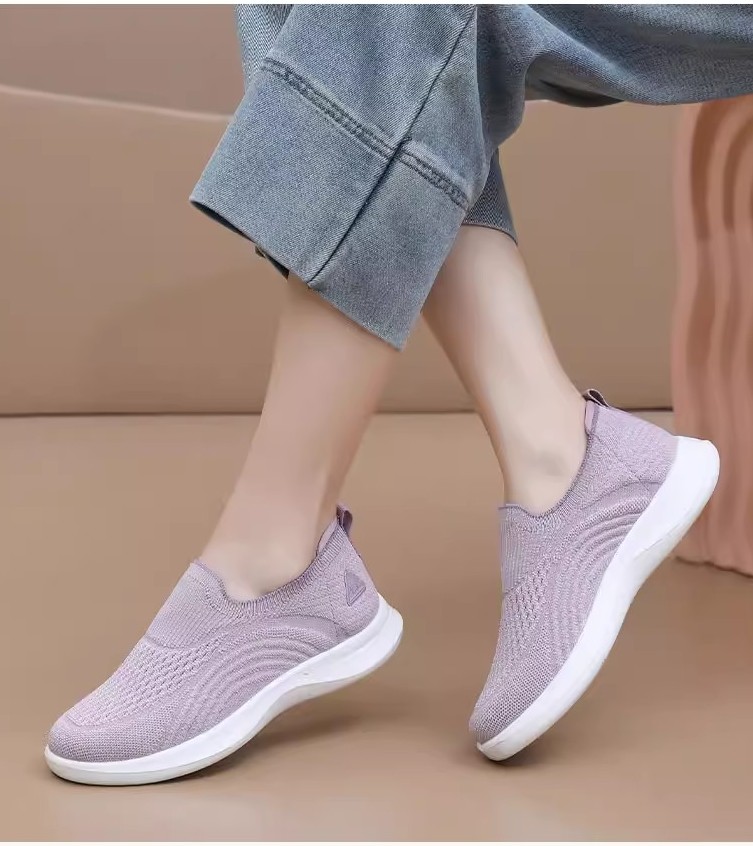
A sneaker forgives a wide foot because it has laces, a padded collar, and a knit or mesh upper that stretches in the direction it needs to. A flat dress shoe has almost none of those escape valves. The vamp — the panel that crosses the top of your foot — is usually cut from a single piece of leather with limited give, and it is stitched to a sole that does not flex much at the ball. When the forefoot is broader than the last, the pressure has nowhere to go except down onto the metatarsals and sideways into the seams. That is why a pair can feel fine standing in the shop and turn painful after twenty minutes of walking: the shoe is not too small in length, it is too narrow across a specific band of the foot, and the seam sits directly over the widest joint.
Heel slip is the other half of the problem, and it is usually a symptom of the same mismatch. Shoppers size up to gain width, which adds length, which leaves the heel floating in a counter that was cut for a shorter foot. The result is a shoe that rubs the back of the ankle raw while still pressing on the toes. A properly built wide flat avoids this by keeping the heel cup snug and expanding only the forefoot — which is a last-design decision, not a sizing trick. When you try a pair on, walk on a hard floor rather than carpet, and pay attention to whether the ball of your foot sits at the widest point of the shoe. If your joint is forward of that point, the shoe will never break in comfortably, no matter how much you soften the leather.
Measuring at Home Without Guessing
You can get a usable width measurement at home with a sheet of paper, a pencil, and a ruler, and it will save you more returns than any sizing app. Stand on the paper in the afternoon or evening, when feet are at their largest after a day of standing and walking, and wear the socks or tights you plan to pair with the shoes. Trace the outline with the pencil held vertically, keeping the tip against the skin rather than angled outward. Then measure the straight-line distance from the back of the heel to the tip of the longest toe, and separately measure across the widest part of the ball of the foot. Measure both feet and use the larger numbers; almost nobody is perfectly symmetrical, and a difference of a few millimeters between left and right is normal.
Timing the measurement matters more than most guides admit. Feet swell by the end of the day, and they swell further in summer heat or after a long flight, which is why a pair bought at nine in the morning can feel tight by six. Measure late, and if you are shopping for a specific event, measure at the same time of day the event will happen. Tights and thin socks change the number by a couple of millimeters, enough to tip you from one width into the next, so replicate the hosiery you actually intend to wear. It also helps to measure standing rather than sitting, because body weight spreads the foot and adds width at the ball that disappears the moment you lift it. Two measurements, one in the morning and one in the evening, give you a range instead of a single figure, and a range is what you want when you are comparing against charts built from averaged data rather than from your own feet.
Compare that ball measurement against the brand’s published width chart rather than against a generic conversion table. If the chart is missing, the next best signal is the difference between your foot length and your foot width in the same units: a foot that is proportionally broad at the ball relative to its length is the profile that struggles most with standard lasts, whatever the absolute numbers say. Arch length matters too, especially for anyone with a high instep, because a high arch pushes the top of the foot upward and turns a roomy toe box into a tight one across the laces or the vamp. For persistent pain, numbness, or bunions that change shape, a podiatrist or a foot health service is a better guide than any chart — the NHS guidance on foot pain is a sensible starting point for knowing when a fitting problem has become a medical one.
The Construction Details That Decide Comfort
The insole is the first thing to inspect, because a removable one is a free width adjustment. Pull it out and look at whether it is glued down or loose. A loose footbed lets you swap in a thinner insert to gain interior volume, or a supportive one if you need arch contact, and it also tells you the shoe was built with some flexibility in mind. A glued, thinly padded insole is not a dealbreaker, but it means the fit you feel in the shop is the fit you are stuck with. Look at the edge of the insole too: if the stitching sits right at the boundary with no margin, the upper has very little material to give when the leather relaxes.
Heel height on a flat is a number worth reading closely, because “flat” covers everything from a true zero-drop ballet to a two-centimeter block. A slight lift at the heel — five to ten millimeters — takes tension off the Achilles and suits most people who stand for long stretches, while a completely level shoe asks the calf to do more work. Neither is wrong; they simply suit different feet. Sole thickness is the other variable: a thin leather sole looks refined and flexes instantly, but it transmits every paving stone, and on concrete it wears through at the toe within a season. A rubber or rubber-injected sole adds a few millimeters of separation from the ground and much better grip on wet tile, which matters if your commute involves stairs or polished lobby floors.
Then check the shank and the outsole. A flat dress shoe with no shank — the stiffened strip under the arch — will fold in the middle and press the sole upward into your arch with every step. You can test this by holding the shoe at the heel and the toe and bending it: it should flex at the ball, roughly a third of the way from the front, and resist bending in the middle. The heel counter at the back should be firm enough to hold its shape when you squeeze it, since that structure is what keeps a wide forefoot from turning into a sliding heel. Finally, look at where the upper meets the sole. A stitched or cemented seam with a small welt gives more room for a wider foot than a sharply tapered edge, because the foot is not being squeezed toward a narrow base.
Materials That Survive an Office Week
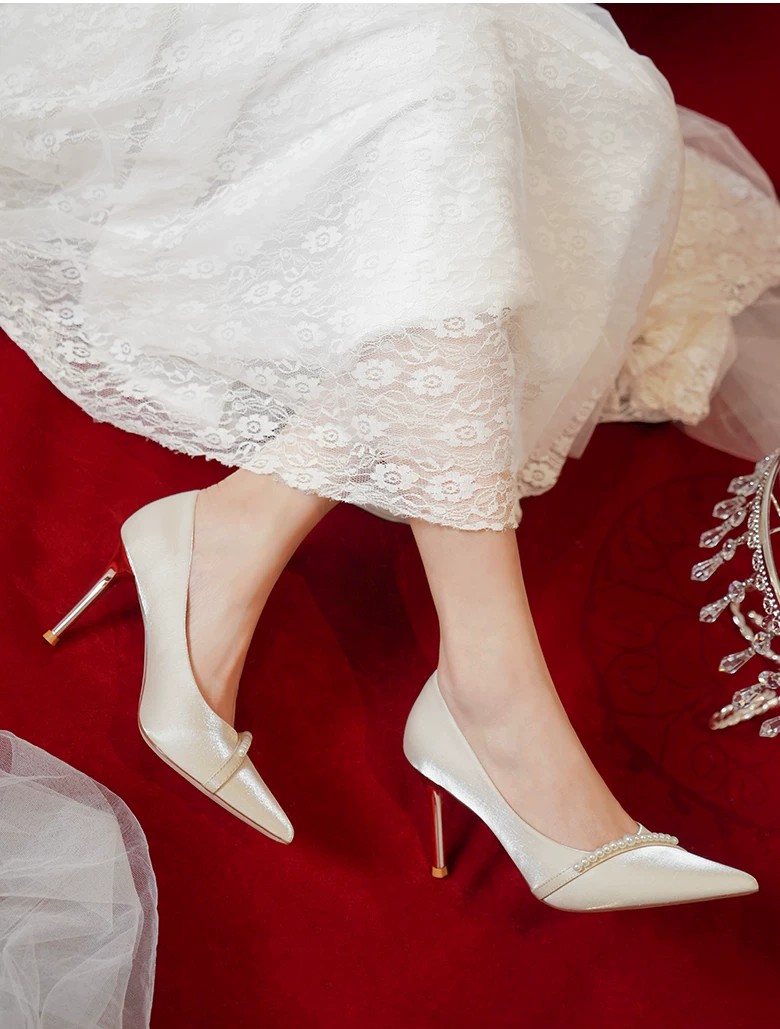
Leather is still the most reliable choice for wide width flat dress shoes for women, but not all leather behaves the same way. Full-grain and smooth calf leathers stretch slowly and hold their shape, which means the first week is snug and the third month is comfortable. Patent finishes look sharp and wipe clean, yet the coating limits stretch almost entirely, so a patent flat must fit correctly on day one — there is no break-in period to fall back on. Suede sits in the middle: soft from the start, forgiving across the vamp, but prone to marking at the toe and quick to lose structure in the heel. If your priority is all-day wear under a desk, smooth leather with a soft lining is the safest bet.
Weather and wear change fit over time, and it is worth planning for that rather than treating the first wear as the final verdict. Leather relaxes in heat and tightens again when it cools, so a pair that feels snug on a July afternoon may be exactly right by October. A water-repellent spray applied before the first wear keeps rain from stiffening the upper, and stiff leather is tight leather. Store the shoes with light shoe trees rather than stuffing them with paper, since trees hold the shape of the vamp and stop the upper from folding inward across the instep, which is where wide feet feel pressure first. Rotate two pairs if you can: leather needs a day to dry out between wears, and a shoe that never dries never really softens in the right places.
Linings matter as much as the outer material and get far less attention. An unlined or lightly lined leather interior wicks moisture and reduces the friction that causes blisters at the heel and the little toe. Synthetic linings can feel cool and smooth at first but trap heat, and in a closed flat worn for nine hours that shows up as slipping and rubbing by mid-afternoon. Knit and woven uppers are the newest option in this category, and they solve width beautifully because the fabric moves with the foot; the trade-off is structure, since a soft knit flat can collapse at the sides and look less polished with a tailored trouser. A hybrid — leather upper with a stretch panel at the instep — is often the best compromise for anyone whose foot width fluctuates through the day.
Matching the Flats to the Dress Code
Once the fit is sorted, the style question is easier than it looks, because flat dress shoes divide into a few clear families. The pointed-toe flat is the most formal and lengthens the line of the leg, but the taper can crowd a wide forefoot, so look for a point that starts late rather than a long, narrow tip. The almond toe is the most forgiving shape and reads well with everything from a pencil skirt to wide-leg trousers. Ballet flats are the softest option and the least structured; a wide-foot version needs a deeper vamp and a firmer counter, or it will slip. Loafers, including the penny and the horsebit, add a little visual weight and pair naturally with tailoring — the casual lace-up styles on the site follow similar logic for weekends. Mary Janes with an adjustable strap are the quiet hero of the group, because the strap keeps a wider foot from sliding forward.
Proportion is the variable most shoppers feel without being able to name. A flat with a low vamp and a high cut across the instep makes the foot look shorter and wider; a deeper vamp with a slightly elongated toe balances that. If you wear cropped trousers or a midi skirt that ends at the narrowest part of the ankle, an almond or softly squared toe keeps the line clean. If you wear full-length trousers, the hem should break just above the shoe rather than resting on it, or the toe will scuff within a week. Wide width flat dress shoes for women work best when the rest of the outfit is not fighting them: a straight-leg trouser, a midi skirt, or a tailored short all give the shoe room to read as intentional rather than as a compromise.
Colour and finish do more work than most people expect. A nude shade close to your own skin tone reads as an extension of the leg and works with nearly any hemline, while black leather is the safe default for offices with a formal dress code. Metallic finishes and patent textures draw the eye downward, which is useful if you want the shoe to carry a simple outfit, and they also show scuffs faster on the toe. For a first pair, buy the neutral; for a second, buy the one that makes you want to wear it. The mistake to avoid is buying a trend shape in a material that will not stretch, because a wide foot and a rigid upper is the combination that ends up in the back of the wardrobe after two wears.
Sizing Trouble: Between Widths and Other Fixes
Plenty of people sit between a medium and a wide, and the answer is not always the larger size. If a D width is slightly loose and a B is slightly tight, start with the D and add a thin leather insole or a heel grip; taking up a little volume is far easier than creating room that is not there. If the shoe is tight only across the instep, a cobbler can stretch the vamp a few millimeters with a professional stretcher, though the result depends on the leather and will not work on patent or heavily coated finishes. If the tightness is at the toe box and the outline of your toes is visible through the upper, stop — that shoe is the wrong last and no amount of stretching will fix it.
Half sizes complicate the picture further, because many wide-width lines are cut in whole sizes only. If you are a true half size, go up rather than down and solve the extra length with a heel grip or a thin insole; a shoe that is slightly long can be managed, while a shoe that is slightly short cannot. Ask whether the retailer stocks both B and D in the same style, since comparing two widths side by side in your own home is far more informative than reading descriptions of them. Wide width flat dress shoes for women are also worth buying in two widths when the return policy allows it — trying both on the same afternoon, with the same socks, removes almost all of the guesswork that online shopping otherwise introduces.
Buy from retailers with a clear return window and wear the shoes indoors on a hard floor for an hour before you commit to them outside. That single habit catches most fit problems while the pair is still returnable. Check the American Podiatric Medical Association guidance on footwear if you have a specific condition such as plantar fasciitis or a bunion, since the right answer there is less about width letters and more about support and pressure distribution. And when you find a last that fits, buy the second colour — good wide-width lasts are consistent within a brand, and replacing a worn-out pair from a different maker means starting the search from scratch. Wide width flat dress shoes for women are not a niche anymore; they are simply the category that rewards patience and a tape measure over guesswork and hope.
