

Leopard Print Heels: Four Ways That Don’t Try Too Hard
Leopard print isn’t brave any more. It’s been on school run feet and boardroom feet and wedding-guest feet for twenty years, and the only people who still find it shocking are the ones who haven’t tried it.
Which is good news, because it means you can stop treating a pair of cheetah print heels as a personality statement and start treating them as a tool. They’re the easiest way to make a plain outfit look considered. They also go wrong in about four specific ways, all of them fixable, and none of them to do with confidence.
The Primal Allure: Deconstructing the Leopard Print Phenomenon
The pattern comes from a cat that uses it to disappear. Put the same spots on a shoe and the effect reverses completely. That’s the odd bit of psychology people keep writing about, and it’s true: you’re borrowing the animal’s authority instead of its camouflage.
There’s a practical side to it too. Leopard has been in and out of fashion so many times since the fifties that it never really leaves, which makes it a safer buy than whatever print is having a moment this season. The version that looks dated is the one with big orange blobs and a shiny finish. The version that lasts is smaller, denser, browner, and a bit matte. Those two pairs can cost the same money and look ten years apart.
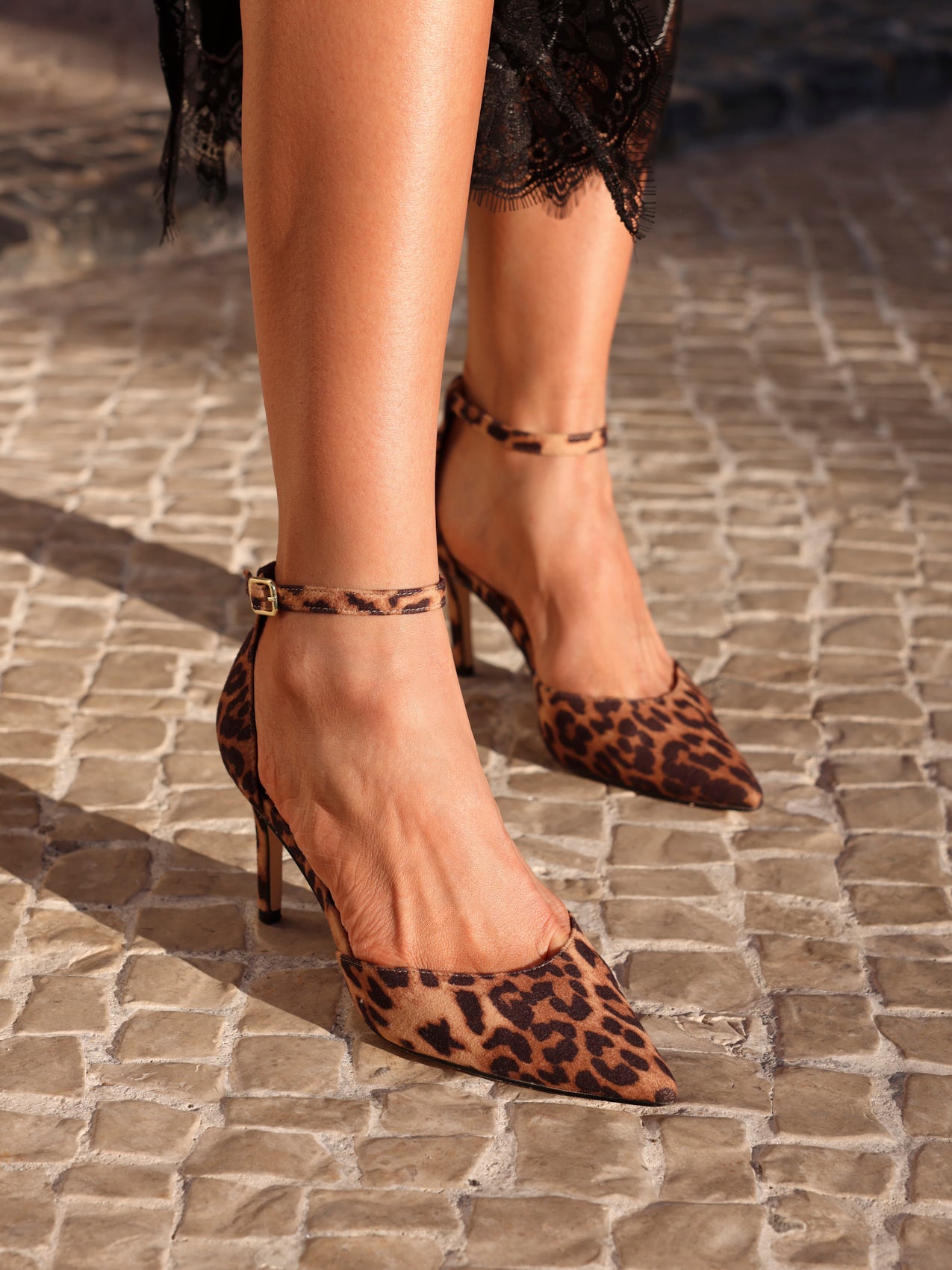
Principle One: The Foundation of Neutrality
Let the shoes be the only loud thing. That’s it. That’s the principle.
Concretely: black trousers and a black knit, or cream and camel, or navy with grey. The pattern then has something calm to sit against and it reads as deliberate rather than accidental. An all-black outfit with leopard heels is the single most reliable version of this look, and it works on almost every body and in almost every room. It’s also the least interesting, which is why it’s where you should start rather than finish.
The mistake I made for a whole year was adding a printed bag as well. Two loud accessories cancel each other out. You end up looking like you couldn’t decide, and nobody looks at either one properly. Plain bag, plain coat, loud shoes. One voice at a time.
Principle Two: Strategic Color Blocking
Leopard is basically brown. Once you accept that, colour gets easy, because brown plays nicely with almost everything warm and contrasts sharply with everything cool. A rust jumper and camel trousers is the safe version and it looks rich. Navy, cobalt or forest green is the version that makes people ask where the shoes are from.
Red is the one I’d argue about. Leopard heels with a red dress is a combination that either looks fantastic or looks like a nineteen-seventies fancy dress party, and the difference is the shade. Deep wine or brick works. Pillarbox red does not, at least not on me.
What to avoid: pastel prints, tie-dye, anything with its own busy pattern. Small dots and fine checks fight the spots for attention and the whole thing turns to noise. If you want two patterns in one outfit, do it with the shoes and the top, and separate them with a solid block of colour in between so the eye gets a rest.
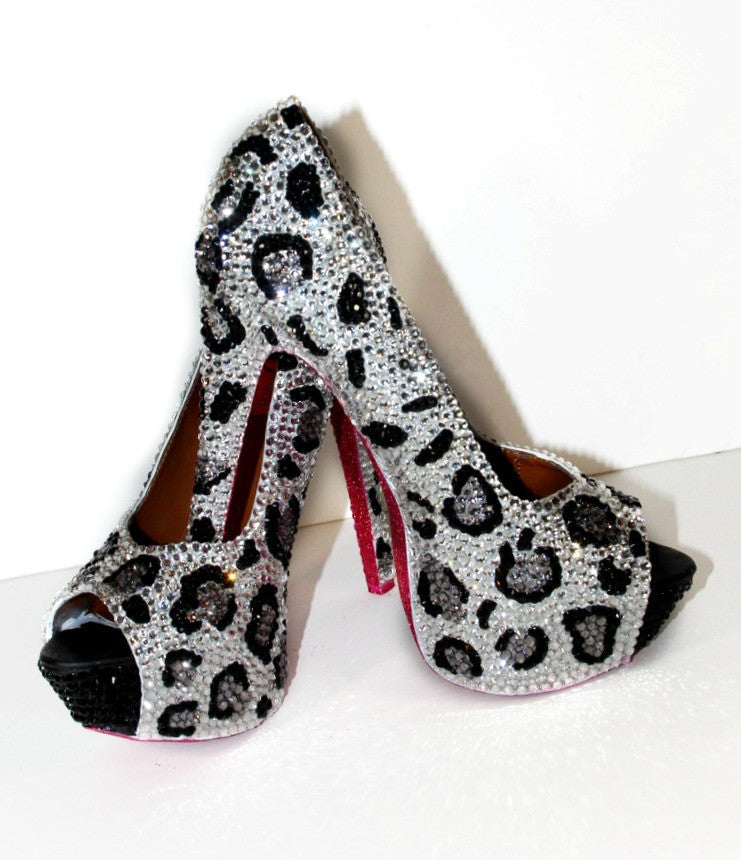
Principle Three: Textural Dialogue and Silhouette Balance
Texture does more work here than colour, and it’s the part most people skip. A silk slip dress next to a patent leopard heel is a good pairing because the two surfaces are saying different things. A chunky knit with a leather skirt and the same heels is better still, especially in November. Raw denim works, and so does a stiff cotton shirt, because both are matte and slightly rough next to the shine of the shoe.
Silhouette matters just as much, and this is where a pair of wild shoes can wreck an otherwise fine outfit. Wide-leg trousers that puddle over the top of the shoe hide the only thing you wanted people to see. A hem that stops right at the ankle cuts the leg in an unhelpful place. What you want is a clean line that finishes above the shoe: a shift dress, an A-line skirt, cropped straight jeans. Give the heels some air.
The other thing worth knowing is heel height. A 90mm stiletto with a midi skirt is a hard look to carry off in daylight. The same print on a 50mm block heel is a shoe you can wear to lunch and then to a supermarket, and I say that from experience because that’s exactly what I did the Saturday after I bought mine.
From Day to Night: Contextual Mastery
One pair, two jobs. For daytime, keep everything matte and simple. Tailored trousers in navy or charcoal, a plain shirt, no jewellery that competes. The shoes do the work and the rest of the outfit stays quiet. This is the version that survives an office with a dress code, as long as the heel isn’t needle-thin and the print isn’t enormous.
At night, you can loosen up. A black dress, obviously, because it’s the easiest canvas there is. Or lean into the print with a satin skirt and a fitted top. The shift is mostly attitude and lighting: the same shoes that looked playful at 10am look sharper at 9pm, and you don’t have to change anything except your top.
One practical note about that transition. Leopard heels scuff at the toe faster than plain leather because your eye goes straight to the damage on a patterned surface. A five-pound tin of cream polish in the right shade hides most of it. I do mine every couple of months and they’ve lasted four years.
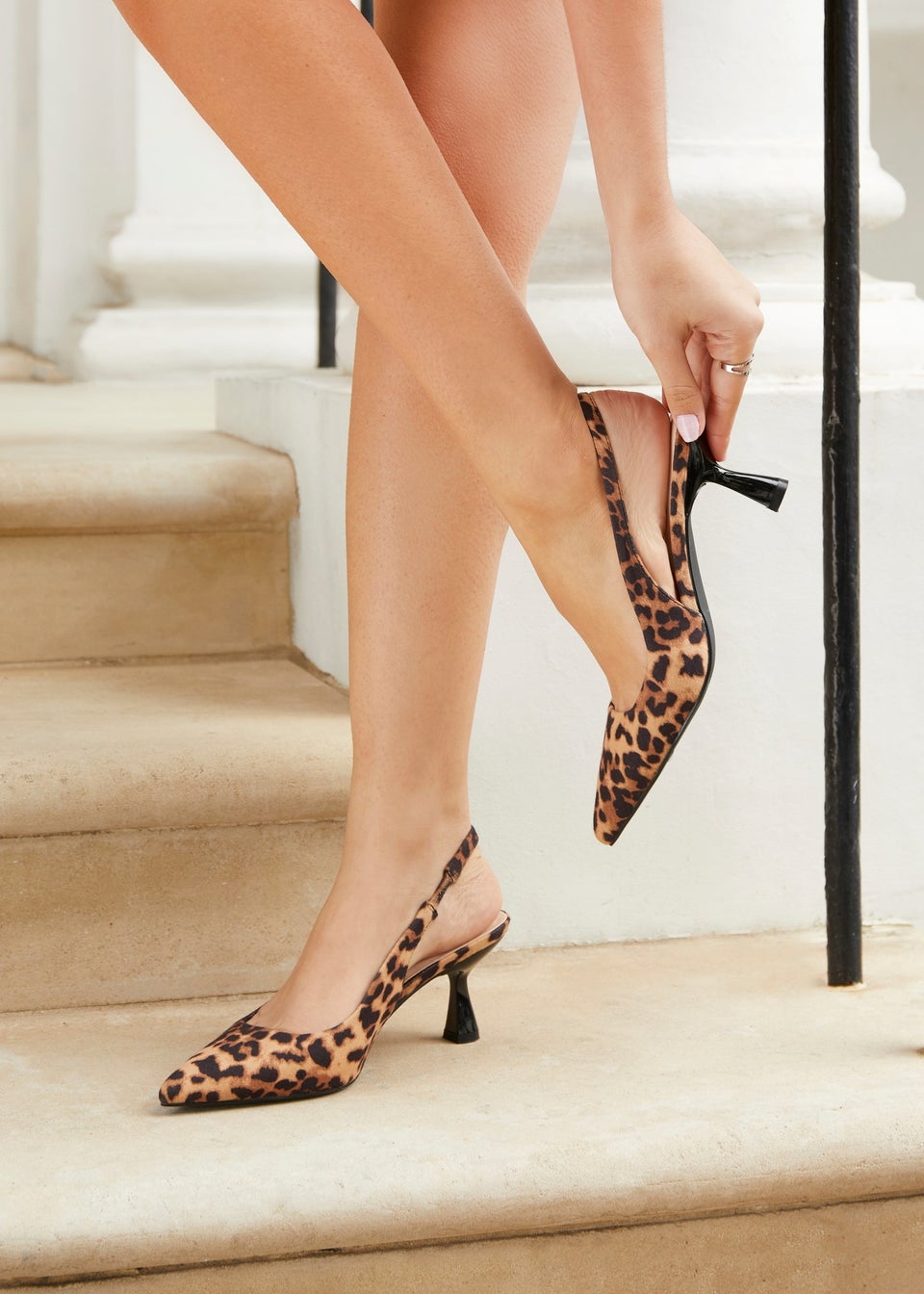
Investment and Acquisition: A Discerning Eye
Print quality is the whole ballgame. A well-printed leopard has soft edges and three or four shades in it. A bad one has two colours, hard edges, and a slight shine that makes it look like a plastic bag. You can usually tell from a photograph at arm’s length, so look at reviews with real customer photos before you buy online.
Construction next. Check the lining, because synthetic linings make your feet sweat and then squeak. Flex the shoe at the ball of the foot and see whether it springs back. Look at how the heel is attached: a screwed heel can be repaired, a glued one usually can’t. Those checks take a minute and they’re the difference between a pair you keep and a pair that ends up in a bag for the charity shop.
On price, my view is contrarian. You don’t need to spend £300. Mid-range brands do this print well now, and end-of-season sales are full of pairs at 60% off because leopard comes back every autumn and the stock has to move. Consignment sites are even better if you know your size in a given brand. I’ve bought two pairs secondhand, both in good condition, both under £40, and neither has fallen apart.
The Final Step: Owning Your Look
Start with an outfit you already trust. Black jeans, black jumper, shoes on. Wear it somewhere small first, a coffee run or the school gate, so that the first time isn’t in front of an audience you care about. You’ll feel self-conscious for about ten minutes and then you’ll forget, and that’s the whole point of the exercise.
Then build up. Add a colour, then a texture, then a second pattern if you fancy it. The rules in every styling guide are descriptions of what usually works, not laws, and the people who look best in leopard print are generally the ones who stopped checking whether it was allowed.
So: one loud thing, everything else calm, and a heel you can actually walk in. That’s the entire method, and it works whether the shoes cost £40 or £400.

