

Elevate Your Style with Burberry Heels: A Guide to Luxurious Footwear Fashion
In the realm of high fashion, footwear is not merely a functional accessory; it is the foundational statement that completes an ensemble, dictating posture, confidence, and narrative. Among the pantheon of luxury houses, Burberry stands as a bastion of British heritage, seamlessly weaving its iconic check and trench coat legacy into every facet of modern design. To step into a pair of Burberry heels is to engage with a century and a half of sartorial excellence, transformed into an object of contemporary desire. This exploration is not about passive admiration but an active inquiry into how these pieces architect personal style. We will dissect the elements that make them more than shoes—examining their design philosophy, their material science, their cultural footprint, and the tangible ways they redefine the wearer’s interaction with space and self-presentation. The journey from a classic stiletto to a bold platform is a journey through Burberry’s evolving identity, and by extension, a tool for crafting your own.
The Architectural Foundation: Design Philosophy and Heritage Codes
To understand the allure of Burberry heels, one must first apprehend the architectural principles upon which they are built. Burberry’s design ethos, particularly under recent creative visions, operates on a dialectic between tradition and disruption. The iconic Nova Check, once a purely functional lining for trench coats, has been recontextualized. In footwear, it appears not as a mere print but as an engineered component—a leather inlay on a heel, a subtle piping on a strap. This is a direct application of semiotic theory in fashion, where a symbol’s meaning is fluid and can be strategically repositioned. As cultural critic Roland Barthes explored in “The Fashion System,” garments are a language. Burberry speaks a dialect where heritage nouns (trench, check) are conjugated with modern verbs (deconstruct, amplify). The structural integrity of a Burberry heel often mirrors the clean lines of its outerwear. The heel itself—whether a slender spike or a geometric block—acts as a load-bearing column, designed for aesthetic impact and engineered for balance. This is not accidental; it reflects the same principles of tailoring that ensure a trench coat drapes perfectly. The Proportions are calculated, the balance point between the ball of the foot and the heel is meticulously studied to ensure wearability—a scientific approach to ergonomics married to haute couture sensibilities. References from the Victoria and Albert Museum’s archives on footwear design corroborate that the most enduring luxury designs solve a functional problem with artistic flair. Burberry heels solve the problem of making a bold statement while providing a platform (literal and metaphorical) for confident movement.

Material Alchemy: From Leather to Technological Innovation
The tactile experience of luxury is born from materiality. A Burberry heel is a case study in material alchemy. At its core is often calfskin or patent leather of a specific temper and finish, sourced from tanneries with environmental and ethical certifications—a non-negotiable standard for the modern luxury consumer, as outlined in reports from the Business of Fashion’s sustainability indexes. But the innovation lies beyond traditional leathers. Burberry has incorporated technical fabrics reminiscent of its gabardine invention: weather-resistant finishes, quilted textures that echo jacket linings, and innovative elastomers for straps that combine elasticity with durability. This is where objective, scientific explanation is crucial. The durability of a luxury good is quantifiable. Tensile strength tests on leather, abrasion resistance ratings for finishes, and fatigue testing for heel attachments are all part of the unseen R&D. A statement from Dr. Subramanian Senthilkannan Muthu, a leading authority in textile sustainability, emphasizes that “true luxury in the 21st century is synonymous with responsibility and innovation in material science.” When you examine the sole of a Burberry shoe, you might find a proprietary rubber compound designed for grip and longevity, a detail often overlooked but fundamental to the value proposition. Furthermore, the treatment of metals for buckles and hardware involves plating techniques that resist tarnishing, ensuring the piece remains pristine. This material narrative transforms the shoe from a seasonal accessory into a durable artifact, justifying its position in a cost-per-wear investment wardrobe. The knowledge that you are walking on a synthesis of heritage craftsmanship and cutting-edge material technology fundamentally alters the perception of the heel’s height from a challenge to an advantage.

The Psychology of the Silhouette: How Heels Command Space
Wearing a significant heel is a psychological act as much as a physical one. The elevation alters the wearer’s literal and figurative perspective, a concept explored in social psychology and even cinematic language. Think of the iconic click of heels in film noir, signaling arrival and authority. A pair of Burberry heels, with their distinct aesthetic, amplifies this effect. The change in posture is physiological: the calf muscle elongates, the spine straightens, the chest opens. This biomechanical shift triggers a cognitive feedback loop known as “enclothed cognition,” a term validated by research from Northwestern University, where the symbolic meaning of clothing influences the wearer’s psychological processes. The tailored precision and bold branding of Burberry carry connotations of authority, heritage, and avant-garde thinking. When you wear them, you are not just taller; you are conceptually aligning yourself with these traits. The silhouette created—a longer leg line, a defined arch—is a visual language understood across cultures. In her book “The Language of Clothes,” sociologist Alison Lurie notes that footwear often communicates practical and social status information faster than any other garment. A clean, sharp, luxuriously crafted heel communicates decisiveness and attention to detail. Burberry’s designs often feature architectural shapes—square toes, trapezoidal heels—that are inherently modern and assertive. They do not whisper; they articulate. This command of space is crucial in professional and social settings. It’s a non-verbal cue that establishes presence before a word is spoken. The confidence derived is not a superficial boost but a psychologically grounded result of interacting with a tool designed for performance.
Cultural Integration: From Royal Endorsement to Street Style Iconography
The journey of Burberry heels from the atelier to the global stage is mapped through its cultural integration. Burberry’s heritage includes royal warrants, embedding a sense of established, trusted quality. However, its modern relevance is cemented by its adoption and adaptation by diverse cultural spheres. Celebrity stylists, from those working with figures like Emma Watson to Song Hye-kyo, have utilized Burberry footwear to craft looks that bridge red-carpet elegance with intellectual sharpness. On platforms like YouTube, fashion analysts such as Alexa Chung have deconstructed Burberry runway shows, highlighting how the footwear grounds often fantastical looks, making them accessible. Conversely, street style photography from fashion weeks in London and Tokyo reveals how influencers re-contextualize these heels with denim or avant-garde silhouettes, demonstrating their versatility. This duality is Burberry’s strength. A Quora thread on “investment footwear” frequently cites Burberry for this very reason: a single pair can anchor a business formal look and, with a change of accessories, transition to a high-impact evening ensemble. The brand’s narrative is also shaped by cinematic and literary references. While not always directly featured, the aesthetic of a Burberry heel—polished, storm-ready yet elegant—fits the wardrobe of modern literary heroines or the sleek protagonists of a sophisticated thriller. This cultural permeation assures the consumer that they are investing in a piece with narrative longevity, not a fleeting trend. The heel becomes a connector between the wearer’s personal story and a broader, evolving cultural dialogue about British style in a globalized world.
Curating Your Narrative: Selection and Styling as a Personal Practice
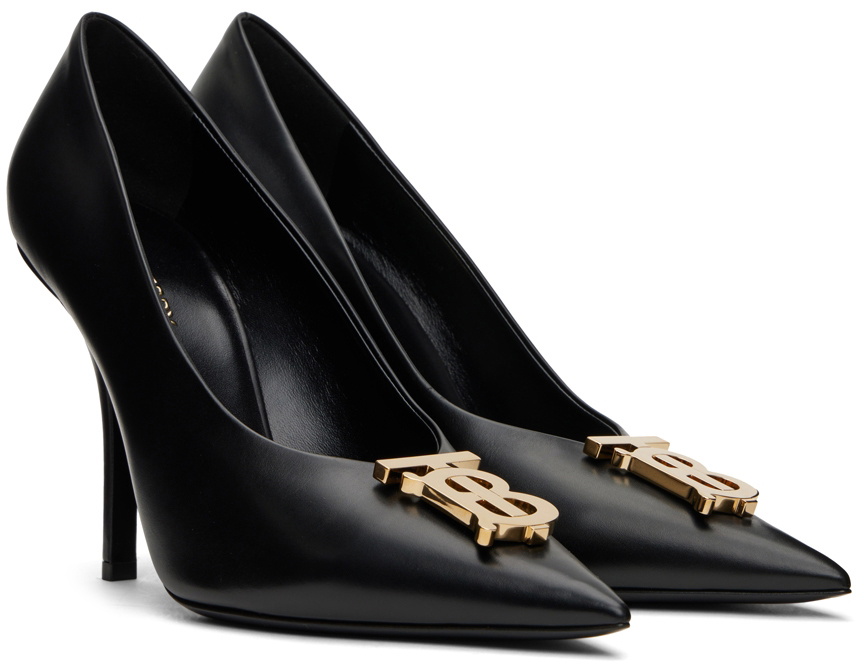
Acquiring a pair of Burberry heels is the beginning of a styling journey. The objective is to move beyond seeing them as a closed, perfect object and towards utilizing them as a dynamic variable in your style equation. The first consideration is silhouette profiling. A pointed-toe stiletto, like the classic Burberry design, extends the leg line and pairs impeccably with tailored wide-leg trousers or a midi skirt, creating a continuous, powerful vertical. A chunkier platform or block heel, often seen in the brand’s seasonal collections, offers stability and a more grounded, contemporary feel, perfect for balancing voluminous shapes or adding weight to a minimalist shift dress. The second is color and pattern decoding. A neutral black or tan leather version is a wardrobe keystone, a modular piece. A version incorporating the iconic check, however, is a statement. The key to wearing patterned luxury items, as advised by stylists on platforms like Who What Wear, is to let them be the focal point. Pair check-embellished Burberry heels with solid, monochromatic outfits in complementary tones—stone, black, navy—to allow the heritage motif to sing without creating visual noise. Third, consider the context of your lifestyle. The professional knowledge here is about cost-per-wear and versatility. A well-chosen pair should have the durability (backed by the material science discussed earlier) to transition from day to evening, from office to dinner. This is where the investment logic crystallizes. While the initial outlay is significant, the cost amortizes over countless wears and style iterations. Furthermore, staying informed on Burberry’s official channels or authorized retailers can provide access to seasonal sales or exclusive pre-collection offerings, allowing for strategic acquisition at a discounted price point compared to full-price, runway-immediate pieces.

The final step in elevating your style with these pieces is internalizing their purpose. They are not delicate objects to be preserved, but instruments of expression to be deployed. The scuff on the sole will tell a story; the perfect shine on the toe will reflect your readiness. In a world of fast fashion, choosing a Burberry heel is a deliberate act of curation—a selection of history, engineering, psychology, and art that aligns with the silhouette you wish to project into the world. It is the understanding that luxury, in its most potent form, is the seamless fusion of an external object with internal intent, creating a presence that is unequivocally your own.
