

Leopard Print Heels From Desk to Dinner, Honestly
My first pair of leopard heels cost £40 and looked like a printer had run out of ink. The spots were grey, the heel was hollow, and I wore them to a wedding where I had to stand on a lawn for two hours. I still think about that lawn.
The second pair cost three times as much and I’ve had them since 2019. Same print. Completely different shoe. That’s the thing nobody tells you about this pattern: it isn’t bold or subtle on its own. It’s whatever the shoe underneath it is.
Why the print keeps coming back
Leopard has been borrowed from big cats for a very long time. Wearing spotted fur used to be a claim about status, then about rebellion, then about glamour, and now it’s mostly about confidence. The pattern sits in a strange spot between neutral and shouty, which is why it never quite goes out of fashion and never quite becomes safe either.
A heel amplifies all of that. The shoe lifts you, changes your posture, and then the print adds a second message on top. Two signals at once. That’s why a leopard stiletto reads as a decision and a leopard sneaker reads as a joke.
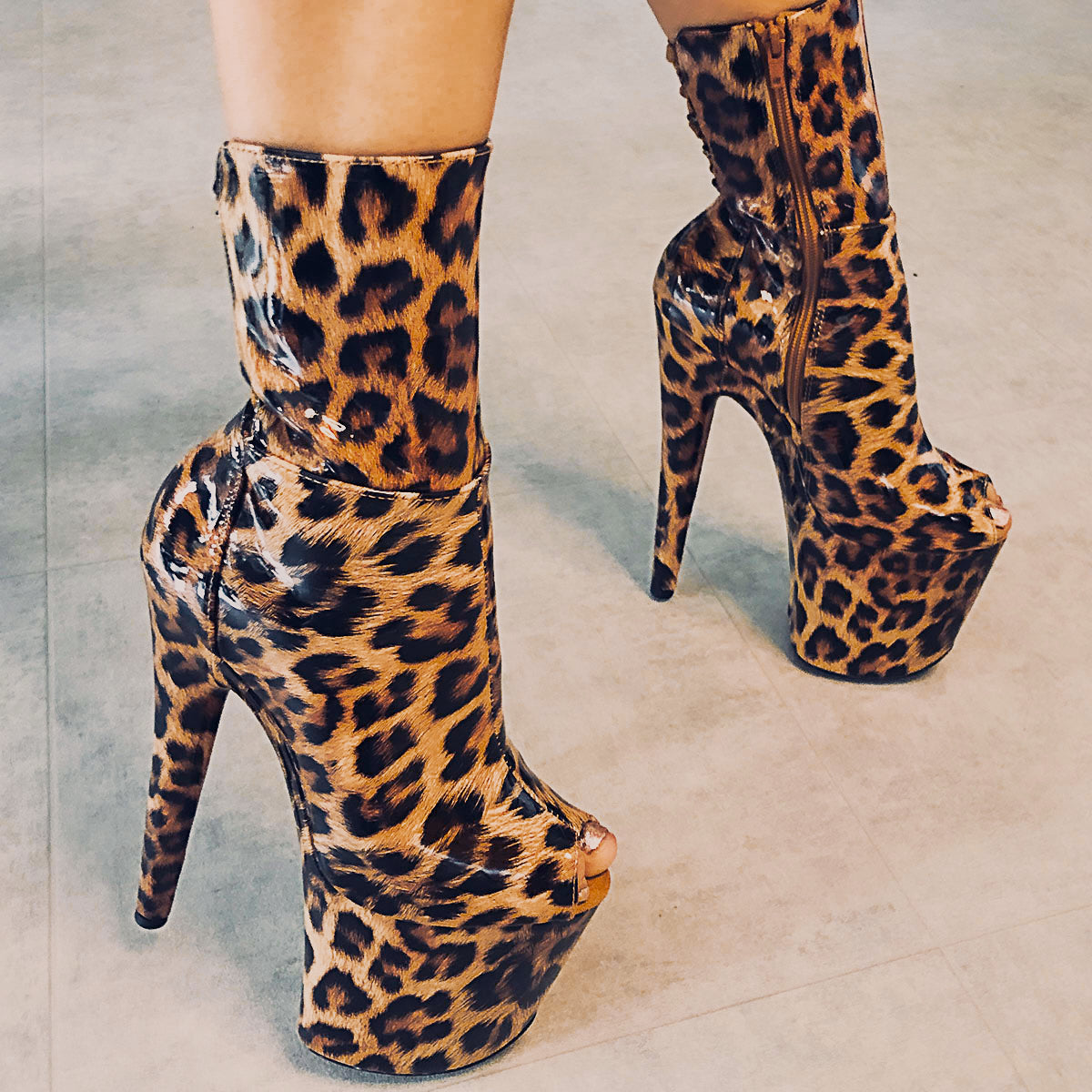
And yes, people will call it cheetah. The spots are rosettes with a darker ring around them, which makes them leopard. Cheetahs have solid dots. Nobody in a shop has ever cared about this distinction, so use whichever word gets you the pair you want.
Daytime: keep everything else quiet
Diane von Furstenberg called leopard a neutral. I love the quote and I don’t believe it. On a coat, maybe. On a shoe at 9am on a Tuesday, it’s a statement, and statements need containing or the whole outfit turns into a costume.
The office version
Start with the plainest clothes you own. A white shirt tucked into straight black trousers, or a camel midi dress with no print anywhere. Then put the heels on last. If the outfit works without them, it’ll work with them, and the shoes become the one loud thing rather than the fourth loud thing.
What I’d avoid at work is a leopard shoe with a leopard bag. It’s the fastest way to look like you bought a matching set in 2011. Also skip anything with a logo plate on the toe. Two focal points on one foot is one too many.
Heel height is a practical question during the day, not a stylistic one. A 50mm block is fine from the school run to a client lunch. A 90mm stiletto is a shoe you wear from the car to the chair and no further. My daytime pair is a 55mm slingback and I’ve walked a mile in them without regret.
Weather changes the answer too. In October, leopard with black opaque tights and a trench coat is one of the few outfits that looks deliberate on a wet Tuesday. In July, the same shoe with bare legs and a linen dress looks like you’re trying too hard. Season matters more than most style writing admits.
One combination I’d push you toward: straight-leg blue jeans, a plain grey knit, and the heels. It shouldn’t work. It does, because the denim keeps the print from getting precious about itself.

Evening: stop containing it
What to wear with them after dark
At night the rules flip. Now the shoe can be the loudest thing in the room and everything else can serve it. A black silk slip dress and a leopard heel is the whole outfit. It works because the dress has no competing idea in it.
Rich colour is the other route. Deep green velvet, oxblood, a dark navy satin skirt. The print reads warmer against those than against black, and warmer is what you want under restaurant lighting.
Where it goes wrong is texture on texture. Sequins plus leopard is a headache. Lace plus leopard is a headache with a bow on it. If your dress has a lot going on, wear a plain shoe and save the leopard for Thursday.
I wore mine to a birthday dinner last winter with a plain black wool dress and a coat I didn’t take off all night. Three people mentioned the shoes. Nobody mentioned the dress, which is exactly the trade you’re making when you wear this print after six o’clock.
Picking a pair that won’t date in a year
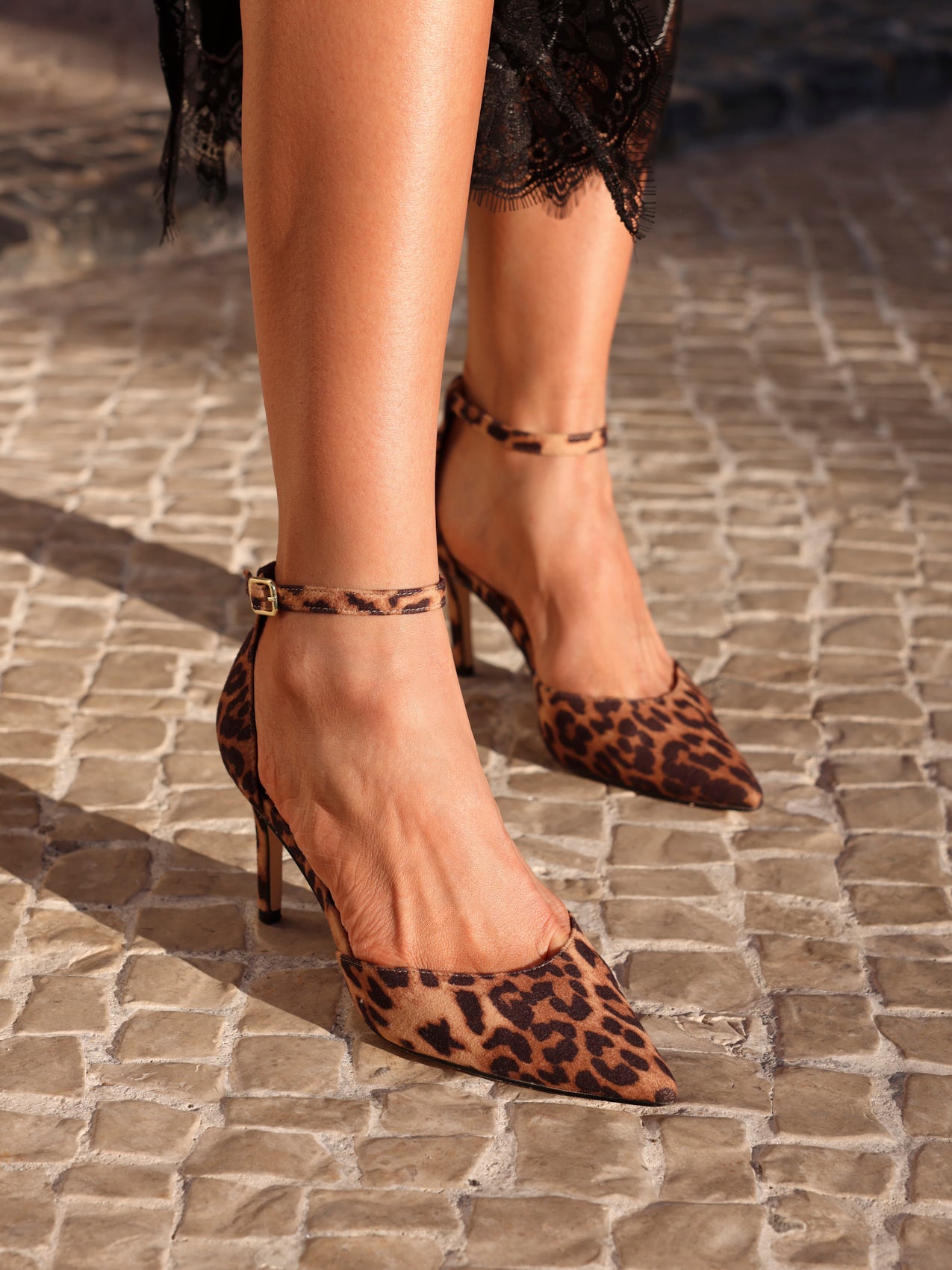
Scale is the first thing to look at. Small, dense spots read calmer and go with more. Big abstract spots read fashion-forward and will look like a specific season in about eighteen months. I have one of each. The small-spot pair gets worn ten times more often.
Colourway second. The classic tan and black is safe for a reason. Grey and black is cooler and works better with tailoring. Pink and black is fun for about two summers. If you’re only buying one pair, buy tan.
Silhouette third, and this is where the money actually goes. A pointed pump lengthens the leg and is the most useful shape. A slingback is softer and more forgiving across the instep. An ankle boot in leopard is a great autumn shoe and a terrible summer one. Try to buy the shape you’d buy in black, because that’s the shape you already know works on your foot.
Look at the print itself before anything else. Cheap versions have a repeating tile you can spot across the vamp, and the spots get cut off hard at the seam. Expensive ones are placed so the pattern runs continuously around the shoe. Hold them at arm’s length and see if your eye catches a repeat. If it does, put them down.
Also check where the print lands on the toe. Good pairs keep a full rosette on the vamp. Bad ones slice a spot in half right where you look at it, and once you’ve seen it you can’t unsee it. I’ve rejected two pairs on that alone.
What it should cost
You can spend £40 or £400 on the same pattern and the difference is entirely in the shoe underneath it. Leather insole, firm heel counter, a sole that isn’t cardboard. Those three things are what you’re paying for, and you can check all of them in the shop in about a minute.
Sales are kind to this category because it’s seasonal. January and July are when the statement stock gets marked down, and leopard is usually the first thing to go because buyers get nervous about it in bulk. That’s your advantage.
Resale is even kinder. Leopard heels get bought for one event and then sit in a box, so the secondhand market is full of pairs with maybe four wears on them. Check the heel tap and the inside of the heel counter in the photos. Those are where the truth shows.
Then budget for upkeep. Taps cost about £8 a pair to replace and should be done the moment you hear a click on tile. Resoling runs £40 to £60, and a cobbler can usually save a scuffed toe with a tinted cream. Nobody does this and everybody should.
One last thing, and it’s the boring one. Spray them before the first wear if they’re suede or fabric. Leopard print in a pale colourway picks up denim dye from a hem and road dirt from a wet pavement, and neither comes out. Mine have a grey shadow on the left toe that I’ve decided to call character.
Buy one good pair. Wear them until the spots stop being a statement and start being your shoes. That’s when it works.
