

Booties Heels: The Search Term Nobody Says Out Loud
“Booties heels” is bad English. Nobody says it out loud. But it’s what people type into a search bar when they want an ankle boot with a heel, so here we are. I’ve owned six pairs in ten years, worn four of them until the lining went, and given the other two away. This is what I actually learned from that.
Ankle boots are the most useful shoes I own. Not the prettiest. The most useful.
What a bootie really is, and why the heel does the work
A bootie stops above the ankle bone and below the calf. That’s the whole definition. What makes it a wardrobe piece rather than a novelty is the last: the shape the shoe is built on. A pump is cut flat and open. A boot has height to hold. An ankle boot has to do both in a short run of leather, which is why cheap ones look like slippers with a heel glued underneath.
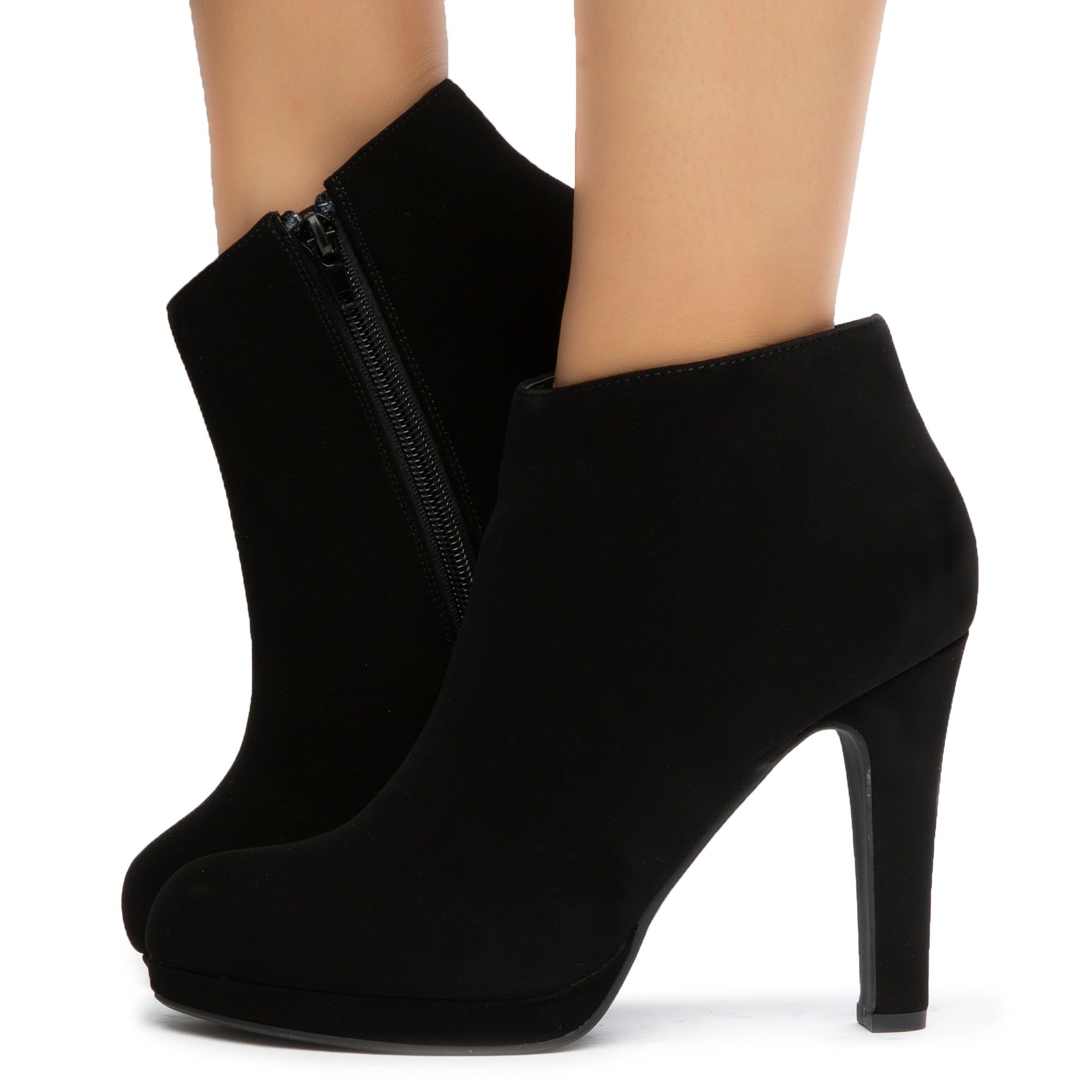
The heel changes how you stand, obviously. A 60mm block puts your weight where your foot can take it. A 100mm stiletto puts it on the ball of your foot and your toes, and after two hours your gait flattens out into something closer to a shuffle. I know which one I’d rather wear across a train station.
The other thing the closed shape gives you is forgiveness. Cold feet, a bruise on your toe from a dropped suitcase in October, an ankle that swells when you fly. Nobody sees any of it. Sandals are honest. Booties are diplomatic.

Spring: the awkward six weeks
March and April are the hardest months to dress for. It’s warm by noon and cold by six. Sandals are a lie and tall boots feel like a hangover from January. This is the bootie’s best moment.
Go lighter than you think. Blush suede, tan leather, a washed grey. I have a pair in a pale stone colour that I bought on a whim and wore constantly from March to May, mostly with a denim skirt and a grey cardigan, which is not a fashionable outfit but works. The trick with light colours is to spray them before the first wear, because one wet pavement in early spring will put a grey ring around the toe and it never fully comes out.
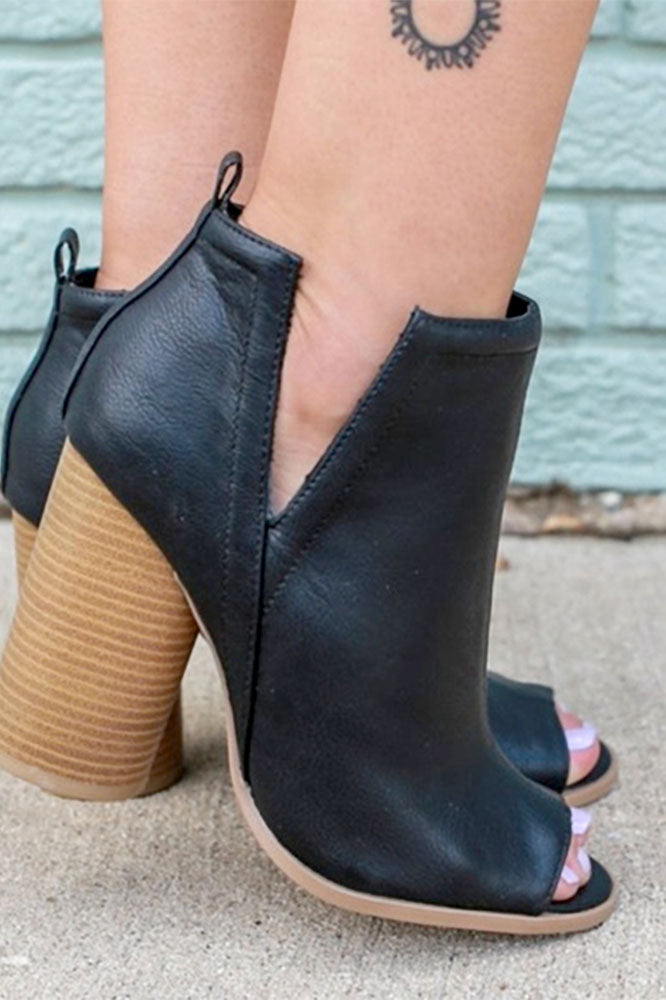
An open-toe or cut-out front buys you another month of wear on either side of summer. Mine have a slingback instead, which does the same job with less risk of a blistered toe.
Summer: yes, really, and here’s how
Boots in July sounds wrong until you try it once. A short sundress with a heeled ankle boot looks off-balance in a good way, like you dressed in a hurry and it worked out. The trick is keeping the boot light: cream leather, bone suede, a woven texture, anything that isn’t black.
Skip PVC. I bought a clear pair in 2022 thinking they’d be fun for a wedding. They fogged up from the inside within twenty minutes and my feet were swimming by the speeches. They went to a charity shop that autumn.
Where it does work: a low block or a wedge, worn with tailored shorts and a linen shirt to dinner, or over a swimsuit with a big shirt on the way back from the beach. Both of those are real outfits I’ve worn, not styling theory.
Autumn: this is what they’re for
September to November is the reason the category exists. Deep colours read better than they do in summer, and the leather stops looking flimsy when there’s a coat above it. Burgundy, forest green, a burnt ochre if you can find one that isn’t orange.
My workhorse pair is black suede with a 60mm block, bought in September 2019 for about £180. They’ve been resoled twice. The lining is going at the heel and the suede has gone shiny where the strap of my bag rubs, but I still wear them three days a week from October. That’s roughly £6 a year, which is a better number than the £40 pair I bought as a backup and threw out after one winter.
Wear them with opaque tights and a wool skirt, or with straight jeans tucked in, or under a wide-leg trouser where only the toe shows. That last one is my favourite and almost nobody does it.
Winter: get the sole right and the rest follows
Most winter booties fail at the bottom. Smooth leather or a hard plastic sole on wet stone is a slip waiting to happen, and no amount of looking good compensates for going down on a crossing in front of a bus. Look at the tread before you look at the toe. If it’s flat, walk away or budget for a cobbler to add a rubber sole for about £30.
Lined pairs are warmer, but they also make the fit tighter, so try them with the socks you’ll actually wear. I made the mistake of trying mine on in thin tights in a warm shop and then discovered in February that they wouldn’t take a wool sock at all.
Salt is what kills them. Rinse the sole edges when you get in, dry them away from a radiator, and keep a tin of conditioner by the door. I’ve lost one pair to salt cracks and it’s a stupid way to lose £200.

Buying a pair without wasting money
Try them at the end of the day. Feet swell, and an ankle boot that fits at 9am will pinch by six. Walk on a hard floor, not carpet, and listen: a clicking heel means a loose tap that’ll need replacing within a year. Bend the shoe where your toes bend. If the sole fights back, so will the shoe.
Height is a personal thing and the internet is wrong about it. The received wisdom is that a stiletto bootie lengthens the leg, and for some people it does. On me, and on most people I’ve stood next to, a 60mm to 70mm block looks longer, because the top line sits flush against the ankle instead of gaping. The ankle gap is what makes legs look short, not the heel.
Price isn’t a reliable guide either. I have a £90 pair from a high-street brand that has outlasted a £260 pair from a label that shall stay nameless. What separated them was the lining: leather inside, not synthetic, and a heel that was screwed on rather than glued.
If you’re buying secondhand, ask for photos of the heel tap and the inside heel counter. Those are the two places wear shows first. Vinted and Vestiaire both have good stock in January, when people clear out what they got for Christmas.
One pair in black or dark brown, one in something lighter for spring. That’s the whole shopping list. The third pair is where the money goes wrong.
And honestly, if you only wear heels twice a month, buy the block. The stiletto is for the two evenings a year when someone else is driving.
