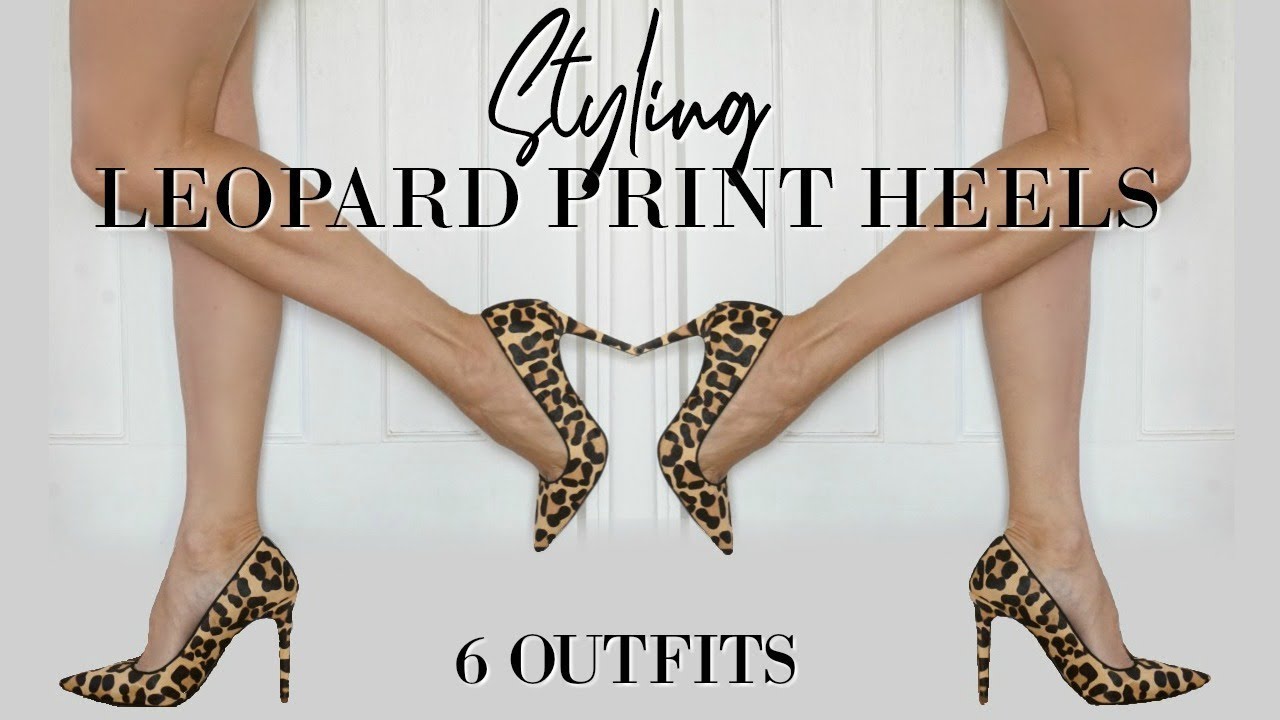
Mastering the Art of Cheetah Print Heels
Let’s discard the notion that animal prints are a fleeting trend or a sartorial gamble. To wear cheetah print heels is to engage in a dialogue with fashion history, psychology, and personal power. This is not about mere adornment; it’s about mastering a visual language that communicates confidence, primal energy, and sophisticated daring. The journey from a wardrobe curiosity to a cornerstone of personal style requires understanding its essence, its history, and the precise art of its deployment. This mastery transforms the wearer, turning a simple step into a statement.
The Primal Allure: A Pattern Rooted in Biology and Status
The power of the cheetah print—often used interchangeably with leopard print in fashion parlance, though zoologically distinct—stems from a deep, almost unconscious, biological and sociological resonance. Scientifically, patterns in nature, like the spots of a big cat, serve as camouflage, breaking up an animal’s outline. When translated to human attire, this function inverts. Instead of hiding, it highlights. It signals that the wearer is borrowing the attributes of the apex predator: speed, agility, lethality, and a regal command of their environment. As noted in evolutionary psychology discussions on platforms like Quora and in texts such as Desmond Morris’s “The Human Zoo,” humans have long used animal skins and patterns as talismans of power and status. A chieftain’s lion pelt or a hunter’s trophy are prehistoric precursors to the modern cheetah print heels. The pattern is inherently tied to notions of dominance and desirability. When placed on the heel—an object that literally elevates the wearer, alters posture, and emphasizes the calf—this primal symbolism is amplified. It’s a fusion of natural authority with human-made artistry, creating an object that is both wild and refined.

From Silver Screen to Sidewalk: A Legacy of Defiant Glamour
To understand the cultural weight of the cheetah print, one must trace its cinematic and celebrity lineage. It was never the pattern of the wallflower. In the 1950s, it was synonymous with the dangerous, sensual glamour of Hollywood starlets and pin-up models. Think of Marilyn Monroe in a lush coat or Jane Russell in a provocative pose—the print suggested a woman in control of her sexuality, untamed by conventional expectations. This association with defiant femininity continued through the decades. In the 1980s, icons like Joan Collins on “Dynasty” used it as armor in boardroom battles, blending corporate power with feline ferocity. The pattern’s rebellious streak was cemented by punk and rock ‘n’ roll royalty. As Debbie Harry of Blondie once stated in an interview, animal print was a way to “look tough and beautiful at the same time, to not be sweet.” This historical trajectory proves that cheetah print heels are not a passive choice. They connect the wearer to a legacy of women who used fashion as a tool of assertion. When you strap on a pair, you are, in a sense, channeling this unbroken line of audacious spirit. It’s a sartorial heirloom of attitude.
The Architecture of Impact: Silhouette, Proportion, and Context
Mastery lies in the application. The raw power of the pattern must be harnessed through intelligent design and styling. The silhouette of the heel itself is paramount. A sleek stiletto elongates the leg, creating a line as graceful as the animal itself, while a chunky block heel or platform offers a more grounded, assertive, and fashion-forward interpretation, often seen in designs from brands like Gucci or Saint Laurent. Proportion is key. The famous fashion dictum, often attributed to Coco Chanel, advises to “look in the mirror and remove one accessory.” This is especially crucial with a bold pattern. Let the cheetah print heels be the soloist. Anchor them with neutral, solid-color clothing—a little black dress, tailored cream trousers, or dark denim. This creates a canvas that allows the shoes to shine without creating visual chaos. Conversely, for the truly adept, clashing patterns can be a high-wire act of style. Pairing the spots with subtle stripes or a different geometric pattern requires a keen eye for scale and color harmony, a technique frequently explored in fashion literature from institutions like the Fashion Institute of Technology. Context transforms the shoe. The same pair that commands attention at an evening gallery opening can be tamed with cuffed jeans and a simple tee for a chic daytime look, demonstrating unparalleled versatility.
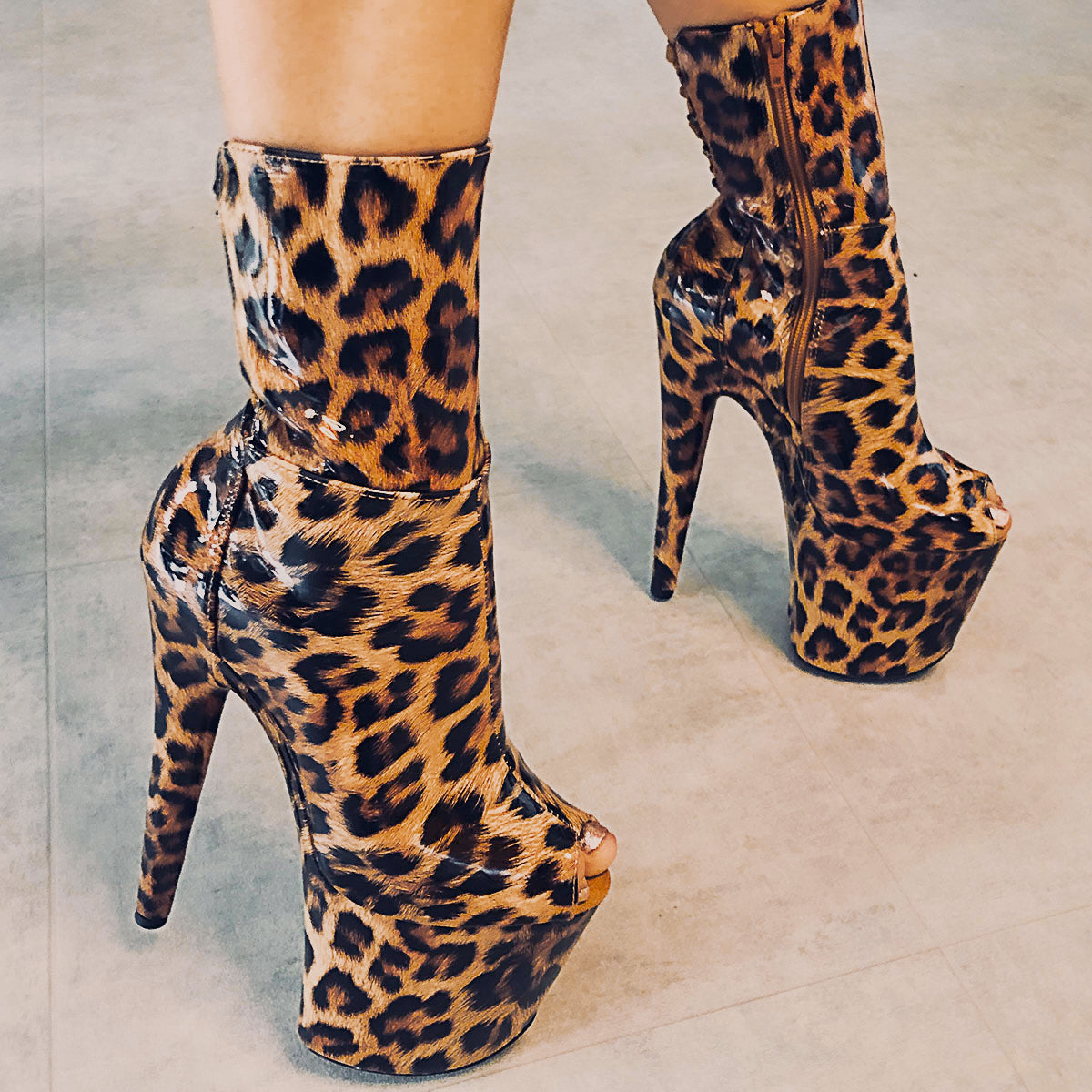
The Psychology of the Step: Confidence as a Required Accessory
Perhaps the most critical component is intangible. Cheetah print heels demand a specific mindset. They are what social psychologists might call “enclothed cognition”—the systematic influence that clothes have on the wearer’s psychological processes. Wearing them isn’t just about how others perceive you; it’s about how you perceive yourself. The shoes impose a certain posture, both physically and mentally. As style philosopher and author Diana Vreeland famously quipped, “The eye has to travel.” These heels ensure it does, and knowing that changes your carriage. You walk with more intention. You own the space you enter. This isn’t mere conjecture; YouTube style analysts like Alexa Chung and fashion psychologists on platforms like Twitter often discuss how “power pieces” alter self-perception and performance. The print’s inherent boldness acts as a permission slip to embrace a more daring, confident version of oneself. If you feel hesitant, the shoes will betray you. Therefore, mastering them is an exercise in self-assurance. They are not for days when you wish to fade into the background; they are for days when you intend to leave a mark.
Investment and Intelligence: Beyond the Trend Cycle
In an era of fast fashion, a well-crafted pair of cheetah print heels represents a intelligent investment in a timeless pattern. Unlike micro-trends that expire seasonally, animal print, as documented by fashion historians on Baidu Baike and in the archives of Vogue, undergoes a perpetual renaissance. It falls in and out of “peak trend” but never becomes obsolete. This longevity justifies seeking quality. Look for shoes with genuine leather uppers, sturdy construction, and comfortable insoles. The print should be clear, not blurry, and the dye job should be even. This is where professional knowledge pays off. Understanding materials and craftsmanship ensures your purchase endures. And while luxury brands offer exquisite options, the democratization of fashion means high-street brands and dedicated online retailers frequently offer stunning, well-made versions at accessible, even discounted, price points. The savvy shopper knows to hunt for seasonal sales or outlet collections, where a classic pair of leopard-print pumps can often be secured for a fraction of its original cost, making high style remarkably attainable. The goal is to acquire a piece that feels luxurious and lasts, not a disposable item that loses its spots after two wears.

The Final Word: Your Signature on the World
So, what does it mean to master the art of cheetah print heels? It is to recognize them as more than footwear. They are a tool for narrative, a piece of cultural shorthand, and a catalyst for inner transformation. They carry the whisper of the savanna and the roar of old Hollywood. They teach lessons in balance, history, and self-presentation. When you select the right pair, style them with thoughtful precision, and stride forth in them with unapologetic confidence, you are not just wearing a shoe. You are authoring a moment. You are declaring that your style has depth, history, and teeth. In a world of bland conformity, that mastered step—confident, poised, and punctuated with that iconic pattern—becomes your unmistakable signature.