

Elevate Your Style with Burberry Heels: A Guide to Chic and Timeless Footwear
In the realm of fashion, where trends flicker and fade with the seasons, the pursuit of enduring style remains a constant. It is a quest not for the ephemeral, but for pieces that anchor our identity, that speak a language of confidence and cultivated taste. Footwear, particularly, holds a unique power—it is the foundation upon which an ensemble is built, the final punctuation mark of a sartorial statement. Among the pantheon of luxury houses, Burberry has long mastered the art of marrying heritage with contemporary relevance. Their approach to the heel is no mere exercise in shoemaking; it is a philosophy of design where British sensibility meets global sophistication. To step into a pair of Burberry heels is to embrace more than an accessory; it is to adopt a perspective on elegance that is both resilient and refined.

The Architectural Foundation: Where Form Meets Biomechanics
The allure of a high heel is often distilled to its aesthetic silhouette—the elongation of the leg, the shift in posture. However, the true mark of luxury, as exemplified by Burberry heels, lies in the unseen engineering. The relationship between form and function is not a compromise but a synergistic dialogue. From a scientific standpoint, the human foot is a complex structure of 26 bones, 33 joints, and over a hundred muscles, tendons, and ligaments. Designing a heel that respects this architecture while achieving a desired aesthetic is a feat of ergonomic design. Brands like Burberry invest significantly in last-making—the mold around which a shoe is constructed. The last determines the toe box width, the arch support, and the pitch of the heel. A well-crafted last, often developed from extensive foot mapping data, ensures that the weight distribution across the ball of the foot is optimized, mitigating the strain often associated with elevated footwear. This is not merely about comfort; it is about sustainability of wear. As noted in biomechanics literature from institutions like the University of Massachusetts Amherst, improper heel design can lead to long-term postural issues. Therefore, the choice of a Burberry heel is, perhaps unconsciously, a choice for a design philosophy that considers the body’s mechanics as seriously as it does the seasonal color palette. The premium materials—supple calfskin, resilient soles—further mold to the foot’s contours, creating a personalized fit over time. This scientific underpinning transforms the heel from a beautiful object into a wearable, enduring component of one’s wardrobe.
A Canvas of Codes: Deciphering Burberry’s Design Language
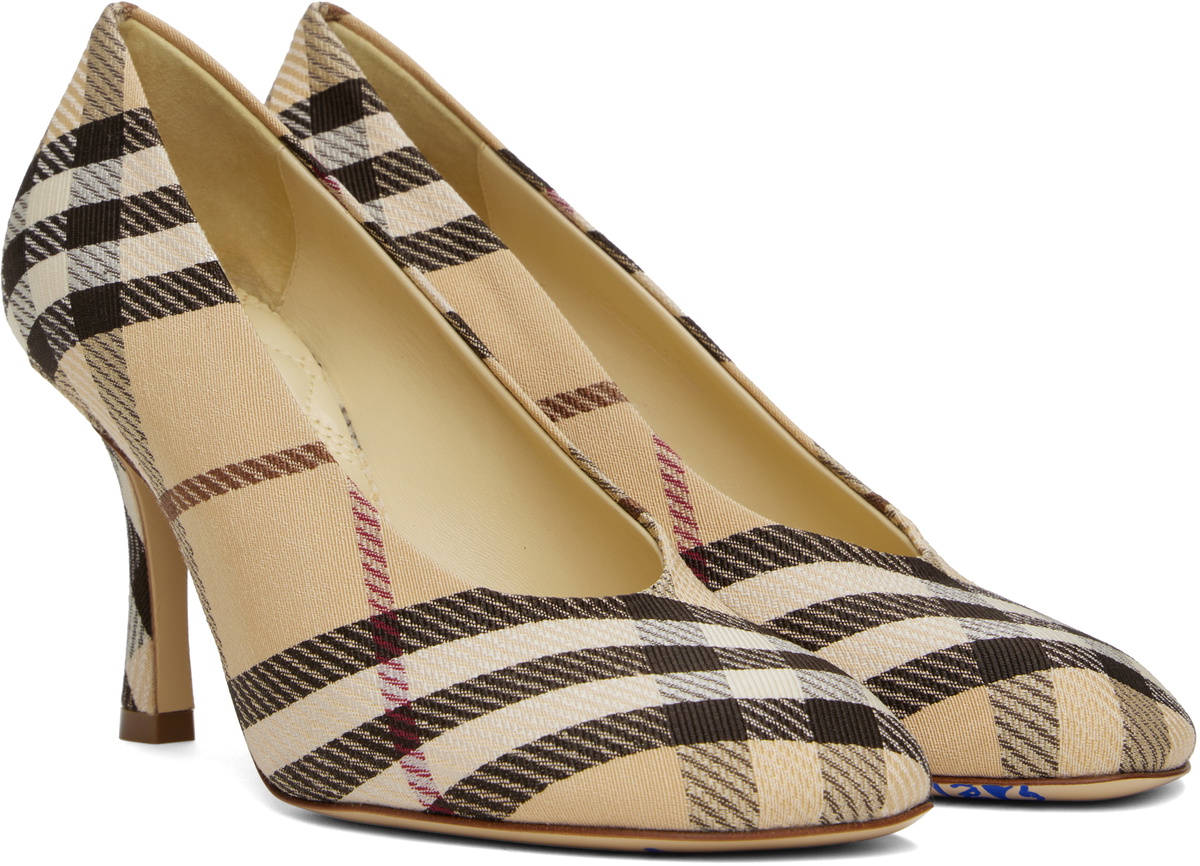
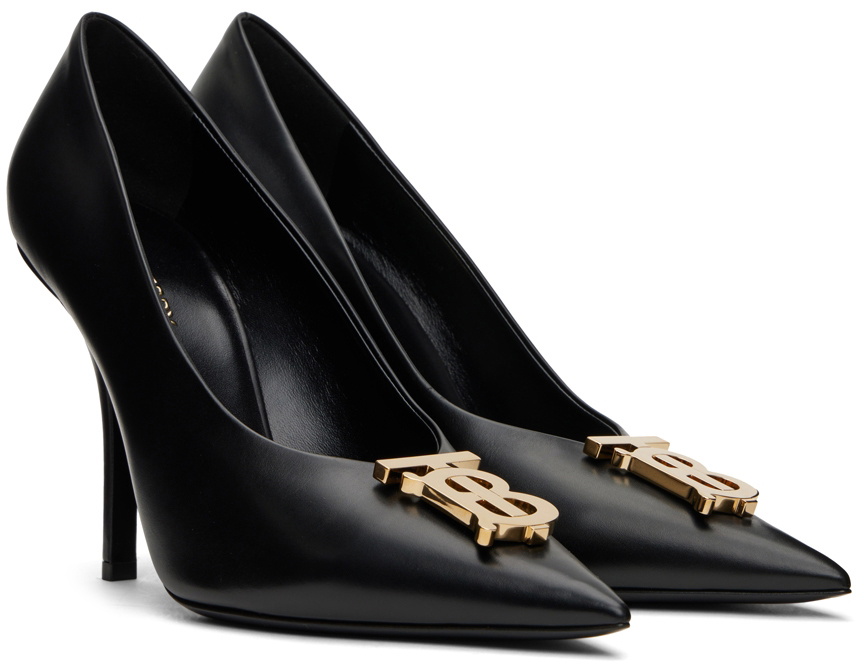
Every luxury house communicates through a visual lexicon, and Burberry’s is one of the most instantly recognizable in the world. To understand a Burberry heel is to understand the narratives woven into its very fabric. The most potent symbol is, of course, the iconic check. Originally introduced in the 1920s as a lining for the brand’s trench coats, the Nova Check—a pattern of black, white, and camel stripes intersecting with a red accent—transcended its utilitarian origins to become a global emblem of British style. Its application on heels is never accidental; it is a statement of heritage, a direct lineage to the brand’s equestrian and outerwear roots. Beyond the check, the TB monogram, conceived under the creative direction of Riccardo Tisci, represents a modern evolution. Drawing from the archives of founder Thomas Burberry’s initials, the interlocking ‘T’ and ‘B’ create a contemporary graphic identity. When embossed on the leather of a stiletto or etched into a heel cap, it signals a fusion of legacy and forward-thinking design. Furthermore, Burberry often employs architectural lines and military-inspired details—straps, buckles, clean silhouettes—that echo the structured elegance of its iconic trench coats. As fashion historian Dr. Rebecca Arnold of the Courtauld Institute of Art observes, “Burberry’s power lies in its ability to make the traditional feel modern, to render the familiar codes of British dress into something sharp and desirable.” This design language is not static; it is a dialogue. A pair of Burberry heels might feature the classic check on a sleek pump, making a bold, confident reference, or it might subtly incorporate the monogram on a minimalist sandal, offering a whisper of branding to the discerning eye. Each design choice is a word in a sentence about identity.
The Psychology of the Heel: An Extension of Self
Why does a particular shoe resonate so deeply? The answer often lies beyond the physical object, in the realm of psychology and social semiotics. A heel, especially one from a house like Burberry, operates as a prosthetic extension of the self. Sociologist Pierre Bourdieu’s concept of ‘cultural capital’ is relevant here: possessions act as markers of taste, education, and social standing. Choosing a meticulously crafted Burberry heel over a fast-fashion alternative is an exercise in accruing and displaying this capital. It signals an understanding of quality, heritage, and nuanced style. Moreover, the act of wearing heels has been extensively analyzed. Professor Carolyn Mair, author of “The Psychology of Fashion,” notes that clothing directly impacts cognitive processes—a phenomenon known as “enclothed cognition.” The specific height, stability, and design of a heel can alter the wearer’s posture, gait, and consequently, their mental state. A sturdy block heel from Burberry’s collection may impart a sense of grounded authority, perfect for a day of decisive meetings. A delicate stiletto, conversely, might evoke a feeling of refined glamour and precision. The first-person experience is transformative. As you fasten the strap of a Burberry sandal, you are not just putting on a shoe; you are assuming a role, a mindset. The second-person perspective is equally powerful: when others see those distinctive design codes, they receive a curated message about your aesthetic allegiance. In films, from the power dressing of “The Devil Wears Prada” to the sophisticated ensembles of James Bond films, specific footwear is used as shorthand for a character’s traits. Your Burberry heels perform a similar narrative function in your own life’s story.
Curating Your Collection: A Strategic Approach to Investment
Building a wardrobe of timeless footwear is an exercise in strategic curation, not impulsive acquisition. The principle of cost-per-wear, a cornerstone of sustainable fashion economics, is paramount here. A $50 heel worn twice before discomfort sets in has a cost-per-wear of $25. A $800 pair of Burberry heels, crafted from superior materials and ergonomic design, worn consistently over five years for special occasions and confident workdays, dwindles to a negligible figure while delivering incomparable value in style and comfort. The key is intentionality. Begin with a foundational neutral. A sleek black leather pump, perhaps with a subtle TB monogram detail, is the sartorial equivalent of a little black dress—infinitely versatile, universally appropriate. From there, consider a seasonal statement. This could be a heel featuring the iconic check, a pattern that, according to trend analytics from sites like Business of Fashion, cycles in and out of “peak” trendiness but never truly disappears from the lexicon of classic style. Finally, assess a modern silhouette, such as a sculptural block-heel mule or an ankle-wrap sandal, which reflects Burberry’s contemporary design direction. This tripartite approach ensures coverage for a spectrum of occasions while maintaining a cohesive aesthetic thread. It is also worth monitoring official Burberry outlets, authorized retailers during seasonal sales, and reputable luxury consignment platforms. The arrival of new collections often prompts discounts on previous seasons’ styles, which, in the context of timeless design, are merely earlier chapters of the same enduring story. Investing in these pieces during promotional periods is an astute way to acquire exceptional quality at a more accessible price point, bringing professional-grade style into your orbit.
Beyond the Shoe: The Ecosystem of Elegance
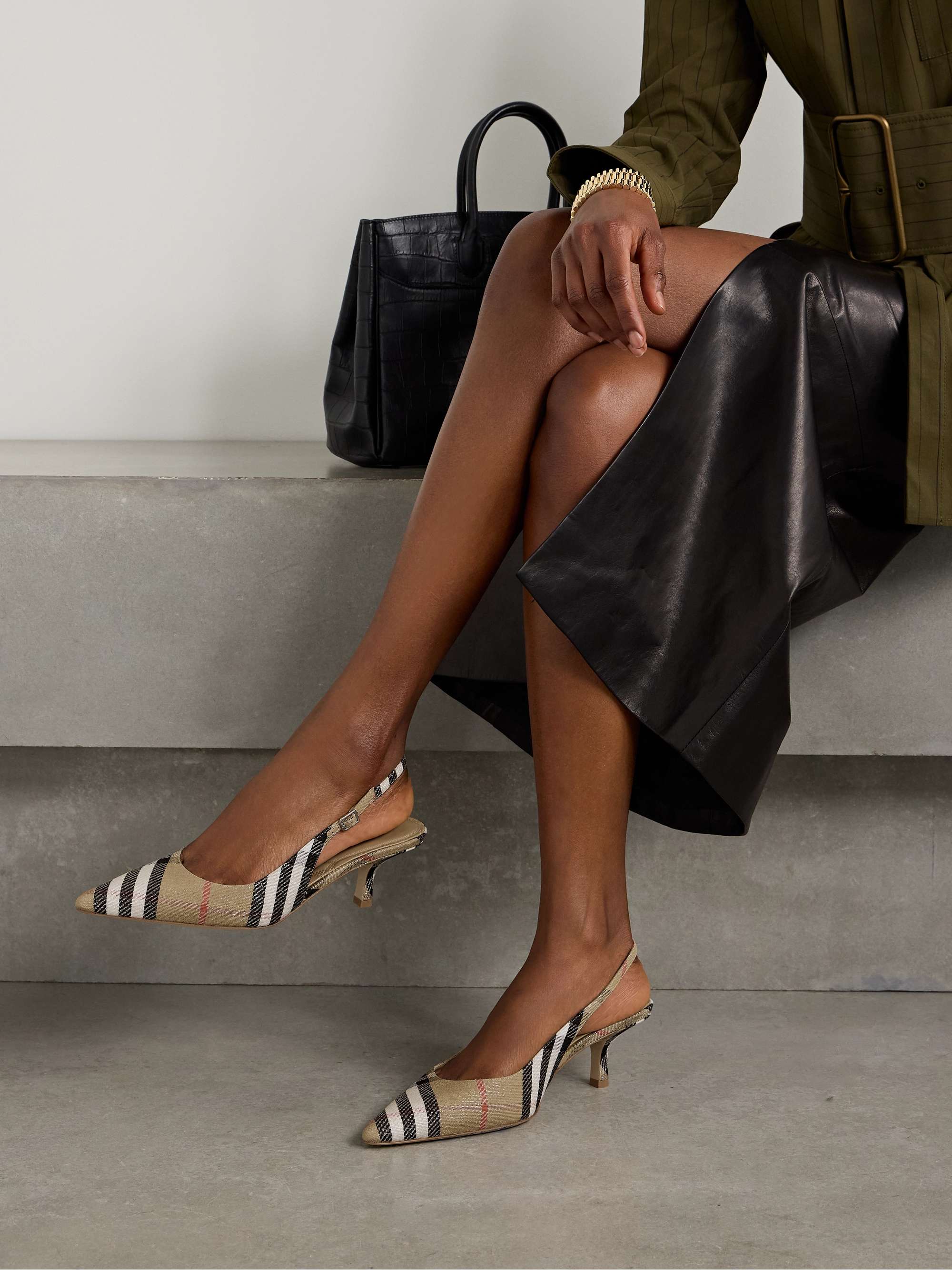
The journey with a luxury item extends beyond the point of purchase; it is nurtured through care and integration. A pair of Burberry heels deserves a considered ecosystem. Proper storage is the first defense against time. Using shoe trees, preferably cedar ones that absorb moisture and maintain shape, is crucial. Storage should be in a cool, dry place, away from direct sunlight which can fade distinctive fabrics like the signature check. Professional cleaning and protective sprays applied by experts familiar with luxury materials will prolong the life of the leather and fabrics. But care is also conceptual. How you style these heels completes their narrative. The beauty of Burberry’s design language is its chameleonic quality. Those iconic check heels can be paired with crisp, minimalist tailoring—a white shirt and black trousers—to let the shoes be the unequivocal focal point, a technique often showcased on fashion authority websites like Vogue Runway. Conversely, they can be boldly paired with other patterns in a display of fashion confidence championed by style icons like Olivia Palermo. The monogrammed sandal might elevate a simple summer dress, while a classic leather pump grounds a bold, printed midi skirt. The third-person perspective in this scenario is one of observed harmony. An outfit is a composition, and the heels are the bass note—providing rhythm, foundation, and depth. They should not always shout, but their presence should always be felt, structuring the silhouette and elevating every other element.
Ultimately, the path to timeless style is paved with intention. It is a conscious departure from the cyclical churn of disposability towards a curated permanence. Burberry heels represent more than footwear; they are tangible pieces of a design heritage, engineered for the human form and encoded with a century of aesthetic discourse. They offer a dialogue between the past and the present, between the body and its adorned extension. To choose them is to make a declaration—not of mere consumption, but of discernment. It is an acknowledgment that true style is not worn; it is inhabited, one confident, well-crafted step at a time.
