

Step Out in Style: Top Travel Walking Shoes for Women
Embarking on a journey, whether it’s navigating cobblestone streets in Europe or exploring a bustling Asian market, demands more than just an itinerary; it requires a foundation of confidence literally from the ground up. The quest for the perfect pair of stylish walking shoes for travel women’s is not merely about aesthetics or comfort in isolation. It is a deliberate search for a hybrid that merges biomechanical support with design intelligence, ensuring that every step taken is as visually compelling as it is physically sustainable. This article delves into the anatomy of the ideal travel companion for your feet, arguing that the right shoe is the single most critical gear that transforms a trip from an endurance test into a seamless flow of discovery. We will dissect the elements that constitute excellence, moving beyond subjective preference to objective, science-backed criteria that define a true travel walking shoe.
The Non-Negotiable Triad: Support, Cushioning, and Traction
To understand why a specialized shoe is paramount, one must first appreciate the biomechanics of walking, especially under the duress of travel. The human foot is a complex structure of 26 bones, 33 joints, and over 100 muscles, tendons, and ligaments. According to research from institutions like the American Podiatric Medical Association, improper footwear can lead to a cascade of issues, from plantar fasciitis and metatarsalgia to knee and back pain. Therefore, the core of any worthy stylish walking shoes for travel women’s lies in a triad of features: arch support, heel cushioning, and outsole traction. Arch support maintains the foot’s natural alignment, preventing overpronation or supination. Heel cushioning, often involving technologies like gel, foam, or air units, absorbs the repetitive impact force—which can be up to 1.5 times your body weight with each step. Traction, provided by a rubber outsole with a multi-directional lug pattern, is the difference between a confident stride on a rainy Lisbon hill and a precarious slip. Brands like ECCO, with their FLUIDFORM™ direct injection technology, or Brooks, utilizing DNA LOFT cushioning, exemplify how scientific innovation is embedded into midsole design. This isn’t about a “soft” feel; it’s about engineered shock absorption that preserves energy over miles.

Material Science: Breathability, Durability, and Weight
Once the internal architecture is sound, the external shell must perform equally well. The material composition of a travel shoe dictates its breathability, durability, and overall weight—critical factors for all-day wear. Modern performance fabrics like engineered mesh offer superior airflow, preventing the hot, moist environment where blisters thrive. As noted in material science literature, these synthetic meshes are often treated with hydrophobic coatings to offer light water resistance without sacrificing ventilation. Durability is tested at high-wear areas like the toe box and medial side. Reinforcements with microfiber or thermoplastic polyurethane (TPU) overlays extend the shoe’s life without adding bulk. Perhaps most crucial for travel is weight. The concept of “unsprung mass” from automotive engineering finds a parallel here: every extra gram on your feet requires disproportionately more energy to lift and move over thousands of steps. A study cited by the University of Colorado Boulder’s Locomotion Laboratory suggests that reducing shoe weight by 100 grams can decrease metabolic cost by about 1%. Therefore, the best stylish walking shoes for travel women’s master a delicate balance: robust enough to protect, light enough to liberate. The use of single-piece knit uppers, as seen in brands like Allbirds or some Nike Flyknit models, showcases this pursuit of a seamless, lightweight, and adaptive fit.

Where Form Meets Function: The Aesthetics of Practicality
A common fallacy is that “comfortable” shoes cannot be “stylish.” This dichotomy is thoroughly dismantled by contemporary footwear design. The aesthetic of a modern travel shoe is not an afterthought but an integral part of its function. Consider the sleek, minimalist silhouette of a Cole Haan GrandPro tennis shoe or the athleisure appeal of a Kizik slip-on. This design philosophy aligns with the “capsule wardrobe” principle popularized by fashion experts—versatile pieces that mix and match effortlessly. A neutral-toned, clean-designed walking shoe can transition from a morning museum visit to a casual dinner, eliminating the need to pack multiple pairs. As fashion influencer and author Anuschka Rees argues in her book “The Curated Closet,” versatility is a key component of intentional style, especially for travel. The visual appeal of these shoes often stems from their technical origins: color-blocking follows panel structures, logos are integrated into support straps, and textures reveal different material functions. Thus, the stylish walking shoes for travel women’s you choose become a sartorial statement that says you are prepared, savvy, and engaged with your surroundings, not defeated by them. They embody what architect Louis Sullivan famously declared: “form ever follows function.” The function is all-day comfort and support; the form is a versatile, contemporary look that belongs in any urban landscape.
The Slip-On Revolution and the Philosophy of Ease
A significant innovation in the travel shoe category is the rise of sophisticated slip-ons. This goes beyond convenience; it’s a design solution for security lines, temple visits, and quick transitions. Brands like Kizik and Vionic have pioneered hands-free entry systems using a flexible heel cage that springs back. This addresses a specific travel pain point without reverting to the flimsy structure of traditional ballet flats. The engineering behind this involves a careful calibration of memory foam and thermoplastic elements to allow collapse and rebound without compromising heel lockdown—a critical factor for stability. From a philosophical standpoint, this design aligns with the minimalist travel ethos championed by figures like Rolf Potts, author of “Vagabonding,” who emphasizes removing friction from the travel experience. A shoe you can step into and out of effortlessly is one less barrier between you and the moment. It represents a thoughtful application of technology to enhance human experience, a principle echoed by designers from Dieter Rams to Jonathan Ive. When selecting your pair, consider if the mechanism feels secure and doesn’t pinch; the best designs make the technology invisible and the benefit palpable.

Making an Informed Choice: A Framework for Selection
With countless options, how does one make a choice? Move beyond marketing claims and apply a systematic evaluation. First, analyze your foot type. The “wet test” (checking your footprint on a paper bag) can reveal if you have high, neutral, or low arches, guiding you toward the appropriate level of support. Second, consider the primary travel environment. Dense city walking prioritizes cushioning and sleek profiles, while mixed-terrain adventures demand more aggressive traction and protective toe caps. Third, never buy shoes for a trip without a thorough break-in period. Wear them indoors for several days to identify potential hot spots. Fourth, shop in the afternoon when feet are naturally more swollen, and always wear the socks you intend to travel with. As renowned podiatrist Dr. Jacqueline Sutera often advises on platforms like YouTube, “Your shoes should feel good the moment you put them on. There is no such thing as a ‘break-in period’ for pain.” This is especially true for stylish walking shoes for travel women’s. Finally, assess the value proposition. A higher initial investment in a shoe from a brand like Mephisto, Ara, or Dansko, known for their refurbishment programs and exceptional durability, often yields a lower cost per mile over years of travel compared to disposable fast-fashion footwear.
Investment and Value: Beyond the Price Tag
Speaking of investment, let’s address price pragmatically. A high-quality pair of travel walking shoes typically ranges from $120 to $250. While this may seem steep, frame it as essential travel insurance for your musculoskeletal health. The cost of a single visit to a physiotherapist for travel-induced foot pain can eclipse the price of the shoes. Furthermore, the market offers avenues for value. Many direct-to-consumer brands (like Allbirds, Rothy’s) offer competitive pricing by cutting out retail middlemen. Seasonal sales on sites like Zappos or REI, or checking the “last season’s colors” section on brand websites, can yield significant discounts of 30-50% on technically identical models. The key is to prioritize the technical specifications—the type of cushioning, the weight, the materials—over the seasonal colorway. A discontinued grey model with the same proprietary midsole as the new taupe one performs identically. This informed approach to shopping brings professional-grade knowledge and discounted prices to you, the savvy traveler. It empowers you to acquire the best tools for your journey without overspending, ensuring your budget is allocated to experiences, not medical bills or redundant footwear.
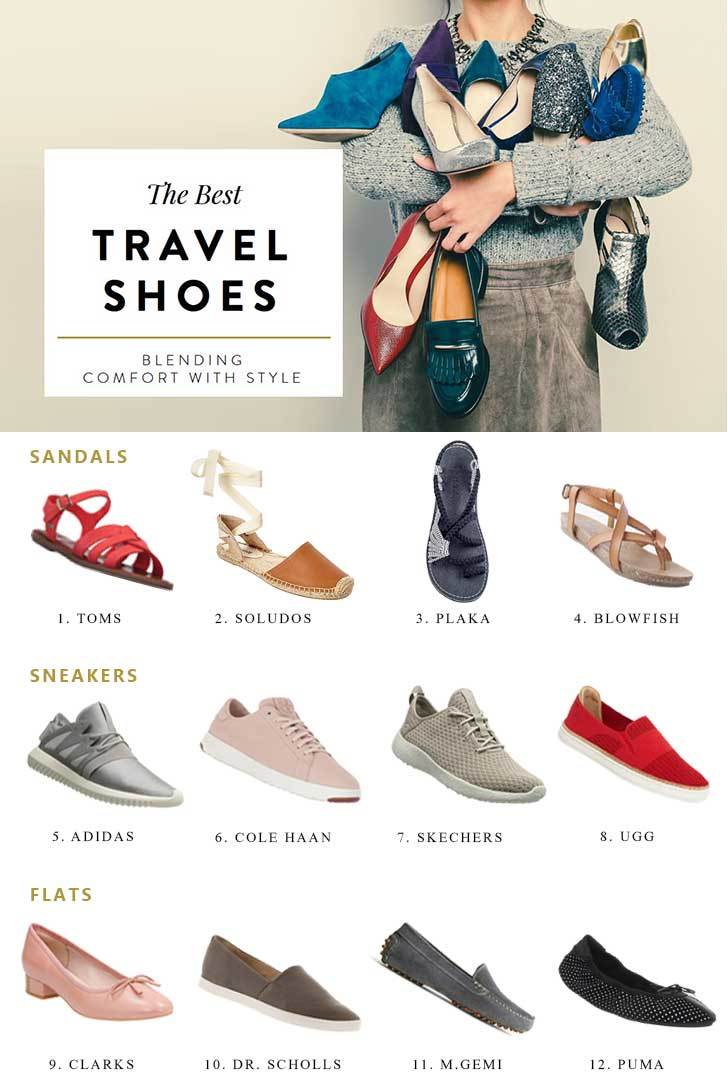
The journey toward finding the perfect stylish walking shoes for travel women’s is a microcosm of travel itself: it requires research, intuition, and a focus on foundational quality. It is a rejection of the false choice between looking good and feeling good. The shoes that earn a place in your suitcase are those that disappear in their performance—you forget about your feet entirely—yet make a deliberate statement through their design. They are a synthesis of orthopedics, material science, and aesthetic philosophy. By choosing wisely, you are not just selecting footwear; you are opting into a journey of greater range, resilience, and presence. Your steps become lighter, your days longer, and your memories unclouded by discomfort. So step out, equipped not just for distance, but for style, and let the world unfold before you, one confident, supported, and decidedly chic step at a time.
