

The Versatile Staple for Every Season’s Wardrobe
In the ever-evolving landscape of fashion, where trends flicker and fade with the seasons, the pursuit of a truly versatile piece becomes a sartorial quest. It’s about finding that anchor, that singular item which possesses the chameleon-like ability to adapt, elevate, and endure. From the crisp mornings of autumn to the balmy evenings of summer, there exists a hero piece that consistently proves its worth, transcending the arbitrary boundaries of seasonal collections. That piece, I argue, is the unassuming yet profoundly powerful chocolate brown heels. More than just footwear, they are a design principle in motion, a neutral with depth, and a secret weapon for building a cohesive, intelligent wardrobe that works as hard as you do.
The Chromatic Psychology of Chocolate Brown: More Than Just a Color
To understand the supremacy of chocolate brown heels, one must first deconstruct the color itself. Brown is often mischaracterized as simple or mundane, but in the realm of design and psychology, it holds a complex position. According to color theory, brown evokes feelings of stability, reliability, and warmth. It is the color of earth, wood, and stone—elements that are fundamentally grounding and timeless. Leatrice Eiseman, executive director of the Pantone Color Institute, has often noted that browns, especially richer shades like chocolate, convey a sense of substance and sophistication. Unlike the starkness of black or the clinical feel of white, chocolate brown carries an inherent warmth that makes it approachable yet elegant. This scientific and psychological foundation is what grants chocolate brown heels their unique versatility. They don’t command attention with loudness; instead, they offer a harmonious complement. They pair seamlessly with the autumnal palette of burgundy, olive, and mustard, yet they don’t feel out of place against the pastels of spring or the bright whites of summer. They provide a visual anchor, pulling an outfit together with a quiet, confident authority that black heels sometimes lack, especially in daylight or warmer seasons.

Architectural Integrity: The Silhouette and Support Equation
Versatility is not solely a function of color; it is equally dependent on form and function. A stiletto, while stunning, may not be the pragmatic choice for a day of meetings followed by an evening event. This is where the design intelligence behind the ideal versatile heel comes into play. The block heel, the wedge, and the sturdy kitten heel are not just trends; they are ergonomic solutions. Literature from design schools like Parsons School of Design often emphasizes the relationship between aesthetic form and practical function. A well-crafted chocolate brown heel with a block heel, for instance, distributes weight more evenly than a stiletto, offering greater stability and comfort over extended periods. This architectural integrity means you can wear them from a morning presentation to an afternoon gallery stroll without a second thought. The silhouette becomes a workhorse. A chocolate brown ankle boot with a moderate heel bridges the gap between seasons, pairing with tights in winter and flowing dresses in fall. A chocolate brown slingback with a manageable heel height is the quintessential go-to for professional and social settings alike. The color ensures cohesion, while the thoughtful design ensures endurance, literally and figuratively.

From Desk to Dinner: The Unmatched Transformative Power
Let’s translate theory into a tangible narrative. Imagine your wardrobe as a toolkit. Your chocolate brown heels are the multi-tool. For a day at the office, pair them with tailored, wide-leg trousers and a crisp white shirt. The brown adds a layer of approachable professionalism, softening the corporate edge without sacrificing polish. As quoted by style icon Diane von Furstenberg, “Style is something each of us already has, all we need to do is find it.” Finding your style often involves finding pieces that reflect your multifaceted life. Now, for that same day transitioning into an informal dinner, the transformation is effortless. Swap the trousers for a midi skirt in a silk or satin material. The chocolate brown heels now ground the fluidity of the skirt, preventing the look from becoming overly romantic and instead injecting a dose of modern edge. The warmth of the brown complements both the starkness of the office white and the sheen of the evening silk. This transformative power is rarely found in more statement footwear. A bright red pump demands a specific outfit; a metallic sandal speaks only of summer nights. But chocolate brown is the conversationalist of colors—it adapts, responds, and elevates whatever it encounters.
The Economic Logic of a Strategic Investment
In an era of conscious consumption, the cost-per-wear metric has become a guiding principle for savvy shoppers. Investing in a transient trend item that will be worn once or twice is a different economic model than investing in a foundational piece. A pair of well-made chocolate brown heels, perhaps from a brand known for quality craftsmanship and currently offered at a discounted price during a seasonal sale, represents tremendous value. This is where professional knowledge meets consumer benefit. Understanding material quality—like full-grain leather that will develop a patina over time, or a robust sole construction—allows you to identify pieces that are built to last. When you amortize the price of a $200 pair of heels that you wear 100 times over two years, the cost-per-wear is a mere $2. Compare this to a $50 trendy pair that falls apart or feels irrelevant after 10 wears. The initial investment is higher, but the long-term value and wardrobe utility are exponentially greater. This isn’t just shopping; it’s building a sustainable, functional wardrobe ecosystem where each piece has a defined and frequent role.

A Testament to Timelessness: Echoes from Culture and Commentary
The endorsement of chocolate brown as a cornerstone neutral isn’t a novel marketing ploy; it’s a notion echoed across decades of style commentary. From the practical, tailored elegance of Katharine Hepburn’s trousers and loafers (where a brown heel would have fit perfectly) to the sophisticated, intellectual vibe championed by designers like Ralph Lauren, brown has always signified a certain grounded luxury. In film, think of the understated, powerful wardrobe of characters like Clarice Starling in The Silence of the Lambs—her style is effective, un-fussy, and built on reliable neutrals. On platforms like YouTube, fashion analysts like Alyssa Beltempo, who champions “slow fashion” and capsule wardrobes, frequently highlight rich browns as essential palette extenders beyond black and navy. Even on Baidu Baike, the entry for “fashion matching” emphasizes the coordinating power of brown tones for creating layered, harmonious looks. This collective, cross-cultural and cross-platform consensus reinforces the objective truth: chocolate brown is a perennial, not a periodic, player in the style arena.
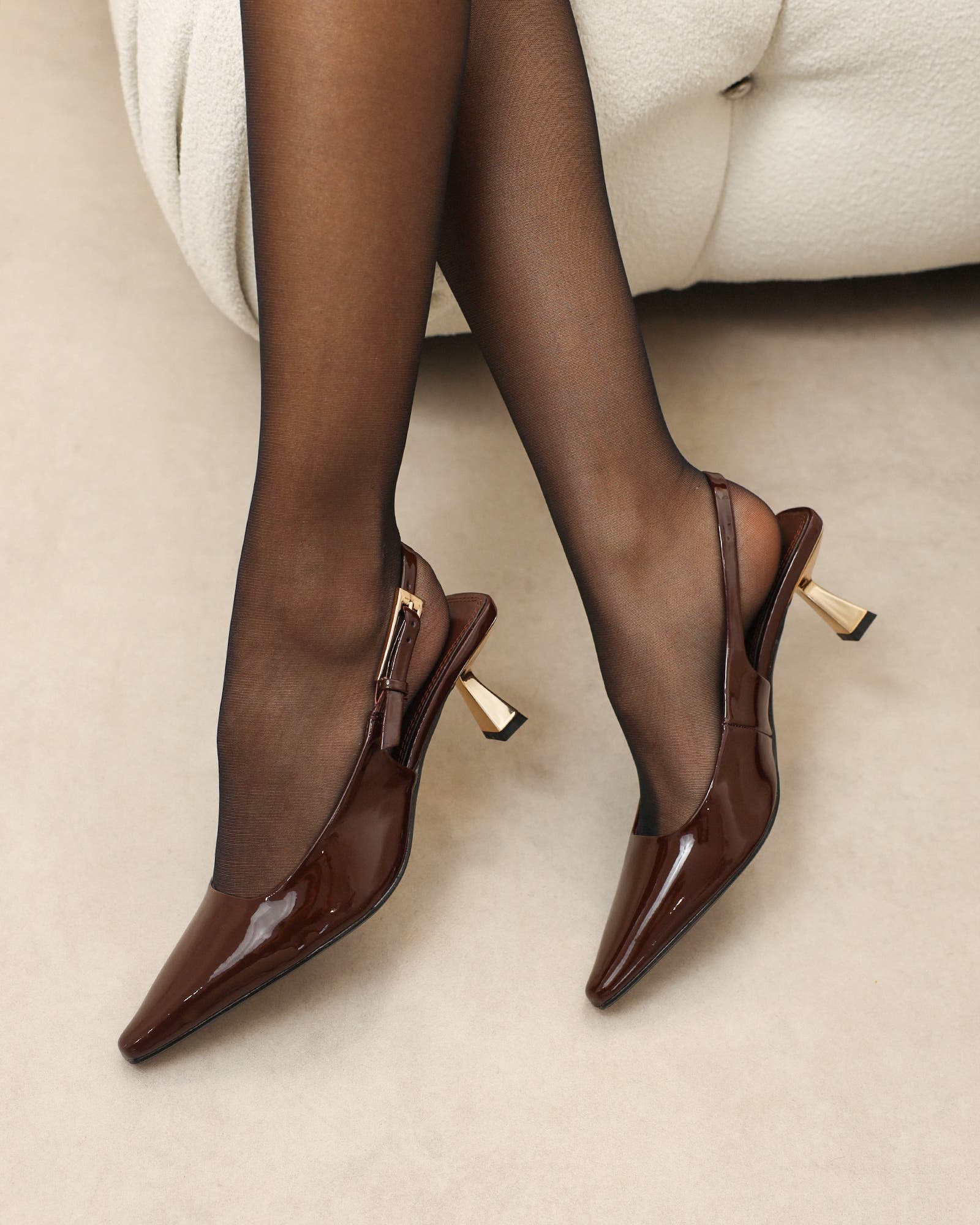
So, as you look at your closet, considering its gaps and its overflows, think not in terms of fleeting trends but in terms of foundational pillars. The goal is a collection of pieces that speak to each other, that travel across the calendar with you, and that simplify your daily choices. In this framework, the chocolate brown heels stand not as an optional accessory, but as a central, unifying component. They are the quiet orchestrator of your style symphony, the dependable constant in a world of variables. Their versatility is their superpower, their warmth is their charm, and their endurance is their promise. They are, quite simply, the versatile staple that every season’s wardrobe has been waiting for.
