

The Ultimate Guide to Booties Heels for Every Season
Footwear is more than just protection for our feet; it’s a statement of intent, a punctuation mark on an outfit, and for many, a foundational piece of personal expression. Among the vast constellation of shoe styles, one category has demonstrated a remarkable and enduring versatility, seamlessly bridging seasons, trends, and dress codes: the booties heels. This guide isn’t about chasing fleeting fads. It’s about understanding the architectural and stylistic principles that make a great ankle boot with a heel, empowering you to build a timeless, functional, and deeply personal collection. We’ll move beyond subjective opinion, grounding our exploration in design theory, material science, and cultural context, while providing actionable knowledge to make informed choices for your wardrobe and your wallet.
The Architectural Foundation: Deconstructing the Ankle Boot
To appreciate the booties heels, one must first understand its anatomy. Unlike their taller boot cousins, ankle boots are defined by their shaft height, which typically terminates at or just above the ankle bone. This specific elevation is not arbitrary. From a biomechanical perspective, it offers a unique blend of support and mobility. The shaft provides a degree of stability to the ankle joint, a feature noted in podiatric literature for its potential to reduce the risk of minor twists compared to completely unsupported shoes. However, it doesn’t restrict the full range of motion required for the calf muscles, a compromise often found in knee-high styles. The heel itself introduces a second layer of engineering. Whether a stiletto, block, or wedge, the heel shifts the body’s weight forward, altering posture and gait. A study from the University of Copenhagen’s Department of Neuroscience and Pharmacology, while often cited in discussions of high heels, broadly notes that heel elevation changes the load distribution across the foot and lower limb. This isn’t inherently negative; it’s a design parameter. A well-constructed booties heels will have a heel positioned to align reasonably with the natural arch’s projection, and a cushioned insole to distribute pressure. The toe box shape—pointed, almond, or square—completes the foundation. Here, we turn to the wisdom of renowned shoe designer Christian Louboutin, who famously stated, “A shoe has so much more to offer than just to walk. It’s the closest thing to architecture.” This architectural view is key: every line, seam, and material choice in a bootie serves a structural and aesthetic purpose.

Material World: Science and Sensation in Every Stitch
The soul of a bootie lies in its materials, which dictate not only its character but its performance across climates. Leather, the perennial favorite, is a complex biological material. Full-grain leather, the top layer of the hide, is prized for its durability and ability to develop a patina. As explained by the Leather Working Group, an organization promoting sustainable leather manufacturing, this material is breathable, naturally wicking moisture away from the foot—a critical feature for comfort. Suede, the napped underside of the hide, offers a tactile, soft aesthetic but requires more care, as its porous nature makes it susceptible to water stains. For the modern consumer, technological fabrics have become indispensable. Waterproof membranes like Gore-Tex, a invention born from Wilbert L. Gore’s experiments with polytetrafluoroethylene, can be integrated into booties, creating a barrier against rain and snow while allowing perspiration vapor to escape. This is a game-changer for fall and winter wear. Vegan alternatives, often made from polyurethane (PU) or innovative plant-based materials like Piñatex (derived from pineapple leaf fibers), offer ethical choices without sacrificing style. The choice of lining is equally scientific. A shearling or faux-fur lining provides insulation by trapping air, a principle of thermal dynamics, keeping feet warm in deep winter. A moisture-wicking polyester or cotton blend lining, however, is preferable for transitional seasons, drawing sweat away to keep feet dry and comfortable. When you select a material, you’re not just choosing a look; you’re investing in a microclimate for your feet.
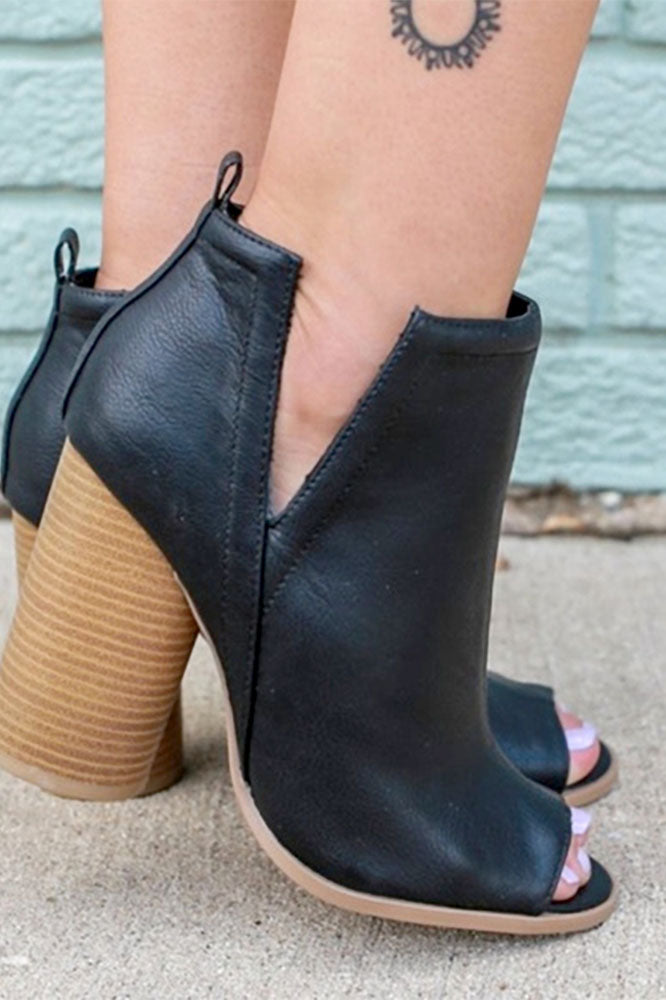
Spring: The Art of Transition and Renewal
Spring is a season of contradiction—lingering chills and promising warmth. Your booties heels should navigate this duality. This is the perfect time for styles that play with ventilation and lighter visual weight. Consider cut-out or open-toe booties. These designs, reminiscent of the architectural “brutalist” fashion that exposes a structure’s inner workings, allow your feet to breathe as temperatures climb while maintaining a chic, covered aesthetic for cooler mornings. Materials shift towards lighter suedes, polished calfskin, or even woven textiles. Heel height can be playful; a medium block heel provides elevation without the sinking feeling in soft ground. Color palettes awaken from winter’s slumber. Think pastel shades like blush pink or sky blue, which align with Pantone’s seasonal color reports often cited by fashion institutes, or classic neutrals like tan and off-white that pair effortlessly with floral dresses, cropped jeans, and midi skirts. The key is versatility—a spring bootie should be the piece that ties your winter wardrobe remnants to your summer pieces in waiting.
Summer: Defying Convention with Strategic Choices
The notion of boots in summer may seem counterintuitive, but it is a bold stylistic move rooted in contrast, much like the cinematic style of a Quentin Tarantino character who wears a suit in the desert. The summer booties heels is about material and form. Opt for boots in ultra-lightweight materials: canvas, linen blends, or perforated leather that mimics the breathability of a mesh sneaker. Espadrille-style booties with a jute-wrapped wedge heel offer a resort-like feel and are incredibly light on the foot. Color is paramount. White booties are a summer staple, creating a crisp, elongating line. Metallics—silver or gold—reflect sunlight and add a festive touch for evening events. The most crucial factor here is pairing: style them with airy silhouettes like a slip dress, shorts, or a breezy romper. The contrast between the covered foot and exposed leg is precisely what makes the look modern and intentional, rather than warm. It’s a statement of confidence, not practicality.

Autumn: The Quintessential Stage for Booties
Autumn is the undisputed zenith of the bootie season. The air is crisp, layers are essential, and the landscape demands richer textures. This is where function and fashion find perfect harmony. Think of the iconic imagery of a New England fall; your footwear should match that depth of color and substance. Leather reigns supreme—in burnished browns, oxblood, black, and olive. Shearling or faux-fur accents at the cuff add a touch of cozy luxury. The chunkier heel comes into its own, providing stability on uneven pathways covered in leaves. Styles like the classic Chelsea boot, with its elastic gussets (a design tracing back to Victorian England and popularized by the Beatles in the 1960s), offer sleek, slip-on convenience. For a more rugged aesthetic, a lace-up combat-style bootie with a block heel provides edge and durability. These boots are workhorses, designed to be paired with everything from thick tights and sweater dresses to denim and a tailored blazer. They are the foundational piece of the autumn wardrobe.
Winter: Fortification Against the Elements
Winter booties must be warriors. Aesthetics are still vital, but performance is non-negotiable. This is where the scientific explanations of materials become directly applicable. Look for boots with a clearly stated waterproof or water-resistant construction. A sealed seam and a treated leather or rubberized upper are your first line of defense. Insulation is critical. Thinsulate™, a microfiber insulation developed by 3M, is a common and effective technology that provides warmth without excessive bulk. The tread is perhaps the most overlooked yet vital feature. A rubber outsole with a deep, multi-directional lug pattern, similar to those found on hiking boots, increases traction on ice and snow, a safety feature backed by principles of friction physics. Style-wise, shearling-lined booties, padded “puffer” booties, or sleek leather styles with a hidden thermal lining are all excellent choices. Keep the palette darker or neutral to coordinate with heavy coats, but a pop of color on a gloomy day can be a powerful mood lifter. Your winter bootie is an investment in comfort and safety.

Investment and Intelligence: Building Your Collection Wisely
Building a versatile bootie wardrobe is an exercise in strategic curation, not impulsive accumulation. The “capsule wardrobe” philosophy, popularized by stylists like Susie Faux and later Donna Karan, applies perfectly here. The goal is to own a few exemplary pairs that cover all scenarios, rather than many mediocre ones. Start with a booties heels in a classic, waterproof black leather with a moderate block heel. This is your utilitarian hero, suitable for work, travel, and inclement weather. Next, invest in a luxurious neutral pair, perhaps a tan suede Chelsea boot with a leather sole, for polished casual and dressier occasions. Your third piece could be a trend-led item—animal print, a bold color, or an unconventional silhouette—that expresses your personal style. When evaluating cost, consider the Price-Per-Wear (PPW) model. A $300 boot worn 150 times over five years has a PPW of $2.00, a far smarter investment than a $80 boot worn only 10 times before discomfort or deterioration sets in. Look for signs of quality: full leather linings, sturdy stitching (like Goodyear welting, which allows for resoling), and solid, well-attached hardware. Remember the words of style icon Iris Apfel: “More is more and less is a bore.” But in this context, “more” refers to the quality and character infused into each carefully chosen pair, not the quantity in your closet.
Where to Find Your Perfect Pair: A Note on Value
The journey to the perfect bootie often leads to both brick-and-mortar boutiques and the vast digital marketplace. While department stores and specialty shoe retailers offer the advantage of tactile fitting, online retailers frequently provide a wider selection and competitive pricing. To be an intelligent shopper, leverage technology. Use price-tracking browser extensions or apps that monitor historical pricing on major retail sites; they can alert you when a coveted pair drops to a discounted price. Sign up for newsletters from your favorite brands to receive notifications on seasonal sales, which often occur at the end of January and July. Consider pre-owned luxury platforms for gently worn, iconic styles from designers like Stuart Weitzman or Aquazzura at a fraction of the original cost. When shopping online, always scrutinize the product description for the materials used, the type of construction, and the heel height measurement. Cross-reference these details with multiple customer reviews, paying special attention to comments on fit (do they run large or small?) and comfort over time. Your perfect pair is out there; finding it requires a blend of taste, knowledge, and savvy shopping strategy.
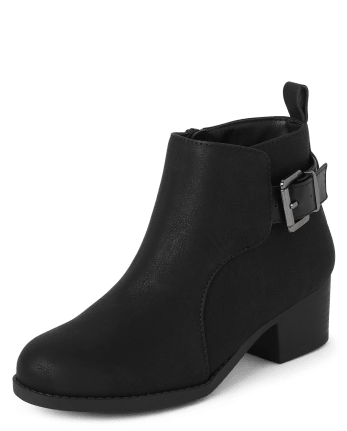
The true power of the booties heels lies in its chameleonic ability to adapt. It is a shoe that understands assignment, whether that assignment is navigating an urban sidewalk in a rainstorm, elevating a simple jeans-and-tee combination, or providing the foundation for an elegant evening ensemble. By applying a lens of objective analysis to its design, materials, and seasonal roles, you move beyond seeing it as a mere accessory. You begin to see it as a tool for self-expression and a reliable companion through the turning of the years. Choose with intention, invest in quality, and let your steps, from season to season, be taken with confidence and style.
