

The Best Tennis Shoes for Everyday Walking Comfort
Finding the perfect pair of shoes for daily ambulation is more than a matter of style; it’s a foundational decision for your long-term physical well-being. While specialized walking shoes exist, a surprising and excellent option lies in a category designed for a different court: tennis shoes for walking. The crossover might seem unorthodox, but when you dissect the engineering, the rationale becomes clear. This article isn’t about pushing a trend; it’s about aligning your footwear with biomechanical principles. We will navigate through the architectural merits of tennis shoes, translate sports science into everyday comfort, and provide a clear-eyed view on why a well-chosen tennis shoe can be a superior companion for your miles on pavement, in the office, or exploring the city.
The Unlikely Synergy: Tennis Biomechanics Meets Daily Pedestrianism
To understand why tennis shoes excel for walking, we must first appreciate the brutal demands of tennis. As noted by researchers in sports medicine, tennis is a multidirectional explosive sport involving lateral cuts, sudden stops, forward sprints, and constant weight shifting. A shoe built for this must offer exceptional lateral support to prevent ankle rolls, ample cushioning to absorb impact from hard courts, and a durable outsole with a herringbone or modified pattern for grip during complex footwork. Now, translate this to walking. While walking is a linear, heel-to-toe motion, urban environments are unpredictable. A curb step, a slippery surface, or a quick sidestep to avoid an obstacle—these are micro-movements where lateral stability becomes crucial. The cushioning system in a tennis shoe, often featuring advanced foams like Adidas’ Boost or Nike’s React, is engineered to handle repetitive impact, which directly correlates to the repetitive heel strike of walking. Dr. James G. Garrick, Director of the Center for Sports Medicine, once stated, “The primary role of the athletic shoe is to protect from injury, and the second is to enhance performance.” In the context of daily walking, injury protection translates to mitigating stress on joints, and a tennis shoe’s protective architecture is inherently overbuilt for the linear, lower-impact task of walking, thereby offering a surplus of safety and comfort.
:max_bytes(150000):strip_icc()/Web_1500-vwt-primary-best-overall-shoe-tstaples-118-671f4e0048e64d14a1c42e4f8d9e6658.jpg)
Deconstructing Comfort: Key Features That Make Tennis Shoes Ideal
Midsole Cushioning and Energy Return
The heart of any walking shoe is its midsole. In tennis shoes, this component is a marvel of material science. Brands invest heavily in proprietary compounds. For instance, ASICS employs its GEL technology, a silicone-based material that absorbs shock waves from vertical impact. A study from the Spaulding National Running Center at Harvard Medical School emphasizes the importance of cushioning in reducing loading rates on the body. When you walk, your body absorbs a force of about 1.5 times your body weight with each step. A tennis shoe’s midsole is designed to dissipate forces far greater than this, originating from a player’s jump or hard landing. This means for a walker, the shoe is operating well within its comfort threshold, providing a plush, protected feel mile after mile. The energy return properties of modern foams also contribute to a less fatiguing walk, giving a subtle bounce that propels you forward rather than leaving your energy sinking into the pavement.
Outsole Durability and Traction Pattern
Durability is a non-negotiable in tennis. The dragging of toes during serves and the abrasive nature of hard courts necessitate outsoles made of high-density, non-marking rubber. For the everyday walker, this translates to exceptional longevity. The outsole of a quality tennis shoes for walking will outlast that of many lightweight walking-specific models. Furthermore, the traction pattern is instructive. While a running shoe prioritizes forward motion, a tennis shoe’s pattern is omnidirectional. The modified herringbone or circle patterns provide grip in multiple directions. This is invaluable for urban walking where surfaces change from concrete to tile to polished stone. You gain a secure footing that a purely linear-patterned shoe might not offer, enhancing safety and confidence with every step you take on varied terrains.
Upper Support and Breathable Structure
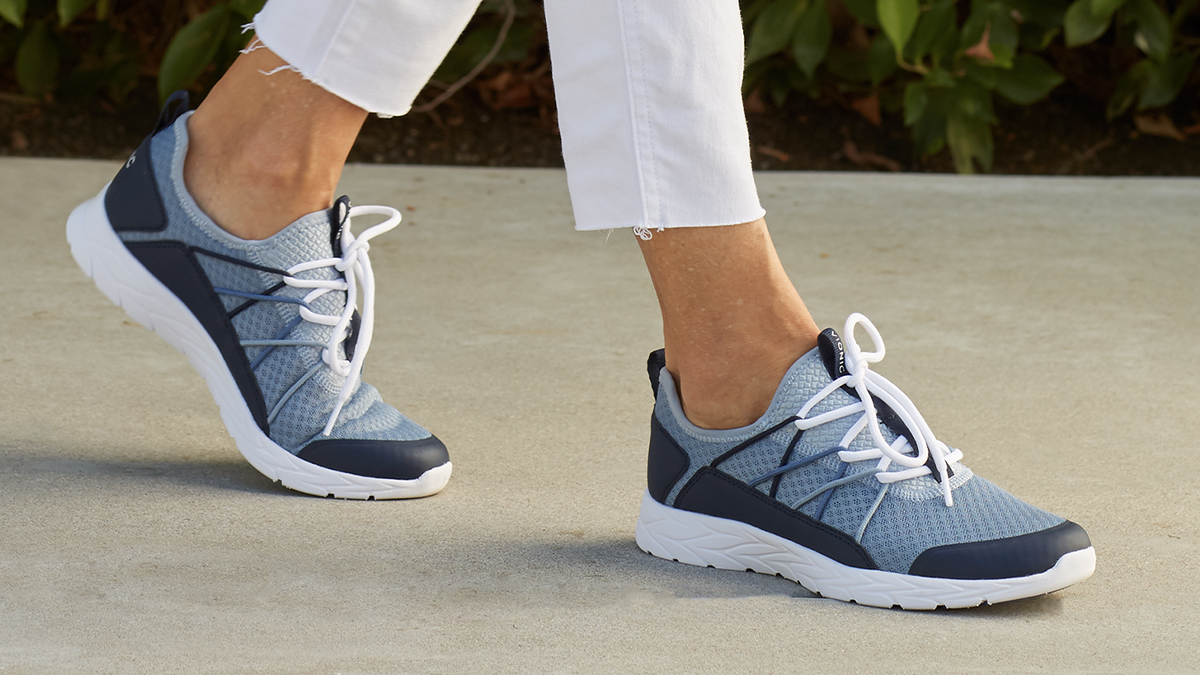
The upper of a tennis shoe is a fortress for the foot. It must lock the foot down to prevent internal movement that could lead to blisters during rapid lateral shifts. This is achieved through a combination of sturdy synthetic materials, reinforced toe caps (often called “toe guards”), and robust lacing systems. For walking, this means exceptional heel and midfoot lockdown, eliminating the slippage that can cause hot spots. Moreover, breathability is critical in a sport as intense as tennis. Modern tennis shoe uppers utilize engineered mesh zones that allow heat and moisture to escape. As noted in podiatric literature, a cool, dry foot environment is essential for preventing fungal infections and maintaining skin integrity during prolonged wear. Therefore, when you choose a tennis shoes for walking, you are opting for a structure that prioritizes foot containment and climate control, two pillars of all-day comfort.
Navigating the Selection: A Buyer’s Guide for the Everyday Walker
Not all tennis shoes are created equal for walking purposes. The key is to select models that emphasize comfort and stability over aggressive, performance-oriented features. Look for terms like “comfort,” “court feel,” or “all-day” in the model’s description. Avoid highly specialized “clay court” or “grass court” shoes, which have extreme traction patterns unsuitable for pavement. Instead, focus on “hard court” tennis shoes, as their design is most aligned with abrasive, firm surfaces. Prioritize cushioning over minimalism. A model like the New Balance Fresh Foam Lav or the Asics Gel-Resolution often receives praise in forums like the “Tennis Warehouse” message boards for their plush feel, which translates perfectly to walking. Remember, you are not looking for the shoe that will help you nail a topspin backhand; you are looking for the shoe that makes your 10,000 daily steps feel like 5,000. The arch support is another critical factor. Many tennis shoes come with removable insoles, allowing you to insert custom orthotics if needed, a level of customization not always available in standard walking shoes.

Professional Insight and Value Proposition
Bringing professional knowledge to your purchase decision empowers you. Podiatrists often recommend shoes with a firm heel counter, adequate toe box width, and flexible forefoot. A well-constructed tennis shoe checks all these boxes. The value proposition is also compelling. While premium walking shoes can command high prices, the tennis shoe market is competitive, with frequent sales and discounts. Last season’s top-tier tennis model, often discounted by 30-50%, offers technology and build quality that far exceed a similarly priced new walking shoe. This is where savvy shopping comes in. Websites of major sporting goods retailers often have “clearance” sections for tennis footwear. Investing in a previous champion model means you are acquiring advanced engineering—midsoles that have been proven on the professional tour, outsoles tested for hundreds of hours of play—at a fraction of the original cost, making the choice of tennis shoes for walking both a smart biomechanical and economic decision.
Addressing the Counterpoint: Are There Any Drawbacks?
A fair analysis must consider potential drawbacks. The primary critique is weight. Tennis shoes can be heavier than minimalist walking or running shoes due to their reinforced construction. However, for everyday walking where speed is not the goal, the trade-off for stability and durability is often worthwhile. The additional ounces provide a stable platform that can reduce muscular fatigue in the feet and lower legs over long distances. Another point is style. While tennis shoes have evolved aesthetically, some may find their look too sporty for certain professional settings. However, the rise of “athleisure” has blurred these lines, and many modern tennis shoes from brands like Adidas Stan Smith (originally a tennis shoe) or Nike Court Legacy offer clean, classic profiles suitable for casual and business-casual environments. The key is to select a design with a simpler colorway—predominantly white, black, or grey—which seamlessly integrates into a wider wardrobe.

Real-World Endorsements and Concluding Perspective
The proof, as they say, is in the wearing. Beyond clinical studies, anecdotal evidence from diverse communities supports this idea. On platforms like Quora and Reddit’s r/walking, numerous users extol the virtues of using tennis shoes for their daily walks, citing unmatched durability and all-day support. Celebrity fitness trainer Harley Pasternak, in a YouTube interview, emphasized the importance of “appropriate footwear for your activity,” noting that people often wear running shoes for everything, but a shoe built for stability might be better for mixed movements. This aligns perfectly with the tennis shoe’s design philosophy. In the end, your feet are your foundation. Choosing footwear is an act of preventative health. The architectural integrity, scientific cushioning, and durable construction of a purpose-built tennis shoes for walking offer a compelling, evidence-backed solution for the pedestrian’s daily grind. It is a choice that moves beyond convention, applying the rigorous standards of court sports to the noble, essential act of walking, ensuring every step is taken in confidence and comfort.
:max_bytes(150000):strip_icc()/vwt-walking-shoes-test-ryka-devotion-x-sahara-borja-02-18807b688fbb49e4ba30a3ee438600cb.jpeg)
