

The Walking Shoe: Your Secret to Effortless Style and All-Day Comfort
In the rhythm of modern life, where every step counts, the right footwear is not merely an accessory but a foundational element of daily existence. It bridges the gap between enduring comfort and personal expression, transforming mundane commutes and lengthy explorations into experiences of ease. The quintessential piece that achieves this harmony is the walking shoe. This article delves into the anatomy, science, and philosophy behind this indispensable item, arguing that a well-chosen walking shoe is the ultimate tool for unlocking a life of stylish, pain-free mobility. We will move beyond superficial trends to explore the objective engineering and subjective joy these shoes provide, offering you the knowledge to make an empowered choice.
The Anatomy of All-Day Comfort: More Than Just Cushioning
To understand why a dedicated walking shoe outperforms a generic sneaker, one must dissect its architecture. Comfort is a symphony of components working in concert, not a solo act performed by a thick midsole. The foundation lies in the last—the mold around which the shoe is built. Walking-specific lasts are often designed with a straighter shape and a roomier toe box to accommodate the natural splay and rolling motion of the foot during a stride. This contrasts with running lasts, which may curve more to facilitate forward propulsion. The midsole, frequently composed of advanced polymers like EVA (ethylene-vinyl acetate) or proprietary gels (as seen in ASICS’ GEL technology), is engineered for shock absorption over repeated, lower-impact steps rather than high-energy rebound. Dr. Casey Kerrigan, a former Harvard Medical School professor and founder of a biomechanics research company, has extensively studied gait. Her research suggests that overly cushioned shoes can sometimes destabilize natural foot mechanics, highlighting the need for targeted cushioning that supports the specific heel-to-toe rolling motion of walking. Furthermore, the flexibility point is critical. A proper walking shoe will bend easily at the ball of the foot, where the foot naturally flexes, but offer stability through the arch and heel. This engineered flexibility reduces the energy expenditure per step, a concept supported by biomechanics literature from institutions like the University of Calgary’s Human Performance Laboratory, which analyzes how footwear affects gait efficiency.
:max_bytes(150000):strip_icc()/when-should-i-replace-my-walking-shoes-3436325-0801-7a1840d83573471092e0380f9e230ecc.jpg)
Style Reborn: The Evolution of the Functional Aesthetic
The historical dichotomy between “comfort shoes” and “stylish shoes” is a false paradigm that the modern walking shoe has decisively shattered. We are no longer confined to clunky, purely utilitarian designs. The convergence of performance wear and streetwear, a trend meticulously documented by fashion analysts from websites like Business of Fashion, has ushered in an era where technical features are celebrated as design elements. Think of the visible air units in certain sneakers or the intricate, multi-textured mesh uppers—these are hallmarks of performance that have become style icons. This shift is echoed in popular culture. In films like Forrest Gump, the simple act of walking—and by extension, the shoes that enable it—is portrayed as a vehicle for profound journey and personal narrative. The shoes are a constant, reliable companion through changing landscapes. Similarly, renowned designer Tinker Hatfield, the mind behind many iconic Nike silhouettes, often speaks in interviews about designing shoes that tell a story and serve a function, blurring the line between tool and artifact. The modern walking shoe embraces minimalist color palettes, sleek silhouettes, and premium materials that transition seamlessly from a morning walk in the park to a casual brunch or even a smart-casual office environment. It proves that one does not need to sacrifice personal aesthetic for physical well-being; the walking shoe is the embodiment of both.
The Scientific Pillars: Pressure Mapping and Gait Analysis
Delving deeper into the science, two key concepts validate the specialized design of walking shoes: plantar pressure distribution and kinematic gait analysis. Plantar pressure mapping, a technology used in both research and high-end footwear fitting, visually charts the force exerted by the foot against the ground. Studies referenced in podiatric journals show that improper footwear can create high-pressure “hot spots” under the heel or metatarsals, leading to discomfort and conditions like plantar fasciitis. A well-designed walking shoe uses contoured footbeds and strategic cushioning to distribute this pressure more evenly, a principle corroborated by resources like the American Podiatric Medical Association’s footwear guidelines. Kinematics, the study of motion without considering forces, analyzes the angles and rotations of joints during walking. A third-person observational study from a gait lab might reveal how a shoe with a flared heel or a specific torsional rigidity can control excessive pronation (inward rolling) or supination (outward rolling), promoting a more neutral and efficient stride. This isn’t anecdotal; it’s applied physics. As biomechanist Dr. Benno Nigg of the University of Calgary famously proposed in his “Preferred Movement Path” theory, the best shoes are those that interfere the least with the body’s natural movement preferences, providing guidance rather than forceful correction. The walking shoe, at its best, acts as a subtle facilitator of this natural path.
Beyond the Shoe: A Holistic Approach to Foot Health
Investing in a superior walking shoe is the cornerstone, but the philosophy extends to holistic foot stewardship. Consider the sock—a thin layer with outsized impact. Moisture-wicking fabrics like merino wool or synthetic blends prevent blisters, a simple tip endorsed by long-distance hikers and experts on platforms like Quora’s outdoor communities. Furthermore, the lifespan of a shoe is finite. The common recommendation, often cited by sources from Verywell Fit to shoe retailers, is to replace walking shoes every 300-500 miles. The degradation of the midsole’s cushioning is often invisible but profound, losing its shock-absorbing properties long before the outsole wears through. This is not a marketing ploy but a material science reality; the polymers compress and lose resilience with repeated loading. Pairing your shoes with targeted foot and calf strengthening exercises, such as toe curls and heel raises, can build the body’s own supportive architecture. This integrated approach—combining intelligent gear with proactive self-care—ensures that your foundation remains strong. It transforms footwear from a passive commodity into an active partner in your long-term mobility and vitality.
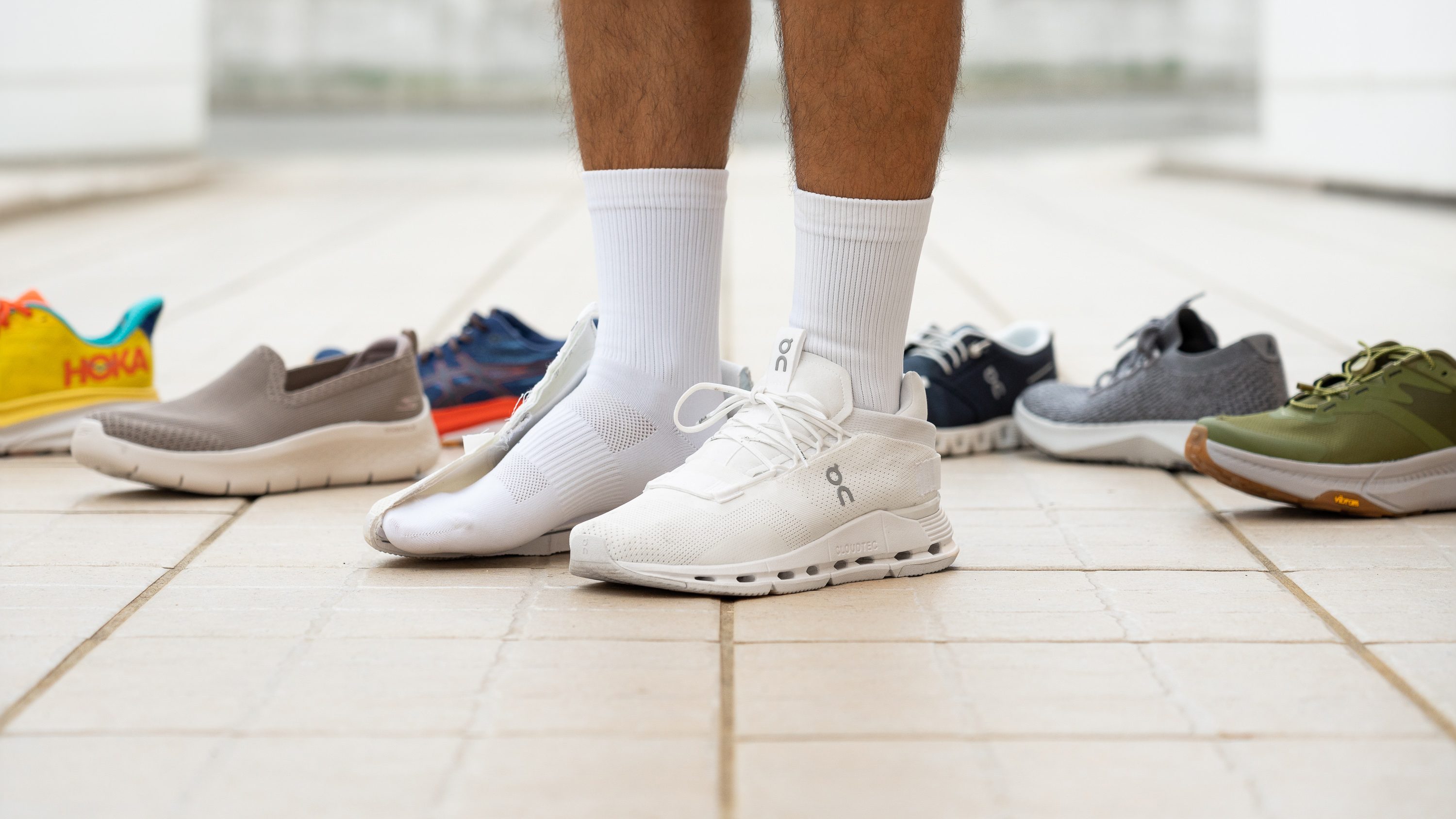
The Informed Choice: Bringing Expertise and Value to You
Navigating the market for the perfect pair can be daunting. This is where professional knowledge translates into personal value. Understanding your foot type (neutral, flat, or high-arched), typically determined by a “wet test” or professional fitting, is the first step. Brands now offer extensive lines tailored to these needs. For instance, motion-control shoes for overpronators, or highly cushioned neutral shoes for underpronators. We bring this expertise to you, cutting through the jargon. Furthermore, quality need not command a prohibitive price. By focusing on direct value—durable materials, proven biomechanical designs, and classic styling that outlasts fads—we advocate for shoes that offer cost-per-wear excellence. Look for seasonal sales on previous models, which often feature identical core technology to the latest versions at a fraction of the cost. The goal is to equip you with the discernment to identify where the true engineering value lies, ensuring your investment delivers maximum comfort and style over hundreds of miles, not just in fleeting first impressions.

Your journey through city streets, park paths, or daily errands should be defined by liberation, not limitation. The conscious selection of your footwear is a profound act of self-care and practical wisdom. It is an acknowledgment that the foundation of movement deserves thoughtful investment. The right walking shoe is that silent, steadfast ally—engineering meeting elegance, science embracing style. It is the secret not to merely moving, but to moving through your world with unwavering comfort and confident grace. Let your next step be your most informed and inspired one.
