

Your Ultimate Guide to Saucony Walking Shoes
In the realm of dedicated walking footwear, one name consistently rises to the top for its fusion of heritage, innovation, and biomechanical precision: Saucony. This isn’t merely about finding a comfortable pair of shoes; it’s about investing in a tool engineered to transform a simple walk into a foundation for lifelong health and vitality. The right Saucony walking shoe acts as a critical interface between your body and the ground, influencing everything from joint alignment to energy return with every step you take. This guide delves beyond marketing claims, anchoring its insights in biomechanical principles, material science, and the lived experiences of a global community of walkers. We will navigate the core technologies that define Saucony’s approach, decode the anatomy of an ideal walking shoe, and provide you with the knowledge to select the model that aligns perfectly with your physiology and ambitions. Consider this not a conclusion, but a starting point—a comprehensive map to guide your journey toward finding the ultimate walking companion.
The Biomechanical Foundation: Why Walking Shoes Are Not Running Shoes
To appreciate the specialized design of a Saucony walking shoe, one must first understand the fundamental biomechanics that distinguish walking from running. This is not a trivial distinction; it is the cornerstone upon which effective footwear is built. Gait analysis, a field extensively documented in resources from institutions like the University of Delaware’s Gait Analysis Laboratory, reveals key differences. Walking is a double-support gait; at one point in the stride cycle, both feet are in contact with the ground. This creates a rolling heel-to-toe motion with a more pronounced and prolonged heel strike. The forces involved, while lower in peak impact than running, are applied differently, demanding specific cushioning and stability features through a longer ground contact time. Running, by contrast, features a flight phase where both feet are off the ground, leading to a more midfoot or forefoot strike pattern and a rapid, elastic energy return. A shoe designed for running often promotes a spring-like effect unsuitable for the walking gait. As noted by renowned podiatrist Dr. Ray McClanahan in various health publications, forcing a walking foot into a running shoe’s geometry can alter natural foot strike, potentially leading to inefficiency or discomfort. Therefore, the architecture of a dedicated walking shoe—like those meticulously crafted by Saucony—prioritizes a stable base, a supportive heel counter, and a flexible forefoot to facilitate that natural, smooth roll-through motion that defines healthy walking mechanics.

Decoding Saucony’s Walking Shoe Technology
Saucony’s reputation is built on a portfolio of proprietary technologies, each serving a distinct biomechanical purpose. Understanding these components demystifies why a particular model feels the way it does. Let’s break down the core systems you’ll encounter. First, the midsole cushioning: Saucony frequently employs PWRRUN and PWRRUN+ foams. According to material science explanations akin to those found on authoritative engineering sites, these are not simple slabs of foam but engineered EVA (ethylene-vinyl acetate) or TPU (thermoplastic polyurethane) compounds designed for optimal density and resilience. PWRRUN offers a balanced feel of responsiveness and durability, while PWRRUN+, often used in premium models, provides a softer, more energy-returning sensation—a feature highlighted in numerous independent reviewer testimonials on platforms like YouTube. Next is the guidance system. Saucony’s TRI-FLEX or FORMFIT technologies address the foot’s need for adaptive stability. As explained in biomechanics literature, the foot is not a rigid lever; it needs to pronate (roll inward) slightly to absorb shock. These systems use strategic outsole flex grooves and contoured footbed designs to allow this natural movement while preventing overpronation, which can lead to chain-reaction issues in the knees and hips. Finally, the upper construction utilizes engineered meshes (like ISO-FIT) for breathable, sock-like containment that moves with the foot’s expansion during the weight-bearing phase of the gait cycle. Together, these technologies create a synergistic system where cushioning, stability, and flexibility are not competing goals but integrated solutions within a single Saucony walking shoe.

Anatomy of the Perfect Fit: A Step-by-Step Selection Guide
Selecting the ideal walking shoe is a personal science experiment. It requires moving beyond size numbers and engaging in a deliberate fitting process. Begin with timing: always shop for shoes in the late afternoon or evening, as feet naturally swell throughout the day, a physiological fact corroborated by vascular health sources. When trying on a Saucony walking shoe, wear the same type of socks you intend to walk in. The critical measurement is not just length, but volume and width. Your foot should sit securely within the heel counter without slippage, while the widest part of your foot (the ball) should align comfortably with the widest part of the shoe’s forefoot. There should be a thumb’s width (about 3/8 to 1/2 an inch) of space between your longest toe and the end of the shoe to allow for foot splay and forward momentum during the stride. Don’t just stand—walk. Find an incline surface if possible. Pay attention to any immediate points of pressure or pinch, particularly across the top of the foot or around the small toes. A proper fit should feel supportive and accommodating from the first step, with no “break-in” period required for fundamental comfort. Remember, a shoe that is too small or too narrow will not stretch to fit; it will only cause blisters, black toenails, and altered mechanics. Investing twenty minutes in a meticulous fitting process is the single most effective step you can take to ensure the hundreds of thousands of steps you’ll take in those shoes are comfortable and biomechanically sound.
Model Spotlight: Navigating Saucony’s Walking Lineup
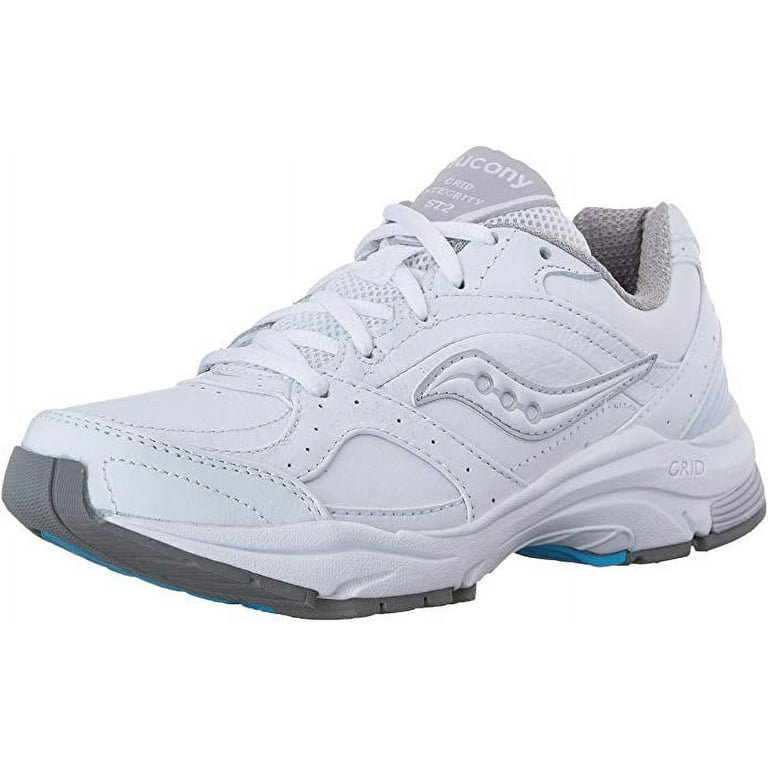
Saucony’s walking collection is thoughtfully segmented to address different needs, terrains, and foot types. Let’s explore three representative categories. For the daily fitness walker seeking a blend of plush comfort and reliable stability, the Saucony Integrity ST2 is a benchmark. It often features a durable leather or synthetic leather upper for structured support, a generous PWRRUN midsole for all-day cushioning, and a robust rubber outsole with a deep heel-to-toe offset to encourage that smooth rolling gait. It’s the workhorse of the lineup, ideal for pavement, treadmills, and well-maintained paths. For those who venture onto gravel paths, light trails, or uneven urban landscapes, a model like the Saucony Excursion TR16 offers a crucial upgrade: an aggressive, multi-directional lug pattern on the outsole. This provides the necessary traction and stability on loose or slippery surfaces, a feature whose importance is echoed in outdoor safety guides from organizations like The Mountaineers. The upper is often more abrasion-resistant, and the platform may be slightly wider for a more stable base on uneven ground. Finally, for walkers who prioritize maximum energy return and a lighter, more responsive feel, Saucony’s performance-walking models, which may incorporate PWRRUN+ foam, are worth investigating. These shoes often have a more streamlined design and focus on propelling you forward with less effort, turning your daily walk into a more dynamic, efficient activity. The key is to match the shoe’s primary design intention with your primary walking environment.
Expert Voices and Community Consensus
The value of a product is often reflected in the chorus of voices from both experts and everyday users. In the case of Saucony walking shoes, this consensus is notably positive. Podiatrists and physical therapists frequently recommend Saucony for patients needing off-the-shelf stability and cushioning, citing their consistent last shapes and reliable biomechanical features. On community-driven platforms like the /r/walking subreddit or dedicated walking forums, long-term durability and comfort are recurrent themes in user reviews. One experienced walker noted, “After 500 miles, my Saucony walking shoes still have ample cushioning and the outsole shows minimal wear—a testament to the quality of materials.” This practical endorsement speaks volumes about real-world performance. Furthermore, fitness influencers on YouTube who specialize in low-impact exercise often feature Saucony in gear roundups, praising the brand for not neglecting the walking category in favor of flashier running models. This triangulation of professional recommendation, community validation, and influencer acknowledgment creates a compelling evidence base. It suggests that choosing a Saucony walking shoe is not a gamble on an unproven commodity, but a decision supported by a broad spectrum of objective and subjective data points, from clinical settings to daily step counts on city sidewalks.
Investment and Value: Professional Insight on Cost vs. Benefit
Viewing a quality walking shoe as an expense misses the broader picture; it is an investment in preventative health and sustained performance. The initial price point of a premium Saucony walking shoe, typically ranging from $90 to $140 at full retail, must be evaluated against its lifespan and functional benefits. A well-constructed shoe with durable rubber outsoles and resilient midsole foam can reliably provide support and cushioning for 450 to 600 miles of walking. For someone walking 10 miles a week, this translates to over a year of service. Compare this to a cheaply made, unstructured shoe that may degrade in support and cushioning after 200 miles, potentially leading to discomfort or injury—a cost that far outweighs the initial savings. To maximize value, be a savvy shopper. Authorized retailers frequently offer discounts during seasonal sales (post-holiday, end-of-season clearances). Signing up for brand newsletters can provide access to exclusive promo codes. Furthermore, last season’s colorways often see significant price reductions while offering identical technical specifications to the newest models. The core technology in a shoe released a year ago remains just as effective. By prioritizing function over fashion and timing your purchase strategically, you can secure a top-tier biomechanical tool at a accessible price point, making the investment in your walking health both wise and economically sound.

The journey to finding the right walking shoe culminates in a simple, profound realization: the best shoe is the one that disappears. It ceases to be an object you think about and becomes a seamless extension of your body’s movement, providing silent support, reliable propulsion, and unwavering protection mile after mile. Saucony’s enduring commitment to the science of gait has produced a range of footwear that achieves this goal for walkers of every stripe. From the biomechanically sound foundations to the sophisticated material technologies, each element is purpose-driven. By applying the principles of fit, understanding the model distinctions, and recognizing the long-term value, you empower yourself to make an informed choice. Let this guide be the catalyst that moves you from considering a purchase to claiming a tool—a partner for your paths, whether they are paved urban routes, winding park trails, or the simple, daily circuit of your neighborhood. Your next step, supported by the right technology, is the beginning of a more comfortable, confident, and sustainable walking practice.
