

How to Style Air Force Sneakers for Effortless Street Style
Street style isn’t about following rigid rules; it’s a personal expression built on a foundation of iconic pieces. At the heart of this wardrobe, you’ll often find a pair of air force sneakers. Their journey from the basketball court to a global style staple is a testament to their unparalleled versatility and enduring design. This article isn’t a list of instructions but a deep dive into the philosophy of styling these sneakers. We’ll explore how their design principles, cultural weight, and inherent adaptability can become the cornerstone of your most effortless, confident looks. Forget chasing trends—let’s build a style that lasts, starting with the classic white-on-white air force sneakers.
The Foundation: Understanding the Air Force 1’s Design Legacy
To style something effectively, one must first understand its essence. The Nike Air Force 1, designed by Bruce Kilgore and released in 1982, was revolutionary not just for introducing Nike Air technology to basketball but for its architectural silhouette. Its design is a study in balanced proportions: the crisp, high-top or low-top leather upper, the defined midsole, and the iconic circular pivot point on the outsole. As noted by design critics at institutions like the Rhode Island School of Design, its form follows function with such clarity that it achieves a timeless aesthetic. This isn’t accidental; it’s the result of a design philosophy prioritizing clean lines and structural integrity. When you wear air force sneakers, you’re not just wearing shoes; you’re engaging with a piece of design history. This understanding is crucial because it informs why they work so well with such a wide array of clothing. Their clean, geometric lines provide a visual anchor, a “grounding” element that can balance more complex or fluid garments. Whether you’re pairing them with the sharp lines of tailored trousers or the soft drape of a cotton skirt, the AF1 provides a stable, coherent base. This principle is echoed in the world of architecture and product design, where a well-proportioned base allows for greater creative freedom in the superstructure. Your outfit is that superstructure, and the AF1 is your foundational plinth.
Principle 1: The Power of Contrast and Context
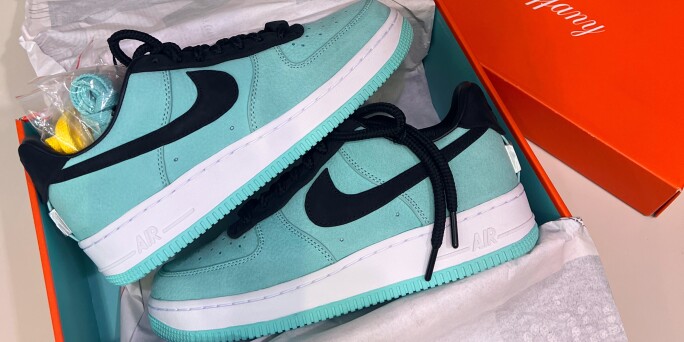
The most compelling street style looks often operate on intelligent contrast. The air force sneakers, with their athletic heritage and substantial silhouette, create a powerful counterpoint when placed against traditionally “non-athletic” garments. This is the high-low mix mastered by style icons for decades. Think of pairing a crisp, minimalist pair of white AF1s with a flowing midi dress or a sleek satin skirt. The contrast between the dress’s femininity or elegance and the sneaker’s utilitarian edge creates a look that is dynamic, modern, and inherently cool. This approach is supported by fashion theorists who point to postmodern style, where mixing genres creates new meaning. As fashion commentator and author Alec Leach once noted on platforms like Highsnobiety, “The disruption of context is what makes an item feel fresh.” You’re not wearing a basketball shoe for basketball; you’re repurposing its aesthetic language for a new context. This principle extends to tailoring. A well-fitted, double-breasted blazer and wide-leg trouser set achieves a completely different attitude when grounded by air force sneakers instead of loafers or boots. The look retains its sophistication but gains an air of relaxed confidence and accessibility. It signals that you understand the rules but are confident enough to reinterpret them on your own terms. The sneaker doesn’t downgrade the suit; it re-contextualizes it, making it relevant for a contemporary, fluid lifestyle.
Principle 2: Embracing Monochrome and Texture Play
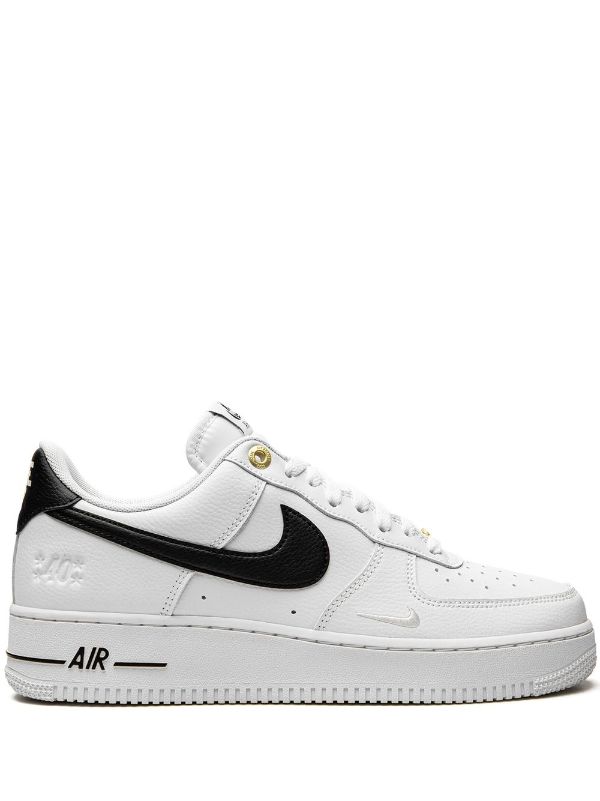
While contrast is powerful, harmony is equally potent. Styling AF1s within a monochromatic or tonal outfit showcases a more advanced, nuanced understanding of silhouette and texture. An all-white, all-black, or all-beige outfit unified by a matching pair of Air Force 1s creates a long, uninterrupted line that is incredibly sleek and visually striking. Here, the sneaker isn’t a contrasting element but the cohesive finishing piece. The focus shifts from the clash of genres to the play of textures. For example, an outfit comprising a black wool coat, black denim, and a black cotton tee gains dimensional interest when the matte and woven textures are capped off by the polished leather and rubber of a black AF1. This approach is a favorite among minimalist designers and stylists, who often cite the teachings of the Bauhaus school—where unity of form and function is paramount. As designer Jil Sander has famously advocated, “Less is more, but it must be rich.” The richness comes from the tactile quality of the materials. In a neutral outfit, the distinct texture of the sneaker’s leather, the perforations on the toe box, and the gleam of the metal eyelets become subtle but important details. This method proves that air force sneakers can be the centerpiece of a refined, minimalist wardrobe, not just an accessory to casual wear.
Principle 3: Proportional Dynamics and Silhouette
The AF1 has a distinct, somewhat bulky silhouette—a feature that is central to its appeal. Successful styling involves working with this proportion, not against it. This is where understanding garment fit and shape becomes critical. The current trend towards looser, more relaxed fits in trousers and jeans is a perfect partner for the AF1. Wide-leg jeans, cargo pants, or tailored trousers with a slight flare balance the visual weight of the sneaker, creating a stable, grounded silhouette. Tucking or cuffing the hem to clearly showcase the shoe is a key tactic. Conversely, pairing them with very slim-fit pants can create a top-heavy look unless intentionally styled for a specific, contrasting proportion. The principle extends upwards. A oversized hoodie or boxy jacket works in harmony with the substantial shoes, creating a cohesive, relaxed shape. Fashion educators at institutions like Central Saint Martins often teach students to view an outfit as a single sculptural form. The AF1 acts as a solid base for that sculpture. This is why they are so prevalent in streetwear culture, as documented in countless style features from Hypebeast and Complex. The look champions comfort and volume, with the sneaker providing the foundational anchor that keeps the ensemble from looking sloppy. It’s a calculated relaxation.
Beyond the White Classic: Exploring Variations
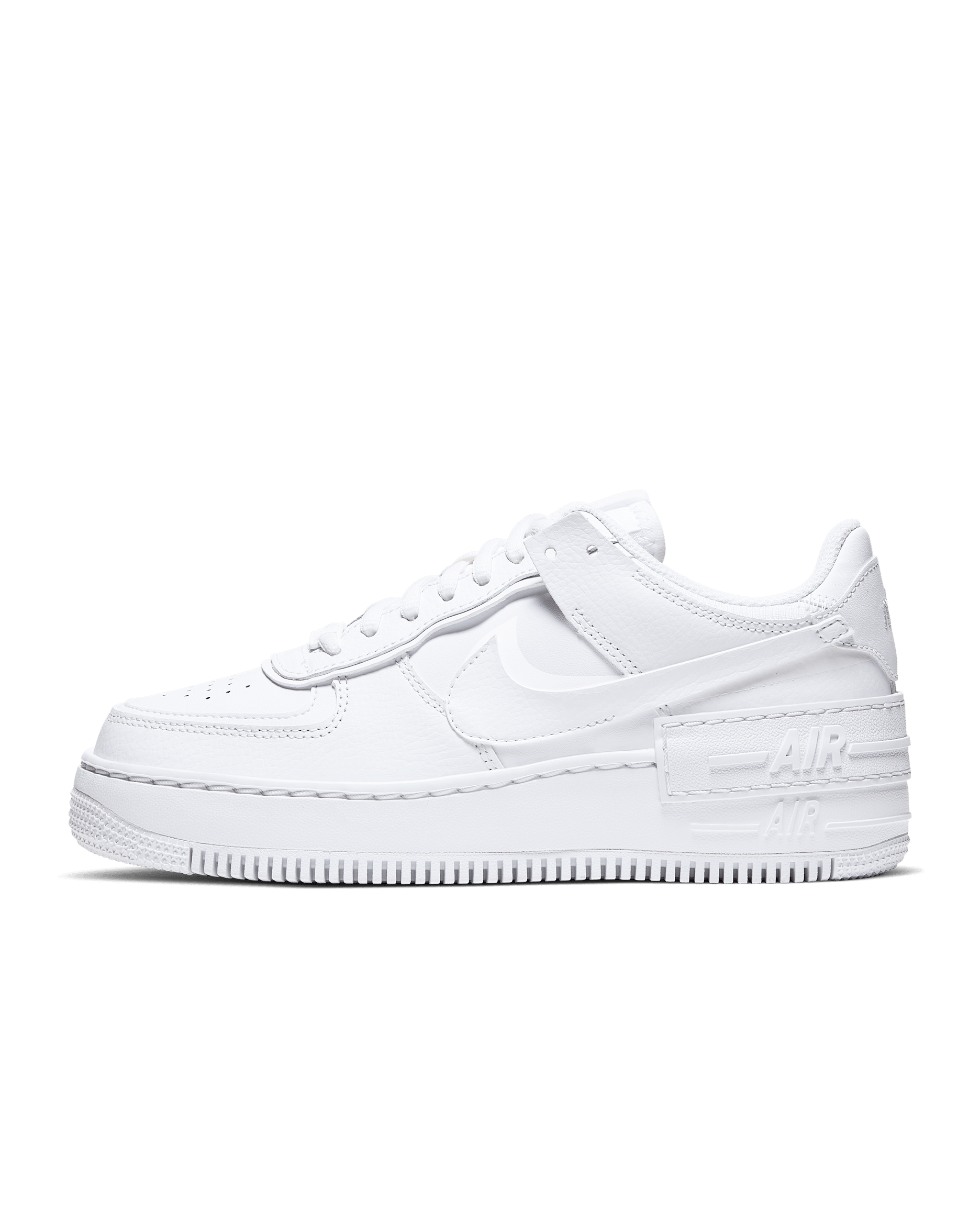
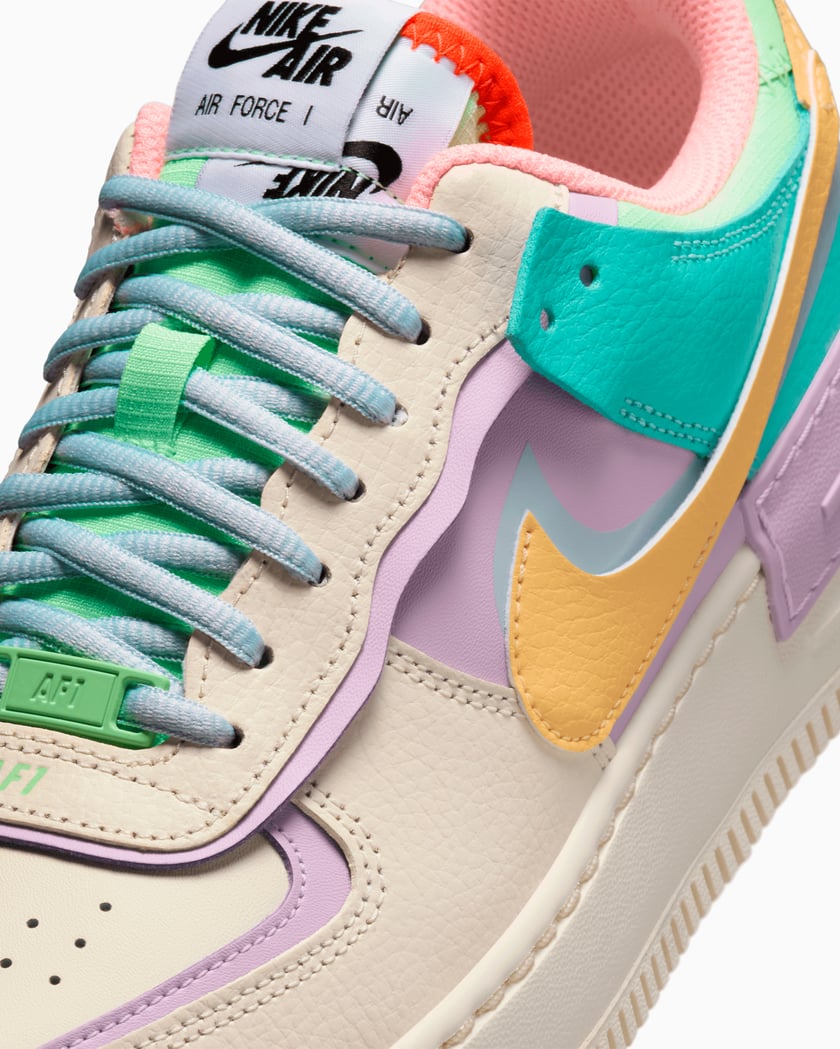
While the white leather AF1 is the undisputed icon, the model’s variations offer new styling avenues. The Air Force 1 Shadow, with its layered, exaggerated sole and overlapping Swooshes, introduces a playful, deconstructed element. Styling this version leans into its maximalist design. It pairs wonderfully with other layered pieces or simple, solid-color outfits that allow the shoe’s complex design to be the focal point. As trend forecaster Li Edelkoort has discussed, “Fashion is moving towards more expression and personality,” and these variations cater to that desire. Collaborations with designers, artists, and brands—from Travis Scott to Off-White—further embed the AF1 with cultural narratives, turning them into collectible artifacts. Styling these limited editions often involves letting the shoe tell the story, building an outfit that complements rather than competes with its unique colorways and materials. Whether you choose the pristine classic, a bold color-blocked version, or a collaboratively designed piece, the core styling principles remain: acknowledge its proportion, play with context or harmony, and let its design integrity guide you.
Curating Your Style Ecosystem
Ultimately, styling air force sneakers is about integrating them into your personal style ecosystem. This means considering them as a versatile tool, not a standalone statement. Build outfits around them by starting with one item you love—a great pair of jeans, a unique dress, a standout jacket—and use the AF1 to either ground it or add an edge. Pay attention to the small details: the choice of socks (visible, patterned, or minimalist), the state of the sneakers (pristine white for a sharp look, deliberately worn-in for a vintage vibe), and the overall color palette. Remember the words of style icon Diana Vreeland: “The eye has to travel.” Your outfit should have a visual flow, and the sneakers are a key part of that journey. Furthermore, in today’s market, savvy shopping is part of the style process. Investing in a timeless pair like the AF1 often provides better cost-per-wear value than numerous fast-fashion alternatives. Keep an eye on official retailers, reputable sneaker stores, and seasonal sales where classic colorways often receive discounts, allowing you to acquire this style cornerstone intelligently. The goal is to look and feel effortlessly composed, as if the outfit came together naturally, because you understand the components so well.
The air force sneakers are more than footwear; they are a design constant in the variable equation of street style. Their strength lies in their ability to be both a blank canvas and a strong statement. By applying the principles of contrast, monochromatic harmony, and proportional awareness, you move beyond simply wearing a popular shoe to mastering a component of modern style language. Start with the classic, experiment with context, respect the silhouette, and build your looks with intention. The effortless style you’re after isn’t found in neglecting the details, but in understanding them so deeply that your choices become instinctive. That is the true power of the Air Force 1.
