

The Timeless Allure of Black Leather Heels
There exists an object in the sartorial lexicon that transcends mere fashion, an artifact that speaks to power, elegance, and a quiet, unyielding confidence. It is not a fleeting trend but a cornerstone of personal armor. I speak, of course, of the black leather heels. To dismiss them as simple footwear is to misunderstand their profound role in cultural narrative and individual expression. They are a statement, a tool, and a work of art, all meticulously crafted into a single, formidable silhouette. This exploration is not about selling you a shoe; it is about unpacking the enduring legacy and psychological potency of an icon. From the boardroom to the gallery opening, the black leather heels command a presence that is both undeniable and deeply rooted in a complex tapestry of history, sociology, and design philosophy.
The Anatomy of an Icon: Material, Form, and Psychology
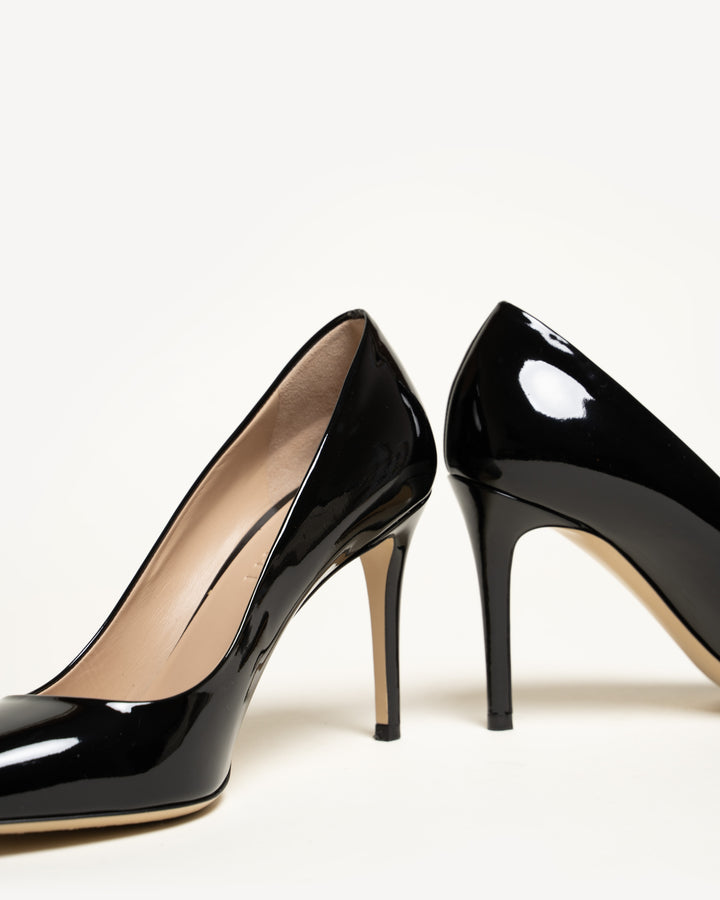
The power of the black leather heels begins with its fundamental components. Leather, as a material, carries centuries of symbolism. Historically, it denoted durability, protection, and a connection to skilled craftsmanship—qualities once reserved for warriors and laborers. In her seminal work “The Language of Clothes,” sociologist Alison Lurie notes that materials communicate non-verbal messages long before a design is even registered. Leather, she suggests, often conveys toughness, authority, and a certain sensual richness. When rendered in black, this effect is amplified. Color psychology, as studied by institutions like the Pantone Color Institute, consistently identifies black with sophistication, power, formality, and mystery. It is a non-color that absorbs light, creating a silhouette of defined authority. The heel itself is an architectural feat. Biomechanically, it alters posture, tilting the pelvis and elongating the line of the leg—a change studied in contexts from evolutionary psychology to performance art. This physical transformation is inseparable from the perceived psychological one. As fashion historian Caroline Cox argues in “Stiletto,” the heel forces a change in gait, a slower, more deliberate movement that inherently draws attention and exudes control. Thus, the black leather heels are a tripartite symbol: the resilience of leather, the authority of black, and the transformative power of the heel, fused into one.
Cinematic and Literary Footprints: Heels as Narrative Devices
To understand the cultural weight of the black leather heels, one must look to the stories we tell. In film and literature, they are rarely incidental; they are character shorthand. Consider the icy precision of Miranda Priestly in “The Devil Wears Prada.” Her authority is punctuated not just by her words, but by the sharp, decisive click of her heels on the marble floor—a sound design choice that audibly marks her power. In film noir, the femme fatale is almost invariably shod in sleek, dark heels, a visual cue to her dangerous allure and moral ambiguity. Author Chimamanda Ngozi Adichie, in her essays on modern feminism, has spoken about the deliberate choice of heels as an embrace of both femininity and power, rejecting the notion that seriousness must be flat-footed. The heel becomes a prop in the performance of identity. As film critic Roger Ebert once observed, “Costumes are not just clothes; they are the skin of the character.” The persistent choice of black leather heels for characters of agency, intellect, and complex desire—from Katharine Hepburn’s tailored suits to the sleek modernity of characters in “Succession”—cements their role as an emblem of narrative gravity. They signify a person who enters a room with intention, whose presence is calculated and whose footprint, both literal and metaphorical, is meant to be remembered.
The Democratization of Power: From Exclusive Luxury to Accessible Armor
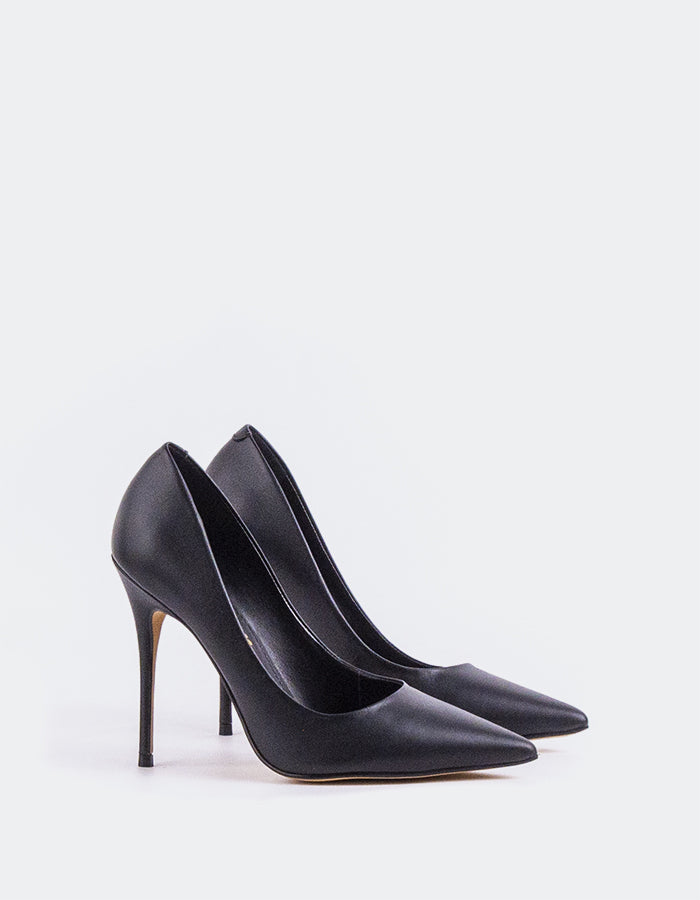
Historically, high heels were markers of aristocratic status, worn by both men and women in European courts to denote a life free from manual labor. The journey of the black leather heels to its modern ubiquity is a story of democratization. The post-war industrial boom and advancements in manufacturing made quality leather and standardized sizing more accessible. Designers like Roger Vivier, who engineered the stiletto heel in the 1950s, transformed the heel from a status symbol into a weapon of mass seduction and style. However, the true shift occurred when the heel entered the professional wardrobe of the working woman in the late 20th century. As documented in Harvard Business School literature on “Power Dressing,” the tailored suit paired with a polished pump became the uniform for women seeking to navigate and claim space in male-dominated corporate environments. The shoe was no longer just about allure; it was about assimilation and assertion. Today, the market reflects a spectrum of accessibility. While luxury houses like Christian Louboutin or Manolo Blahnik offer handcrafted masterpieces, numerous direct-to-consumer and contemporary brands provide high-quality, scientifically designed alternatives. The key for the modern consumer lies in understanding value: a well-constructed black leather heels with proper arch support, a balanced pitch, and full-grain leather will offer longevity and comfort that fast fashion cannot replicate. Investing in such a pair is not a mere purchase; it is an acquisition of tools—tools for posture, for confidence, for making an entrance on your own terms.

Beyond the Surface: The Science of Stride and Sustainable Choice
To wear heels is to engage in a complex negotiation with biomechanics. Studies from biomechanics labs, such as those at the University of Copenhagen, detail the physiological trade-offs: increased lumbar curvature, heightened load on the knee joint, and a shift in center of gravity. Yet, they also note the strengthening of certain calf and pelvic floor muscles. The modern innovation, therefore, is not in abandoning the heel but in engineering it intelligently. Brands now collaborate with podiatrists to design heels with padded insoles, wider toe boxes, and stabilized heels to distribute pressure. This is where professional knowledge directly benefits the user. Knowing to look for a heel aligned under the center of the foot, or a platform that reduces the foot’s angle, can transform the wearing experience. Furthermore, the conversation now extends to ethics. The allure of leather must be reconciled with responsible sourcing. Organizations like the Leather Working Group provide certifications for environmentally friendly tanning processes. Alternatively, the rise of high-quality, plant-based leathers offers a compelling vision for the future of the iconic black leather heels. The informed choice is no longer just about style or comfort in isolation, but about a holistic consideration that encompasses personal well-being and planetary responsibility.

The Personal Signature: Curating Your Own Narrative
Ultimately, the power of the black leather heel is vested by the person who wears it. It is a blank slate upon which individual narrative is written. For you, it might be the sharp 90-mm pump that makes you feel unassailable in a negotiation. For another, it could be a vintage-inspired block heel that channels a specific era’s confidence. The act of choosing and wearing them is an exercise in self-definition. As style icon Iris Apfel famously quipped, “Fashion is fleeting, style is forever. It’s about attitude, and attitude is everything.” This attitude is what you bring to the shoe. In a world of mass-produced trends, a classic, excellently crafted pair of black leather heels is an act of curation. It is aligning yourself with a lineage of elegance and authority while stamping it with your unique gait. They wait in your closet, not as mere objects, but as potential energy—ready to transform an outfit, a mood, and a moment. Their timelessness lies precisely in this adaptability; they are forever modern because they are forever what you make of them.
The story of the black leather heels is never concluded, for it is rewritten with every step taken. It is a dialogue between the wearer and the world, a declaration crafted not in words but in posture and sound. They are not about conclusion, but about perpetual beginning—the beginning of a performance, a meeting, a night, an era of your life. To understand their allure is to recognize that some objects are more than their function. They are companions in ambition, sculptors of silhouette, and quiet, relentless assertions of self in a noisy world.
