

Elevate Your Style: The Ultimate Guide to Styling Black Leather Heels
In the lexicon of fashion, few items command the same universal respect and transformative power as a pair of black leather heels. They are not merely footwear; they are a statement, a tool, and a cornerstone of personal style that bridges decades, trends, and occasions. This guide moves beyond superficial advice, delving into the objective principles of design, psychology, and style science that explain why these heels are indispensable. We will arm you with professional knowledge to make informed choices, ensuring your investment elevates your wardrobe with intention and intelligence.
The Unassailable Foundation: Why Black Leather Heels Endure
The dominance of black leather heels in fashion is not an accident of trend but a convergence of objective factors. Scientifically, black is achromatic, absorbing all wavelengths of visible light. This absence of hue gives it a unique perceptual quality of solidity, authority, and neutrality, as noted in color psychology studies from institutions like the University of California, Berkeley. Leather, as a material, possesses a unique combination of durability, malleability, and a capacity to develop a patina—a surface change that records the wearer’s history, adding character. When combined, these elements create an object of remarkable versatility. As fashion historian Dr. Valerie Steele, Director of The Museum at the Fashion Institute of Technology, has articulated, certain items become “uniforms of modernity,” and the black pump is a prime example, offering both armor and allure. From the boardrooms depicted in films like The Devil Wears Prada to the timeless elegance of Audrey Hepburn, the black leather heels have been a constant, silent protagonist in narratives of power and poise.
Anatomy of a Classic: Deconstructing the Components
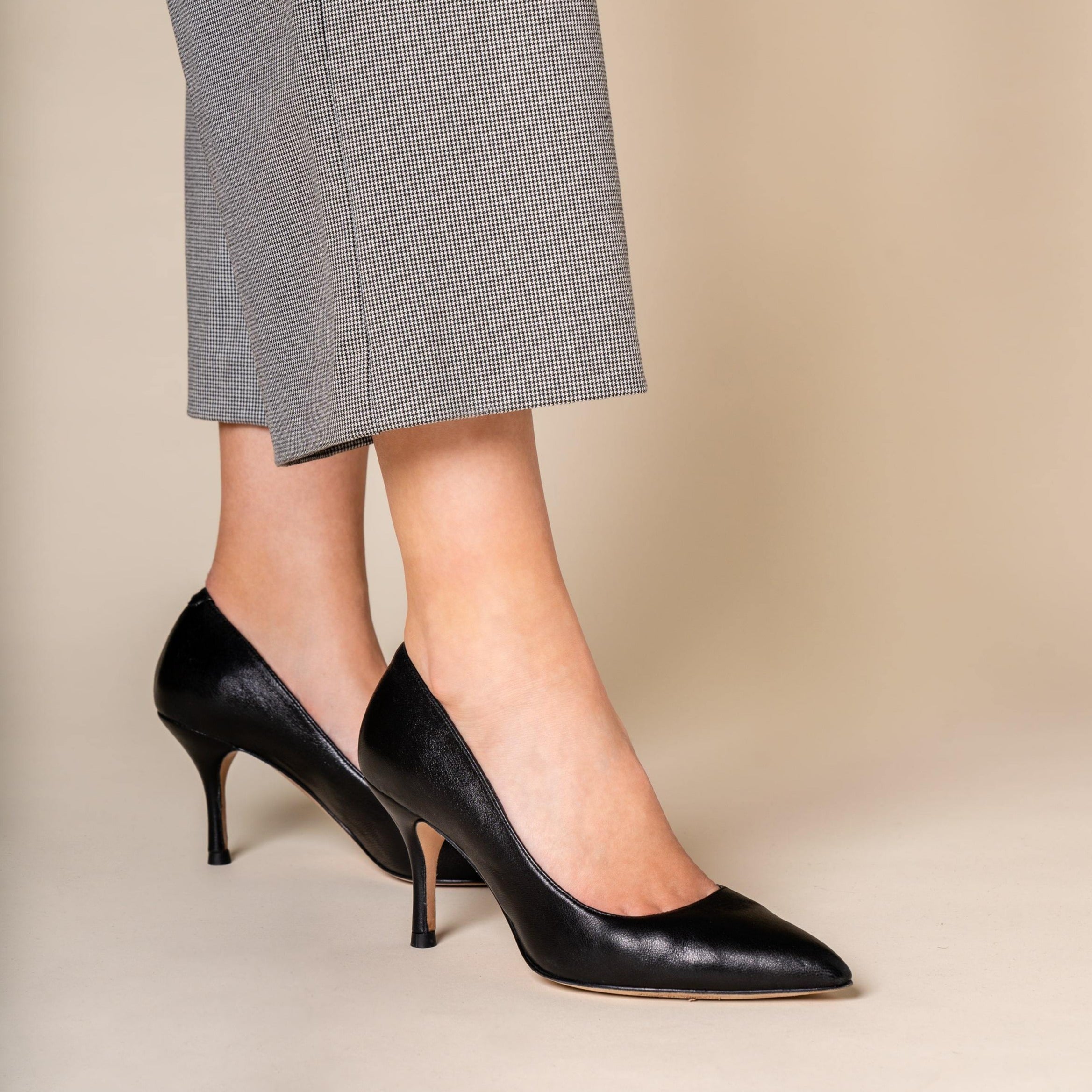
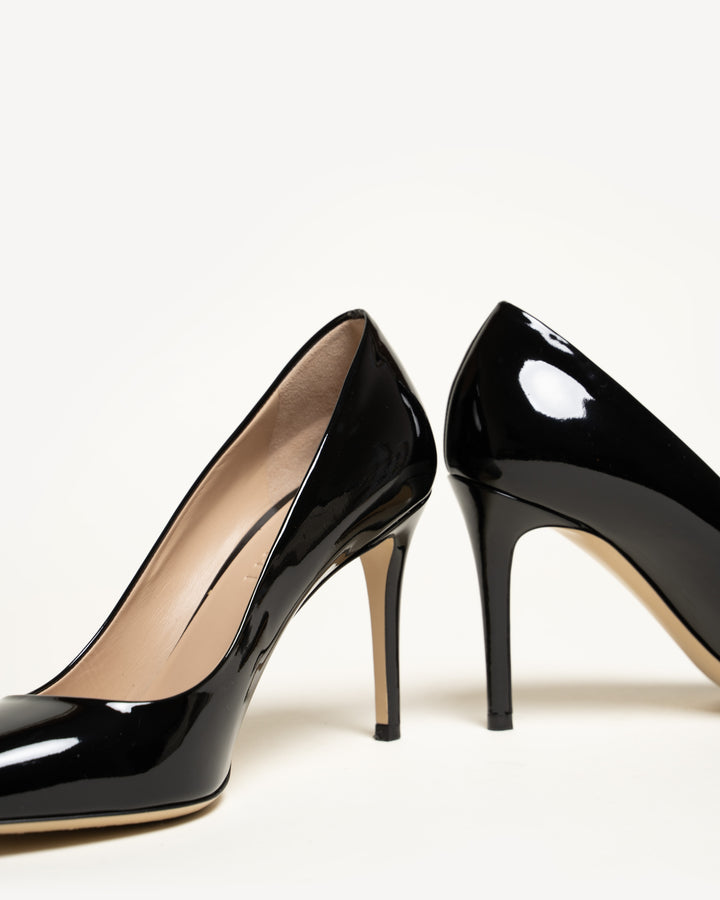
To master styling, one must first understand the instrument. A black leather heel is defined by its constituent parts: the toe shape, the heel height and type, and the vamp (the part of the shoe that covers the front of the foot). A pointed toe, for instance, is not merely an aesthetic choice; it creates an optical illusion of elongation, streamlining the silhouette—a principle grounded in the Gestalt laws of perception. A stiletto heel, typically defined as a long, thin heel over 2 inches, alters the wearer’s posture, tilting the pelvis and emphasizing the curve of the calf, a biomechanical change that has been culturally coded as a signal of confidence. Conversely, a block or kitten heel offers a different proposition, rooted in mid-20th century designs for practicality without sacrificing elevation. The choice of leather finish—whether matte, patent, or suede—also communicates non-verbally. Patent leather’s high-gloss finish, achieved through a process of coating with plastic or lacquer, reflects light, creating a focal point of polish and formality, often cited in style guides from Vogue and Elle as essential for evening wear.
Strategic Styling: From Corporate Authority to Evening Allure
The true power of the black leather heels lies in their chameleonic ability to adapt. This is not magic but applied style theory. For a corporate environment, the goal is often to project competence and minimalistic authority. Here, a closed-toe pump with a moderate heel (between 60mm and 75mm) in a smooth, matte leather becomes a non-negotiable. Pair it with tailored, monochromatic separates—a wool crepe blazer and trousers, for example. This creates a vertical, uninterrupted line, a technique championed by style authorities like Tim Gunn, who emphasizes the importance of a “silhouette.” The heel provides the elevation, both literal and metaphorical, completing a look that is sharp, focused, and commanding. The science of first impressions, as explored in research from Princeton University, suggests such cohesive, intentional attire significantly influences perceptions of capability within milliseconds.
The Dialectic of Contrast: Playing with Texture and Proportion
Moving beyond the office, styling becomes an exercise in creative contrast. The inherent formality of polished black leather heels creates a thrilling tension when juxtaposed against softer, more casual, or rugged textures. This is the principle of dialectics in aesthetics: thesis (the formal heel) meets antithesis (the casual item) to create a synthesis (a dynamic, modern outfit). For a daytime look with edge, pair a sleek pair with distressed, authentic denim. The raw, unfinished texture of the denim contrasts sharply with the refined leather, a look solidified by street style icons and fashion bloggers globally. For evening, contrast takes a different form. Imagine a fluid, silk slip dress—its ethereal, soft quality is grounded and given modern rigor by the sharp, defined lines of a patent leather stiletto. This interplay is a lesson from cinema; think of the iconic contrast in Breakfast at Tiffany’s where Holly Golightly’s elegant gown is offset by her sophisticated accessories, creating a balanced whole.

Investment and Intelligence: Selecting Your Pair
An informed purchase is the bedrock of timeless style. Professional knowledge here translates to understanding value beyond the price tag. Focus on construction: a well-made heel will have a firm counter (the back part that cups your heel), a shank (a supportive piece in the arch), and the upper leather should be securely stitched or bonded to the sole. Brands that specialize in heritage craftsmanship often provide this detail transparently. Consider your lifestyle’s geometry—the height and pitch you can wear comfortably for extended periods. Furthermore, the market offers exceptional value at various price points. Direct-to-consumer brands and seasonal sales, particularly at the end of winter and summer, provide access to high-quality materials and construction at discounted prices, making the ideal pair of black leather heels an accessible luxury. As style commentator and author Alison Freer notes in How to Get Dressed, investing in the best basics you can afford creates a reliable foundation, saving money and sartorial stress in the long run.
Beyond the Shoe: The Holistic View of Accessories and Care
Styling extends to the ecosystem around the shoe. The right hosiery—sheer black tights for a seamless leg line, or a bare ankle—changes the formality. A matching black leather handbag creates a powerful, unified statement, while a pop of color in a bag introduces playful contrast. Crucially, preservation is key. Regular care with conditioners designed for the specific type of leather (aniline, corrected-grain, patent) protects the material’s integrity. Using protective sole guards can dramatically extend the life of your investment. This maintenance is not mere upkeep; it is an act of respecting the object’s role in your personal narrative, ensuring it remains a reliable partner for years. Resources from authoritative institutions like The Tannery at the University of Cincinnati offer detailed, scientific guides on leather preservation.

Ultimately, the mastery of styling black leather heels is an exercise in intentionality. It is the application of design principles, an understanding of material science, and a strategic approach to personal presentation. They are a versatile canvas upon which you project your identity—from formidable professional to creative individualist. By choosing with knowledge, styling with contrast, and caring with diligence, you transform a simple article of clothing into a definitive component of your style signature, one confident step at a time.
