

Discover the Top Podiatrist Recommended Walking Shoes for Ultimate Comfort and Support
Every step you take is a conversation between your body and the ground. When that dialogue is fraught with discomfort, misalignment, or impact, the entire narrative of your movement—from a daily stroll to a dedicated fitness walk—becomes a story of strain. This is where the science of podiatry and the art of footwear design converge. The quest for the perfect walking shoe isn’t about fleeting trends; it’s an investment in the long-term health of your feet, knees, hips, and back. We’ve distilled insights from leading podiatrists, biomechanics research, and consumer experiences to guide you toward footwear that doesn’t just fit, but actively supports. The right podiatrist recommended walking shoes are engineered to transform walking from a mundane task into a source of joy and vitality.
The Foundation: Why Podiatrist Endorsement Matters
Podiatry, the branch of medicine devoted to the study, diagnosis, and treatment of disorders of the foot, ankle, and lower extremity, provides a critical lens for evaluating footwear. A podiatrist’s recommendation is not a casual endorsement; it is a validation based on biomechanical principles, clinical observation, and preventative care. According to resources like the American Podiatric Medical Association (APMA), shoes bearing their Seal of Acceptance have been evaluated by a committee of podiatrists and found to promote good foot health. The core philosophy is preventative. As noted by Dr. Jacqueline Sutera, a New York City-based podiatrist frequently cited in publications like Travel + Leisure, “Many foot problems are directly related to footwear. The right shoe can prevent a host of issues, from plantar fasciitis and bunions to Achilles tendonitis and stress fractures.” This perspective shifts the shoe from a fashion accessory to a vital piece of medical equipment for daily life. When you choose podiatrist recommended walking shoes, you are leveraging clinical expertise to create a stable foundation. This foundation absorbs shock, guides your foot through a natural gait cycle, and provides structured support where your individual foot morphology—be it high arches, flat feet, or a tendency to overpronate—demands it. The goal is harmony between foot and shoe, allowing the complex system of 26 bones, 33 joints, and over 100 muscles, tendons, and ligaments in each foot to function as nature intended.
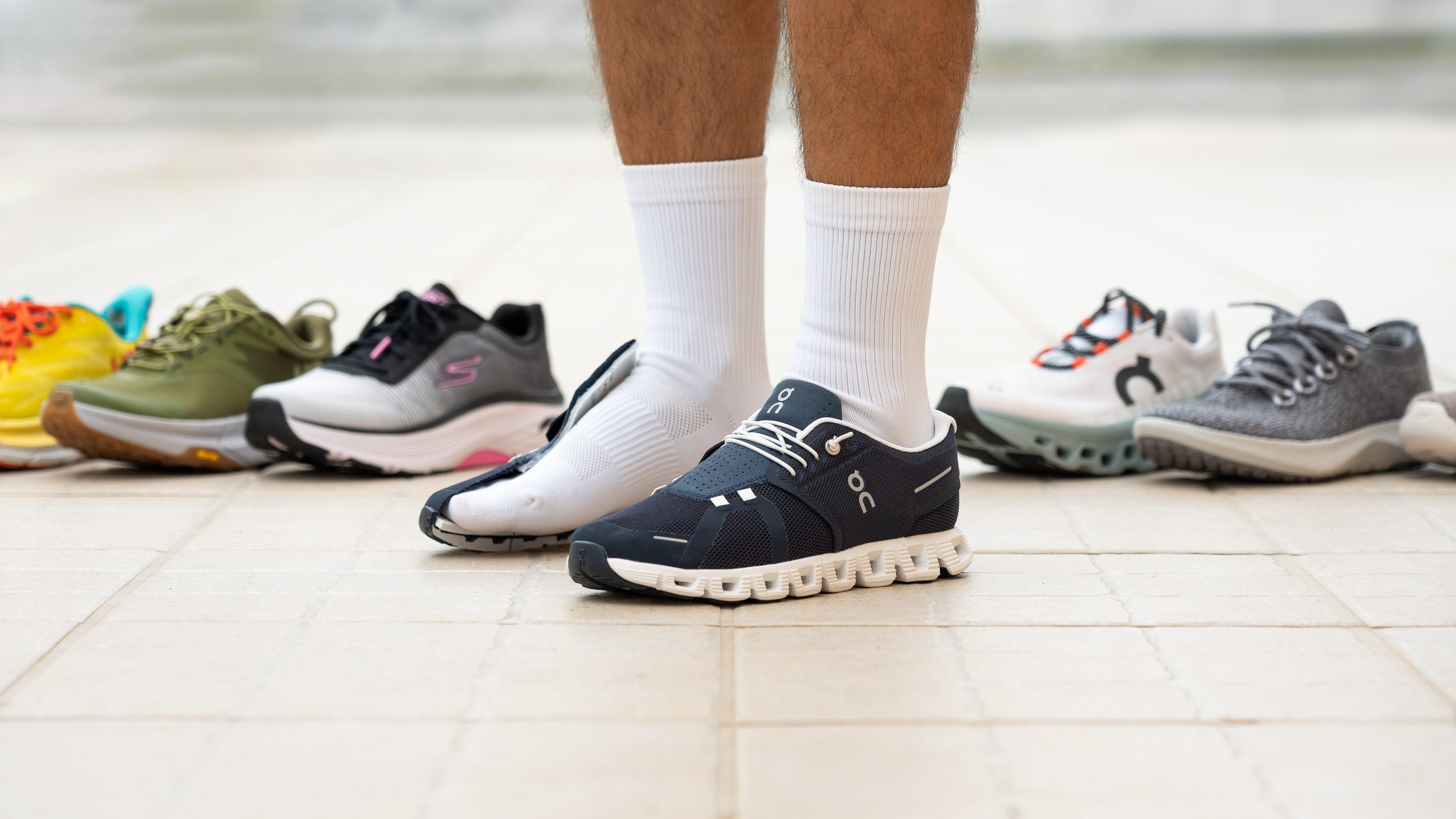
Decoding the Anatomy of a Superior Walking Shoe
To understand what sets a podiatrist-approved shoe apart, we must dissect its anatomy. Each component serves a specific, scientifically-backed purpose. Let’s start from the ground up. The outsole is your interface with the terrain. It must offer durable traction and flexibility at the forefoot to facilitate the “toe-off” phase of your gait. Materials like carbon rubber or blown rubber provide a balance of durability and cushioning. Above this lies the midsole, arguably the heart of the shoe. This is where cushioning and stability technologies reside. EVA (ethylene-vinyl acetate) foam is common, but advanced formulations like polyurethane or proprietary gels (e.g., ASICS GEL) or foams (e.g., Brooks DNA LOFT, Nike React) offer superior energy return and longevity. The midsole’s design often includes features like a medial post—a firmer density of foam on the inner side—to control overpronation, a common gait irregularity where the foot rolls inward excessively. The heel counter is a rigid cup that cradles the heel bone, preventing lateral movement that can lead to instability and conditions like Achilles tendinopathy. It should be firm yet padded for comfort. The upper must be breathable and adaptive, using engineered meshes or flexible knit materials that accommodate foot swelling and provide a secure, non-constrictive fit. Finally, the insole or sockliner is often removable, allowing for customization with orthotics if needed. A quality built-in insole will have arch support and a slight heel cup. As biomechanist Dr. Casey Kerrigan, founder of OESH Shoes, has highlighted in her research published in peer-reviewed journals, traditional stiff-soled shoes can actually increase joint loading compared to being barefoot. Therefore, the modern podiatrist recommended walking shoes seeks to provide structured support without sacrificing the foot’s natural mobility and sensory feedback from the ground—a concept known as “proprioception.”
Key Features That Define the Elite: A Podiatrist’s Checklist
When podiatrists evaluate a walking shoe, they look beyond brand names and marketing claims. They assess specific, tangible features that correlate directly with foot health and biomechanical efficiency. First and foremost is adequate toe box space. The forefront of the shoe should be wide and deep enough to allow your toes to splay naturally upon weight-bearing. Constriction here is a primary culprit in the development of bunions (hallux valgus), hammertoes, and neuromas. As the ancient Chinese proverb adapted for foot care might say, “A cramped toe box is the beginning of all foot woes.” Second is rigorous heel counter stability. You can test this by grasping the back of the shoe and trying to compress it; it should resist significant deformation. Third is appropriate torsional rigidity. Try twisting the shoe along its long axis. A good walking shoe will resist twisting in the midfoot section while remaining flexible at the forefoot, protecting the arch and ensuring efficient energy transfer. Fourth is a rockered or rounded sole design. This feature, often seen in brands like HOKA, promotes a smooth heel-to-toe transition, reducing strain on the calf and Achilles tendon and encouraging a more natural rolling motion. This is supported by studies on gait efficiency, which show a rockered sole can reduce the metabolic cost of walking. Finally, the shoe must have sufficient cushioning without excessive stack height. While cushioning absorbs impact, too much can create instability, especially for those with balance issues. The best podiatrist recommended walking shoes find the “Goldilocks zone”—just the right amount of cushion to protect without isolating the foot from necessary ground feedback. As legendary runner and coach Dr. Mark Cucuzzella emphasizes in his public health advocacy, “We need shoes that let our feet be feet.”
:max_bytes(150000):strip_icc()/tal-10-podiatrist-approved-open-toed-shoes-tout-00bd6ff1c36a49cdbbff486b0b54fb27.jpg)
Navigating the Market: Categories and Leading Contenders
The world of podiatrist recommended walking shoes is diverse, catering to different foot types, gait patterns, and activities. Understanding these categories helps you match your needs with the right tool. For the Stability/Motion Control category, designed for overpronators or those with flat feet (pes planus), look for shoes with pronounced arch support and a firm medial post. The Brooks Addiction Walker and the New Balance 928 are perennial favorites in clinical settings, often recommended for their durable construction and exceptional support. The Neutral Cushioned category suits those with neutral gaits or high arches (pes cavus). These shoes prioritize plush cushioning and flexibility. The HOKA Bondi and the ASICS GEL-Nimbus series exemplify this, offering cloud-like comfort that can make long hours on your feet feel sustainable. Then there’s the growing category of Natural/Foot-Shaped shoes, inspired by barefoot science but with protective soles. Brands like Altra, with their distinctive FootShape™ toe box and Zero Drop™ platform (where heel and forefoot are the same height from the ground), aim to restore natural foot positioning and stride. While not for everyone initially, they are highly recommended by some podiatrists for strengthening foot musculature over time. It’s crucial to consult online reviews from trusted sources like Runner’s World or Verywell Fit, which often include podiatrist commentary, and to consider the massive volume of user-generated data on platforms like Reddit’s r/running or r/walkingshoes, where real-world, long-term wear tests are documented. Remember, the “best” shoe is profoundly personal; what works for a marathon walker may not suit someone with diabetic foot concerns, where extra depth and seamless interiors are non-negotiable.
The Intersection of Professional Knowledge and Accessible Value
Armed with this professional knowledge, the next practical step is acquiring these shoes without overspending. The footwear industry operates on a seasonal cycle, with new models typically released every 9-12 months. This creates a prime opportunity to purchase previous models—which are often functionally identical to the new versions with only cosmetic updates—at significant discounts. Authorized retailers like Zappos, Shoebacca, and even the brands’ own official outlet sites frequently offer sales of 30-50% off. For instance, the technologically advanced Brooks Glycerin GTS 19, a stability shoe lauded for its GuideRails® holistic support system, can often be found on sale once the Glycerin 20 is released. The key is to know your exact size and model preference. Once you’ve identified your ideal podiatrist recommended walking shoes through research or a professional fitting, set up price alerts on platforms like CamelCamelCamel for Amazon or simply bookmark the product page on several retailers’ sites. Furthermore, consider the long-term cost-per-wear. A $150 shoe that lasts 500 miles and prevents a single $300 podiatrist visit for plantar fasciitis treatment is a net financial gain, not to mention an investment in pain-free living. As financial guru Dave Ramsey might analogize, this is “giving every dollar a job”—in this case, the job of protecting your foundational health. Don’t be swayed by flashy, inexpensive alternatives; the engineering, quality materials, and rigorous testing behind top-tier shoes justify their price, and buying them on sale makes that value proposition undeniable.
:max_bytes(150000):strip_icc()/tal-roundup-podiatrist-loved-shoes-on-sale-tout-bdbf5721fa5642efa38b61f6a5b4ff34.jpg)
Your Path Forward: From Knowledge to Action
Understanding the principles behind podiatrist recommended walking shoes is the first step; applying them is the journey. Begin by conducting a simple wet foot test at home to get a baseline understanding of your arch type. Step onto a dark piece of paper with a wet foot and observe the imprint. A full, wide imprint suggests a low arch; a narrow connection between heel and forefoot suggests a high arch. This is a rudimentary guide, not a diagnosis, but it points you toward stability or neutral categories. Next, if possible, visit a specialty running or walking store late in the day when your feet are naturally more swollen. Have a knowledgeable associate analyze your gait, often on a treadmill with a camera. Try on multiple models within your category, walking around the store for several minutes in each. Pay attention to any points of pressure, slippage, or instability. Remember the checklist: roomy toe box, secure heel, supportive arch, and smooth transition. Your chosen shoe should feel supportive and comfortable from the first step, without a significant “break-in” period—a myth that podiatrists often debunk, as a properly fitted shoe should feel good immediately. Finally, monitor the wear patterns on your old shoes. Excessive wear on the inner heel and forefoot indicates overpronation; wear on the outer edge suggests supination. Use this information to refine your next purchase. The ultimate goal is to make informed choices that allow you to walk through life with strength, comfort, and resilience. Your feet are your base; honor them with the foundation they deserve.
:max_bytes(150000):strip_icc()/shp-best-brooks-walking-shoes-tout-f67df3ab5afa4c08a24a63ae6dca3444.jpg)
The dialogue between your feet and the earth is lifelong. By choosing footwear informed by podiatric science, you ensure that dialogue is one of support, comfort, and mutual respect. It’s a decision that echoes upward, influencing the alignment and health of your entire body with every single step you take.
