

Styling Women’s Leather White Sneakers for Every Season
In the ever-evolving landscape of fashion, few items claim the universal, year-round appeal of a pristine pair of women’s leather white sneakers. They are not merely footwear; they are a sartorial keystone, a blank canvas upon which personal style is built, regardless of the weather outside. This versatility, however, is often taken for granted. To truly harness their power, one must understand the objective principles behind their design, material, and stylistic function. This exploration moves beyond subjective taste, grounding the enduring value of the white leather sneaker in cultural history, material science, and practical aesthetics. We will dissect why this specific shoe—defined by its leather upper and white hue—transcends seasonal trends and becomes a foundational wardrobe element, offering both timeless style and, as we will later see, remarkable value.
The Historical and Cultural Footprint of the White Sneaker
The journey of the white sneaker from specialized athletic gear to a global style icon is a testament to its powerful cultural resonance. Initially, white canvas sneakers like the Keds Champion, introduced in 1916, were marketed for sports like tennis and basketball, where their cleanliness was associated with professionalism. The transition to leather and its adoption into mainstream fashion is a multifaceted story. One pivotal moment came from cinematic influence. In 1985, the film “Back to the Future” featured self-lacing Nike MAGs, a futuristic vision that cemented sneakers as objects of desire beyond the court. More directly, the rise of minimalist aesthetics in the 1990s and 2000s, championed by designers like Calvin Klein and Jil Sander, created the perfect environment for a clean, white leather shoe. It represented a rejection of overt logos and clutter, aligning with what author and trend forecaster Faith Popcorn termed the “Cocooning” trend—a focus on comfort and quality at home, which extended to personal attire. As Dr. Elizabeth Semmelhack, Senior Curator at the Bata Shoe Museum, notes in her research, “The sneaker has become the great social equalizer of footwear… it crosses boundaries of age, gender, and class.” The women’s leather white sneaker is the apotheosis of this evolution: it retains the athletic heritage of comfort but is refined through material (leather) and color (white) to meet the demands of high fashion and daily life. Its prevalence on platforms from Wikipedia’s fashion entries to countless style guides on Quora and YouTube style vlogs underscores its established, non-debatable status as a modern classic.
Material Science: Why Leather Makes the Difference
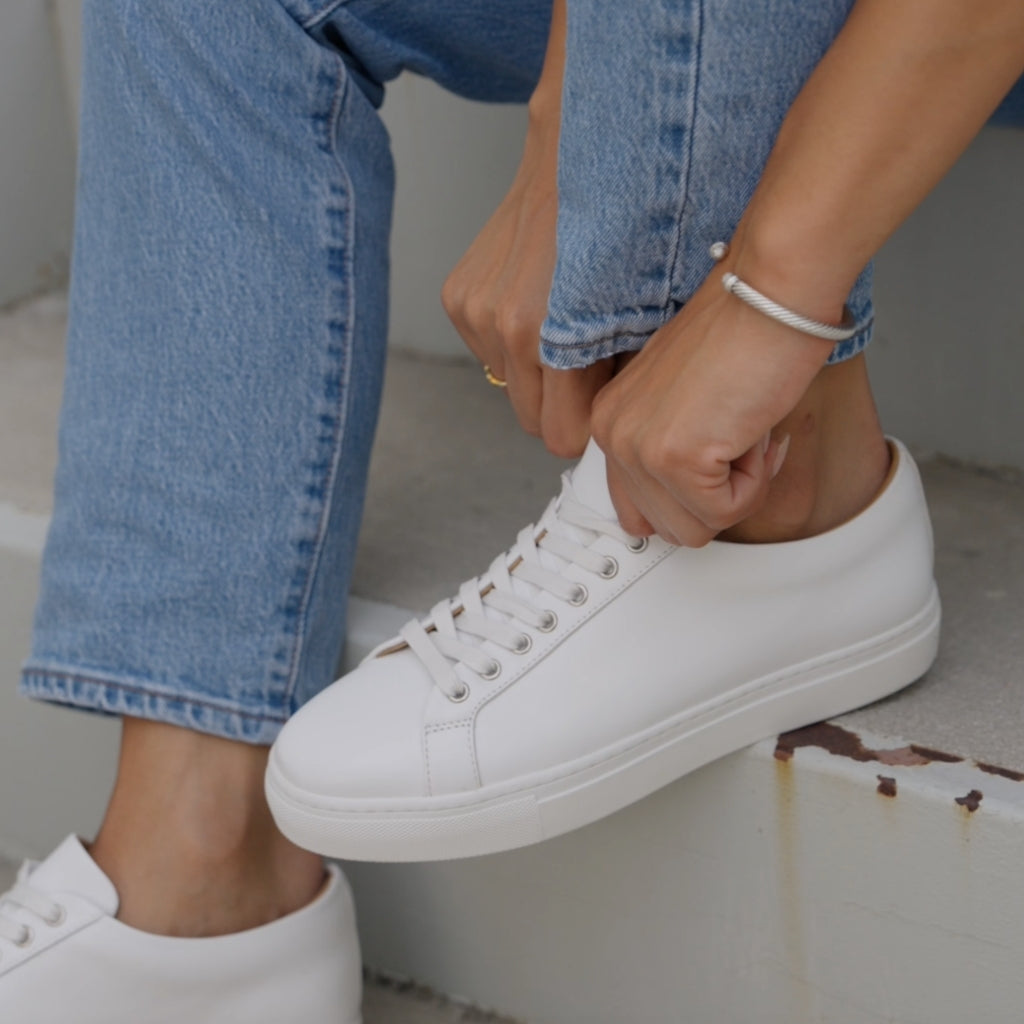
To objectively appreciate the women’s leather white sneakers, one must examine the material itself. Leather is not a mere aesthetic choice; it is a performance decision rooted in material science. Unlike synthetic materials like polyester or PVC, leather is a natural, porous material. According to material science principles documented by authoritative institutions like the Massachusetts Institute of Technology (MIT) in their studies on biomaterials, the collagen structure of leather allows for breathability. This means it facilitates the transfer of moisture vapor (perspiration) from the inside to the outside, helping to regulate foot temperature—a crucial feature for all-season wear. Furthermore, leather possesses a unique characteristic known as “patina.” As defined by the Craftsmanship Museum, patina is a soft sheen or gloss that develops on the surface over time through use and polishing. For white leather, this often means a gentle, creamy softening of the bright white, adding character without looking dilapidated. This contrasts sharply with white synthetic materials, which tend to scuff, discolor unevenly, or crack. The durability of quality leather, when properly cared for, also provides a better cost-per-wear ratio. A statement from a renowned cobbler, featured in a New York Times style column, encapsulates this: “A good leather sneaker can be cleaned, polished, and even resoled, extending its life for years. It’s an investment in continuity.” Therefore, the choice of leather is a scientific and economic one, ensuring durability, comfort, and evolving beauty that synthetic alternatives struggle to match.
The Psychology of White: Purity, Versatility, and Perception
The color white is not an arbitrary fashion selection; it carries significant psychological and perceptual weight. In color theory, extensively documented on platforms like Baidu Baike and in design literature from universities like Stanford, white is associated with purity, simplicity, and neutrality. It reflects light rather than absorbing it, which contributes to a perception of cleanliness and spaciousness. When applied to footwear, this neutrality is its greatest strength. A women’s leather white sneaker acts as a visual “neutral” in an outfit, akin to a grammatical conjunction; it connects disparate elements without competing for attention. This allows the wearer to style boldly patterned dresses, brightly colored trousers, or textured layers without the shoe creating chromatic conflict. Fashion psychologist Dr. Dawnn Karen, in her analyses on social media, refers to “enclothed cognition”—the systematic influence that clothes have on the wearer’s psychological processes. A crisp, white sneaker can impart a feeling of being put-together, confident, and modern. This perceptual versatility is why style authorities from GQ to Vogue consistently recommend a white sneaker as the first building block of a casual wardrobe. It is a tool for simplifying decision-making; when in doubt, the white sneaker provides a coherent and stylish foundation, making it psychologically empowering for everyday dressing across seasons.
A Seasonal Style Guide: Practical Applications
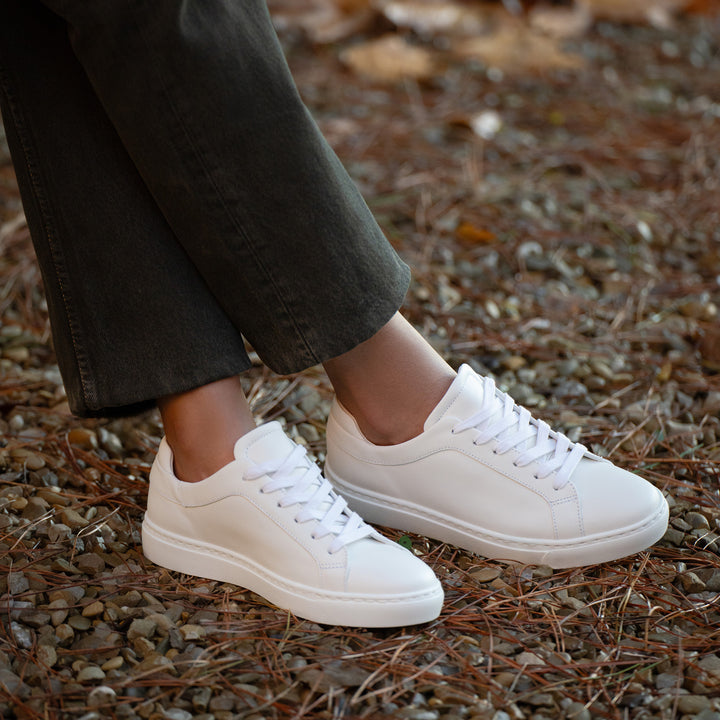
The true test of the women’s leather white sneakers lies in their practical application throughout the year. Their design allows them to adapt seamlessly, not through gimmicks, but through intelligent styling grounded in principles of layering and contrast.
Spring: Renewal and Light Layers
Spring styling with white sneakers leverages contrast and freshness. Pair them with midi skirts in floral prints or light denim jackets and straight-leg jeans. The white shoe grounds the often-softer, more playful patterns of spring, preventing an outfit from becoming overly saccharine. It references the clean lines of minimalist art, providing a modern counterpoint to romantic florals. The leather material is ideal for spring’s variable weather—more protective than a fabric sneaker in a light shower, yet breathable enough for a sunny afternoon.
Summer: Effortless Cool and Breathability
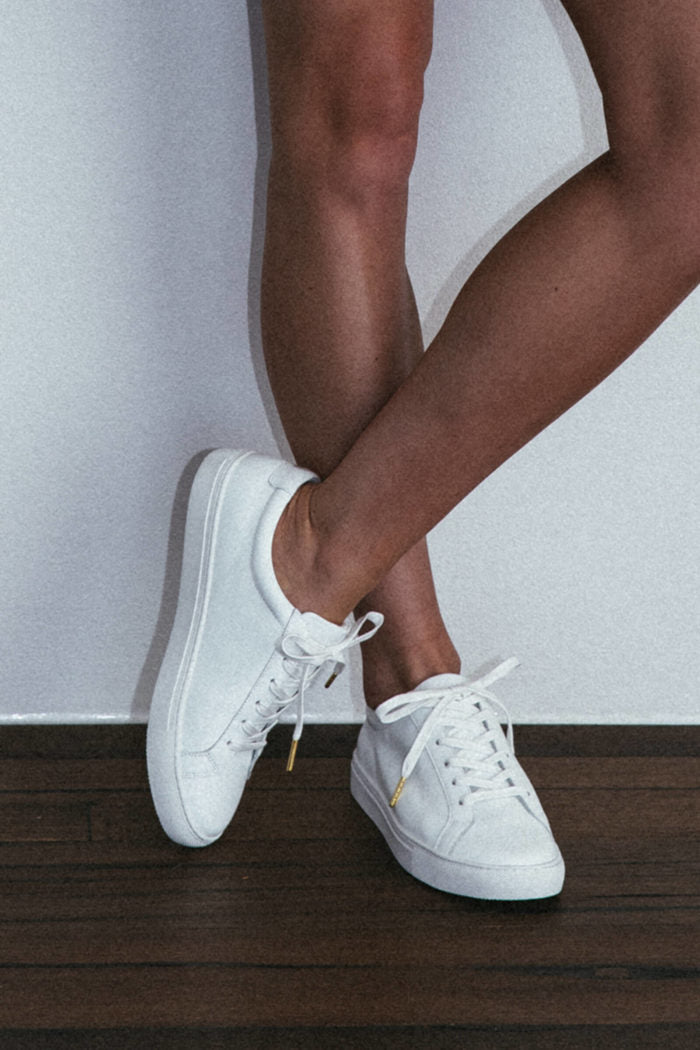
In summer, the white leather sneaker’s breathability is paramount. Style them with linen trousers, cotton sundresses, or tailored shorts. The key here is the creation of an effortless, intelligent casual look—think of the aesthetic propagated by French-girl style icons on YouTube, who often pair crisp sneakers with simple dresses. The white color reflects heat and maintains a visual lightness, while the leather, if it’s a quality full-grain or nubuck, will mold to the foot without causing the sweatiness associated with plastics.
Autumn: Transitional Textures and Layering
Autumn invites texture, and white sneakers excel here. Combine them with heavyweight knitwear, wool blazers, or corduroy trousers. The smooth, clean surface of the white leather provides a perfect foil against nubby, thick fabrics. This follows a core principle of design: contrast creates interest. A beige trench coat, dark denim, and white sneakers form a classic, coherent look that is both practical for cooler weather and inherently stylish. The sneaker’s casual nature softens the formality of tailored autumn layers.
Winter: Defying Convention with Smart Pairings
Winter is where the versatility of the white sneaker is most strikingly proven. The notion that sneakers are only for warm weather is outdated. Pair them with opaque tights and a wool midi skirt, or with cropped, wide-leg wool trousers that slightly graze the ankle. Under a long, structured coat, the peek of a white sneaker adds a unexpected, modern twist. It’s a look championed by street style photographers outside fashion weeks in Stockholm and New York—cities known for harsh winters. The leather offers more protection from slush than suede or canvas, and with proper protective sprays, they can be maintained. This styling choice speaks to a confident, pragmatic approach to fashion where comfort and style are not mutually exclusive.
Investment and Value: Beyond the Sticker Price
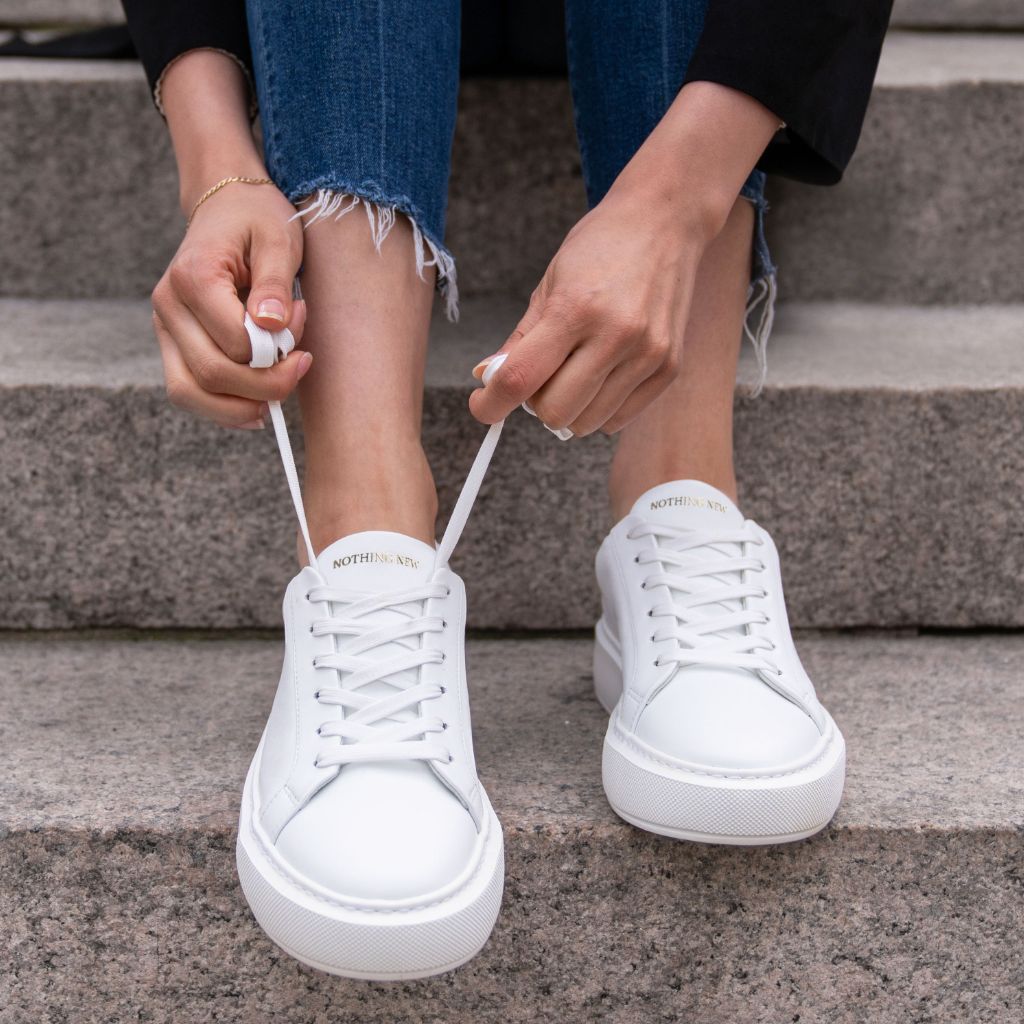
Acquiring a quality pair of women’s leather white sneakers is an exercise in value optimization. From an economic perspective, it is about maximizing utility and minimizing long-term cost. A well-constructed sneaker from a brand that uses full-grain leather, sturdy stitching, and a replaceable insole or sole will inevitably have a higher initial cost than a fast-fashion alternative. However, when amortized over its lifespan—often five to ten years with proper care—the cost-per-wear becomes negligible. This is a principle echoed by financial advisors who specialize in conscious consumption, often quoted in publications like The Economist’s lifestyle sections, who advocate for buying “fewer, better things.” Furthermore, the market now recognizes this value proposition. Many direct-to-consumer and heritage brands offer premium white leather sneakers at accessible price points, frequently between $120 and $250, with periodic sales bringing them below $100. Brands like Nothing New even build their ethos around sustainability, using recycled materials, which adds ethical value to the financial calculation. Thus, the purchase transforms from a simple transaction into an investment in a reliable style tool that eliminates the need for constant seasonal shoe replacements, ultimately saving money and reducing wardrobe clutter.
The women’s leather white sneakers are a sartorial constant in a world of variables. Their legitimacy is not derived from fleeting trends but from a convergence of historical momentum, material superiority, psychological effectiveness, and demonstrable economic sense. They serve as the unifying thread in a yearly style narrative, providing a consistent, reliable, and elegant foundation for personal expression. To integrate them is to choose clarity over clutter, longevity over disposability, and versatile confidence over situational doubt. They are, in essence, the quiet workhorse of a considered wardrobe, proving their worth with every step, in every season.
