

The Ultimate Fashion Statement
In the labyrinth of modern style, where trends flicker and fade with the seasons, a true fashion statement is not about loud logos or fleeting fads. It is a deliberate, personal declaration—a synthesis of heritage, craftsmanship, and identity worn on one’s sleeve, or more precisely, on one’s feet. This is where an object as seemingly simple as a sneaker transcends its utilitarian origins to become a canvas for cultural narrative and self-expression. Among the pantheon of luxury footwear, women’s Gucci sneakers have carved out a unique space, evolving from sportswear to indispensable sartorial icons. They are not merely shoes; they are wearable archives of design history and potent symbols of contemporary luxury.
The Alchemy of Heritage and Hype: From Tennis Courts to Fashion Capitals
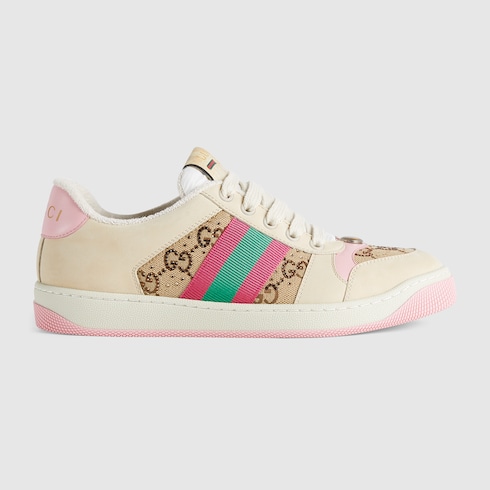
The journey of the luxury sneaker, and Gucci’s pivotal role within it, is a masterclass in cultural repositioning. For decades, sneakers were firmly entrenched in the realms of athletics and casual, often subcultural, style. The seismic shift began when high-fashion houses recognized the street’s growing influence on the runway. Gucci, under the transformative vision of Creative Director Alessandro Michele from 2015 onward, didn’t just adopt the sneaker; he re-enchanted it. Michele’s approach, often described as “maximalist” or “romantic,” involved layering historical references with eclectic, contemporary flair. A pair of women’s Gucci sneakers under his direction is rarely just a shoe; it might incorporate the iconic Web stripe, a heritage symbol from the 1950s, alongside embroidered bees or crystalline details, thereby weaving a story that connects Gucci’s equestrian past to its vibrant present. This alchemy is validated by fashion theorists. As Valerie Steele, director of The Museum at the Fashion Institute of Technology, notes, “Fashion is not about utility. An accessory is a tool for communication.” The sneaker became the perfect accessory—a democratic item elevated to a luxury communication device, speaking volumes about the wearer’s alignment with both tradition and the avant-garde.
Deconstructing the Icon: More Than Just Leather and Thread
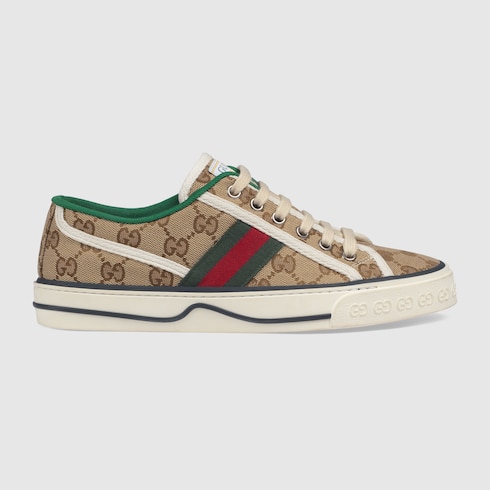
To understand the statement, one must dissect its components. The authority of a women’s Gucci sneaker is built on pillars of objective value that extend beyond the brand name. First, there is the material science: premium calfskin, supple suede, and technical fabrics are selected not only for aesthetics but for durability and comfort. The construction often involves techniques like Blake stitching, which allows for greater flexibility and a sleeker profile compared to bulkier, glued alternatives. Second, consider the design semiotics—the symbolic language embedded in the design. The recurring green-red-green Web stripe is not arbitrary color blocking; it is a direct reference to horse bridles from Gucci’s founding era, a nod to its Florentine craftsmanship roots. The interlocking GG logo, originally conceived in the 1960s, represents founders Guccio Gucci, a mark of lineage. When these elements are applied to a sneaker silhouette, they perform a fascinating trick: they ground a modern, casual form in a century of luxury heritage. This fusion is what platforms like Business of Fashion refer to as “the new codes of luxury,” where authenticity and storytelling are as critical as the physical product.
The Cultural Footprint: Celebrities, Platforms, and the Personal Narrative
The elevation of women’s Gucci sneakers to ultimate statement status is inextricably linked to their cultural propagation. This occurs through a multi-channel echo chamber of influence. On one tier, there are celebrity endorsements that function as modern-day royal seals of approval. When a figure like Harry Styles, a global ambassador for Gucci known for his gender-fluid style, wears a pair of embellished Ace sneakers, it broadcasts a message of inclusive, playful luxury to millions. On digital platforms like YouTube, fashion analysts such as Alexa Chung dissect how to style these sneakers, transforming them from purchase to persona. Chung might argue, “The point is the juxtaposition—a delicate dress with a robust, logo-embellished sneaker creates a tension that is utterly modern.” Meanwhile, on Twitter, the conversation shifts to accessibility and identity; users proudly post their #GucciSneakers as milestones of personal achievement or as key pieces in a curated wardrobe. This omnipresence across different media strata—from the glossy pages of Vogue to the authentic grids of Instagram—cements their role not as passive footwear but as active participants in building a personal brand.
The Statement in Stride: Function Meets Philosophical Expression
Wearing a statement piece is a philosophical act. It is an exercise in intentionality. Choosing a pair of women’s Gucci sneakers over a standard pair is a decision laden with subtext. In a practical sense, they offer the universal comfort and versatility of a sneaker, enabling the wearer to navigate a day from morning meetings to evening social engagements without a wardrobe change. But the philosophical expression is deeper. It signals a rejection of the old luxury rules that prioritized obvious, often uncomfortable, displays of wealth. Instead, it embraces what sociologist Pierre Bourdieu termed “cultural capital”—the knowledge and taste to mix high and low, to understand the references, and to wear that understanding with nonchalance. The sneaker becomes a tool for what fashion blogger Susie Lau calls “armored dressing”—using familiar, comfortable items that are simultaneously powerful and packed with meaning. You are not just walking; you are striding with a century of Italian design history and a very personal chapter of your own story.
An Informed Acquisition: Beyond the Price Tag
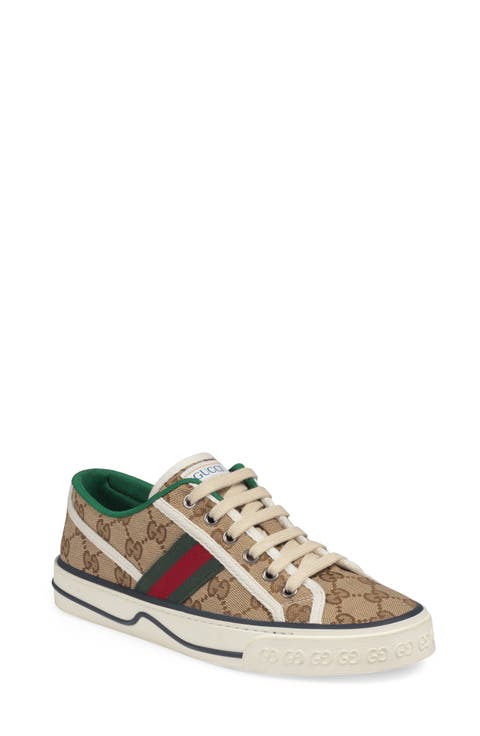
Making the ultimate fashion statement should be an empowered decision, not just an impulsive one. This means bringing professional knowledge to the forefront. Understanding the difference between a Gucci Tennis 1977 model, which pays homage to vintage athletic lines, and the Ace sneaker with its iconic bee embroidery, allows you to select a piece that resonates with your specific aesthetic narrative. Furthermore, an informed acquisition considers value retention and versatility. A classic leather pair in a neutral hue often has a longer stylistic lifespan than a heavily trend-driven iteration. The savvy shopper also knows the rhythm of the retail calendar. While full-price purchases guarantee immediate access to the latest collections, end-of-season sales, official outlet channels, and reputable consignment platforms can offer significant opportunities to acquire these statement pieces. The goal is to merge your fashion aspiration with financial acuity, ensuring your statement is as smart as it is stylish.
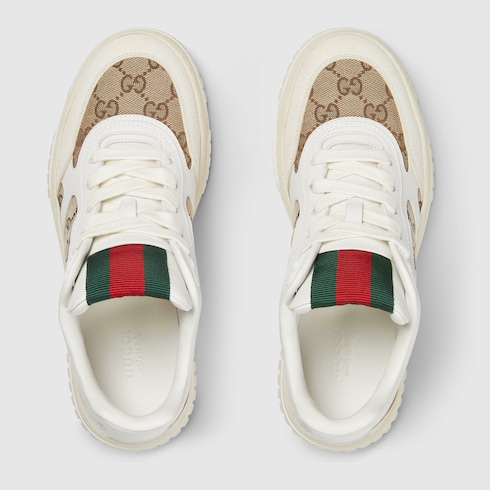
Ultimately, the crowning glory of a wardrobe is not its most extravagant piece, but its most authentic one. A pair of women’s Gucci sneakers embodies this paradox perfectly: they are at once a mass-produced luxury good and a deeply personal totem. They carry the weight of a storied maison and the lightness of your own step. They speak a language of heritage understood globally yet can be whispered in a dialect unique to you. In a world saturated with images and items vying for attention, the ultimate fashion statement is not the loudest shout, but the most resonant, considered voice. It is found in the details—the stitch, the symbol, the story—and it walks with you, confidently, into every room.
