

5 Fresh Ways to Style Women’s Leather White Sneakers This Season
As the seasons shift, so does the sartorial landscape, yet some staples possess a perennial versatility that demands reinvention rather than retirement. Among these, the women’s leather white sneakers stand as a canvas of pure potential. This season, we move beyond the predictable jeans-and-tee combo, exploring five distinct, elevated pathways to integrate this icon into your wardrobe. The goal is not merely to wear them but to wield them as a central, transformative element of your style narrative. Let’s dismantle the conventional and reconstruct the exceptional.
1. The Tailored Neutralist: Precision Meets Ease
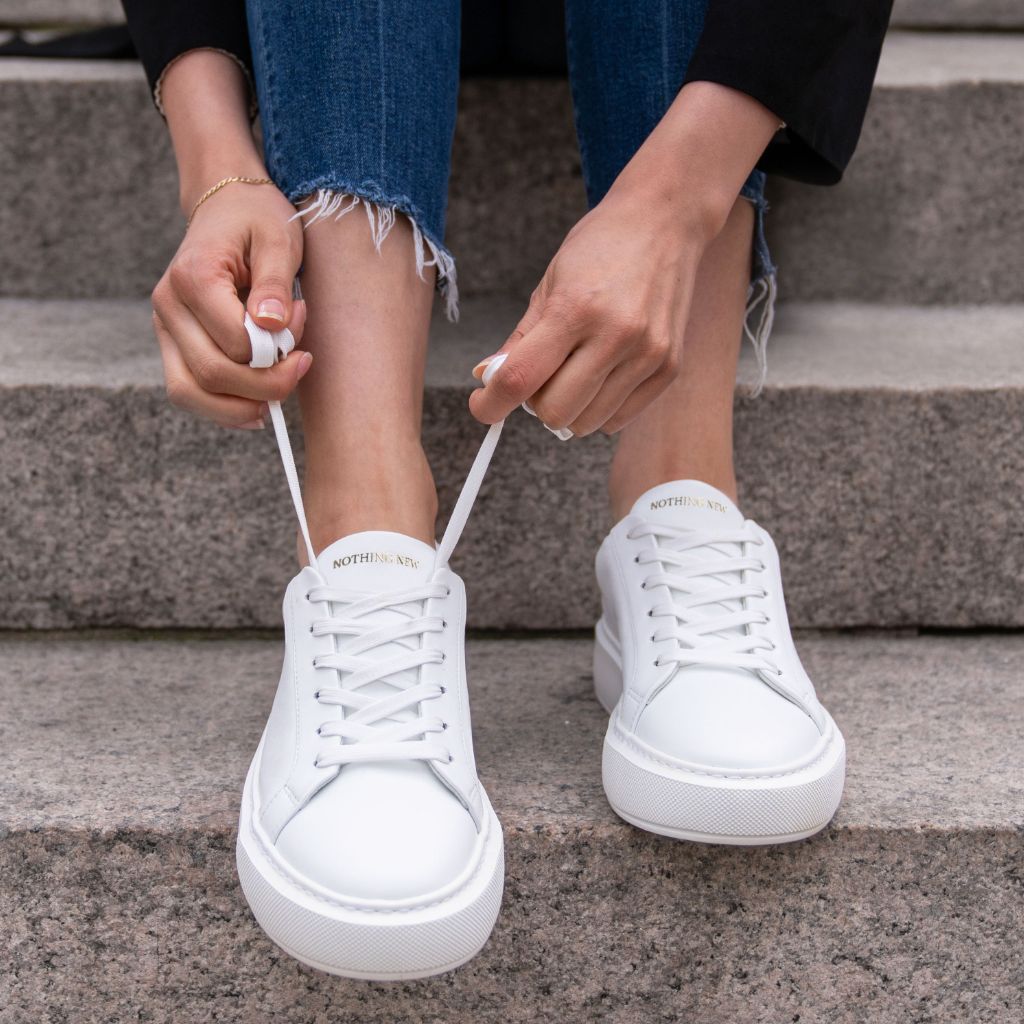
The first avenue explores the compelling tension between structured tailoring and casual footwear. This look champions the philosophy of “elevated basics,” a term often dissected in fashion theory for its role in building a intelligent, versatile wardrobe. The concept isn’t about dressing down a suit; it’s about redefining formality through contrast. Imagine a impeccably cut blazer in a wool-cashmere blend, paired with wide-leg, high-waisted trousers in a matching neutral tone—beige, oat, or stone. Beneath this armor of sophistication, the women’s leather white sneakers are introduced. Their clean lines and pristine white leather offer a stark, modern counterpoint to the traditional suiting fabric. This pairing finds its rationale in the principles of aesthetic contrast, a subject extensively analyzed in design curricula at institutions like Parsons School of Design. The sneaker’s inherent informality doesn’t undermine the suit’s authority; instead, it humanizes and modernizes it, creating an ensemble that is powerful yet approachable, rigorous yet relaxed. It’s a uniform for the creative director, the architect, or the entrepreneur who commands respect without sacrificing comfort. The leather ensures the sneaker maintains a polished enough profile to not look out of place, its material integrity aligning with the quality of the tailoring. As fashion critic Vanessa Friedman of The New York Times has noted, the most interesting style moments often occur at the intersection of categories. This look is a direct application of that insight.
The Scientific Basis of Contrast in Design
To understand why this pairing works so effectively, we can turn to foundational design theory. The Bauhaus school, a seminal force in modern design, emphasized the harmony of form and function, and the deliberate use of contrast to create visual interest and balance. Placing a sleek, minimalist women’s leather white sneaker against the textured, formal geometry of a wool suit is an exercise in controlled dissonance. The brain recognizes the categories as distinct, and the resulting combination is perceived as innovative and intentional. Furthermore, color psychology positions white as a color of purity, simplicity, and new beginnings. When applied to footwear in a tailored context, it acts as a visual “reset,” clearing the stylistic clutter and focusing attention on the silhouette and cut of the clothing. This isn’t a random trend; it’s an application of visual principles that have been studied and validated for nearly a century. The durability and cleanability of quality leather also speak to a functional aspect, ensuring the sneaker remains a worthy investment piece within a refined wardrobe.
2. The Feminine Romantic: Volumes and Textures
Our second style proposition deliberately challenges the sneaker’s sporty origins by pairing it with the epitome of romantic dressing. Think diaphanous midi dresses in chiffon or silk, tiered prairie skirts, or billowy linen smock dresses. The key here is volume and softness. The women’s leather white sneakers ground these airy, ethereal pieces, providing an anchor of contemporary cool that prevents the look from veering into costume or anachronism. This style dialogue is frequently observed on platforms like Pinterest and Instagram, where fashion influencers showcase the “hard vs. soft” aesthetic. The sneaker, with its defined shape and often rubber sole, represents a tangible, urban reality against the dreamlike quality of a flowing dress. This combination has been celebrated in popular culture, reminiscent of the effortlessly chic style of characters in films like “Frances Ha,” where personal style is an extension of a dynamic, modern life. The leather upper is crucial here again—its subtle sheen and structured form hold their own against delicate fabrics, whereas a canvas sneaker might appear too insubstantial. It’s a look that says you can dance at an afternoon garden party and still comfortably navigate city streets afterward.
3. The Monochromatic Maverick: A Study in Tone
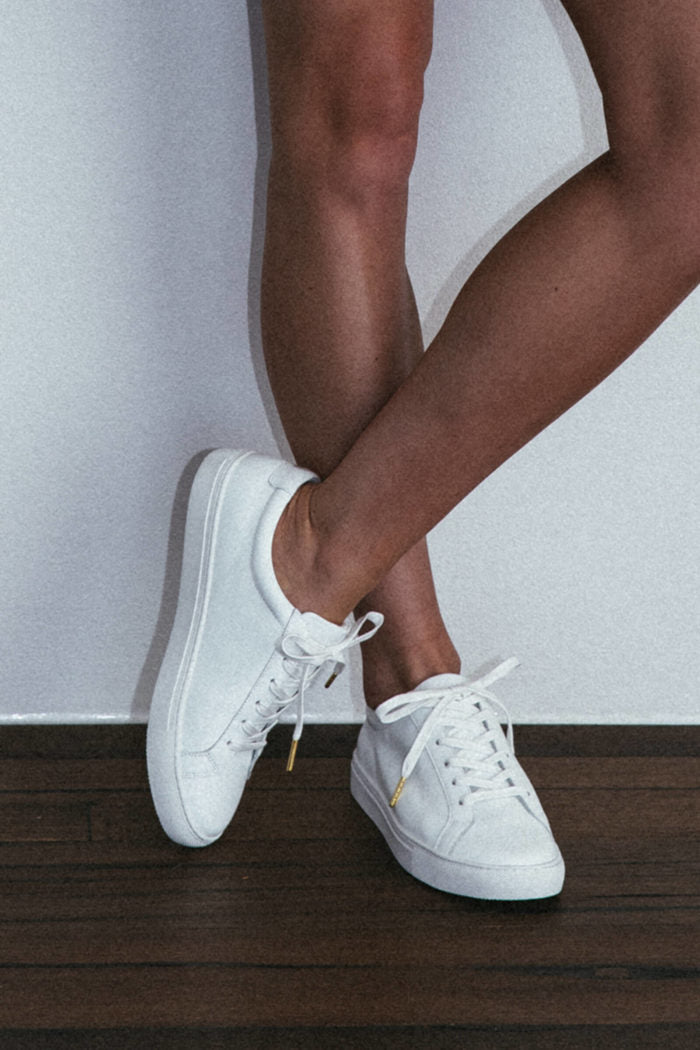
For a truly modern and sleek approach, immerse your women’s leather white sneakers in a head-to-toe white or cream ensemble. This is more than just wearing white; it’s a dedicated study in tonal variation, texture, and silhouette. An outfit comprising an off-white cable-knit sweater, cream wide-leg trousers, and a bone-colored trench coat achieves a powerful, cohesive visual statement. The sneakers, in a bright or optic white leather, become the unifying element, their hue slightly different to create subtle depth. This approach is rooted in the minimalist art movement and the architectural principle of a single, focused material palette allowing form to take precedence. Fashion historians often trace the power of monochrome dressing to figures like Coco Chanel, who understood its slimming and elongating effect. In the digital age, style authorities on YouTube, such as fashion educator Aly Art, frequently analyze the visual impact of monochromatic outfits, explaining how they streamline the figure and project confidence. The challenge and beauty lie in the mix of textures—the smooth leather of the sneaker against the knit of a sweater, the weave of linen, or the drape of wool. It’s a look that requires little effort to appear immensely considered, and it showcases the sneaker not as an accessory, but as an integral component of a sculptural whole.
Material Science and Perceived Value
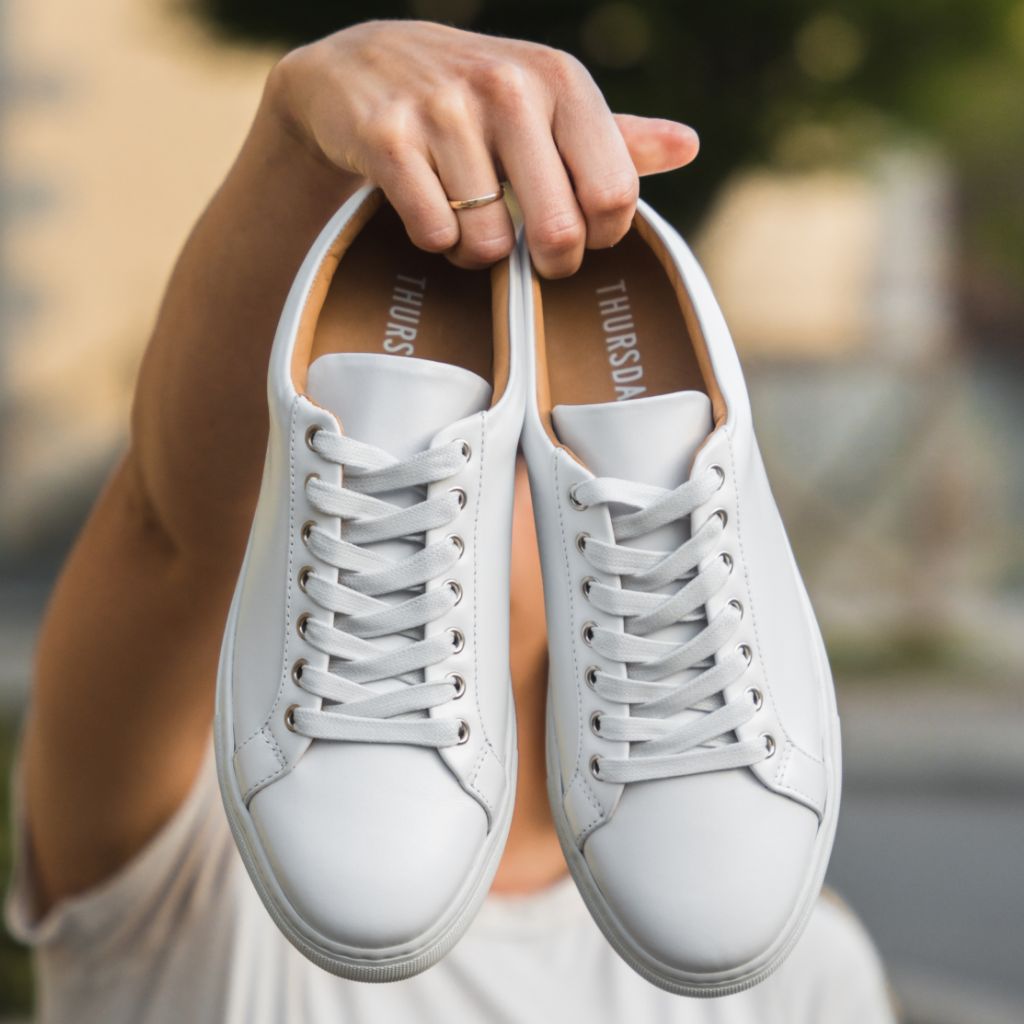
Choosing leather for this monochromatic look is a decision backed by material science. Full-grain or high-quality corrected grain leather possesses a durability and aging characteristic (developing a patina) that synthetic materials cannot replicate. From an investment perspective, a well-constructed leather sneaker from a brand like Nothing New or Thursday Boots, which often utilize sustainable and high-wear materials, may have a higher initial cost but a significantly lower cost-per-wear over time. Brands are increasingly transparent about their sourcing and production, offering lifetime repair services that align with a slow-fashion ethos. When building a tonal outfit, the inherent quality and longevity of the materials become paramount, as the focus is intensely on each item’s contribution to the whole. A cheaply made sneaker would undermine the sophistication of the ensemble. Thus, the women’s leather white sneakers in this context are a purchase of intentionality, aligning with a broader, more conscious approach to consumption.
4. The Rugged Hybrid: Utility Chic
This style direction embraces a utilitarian, almost workwear-inspired aesthetic. Pair your crisp white leather sneakers with cargo pants in a sturdy cotton or canvas, a vintage leather jacket, or a heavyweight chore coat. The contrast here is between the sneaker’s urban cleanliness and the raw, functional appeal of utility garments. This look draws inspiration from the “gorpcore” trend, which integrates outdoor and technical gear into everyday fashion, but softens it with the pristine, city-ready sneaker. It’s a style narrative seen in the wardrobes of off-duty models and creative professionals, a look that suggests readiness and resourcefulness. The white leather acts as a brilliant highlight, preventing the earth tones and rugged textures from appearing muddy or dull. Philosophically, it mirrors a blend of preparedness and polish—you’re ready for a spontaneous adventure or a long day of hands-on work, but you haven’t sacrificed a sense of style. The durability of the leather sneaker is key, as it needs to visually and physically stand up to the robustness of the accompanying pieces. This isn’t a look for delicate footwear; it requires a sneaker with substance, making the choice of a solid leather construction non-negotiable.

5. The Elevated Athleisure: Beyond the Gym
The final reinterpretation takes the sneaker’s native category—athleisure—and elevates it to a level of deliberate luxury. Instead of pairing them with old sweatpants, combine your women’s leather white sneakers with tailored track pants in a luxurious fabric like French terry or jersey with a clean side stripe, a sleek cashmere hoodie, or a technical fabric bomber jacket with minimalist detailing. This look is about premium fabrics and perfect fits. It acknowledges the cultural dominance of comfort-first dressing but insists on a high standard of execution. The perspective here is supported by the massive growth of the luxury activewear market, as analyzed by business publications like Forbes and The Business of Fashion. The white leather sneaker is the linchpin, bridging the gap between sportswear and high fashion. It provides the authentic athletic element while its material (leather) and pristine condition signal care and selectivity. As designer and entrepreneur Virgil Abloh often explored in his work for Off-White and Louis Vuitton, the reinterpretation of mundane items through a luxury lens is a defining theme of contemporary fashion. This styling method does exactly that, transforming loungewear into a viable, chic public uniform.
The journey through these five styles demonstrates that the women’s leather white sneakers are far more than a casual footnote. They are a dynamic tool for personal expression, capable of navigating diverse style territories from the boardroom to the weekend market. Their power lies in their simplicity, their material integrity, and their unique position at the crossroads of multiple fashion narratives. This season, challenge yourself to see them not just as shoes, but as the starting point for a more inventive and personal approach to getting dressed. The possibilities, as we’ve outlined, are expansive and ripe for exploration.
