

Discover the Best Podiatrist Recommended Walking Shoes for All-Day Comfort
Your feet are your foundation, and the shoes you choose can either support that foundation or undermine it entirely. For anyone who spends a significant portion of their day on their feet—whether navigating city streets, managing a busy household, or exploring new trails—the quest for truly comfortable footwear is paramount. This isn’t merely about avoiding blisters; it’s about long-term musculoskeletal health, energy conservation, and overall well-being. The market is flooded with options, each claiming to be the most comfortable, but how do you cut through the noise? The answer lies in turning to the experts who understand foot anatomy and pathology best: podiatrists. This guide is dedicated to uncovering the science and specifications behind podiatrist recommended walking shoes, providing you with objective criteria to make an informed choice that brings lasting comfort and professional-grade support to your daily stride.
The Science of Stride: Why Podiatrist Endorsement Matters
To understand the value of a podiatrist’s recommendation, we must first appreciate the complex biomechanics of walking. The human foot is a marvel of engineering, comprising 26 bones, 33 joints, and over 100 muscles, tendons, and ligaments. Each step you take is a coordinated cascade of events—heel strike, foot flat, mid-stance, heel-off, and toe-off. A shoe that disrupts this natural gait cycle can lead to a cascade of problems, from localized foot pain (plantar fasciitis, metatarsalgia) to issues propagating upwards, affecting ankles, knees, hips, and even the lower back. Podiatrists, as doctors of podiatric medicine, are trained to diagnose and treat conditions of the foot, ankle, and related structures of the leg. Their recommendations are not based on fleeting fashion trends but on principles of biomechanics, orthopedics, and material science. For instance, the American Podiatric Medical Association (APMA) grants its Seal of Acceptance to products that promote good foot health, a significant credential to look for. When a shoe is podiatrist recommended, it typically signifies it has adequate arch support to prevent overpronation or supination, sufficient cushioning to absorb shock (which can be up to 1.5 times your body weight with each step), a roomy toe box to allow natural toe splay and prevent deformities like bunions, and a stable heel counter to control rearfoot motion. This scientific backing transforms a shoe from a simple accessory into a vital piece of preventative health equipment.
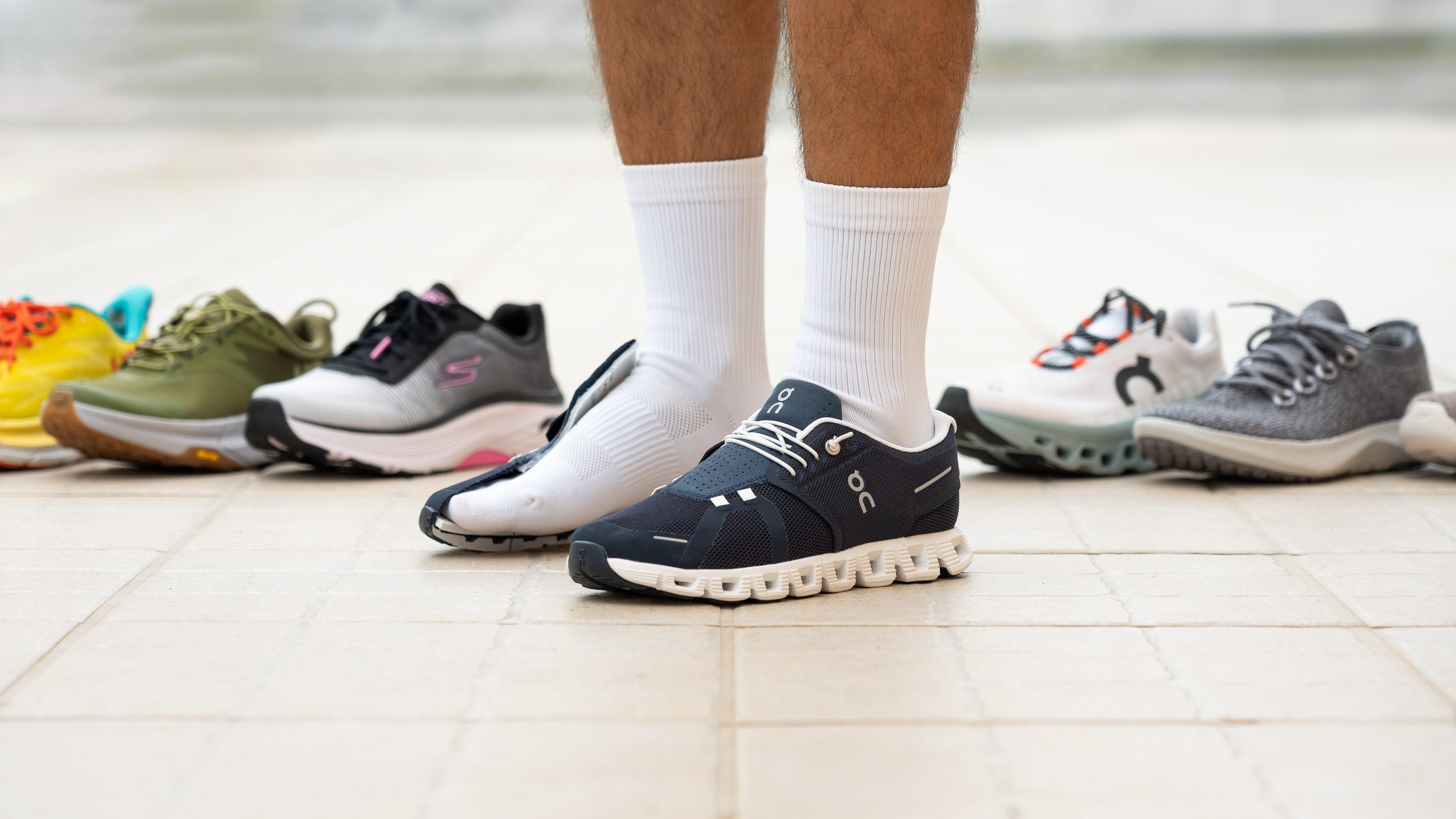
Deconstructing Comfort: The Non-Negotiable Features
What specific elements should you scrutinize when evaluating podiatrist recommended walking shoes? Let’s deconstruct the concept of all-day comfort into its core, non-negotiable components. First and foremost is arch support. The arch acts as a natural shock absorber; without proper support, the plantar fascia ligament can become strained and inflamed. Shoes with contoured, firm yet compliant arch support help maintain the foot’s natural alignment. Next is cushioning technology. This isn’t just about softness; it’s about responsive resilience. Materials like EVA (ethylene-vinyl acetate), polyurethane, and proprietary gels (like ASICS GEL or Brooks DNA LOFT) are engineered to dissipate impact forces. However, as noted by Dr. Jacqueline Sutera, a New York City-based podiatrist, “A shoe can be too cushioned, leading to instability. The goal is a balance of cushion and control.” The heel counter, the firm cup at the back of the shoe, is critical for stability. It should be rigid enough to hold the heel in place, preventing excessive side-to-side motion that can lead to Achilles tendonitis or ankle sprains. Finally, the toe box must be wide and deep enough to allow your toes to lie flat and move naturally. Constriction here can cause neuromas, hammertoes, and aggravate existing bunions. A study published in the Journal of Foot and Ankle Research emphasizes that footwear with a wider toe box significantly reduces forefoot pressure. These features, working in concert, define the archetype of a shoe worthy of a podiatrist’s nod.
:max_bytes(150000):strip_icc()/tal-10-podiatrist-approved-open-toed-shoes-tout-00bd6ff1c36a49cdbbff486b0b54fb27.jpg)
Beyond the Basics: Materials, Weight, and Flexibility
While structure is paramount, the materials that constitute the shoe play an equally vital role in achieving all-day comfort. The upper, the part that encases your foot, should be constructed from breathable, adaptive materials. Modern meshes, often engineered with seamless overlays, reduce friction points and allow heat and moisture to escape, maintaining a healthy foot environment and preventing blisters and fungal infections. Leather remains a classic choice for its durability and ability to mold to the foot’s shape over time. The weight of the shoe is a factor often overlooked. A heavy shoe increases the metabolic cost of walking, leading to quicker fatigue. Lightweight materials, such as engineered meshes and advanced foam compounds, can reduce shoe weight without sacrificing support or durability. Flexibility is another nuanced aspect. The shoe should bend easily at the ball of the foot—where your foot naturally flexes during toe-off—but remain rigid through the midfoot. This “rocker” design, often incorporated into many podiatrist recommended walking shoes, promotes a smooth gait transition and reduces strain on the plantar fascia and Achilles tendon. As biomechanist Dr. Casey Kerrigan, founder of OESH Shoes, has articulated in her research, traditional stiff-soled shoes can actually inhibit the foot’s natural spring-like function, whereas shoes that allow for natural motion can enhance efficiency and comfort. Therefore, the ideal shoe is a synergistic blend of structured support in the right places and adaptive flexibility in others.
Navigating the Market: Categories and Leading Contenders
The world of podiatrist recommended walking shoes is diverse, catering to different foot types, activities, and personal preferences. Broadly, they can be categorized into stability shoes, neutral cushioning shoes, and motion control shoes. Stability shoes, featuring a denser medial (inner) post, are ideal for mild to moderate overpronators—those whose ankles roll inward excessively. Brands like Brooks (Adrenaline GTS series) and ASICS (GT-2000 series) excel here. Neutral cushioning shoes, such as the Hoka One One Bondi or the New Balance Fresh Foam 1080, offer maximum shock absorption without corrective posts, perfect for runners and walkers with a neutral gait or high arches. Motion control shoes are the most supportive, designed for severe overpronators or larger individuals; the Brooks Beast is a classic example. For everyday urban walking, brands like Ecco, Clarks, and Vionic are frequently endorsed by podiatrists for their combination of style, comfort, and built-in orthotic-like support. Vionic, in particular, was founded by a podiatrist and many of their styles carry the APMA Seal. It’s crucial to remember that the “best” shoe is profoundly personal. A model lauded by countless podiatrists may not be the best for your unique foot shape and gait pattern. This is why, whenever possible, a professional gait analysis at a specialty running or walking store is an invaluable investment.

The Investment in Your Foundation: Value Beyond Price
When discussing podiatrist recommended walking shoes, the topic of price inevitably arises. High-quality biomechanical engineering, advanced materials, and rigorous testing do command a premium, often placing these shoes in the $120 to $180 range. However, viewing this as a mere expense is a misperception; it is an investment in your foundational health. Consider the alternative: the cost of custom orthotics, physical therapy sessions, pain management treatments, or even surgery for conditions exacerbated or caused by poor footwear. The financial and personal toll is exponentially higher. As the ancient proverb wisely states, “We are too poor to buy cheap things.” This encapsulates the principle of cost-per-wear and long-term value. Furthermore, the market offers avenues for savvy shopping. Last season’s colorways, online retailers’ clearance sections, and holiday sales can often yield significant discounts on top-tier models. The key is to prioritize the technical specifications—the arch support, cushioning, and fit—over the aesthetic details of the upper. A shoe that is 30% off because it’s last year’s model but retains the identical midsole and outsole technology as the current version represents exceptional value. Investing in the right pair is a proactive step toward preserving mobility, preventing pain, and enhancing the quality of every step you take.
:max_bytes(150000):strip_icc()/tal-roundup-podiatrist-loved-shoes-on-sale-tout-bdbf5721fa5642efa38b61f6a5b4ff34.jpg)
Stepping Forward with Confidence
The journey to finding the perfect pair of walking shoes is a journey toward taking better care of yourself. It moves beyond subjective comfort into the realm of objective, scientifically-backed support. By prioritizing the features that earn a shoe the distinction of being podiatrist recommended—rigorous arch support, strategic cushioning, a secure heel counter, and a spacious toe box—you are making an informed decision for your long-term well-being. Remember that your feet are dynamic, changing with age and activity, and your shoe choices should evolve accordingly. Listen to the wisdom of specialists, understand the biomechanics at play, and don’t compromise on the fundamentals that protect your foundation. When you lace up a pair engineered with these principles, you’re not just putting on shoes; you’re equipping yourself with the tools for resilient, pain-free movement, ready to embrace whatever path lies ahead with comfort and confidence in every step.
