

Last October I did an experiment on myself, mostly by accident. I left three pairs of shoes by the door and wore whichever one I grabbed first, then wrote down the temperature and how my feet felt at the end of the day. Twelve days, three pairs, one very clear result: the pair I liked most was the pair that failed most often.
It failed because of temperature, not style. At 7:40 the pavement was cold enough that thin canvas felt like standing on tile. By one in the afternoon it was 22°C in the sun and the same shoes felt like wearing a plastic bag. You don’t notice that in the shop. You notice it at 3pm when you take them off under your desk.
So this is the version of fall casual shoes for women that I actually worked out the hard way, over about five weeks of getting it wrong: what to wear in that two-week window when the morning and the afternoon belong to different seasons, which materials survive it, and the one pair I sent back even though I liked how they looked.
The week I wore three pairs and got it wrong twice
Here’s the actual log, because the numbers matter more than the impressions. Morning temperature at 7:40, afternoon peak around 1pm, and a rough note on how my feet felt at 6pm.
- Monday: 11°C morning, 21°C afternoon. Suede ankle boots. Too hot by noon, and the lining left a mark on my ankle where it rubbed.
- Tuesday: 12°C, 22°C. Leather sneakers with a thin sock. Best day of the week. No complaints at 6pm.
- Wednesday: 9°C, 17°C. Canvas slip-ons. Cold feet until 11am, then fine. Not terrible, but I was distracted all morning.
- Thursday: 14°C, 24°C. Same suede boots, because I hadn’t learned yet. Bad decision. My feet were damp by the time I got home.
- Friday: 13°C, 19°C. Leather sneakers again. Fine going in, slightly warm coming home, which is the right direction to be wrong in.
Two things jumped out. First, being slightly too warm in the afternoon is much easier to live with than being cold in the morning, because you can’t take off a shoe the way you take off a scarf. Second, the shoes that handled the range best were the ones with a leather upper and a thin rubber sole, not the ones built for warmth.
That’s the counterintuitive bit. Most people buy fall casual shoes for women by adding insulation. Then the afternoon cooks them. The better move is to buy for the cold morning with a material that doesn’t trap heat at noon, which mostly means leather or a tight knit rather than fleece lining or padded collars.
There’s a second variable I hadn’t counted: how far you actually walk. On the Monday I did 2,100 steps, all of them between a car park and a desk. On Wednesday I did 7,800, because the bus was late twice. The same boots that were fine on Monday were unbearable on Wednesday, and it had nothing to do with the temperature being lower. Distance multiplies every small problem. A 1mm rub becomes a blister at 6,000 steps and stays a mild annoyance at 2,000.
So when someone asks me for one recommendation, I ask them for their step count first. Under 3,000 steps a day, almost anything with a decent sole works. Over 6,000, the upper material and the lining decide everything, and that’s where most of the fall casual shoes for women on the high street quietly fail.
You can test this yourself before committing. Put the shoe on at room temperature, walk for ten minutes, then take it off and feel the inside with the back of your hand. If it’s already warm and slightly damp, that’s your afternoon. If it’s neutral, that’s a shoe that will handle a 10-degree swing.
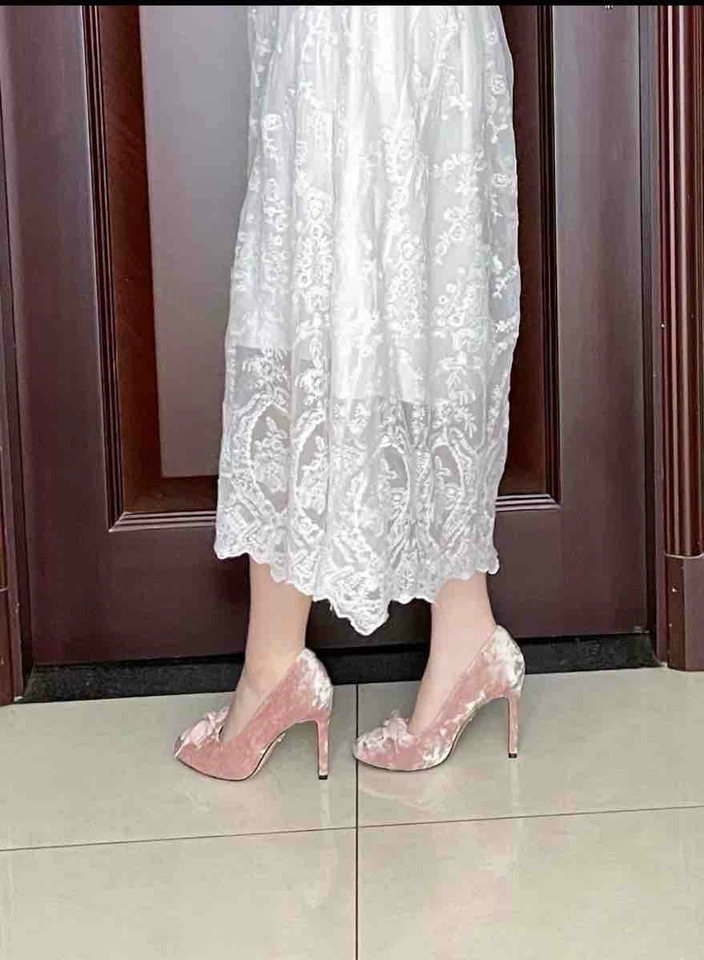
12°C at 7:40, 22°C by 1pm: what that does to a shoe
A ten-degree swing doesn’t just change how warm your feet feel. It changes the material itself, and once you know what to look for you can predict the failure before you buy.
Leather expands slightly as it warms and softens at the vamp. That’s usually good: a shoe that pinched at 8am relaxes by lunch. It also means a leather shoe that fits perfectly in a cold shop can feel loose by mid-afternoon, which is why I now buy leather a half size down from what feels snug at 10am in November.
The exception is anyone whose feet swell noticeably. Mine do, by about half a size between 8am and 5pm in warm weather. For those weeks, buying down is a mistake and an adjustable strap is the answer instead. It’s the one place where my rule reverses, and it took a returned pair to learn it.
Suede does the opposite in the wet. It doesn’t just get damp, it stiffens as it dries, and a stiff suede upper rubs in a new place each time. If your mornings are dewy, the grass in the park is enough to start that cycle.
Canvas and thin textile uppers have almost no insulation, so the morning is genuinely cold, and they hold moisture against the foot. The friction-and-moisture combination behind most blisters is exactly what a cold morning and a warm afternoon produce: cold feet, then sweat, then rubbing.
Rubber soles are the quiet variable. A thin rubber sole stays flexible in the cold and doesn’t transmit as much ground chill as a hard leather sole, which gets stiffer and colder as the temperature drops. If you want one pair to cover 9°C to 22°C, the sole matters as much as the upper.
What I’d look at, in order, if you’re shopping in that window:
- Upper that breathes: smooth leather, or a dense knit. Not fleece-lined, not coated.
- Lining that’s thin and stitched, not glued foam. Foam holds heat and comes loose by month four.
- Sole that flexes when cold. Bend it in the shop; if it fights you at room temperature, it’ll be worse outside.
- Ankle height that clears the cold pavement splash without covering the ankle. Mid is the sweet spot.
Oddly, the historical reason suede became a autumn material has nothing to do with warmth. Suede is leather sanded on the flesh side to raise a nap, and the nap was valued because it hid wear and took dye deeply. Warmth came later, as a marketing story. That’s worth remembering when a label tries to sell you suede as a cold-weather material.
Suede, and the two hours it took to ruin a pair
I ruined a pair of grey suede loafers in about two hours, and it wasn’t rain. It was a damp bench in a park at 9am and a coffee spill at 11. The bench left a water line across the heel. The coffee left a ring on the toe. Neither came out with a brush.
What I learned from that, and from the cobbler who charged me more than the shoes cost to have a go at them: suede is fine in dry cold, and a disaster in wet cold. The two-week window I’m writing about is exactly when you can’t tell the difference at 7:40 in the morning.
If you’re set on suede, there are three things that make it survivable:
- Spray it before the first wear, not after the first stain. Two light coats, dry between, and reapply every six weeks through autumn.
- Avoid the style with a pale suede toe. Marks concentrate exactly where people look.
- Carry nothing in the same hand as the shoe. Sounds silly. Ask anyone who has put a wet umbrella against suede.
For what it’s worth, the suede pair I kept and still wear is a darker brown, and the nap hides everything. I linked what I’d call the retro suede pair that survives a damp morning in another piece, and the reason it works is the sole: a rubber sole means the wet comes from above only, not through the bottom.
One more honest note. The people who tell you suede is low maintenance are usually talking about a different climate. In a city where it rains 12 days a month in October, it isn’t. In a dry city, it absolutely is.
Two fabrics I now stick to until the end of October
After that experiment I narrowed my own rotation to two upper materials for the transition weeks, and I’ve stopped shopping outside them until the temperature settles.
Smooth leather, mid-weight. It handles 9°C to 22°C better than anything else I’ve worn. It softens rather than stiffens, it wipes clean, and it takes a polish. The catch is that cheap leather is coated and doesn’t breathe, so the afternoon problem comes back. You can usually tell by pressing a thumb into the upper: if it creases like skin, it will breathe. If it wrinkles like plastic wrap, it won’t.
Dense knit with a leather rand. Not a running shoe, a proper knit upper on a flat sole. It’s warm at 10°C without a lining, and it lets heat out by noon. The weakness is structure: a knit upper stretches, so buy it snug and expect it to loosen by about half a size over two months.
Both of these share a property that matters more than either material on its own: they dry from the inside. A shoe that gets slightly damp from sweat at 2pm and can’t dry by 8am the next day is a shoe that will smell by November and rub by December. Leather and knit both recover overnight on a shoe tree. Foam-lined uppers don’t.
That’s also why I stopped keeping shoes in the hallway cupboard. A dark closed cupboard at 18°C is the perfect place for bacteria to sit in a damp lining. Mine now live on a rack by the door with about 20cm of air around each pair, and the difference in how they smell by November is not subtle.
What I’ve dropped for now: patent anything (squeaks and shows every mark in low light), bonded leather (peels at the flex point within a season), and heavy padded collars (they hold heat and rub the ankle bone).
The category page is worth a slow scroll if you want to compare shapes side by side. I usually start at the full women’s shoe collection and filter by sold-out stock rather than by new arrivals, because the shapes that sell through tend to be the practical ones.
Socks do more than the shoe does
This is the part I ignored for years, and it’s the cheapest fix in the whole problem. The same pair of shoes can be too cold at 8am and too hot at 2pm depending on what’s on your feet. Most fall casual shoes for women get blamed for a problem the sock caused.
Three sock setups, tested over the same twelve days:
- No-show cotton: cold in the morning, sweaty by noon, and it slid down inside the shoe by 11am.
- Merino crew, thin: best overall. Warm at 10°C, not hot at 22°C, and it doesn’t hold moisture against the skin.
- Cotton athletic crew: warm enough early, then genuinely uncomfortable after lunch. Cotton holds water, which is the whole problem.
The difference between merino and cotton at 22°C is real and easy to feel. Wool moves moisture away from the skin and cotton keeps it there. If your feet feel clammy by mid-afternoon in autumn, the sock is usually the reason, not the shoe.
I now keep two pairs of thin merino crew socks in the same drawer as the shoes and swap them midweek. It cost less than a single pair of the boots I returned, and it fixed about 70% of the discomfort I’d been blaming on footwear.
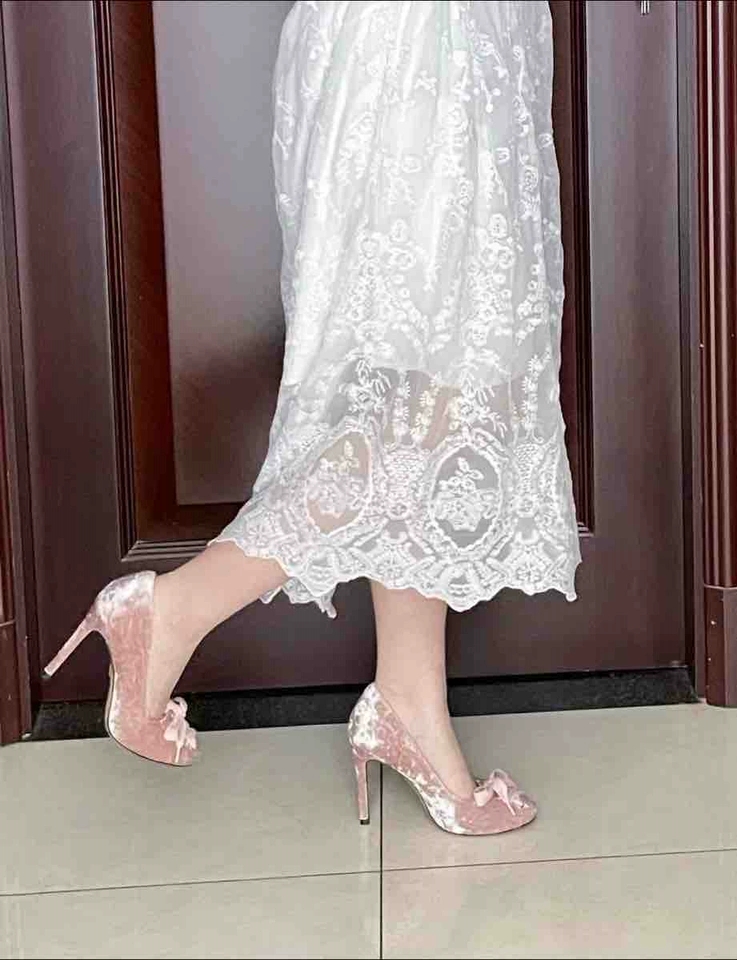
The pair I sent back, and the one I bought twice
The pair I sent back was a lined ankle boot, and I sent it back for a reason that took me a week to admit: it was too good at its job. The fleece lining made the 9°C morning genuinely pleasant. By 1pm on a 21°C day my feet were swimming. There’s no way to fix that, because you can’t unline a boot.
Returning it cost me the postage and about forty minutes. Wearing it for a full autumn would have cost me a season of discomfort plus the same money. If you’re buying in that window, do the afternoon test before you commit: wear the pair for two hours indoors with normal socks, then decide.
The pair I bought twice, four years apart, is a plain leather sneaker with a flat rubber sole and almost no padding. Nothing about it is interesting. It’s the only shoe I’ve owned that behaved the same on a 9°C morning and a 24°C afternoon, and the second pair is on its third autumn.
Its one flaw is the toe. The leather creases across the vamp within a month, and if you care about that, it’ll bother you. I stopped caring around week six.
Two autumns in, the sole is the part that’s going. The tread at the heel has worn to about half its original depth, and on wet leaves that’s noticeable. A cobbler quoted me roughly a third of the shoe’s price to replace both soles, which is still cheaper than a new pair and keeps a shoe I already know fits.
That’s the whole case for buying one pair you actually wear instead of four you rotate through. The pair you wear gets repaired. The pairs you rotate through sit in a cupboard until they’re out of style, and then they go out with the rubbish, still stiff and barely creased.
If you want the higher, slightly dressier version of the same idea, the French retro pair with a low stacked heel does the same job for a smarter day. I wouldn’t wear it for a 6,000-step afternoon, but for a 2,000-step day in a 10-degree swing it holds up better than it looks. There’s a fuller comparison of brown and tan options in four ways to wear suede brown shoes if the colour question is your sticking point.
And if your feet swell in the afternoon, which is normal and more pronounced when it’s warm, a pair with an adjustable strap beats a slip-on every time. That’s the one thing I’d change about my own rotation. There’s a decent argument for it in the 45mm rule for mules worn all day, and it matches what happened to my ankles on the 24°C Thursday.
Start with the socks. Then buy one leather pair a half size down from snug and wear it for a week before you buy anything else. The two weeks between seasons are short, and you only get one autumn per pair.
If you only take one thing from this: the best fall casual shoes for women aren’t the ones built for the coldest morning of the year. They’re the ones that are 10% too cold at 7:40 and 10% too warm at 2pm. That’s the pair you’ll still be wearing in November.
