

Burberry Heels: How I’d Wear One Pair Through All Four Seasons
My first pair of Burberry heels was a black leather block-heel boot, bought in February because the winter boots I already owned had started letting water in along the toe seam. I wanted something I could wear to work without looking like I’d given up on the year. What I didn’t expect was that I’d still be wearing the same pair in July, with bare legs and a cotton dress, and that nobody would look twice. Four years on, they’ve been resoled once and the leather has creased the way decent leather does. That’s the whole argument for buying this brand’s shoes, and it has very little to do with the check print.
Here’s what I’ve worked out from owning them instead of scrolling product pages. The heel shape matters more than whatever the season label says. The leather decides whether you can walk a kilometre in them. And the styling is mostly about not fighting what the shoe is already doing. Get those three right and one pair covers most of your year.
What Burberry actually builds into a heel
Thomas Burberry set up shop in 1856 with outerwear, and the thing that made the company was gabardine: a tight twill that shed rain and still let air through. You can feel that inheritance in the shoes even though nobody weaves gabardine into a pump. The lasts are cut for a foot that has to walk rather than a foot that has to pose, and the leather is finished so that it takes a scuff without turning grey at the crease. That’s not romance. It’s the reason a pair can get through a wet commute and still look presentable at seven in the evening.
The check lining is the part people either love or find a bit much. I don’t need nova check on the inside of a shoe, and on the busier styles it makes an already loud design louder. Where the heritage genuinely earns its money is in the hardware and the sole. Buckles that don’t rattle. A stacked heel a cobbler can rebuild. A sole thin enough to look elegant and thick enough that you don’t feel every paving slab on the way to the station.
One warning before the season-by-season part. These run narrow across the ball of the foot. If yours is wide, going up half a size usually fixes it, and the suede gives a little while patent gives nothing at all. Try them late in the day when your feet have spread, and walk on a hard floor instead of the carpet.

Spring: kitten heels, pale suede, and a trench doing the work
Spring is when a heel has to justify itself against a pair of loafers, and the kitten heel wins on days when you’re walking between buildings instead of sitting in one. My rule is to keep everything above the ankle quiet so the shoe can be the coloured thing. A pale pink or celadon suede kitten heel under a navy trouser suit looks deliberate. Under a floral midi dress it looks like an accident.
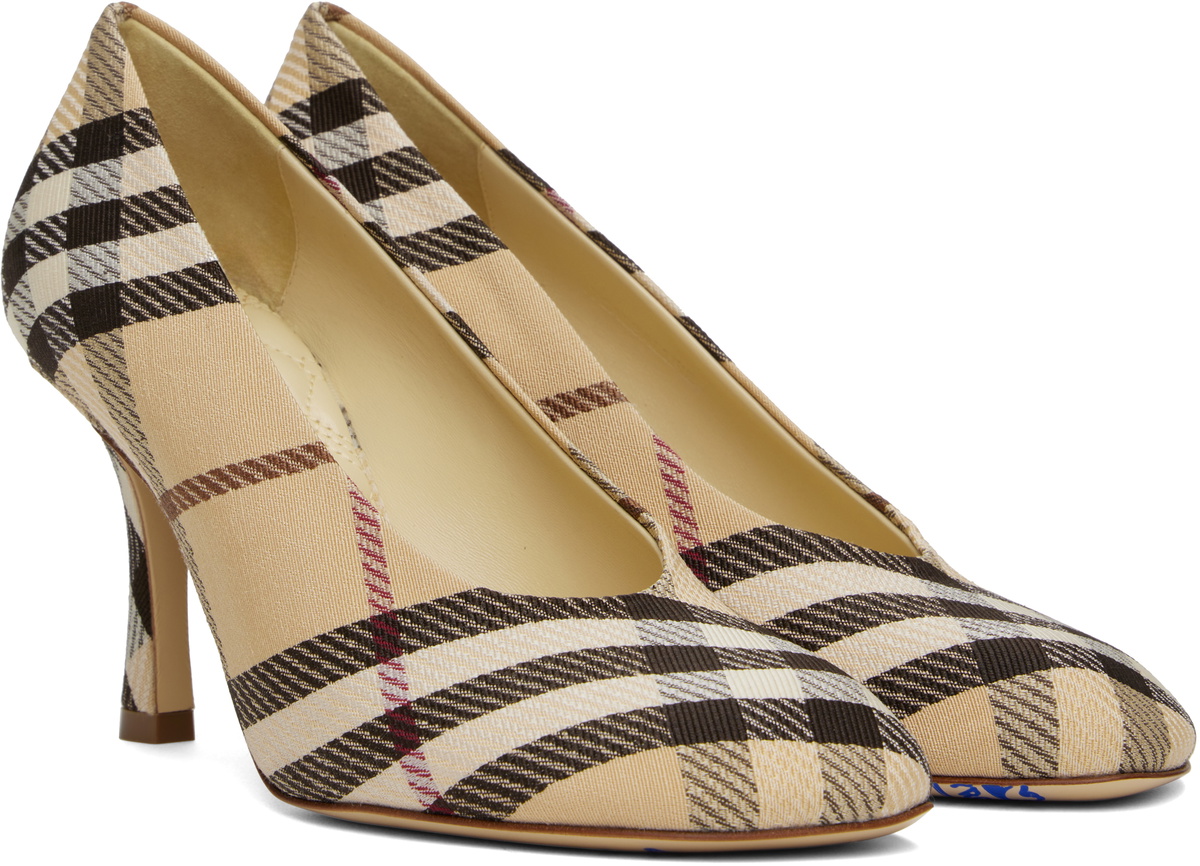
Small-scale check is easier to wear than the big version. From a metre away it reads as texture, which is what you want in March when the light is flat and everything looks slightly washed out. White poplin midi, unlined trench, small-check shoe, and you have the outfit the brand shoots every year. Yours will have a coffee stain on the cuff by April.
Matte finishes suit this season better than patent. Patent leather needs hard sunlight to look right, and spring doesn’t reliably provide any. Also, suede and spring rain don’t get on. Spray them before the first wear and let them dry well away from a radiator. Mine went crisp at the toe after one drying accident and never quite came back.
Summer: sandals, mules, and the visual weight problem
Summer is where most heel advice falls apart, because the honest answer is that nobody needs a heel in thirty-two degrees. But there’s a difference between a heel and visual weight. A slim strapped sandal with a sixty-millimetre heel adds height without adding bulk, and it keeps your foot cool enough that you forget you’re wearing something formal.
An open-toe mule in tan leather is the pair I reach for most between June and August. It works with a linen maxi. It works with tailored shorts and a blazer on a day that has a meeting in it. It also works with jeans in a restaurant where the floor is sticky, which is more of a test than anyone admits. Metallic finishes are fun and they photograph beautifully. They also show scuffs within about a week, so buy those for a wedding rather than a commute.
The mistake I made one summer was buying a strappy sandal with a very thin sole and then walking eight thousand steps through a city in them. By mid-afternoon my heel was bruised and I was carrying them.
Thin soles are for cars and terraces.
Autumn: the season these shoes were really made for
Autumn is where the brand’s whole vocabulary makes sense. Burgundy suede, forest green, tobacco, a block heel that grips wet stone. This is the four to six weeks when a heel doesn’t feel like a compromise, and it’s the part of the year I’d buy for if I could only buy once.
The outfit I come back to every October: black leather ankle boot on a seventy-millimetre block heel, opaque tights, tweed midi, cashmere crew neck, trench on top. Three textures, one colour family, nothing to decide at seven in the morning. And if you want to find out whether a heel is genuinely comfortable, wear it on a platform in the cold for twenty minutes. Cold exposes bad balance faster than any shop assistant will.
Block heels are the unsung half of this. On wet leaves and broken paving they’re stable in a way stilettos never are, and any decent cobbler can reheel one for the price of lunch. Check the heel tip before you buy: you want a replaceable cap, not a moulded plastic wedge. Once the cap wears through, the leather beneath goes with it and the repair bill triples.
Winter: boots, and the two-pair trick
Winter ruins most dress shoes in northern cities, so the sensible move is to stop pretending it won’t. A knee-high leather boot with a manageable heel handles ice, salt and slush, worn over skinny jeans or under a wide wool trouser where only the toe shows.
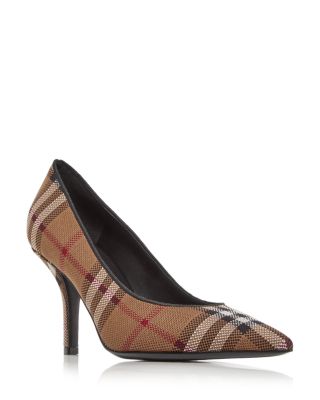
The trick that has saved me more than any boot: keep a pair of black leather pumps in your bag or under your desk. Change out of the weather boots at the office door and your shoes are dry, warm and presentable for the next hour. It sounds fussy until you’ve sat through a two-hour review in wet socks.
Insulation matters more than heel height in January. A thin leather lining plus a wool insole does more for warmth than a thicker sole, and it barely changes the fit. Salt is the real enemy, not cold. Wipe the boots with a damp cloth once a week, condition monthly, and you’ll get several winters out of them instead of one.

Buying them, and what it’s really worth
Cost per wear is the only number that matters, and it’s easy enough to run in your head. If a pair costs five times what you’d normally spend but you wear it sixty times a year for four years, the maths flips in its favour by the second winter. What that sum doesn’t tell you is that expensive shoes still wear out. Soles thin, heel tips flatten, suede balds at the toe. The difference is that these things can be fixed, and a cheap shoe usually can’t.
Sales are worth waiting for, with one caveat. Seasonal colours get marked down hard, and the classic black and tan styles rarely move at all. If you’re after a burgundy suede sandal, wait until November. If you want black leather in your size, buy it the day you see it, because the common sizes go first and restocks are unpredictable.
A quick word on confidence, since every styling piece promises it. Wearing a well-made shoe does change how you stand, but not through magic. It changes because you’re not thinking about your feet. That’s the whole benefit, and it’s worth more than the label sewn inside.
Four seasons from one pair is realistic if you choose the neutral shape first and the colour second. A black leather block heel and a tan suede sandal cover more of your year than a shelf of statement shoes ever will. Start there and see how often you actually reach for them.
