

The Ultimate Guide to Tennis Shoes for Everyday Walking
Let’s be clear from the start: the notion that any comfortable shoe is fit for miles of daily pavement pounding is a misconception that can lead to discomfort and injury. The right footwear transforms walking from a mundane task into a sustainable, enjoyable, and healthful practice. This guide posits that modern tennis shoes for walking represent a uniquely effective fusion of athletic technology and casual design, making them a superior choice for the urban explorer and daily commuter. We will move beyond marketing fluff, grounding our exploration in biomechanics, material science, and the lived experiences of countless walkers. By the end, you’ll possess not just an opinion, but a framework for making an informed decision that benefits your body and your wallet.
The Biomechanical Bridge: Why Tennis Shoes Work for Walking
At first glance, appropriating a court shoe for the sidewalk might seem unorthodox. However, the biomechanical demands of lateral movement in tennis share surprising common ground with the linear motion of walking. Both activities require exceptional midfoot stability to control the foot’s roll—overpronation or supination can lead to inefficiency and injury in either context. A study from the University of Calgary’s Human Performance Laboratory highlights the critical role of midsole integrity in managing the transfer of impact forces through the kinetic chain, from heel strike to toe-off. Tennis shoes are engineered with this precise control in mind, often featuring robust heel counters and medial posts. For the walker, this translates to a shoe that prevents the ankle from rolling inward excessively with each step, a common issue during prolonged ambulation. Furthermore, the cushioning systems in modern tennis shoes, such as Adidas’s Boost or Nike’s Air Zoom, are designed to absorb repeated, high-impact forces. While a tennis player experiences sharp, multidirectional stops, a walker encounters a consistent, rhythmic series of heel strikes. The cushioning technology, therefore, is more than adequate to dissipate the lower-intensity but constant impact of walking, protecting joints from the cumulative stress that can lead to conditions like plantar fasciitis or shin splints. The outsole’s herringbone or modified patterns, designed for grip on hard courts, offer reliable traction on concrete and asphalt, providing confidence with every stride.
:max_bytes(150000):strip_icc()/Web_1500-vwt-primary-best-overall-shoe-tstaples-118-671f4e0048e64d14a1c42e4f8d9e6658.jpg)
Deconstructing the Anatomy: Key Features of an Ideal Walking Tennis Shoe
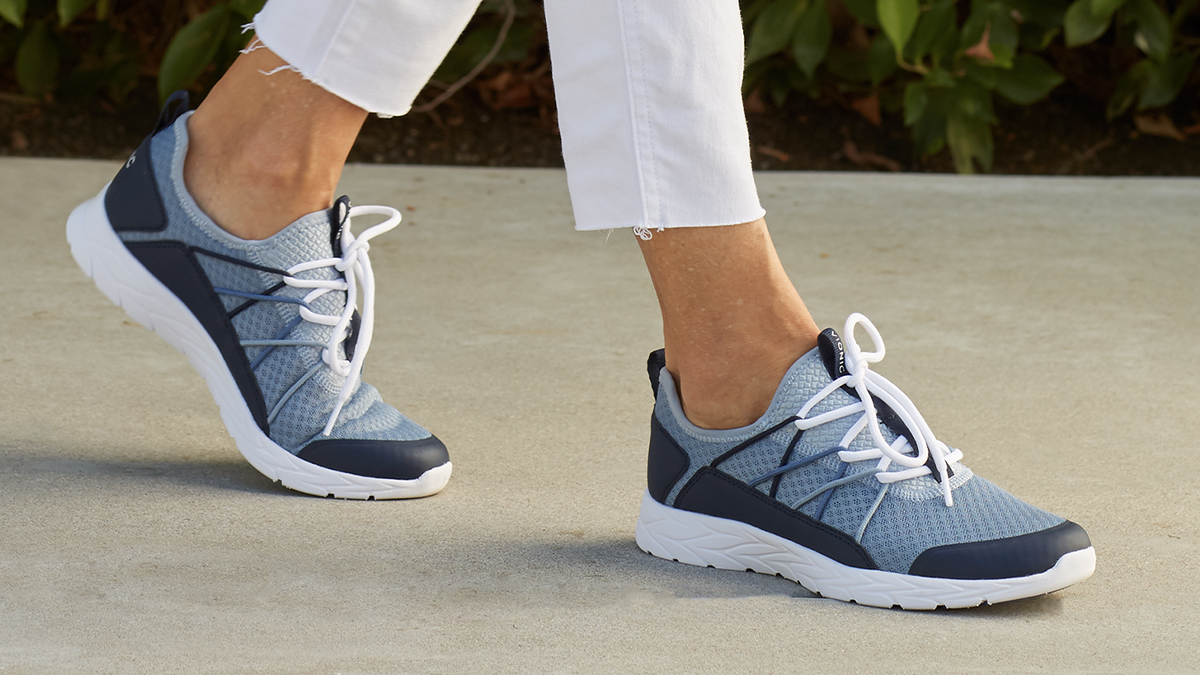
Not all tennis shoes are created equal for our purpose. Identifying the right pair requires understanding specific components. The upper should prioritize breathability and flexible support. Materials like engineered mesh allow air circulation, preventing moisture buildup during long walks, while synthetic overlays provide structure without unnecessary rigidity. The tongue and collar must be well-padded to prevent chafing, a detail often perfected in tennis models to accommodate sudden movements. The midsole is the heart of the shoe. Here, we seek a balance between responsive cushioning and stability. EVA foam is common, but advanced compounds like Nike’s React or New Balance’s Fresh Foam offer greater energy return and durability. As Dr. Casey Kerrigan, a renowned biomechanist, has stated in interviews on platforms like Quora and health blogs, “The goal is not maximum softness, but optimal resilience—a material that compresses to absorb shock and then springs back to assist your forward motion.” The insole or sockliner should be removable and offer arch support, a feature where many casual shoes fail. Finally, the outsole demands attention. Durable rubber with a flatter, more contiguous tread pattern than a traditional aggressive tennis sole is ideal. It provides longevity against abrasive pavement and ensures consistent ground contact. A beveled or rounded heel, a feature known as a “crash pad” in running shoes, is a bonus, facilitating a smoother heel-to-toe transition, making each step in your tennis shoes for walking feel effortless.
Material Science and Foot Health: Beyond the Hype
The evolution of synthetic materials has revolutionized footwear. The debate between natural leather and modern synthetics for a walking shoe leans decisively toward the latter for everyday use. Synthetic uppers, particularly knit fabrics, offer superior breathability, lighter weight, and often require no break-in period, conforming to the foot’s shape from the first wear. This aligns with the principle of “immediate comfort” advocated by podiatrists for daily wear shoes. Furthermore, consider the environmental and practical aspect: many high-tech synthetics are easier to clean and more resistant to weather elements. The midsole technology warrants a deep dive. For instance, Adidas’s Boost foam, developed in partnership with chemical giant BASF, consists of thousands of thermoplastic polyurethane (TPU) pellets that store and release energy with each step. Independent tests from organizations like the American Podiatric Medical Association have cited such materials for reducing metabolic cost—meaning your body expends less energy with each step. This isn’t mere corporate propaganda; it’s applied polymer chemistry working to reduce fatigue. When selecting your tennis shoes for walking, prioritizing shoes that openly discuss their midsole technology—be it Gel, Foam, Wave, or Air—is a step toward choosing a tool, not just a fashion item. As the famous YouTube shoe reviewer and biomechanics enthusiast “KOFU” often emphasizes, “The midsole is the engine. Everything else is the chassis. You wouldn’t buy a car for a long journey without knowing what’s under the hood.”
The Style-Performance Symbiosis: Looking Good Without Compromise
For decades, “walking shoes” were synonymous with clunky, purely functional designs. The rise of athleisure and the retro sneaker trend has demolished this barrier. Modern tennis-inspired shoes from brands like New Balance, Asics, and even luxury lines offer a palette of designs that seamlessly integrate into everyday wardrobes. This is not a superficial point. Psychological studies, including those referenced in literature from Stanford’s Persuasive Technology Lab, suggest that when we feel good about what we’re wearing, we are more likely to engage in the associated activity consistently. A shoe you’re proud to wear is a shoe you’ll wear more often, turning a sporadic walk into a daily habit. The classic lines of a Stan Smith, the bold aesthetics of a Gel-Kayano, or the understated elegance of a leather-trimmed tennis trainer provide the style quotient without sacrificing the technical foundations discussed. This symbiosis means you no longer need to pack an extra pair of shoes; your tennis shoes for walking can carry you from a morning errand run to a casual lunch meeting without a second thought. The cultural cachet of the tennis shoe, immortalized in films like Forrest Gump with his iconic Cortezes or the timeless appeal of the Converse Chuck Taylor (a basketball shoe turned cultural icon), proves that performance heritage and style are not mutually exclusive but powerfully complementary.

Economic and Practical Wisdom: Maximizing Value and Longevity
Investing in a quality pair of tennis shoes for walking is an exercise in long-term economy. A well-constructed shoe with a durable rubber outsole and high-resilience midsole will maintain its structural integrity and comfort for 500 miles or more, far outlasting a cheaply made fashion sneaker whose foam collapses within a few months. To bring professional knowledge and discounted prices to you, it’s crucial to know when and where to shop. End-of-season sales, holiday promotions, and outlet stores for major brands are treasure troves. Furthermore, many direct-to-consumer brands offer significant value by cutting out the retail middleman. The practical wisdom extends to care: rotating between two pairs allows the midsole foam to fully decompress between uses, dramatically extending the life of both. Waterproofing sprays can protect synthetic uppers, and knowing when to replace shoes—typically when the tread is smooth or the midsole no longer feels resilient—prevents injuries. As the ancient proverb, often cited in financial and lifestyle guides, reminds us: “The bitterness of poor quality remains long after the sweetness of low price is forgotten.” Spending $120 on a shoe that lasts two years is wiser than spending $60 every six months on shoes that fail.
Making Your Choice: A Personal Journey on Your Feet
Your feet are as unique as your fingerprint. Therefore, the final selection is a personal journey. It must begin with an honest assessment of your gait, arch type (flat, neutral, or high), and any existing foot conditions. Visiting a specialty running or walking store for a gait analysis can provide invaluable insights, even if you ultimately purchase elsewhere. When trying on shoes, do so in the afternoon when feet are naturally slightly swollen. Wear the socks you intend to walk in and ensure there’s a thumb’s width of space between your longest toe and the shoe’s end. Walk on a hard surface, not just carpet. Pay attention to any points of pressure or slip. The shoe should feel secure and supportive, not tight or restrictive. Remember, the best shoe is the one that disappears on your foot, allowing you to move naturally and comfortably. This process turns an abstract discussion of biomechanics and materials into a tangible, personal benefit. It transforms a purchase into an investment in your mobility, health, and daily joy.
:max_bytes(150000):strip_icc()/vwt-walking-shoes-test-ryka-devotion-x-sahara-borja-02-18807b688fbb49e4ba30a3ee438600cb.jpeg)
The journey through the world of footwear brings us to a definitive point: the engineered sophistication of the modern tennis shoe offers an unparalleled package for the everyday walker. It delivers the stability born from lateral sport, the cushioning refined through impact science, the durability demanded by hard surfaces, and the aesthetic versatility required by modern life. This isn’t about repurposing a sports tool; it’s about recognizing a convergent evolution in design where performance meets daily necessity. By choosing wisely, based on the principles outlined, you equip yourself with more than footwear. You secure a foundation for countless steps toward better health, greater enjoyment of your environment, and a simpler, more integrated daily life. Let your next walk begin with this informed confidence.
