

How to Style Them for a Bold Fashion Statement
Fashion is not merely about clothing; it is a language of identity, a declaration of intent. Among its most potent lexicons is animal print, a pattern that has prowled the corridors of style for decades, evolving from a symbol of exoticism to a mainstream emblem of empowered audacity. This article delves into the art of harnessing one of its most dynamic iterations: the cheetah print heels. We will move beyond superficial trends to explore how this specific footwear can architect an entire persona, grounding our discourse in cultural history, psychological impact, and practical, science-backed styling principles. Forget timid steps; this is about crafting a narrative with every stride.
The Primal Allure: A Brief Archaeology of Animal Print
To understand the power of cheetah print heels, one must first appreciate the deep-rooted symbolism of animal print itself. Its journey is a fascinating study in semiotics. Initially, in many ancient cultures, wearing the skin or pattern of a powerful predator like a leopard or cheetah was a talismanic act, believed to transfer the animal’s strength, speed, and ferocity to the wearer. This concept, known as sympathetic magic, is well-documented in anthropological studies from institutions like Oxford’s School of Anthropology. Fast forward to the 20th century, and the print was co-opted by Hollywood starlets like Josephine Baker and later, in the 1950s, by designers such as Christian Dior, who used it to inject a dose of “savage” glamour into post-war fashion. As fashion historian Dr. Valerie Steele notes in her work for The Museum at the Fashion Institute of Technology, animal print has perpetually oscillated “between the taboo and the chic.” This inherent duality—the civilized versus the wild—is precisely what makes it so compelling. When concentrated on a heel, this symbolism becomes focal and intentional. A cheetah print heels is not a full costume; it is a strategic accent, a controlled release of primal confidence. It references a history of power and allure without requiring literal translation, making it a sophisticated tool in the modern sartorial kit.

Deconstructing the Statement: The Psychology of a Patterned Heel
Why does a simple pattern on a shoe command such attention? The answer lies at the intersection of neuroscience and social psychology. Visually, animal prints are high-contrast, non-repeating patterns. Research in visual perception, cited in resources like Stanford’s perceptual science journals, indicates that the human brain is uniquely wired to notice irregularities and high-contrast stimuli—a survival mechanism for spotting predators or prey. In a fashion context, this translates to an automatic, subconscious draw of the eye. The cheetah print heels becomes an instant focal point. Furthermore, from a social signaling perspective, deliberately choosing such a bold item communicates non-verbal cues studied in fields like sociolinguistics. It signals creativity, confidence, and a willingness to take sartorial risks. As style icon Iris Apfel famously quipped, “More is more and less is a bore.” This embrace of “more” through a bold pattern demonstrates a rejection of sartorial timidity. In the realm of color psychology, the warm, earthy tones of cheetah print (tawny golds, rich browns, and stark blacks) are associated with stability, warmth, and sophistication, but the chaotic pattern overlays it with energy and unpredictability. Wearing them is, therefore, a psychological exercise in balancing these traits—projecting grounded audacity.
Architecting the Outfit: The Foundation Principles
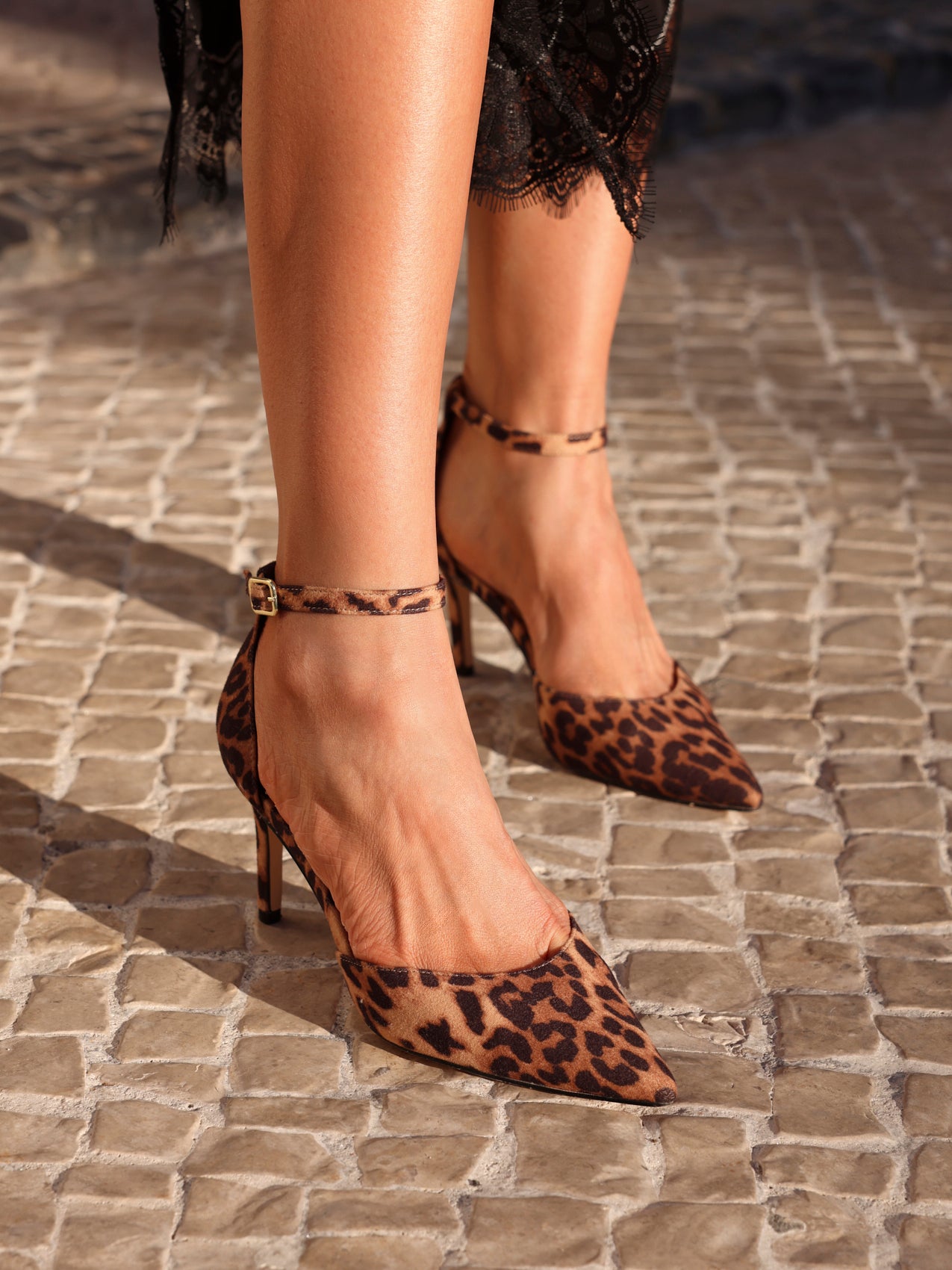
The cardinal rule when styling a statement piece like cheetah print heels is to let them lead without allowing them to overwhelm. This requires a mindful approach to the rest of your ensemble. Think of the shoes as the exclamation point of your sentence; the rest of the outfit should form a coherent, supporting statement. The first and most fail-safe principle is the Monochromatic Canvas. Pair your heels with an outfit in a single, solid color that pulls directly from the print’s palette. A head-to-toe ensemble in cream, black, camel, or chocolate brown provides a sleek, modern backdrop that allows the shoes to pop with intentionality. This approach is favored by minimalist aesthetic authorities like The Row, where focus is on silhouette and singular impact. The second principle is Textural Dialogue. Since the print itself is visually complex, balance it with rich but subdued textures. Consider a cashmere turtleneck, a sleek leather skirt, or a tailored wool blazer. The contrast between the wild pattern and the refined texture creates a compelling tension that speaks to high-fashion sensibility, a technique often showcased in editorials from websites like Vogue Runway.
Beyond the Basics: Contextual Alchemy
Once the foundation is mastered, the true artistry begins: contextual alchemy. This is where you bend the perceived rules to create unexpected, genre-defying looks. For a powerful professional statement, imagine a sharp, tailored navy suit with a crisp white shirt. The conventional finish would be a patent leather pump. Now, replace that with a pair of pointed-toe cheetah print heels. The effect is transformative. It subtly communicates that your professionalism is laced with creative fearlessness, a combination highly prized in innovative industries. This aligns with the philosophy of modern power dressing, as discussed on platforms like LinkedIn and Forbes, which emphasizes individuality within a corporate code. Conversely, for a casual weekend look, subvert the expectation that bold prints demand formal wear. Pair your heels with the ultimate uniform of ease: faded, straight-leg blue jeans and a simple white tee. This juxtaposition—the rugged, democratic denim with the fierce, glamorous heel—is a styling trope perfected by street-style stars and embodies a relaxed confidence. It tells the world you don’t need a special occasion to embrace your bold side.
The Investment Perspective: Quality, Versatility, and Smart Acquisition
Approaching cheetah print heels as a strategic investment rather than a fleeting trend purchase maximizes their value and longevity. From a materials perspective, a well-constructed heel with a leather upper and a stable, comfortable heel block will not only last for seasons but will mold to your foot, becoming a personal staple. Authority figures in sustainable fashion, such as activists like Venetia La Manna, emphasize the “cost per wear” model. A versatile, high-quality statement piece worn frequently has a far lower environmental and financial cost than numerous fast-fashion imitations. To bring professional knowledge on discounted prices to users, savvy shoppers should employ tactics like setting price alerts on retailer apps, shopping during end-of-season sales for classic items (as animal print is perennially cyclical), and exploring reputable consignment or luxury resale websites like The RealReal or Vestiaire Collective. Here, you can often find designer versions—think Jimmy Choo or Gianvito Rossi—at a significant fraction of the original price. This professional approach to acquisition ensures you gain a superior product that elevates your style sustainably and economically.

Iconic Echoes: The Print in Cultural Consciousness
The legitimacy of animal print as a serious fashion element is cemented by its relentless presence in high art and popular culture. It is not a mere trend but a recurring motif. In film, the association with untamed, charismatic power is undeniable. Recall Cruella de Vil’s obsessive pursuit of dalmatian spots, a caricature that underscores the print’s association with formidable, if not villainous, authority. Conversely, in the 1966 film “The Gospel According to St. Matthew,” Pier Paolo Pasolini dressed Mary Magdalene in a leopard-print cloak, symbolizing a raw, pre-conversion sensuality that is later transformed. In literature, the “leopard” or spotted skin often symbolizes the exotic “other,” as seen in Hemingway’s African safaris. More recently, the embrace of the print by music icons from Madonna to Rihanna and onto the red carpet at the Met Gala has continually reforged its meaning. As designer Donatella Versace, whose house is synonymous with animal print, stated in an interview for Vogue:
“Animal print is a neutral. It is not a color; it is an attitude. It can be worn anytime, anywhere, if you have the confidence to carry it.”
This reframing of the print as a “neutral” is revolutionary. It grants permission to integrate pieces like cheetah print heels into daily wear, not as a costume, but as a foundational expression of personal attitude.

Ultimately, styling cheetah print heels is an exercise in personal narrative. It is about selecting a symbol—one laden with history, psychology, and cultural resonance—and making it your own. It requires neither a full safari suit nor an apology. It demands only the conscious decision to let a part of your outfit speak with a roar while the rest whispers. From the boardroom paired with a suit to the sidewalk paired with denim, their versatility is their power. They are not just shoes; they are a wearable thesis on the balance between chaos and control, the wild and the refined. So step into them with the understanding that you are not just following a trend. You are tapping into a long lineage of boldness and scripting the next chapter of your own style story, one confident, patterned step at a time.
