

How to Style Air Force Sneakers for Effortless Everyday Cool
Effortless cool isn’t something you buy; it’s something you build. It’s the confidence that comes from knowing your style is both authentic and functional. At the heart of this aesthetic, for decades, has been a single, iconic silhouette: the air force sneakers. More than just a shoe, it’s a cultural canvas, a design principle, and a testament to minimalist versatility. This article isn’t about following fleeting trends, but about understanding the foundational role these sneakers play in a modern wardrobe. We’ll dissect the objective reasons behind their enduring appeal and provide a practical, principle-based guide to styling them for any day, turning a simple choice of footwear into a statement of considered, effortless style.
The Foundation: Why Air Force 1s Transcend Trend
To style something effectively, you must first understand its essence. The Nike Air Force 1, first released in 1982, didn’t achieve its status by accident. Its design is a case study in functional aesthetics. The clean, white leather upper provides a blank slate, a concept championed by designers from Dieter Rams to Jony Ive, who advocate for simplicity and neutrality as the highest forms of sophistication. The chunky, yet balanced, silhouette offers visual weight that grounds an outfit, a principle evident in architectural stability. Scientifically, the color white reflects all wavelengths of visible light, making it inherently neutral and capable of harmonizing with any color palette—a fact leveraged in everything from laboratory coats to gallery walls. Culturally, its journey from the basketball courts of Baltimore to global hip-hop iconography, as documented in sources like Complex’s “Sneaker of the Year” retrospectives, imbued it with a credibility that pure fashion brands cannot manufacture. It carries what sociologist Pierre Bourdieu termed “cultural capital.” It is simultaneously a performance object (with its encapsulated Air cushioning) and a symbolic object. This duality is key. When you wear air force sneakers, you are not just wearing a shoe; you are wearing a piece of design history, urban culture, and athletic innovation. This foundational understanding is what separates a thoughtful style choice from a mere purchase.

Principle One: The Monochromatic Anchor
The most powerful application of the Air Force 1 is as an anchor in a monochromatic or tonal outfit. This approach leverages the shoe’s crisp whiteness to create a focal point and break up a single-color look, adding depth and preventing flatness. For example, a head-to-toe black outfit—black tailored trousers, a black fine-gauge knit, and a black overshirt—achieves a sharp, minimalist aesthetic. The all-white air force sneakers then act as a stark, clean counterpoint, literally and figuratively grounding the ensemble. This isn’t just a style trick; it’s a visual design principle related to figure-ground perception, where the high contrast makes both the outfit and the shoes stand out more distinctly. The same principle works with shades of grey, navy, or even beige. The key is to let the sneakers be the sole source of high contrast. This method is foolproof and exudes a confidence that comes from restraint. It echoes the philosophy of filmmaker Wes Anderson, whose meticulous compositions often use a single, bold color pop against a uniform backdrop to draw the eye and create narrative focus. Your outfit is the composition; the sneakers are that deliberate, focal point.

Principle Two: Textural Dialogue and Casual Deconstruction
Effortless cool often lives in the tension between opposing elements. The air force sneakers, with their athletic heritage and clean lines, are perfect for juxtaposing against rich textures or deconstructing formal pieces. Consider pairing them with raw denim, a heavyweight cotton tee, and a supple leather jacket. Here, the smooth, polished leather of the sneaker converses with the rugged denim and worn-in leather, creating a rich, tactile narrative. This approach aligns with the “high-low” mixing prevalent in contemporary menswear and womenswear, a strategy frequently analyzed in publications like The Business of Fashion. Alternatively, use them to deconstruct tailoring. Swap dress shoes for a crisp pair of Air Force 1s with a well-fitted suit in a casual fabric like cotton or linen. The result is modern, approachable, and subverts expectation—a tactic seen on runways from brands like Louis Vuitton under Virgil Abloh, who famously championed this fusion of streetwear and luxury codes. As Abloh stated in a lecture at Harvard’s Graduate School of Design:
“The idea of taking something that exists and editing it, is the closest thing to a modern methodology of design that I can articulate. The Air Force 1 is a prime archetype for this.”
This “editing” is exactly what you perform when you replace a formal element with an iconic sneaker.
Principle Three: Color Blocking and Feminine Edge
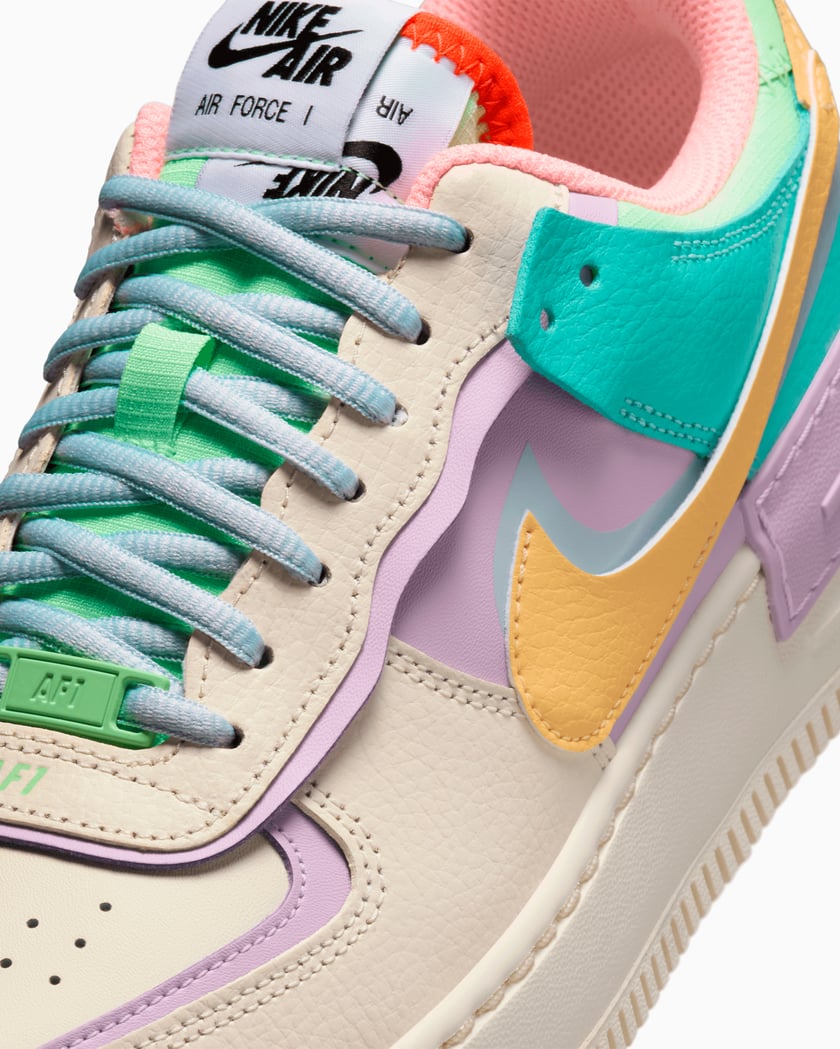
While the classic white is a cornerstone, the Air Force 1 platform offers endless color variations that invite a more playful, color-blocking approach. This is particularly effective in creating a bold, feminine edge. A pair in a soft pastel or a stark black can be the starting point for an outfit built on blocks of complementary or analogous colors. For instance, a pink “Shadow” style Air Force 1 could be paired with wide-leg, cream-colored trousers and a lavender oversized shirt. The chunky silhouette of the sneaker balances the fluidity of the trousers, creating a dynamic, contemporary proportion that feels both powerful and playful. This approach taps into the Y2K and normcore revivals but does so with intentionality. It references the bold color blocking of modernist art and the playful styling seen on platforms like TikTok, where fashion creators like @lindseyrem and @matildadjerf demonstrate how to use statement sneakers as the centerpiece of a colorful wardrobe. The goal is cohesion, not matchy-matchy. Let the sneaker be one bold block in a harmonious composition of two or three other blocks of color.
Beyond the Shoe: The Ecosystem of Cool
Styling the perfect outfit with your air force sneakers is only part of the equation. True effortless cool extends to how you acquire and care for them. From a professional knowledge standpoint, understanding the construction—like the perennial “Are they good for wide feet?” query—matters. The general consensus from podiatry forums and long-term wearers suggests the classic leather AF1 molds well over time, offering a custom fit. Regarding value, the sneaker market is vast. While the core white-on-white is perennially available, limited editions and collaborations (like those with Travis Scott or Off-White) command high resale. For the everyday stylist, the standard models offer the best value. Look for sales during seasonal transitions on major retailer sites or Nike’s own platform. A pro tip: investing in a high-quality sneaker protector spray and a gentle leather cleaner will extend the crisp, “fresh-out-the-box” look exponentially, making your investment last through countless styled outfits. This mindful approach to consumption—buying quality, maintaining it—is itself a cornerstone of sustainable, cool style.
Ultimately, styling air force sneakers is an exercise in understanding balance. It’s about recognizing their role as a neutral, cultural heavyweight and having the confidence to let them play that role—whether as an anchor, a disruptor, or a color protagonist. The effortless cool they promise isn’t delivered by the shoe alone, but by the considered choices you build around it. It’s the knowledge that you’re wearing a design icon, applied with your own personal logic. So step out, not just in a pair of sneakers, but in a piece of applied style theory, ready for whatever the day brings.
