

The Ultimate Guide to Saucony Walking Shoes for Every Stride
Choosing the right walking shoe isn’t about following a trend; it’s a foundational decision for your health and daily vitality. Your feet are the base of your body’s kinetic chain, and the shoes you strap on each morning set the tone for your posture, joint health, and energy levels. Amidst a sea of athletic brands, Saucony walking shoe offerings stand apart, not through flashy marketing, but through a legacy of biomechanical research and precision engineering. This guide cuts through the noise, offering a clear, evidence-based pathway to understanding how the right pair can transform your walking experience from a mundane task into a source of strength and rejuvenation. We’ll move beyond superficial features, delving into the science of stride, the architecture of support, and the specific models that turn intention into effortless motion.
The Biomechanics of Walking: Why Your Shoe is More Than a Soles
To appreciate what sets a dedicated walking shoe apart, we must first understand the complex mechanics of the gait cycle. Unlike running, which involves a flight phase where both feet are off the ground, walking is a continuous sequence of heel-strike, foot-flat, mid-stance, heel-off, and toe-off. This rolling motion places unique stresses on the foot and lower limb. According to research from the University of Virginia’s Motion Analysis and Motor Performance Laboratory, the foot absorbs 1.2 to 1.5 times your body weight with each step during walking. A shoe that fails to manage this repetitive load can contribute to a cascade of issues, from plantar fasciitis and shin splints to knee and hip pain. The American Podiatric Medical Association (APMA) consistently emphasizes that proper footwear is the first line of defense. This is where the design philosophy behind a Saucony walking shoe becomes critical. Their engineering focuses on a stable heel counter to prevent excessive pronation or supination during the crucial heel-strike phase, a flexible forefoot to facilitate a smooth roll-through, and targeted cushioning that doesn’t sacrifice ground feel. It’s a balance between protection and proprioception—allowing your foot to move naturally while being shielded from impact.

Decoding Saucony’s Core Technologies: From FORMFLIT to PWRRUN
Saucony’s reputation is built on a portfolio of proprietary technologies, each serving a distinct biomechanical function. Let’s demystify the key terms you’ll encounter. First, PWRRUN is the cornerstone of their cushioning. Compared to traditional EVA foam, PWRRUN is engineered to be more durable, responsive, and lighter. It provides a soft landing without the “mushy” feeling that can destabilize the foot, a point often highlighted in independent reviews on platforms like RunRepeat. Then there’s FORMFIT, a three-layer system that adapts to your foot’s unique shape. As noted in a technical white paper from the company, it combines a base layer for foundation, a contoured bed for arch conformity, and a top layer for a snug, adaptive wrap. This holistic approach ensures the shoe works with your foot, not against it. For stability, many Saucony walking shoe models feature TPU Guidance Frames or medial posts. These are not rigid barriers but strategic reinforcements that gently guide the foot back to a neutral path, a principle supported by biomechanics literature from institutions like the Spaulding National Running Center. Understanding these technologies empowers you to look past marketing jargon and select a shoe based on the actual engineering that will support your stride.
Navigating Your Foot Type: The Arch Never Lies
One of the most critical, yet often overlooked, steps in selecting any athletic shoe is identifying your foot type and gait pattern. This isn’t a matter of guesswork; it’s a simple diagnostic you can perform at home via the “wet test.” Step onto a dry surface with a wet foot and observe the imprint. A full, wide imprint suggests a low arch (overpronation), a curved imprint with a narrow band connecting heel and forefoot indicates a high arch (underpronation or supination), and a well-defined curve with about half the midfoot visible signifies a neutral arch. Your arch dictates your shoe needs. As renowned physical therapist and author of “Anatomy for Runners,” Jay Dicharry, states: “The goal of a shoe is not to correct your anatomy, but to complement your mechanics and protect you from the forces your body creates.” For the overpronator, a Saucony walking shoe with structured support, like the Saucony Integrity Walker, provides the necessary foundation to control excessive inward roll. For the neutral to high-arched walker, a shoe focused on plush cushioning and flexibility, such as the Saucony Echelon Walker, offers shock absorption where it’s needed most. Ignoring this fundamental alignment is like building a house on an unstable foundation.

A Curated Walkthrough: Top Saucony Models for Every Walker
With the science and self-assessment in hand, we can now explore specific models. Saucony’s walking line is thoughtfully segmented to address different priorities, from all-day comfort to post-rehabilitation stability.
For the All-Day Comfort Seeker: Saucony Grid Omni Walker
If your day involves prolonged periods on your feet—whether you’re a nurse, teacher, or avid city explorer—the Grid Omni Walker is engineered for endurance. Its defining feature is the historic GRID cushioning system, a web of Hytrel filaments suspended in the heel that acts as both a shock absorber and a stabilizing device. This technology, pioneered by Saucony in the late 80s, distributes impact forces horizontally rather than sending them vertically up the leg. The result is a feeling of “floating on a cloud” that remains consistent for miles, a sentiment echoed across countless user testimonials on retail sites. The upper is typically constructed from breathable, durable mesh with reinforced overlays in high-wear areas, ensuring the shoe maintains its structure. The rocker-shaped sole promotes a natural, energy-efficient gait cycle, reducing fatigue in the calves and Achilles tendon. When considering a Saucony walking shoe for work or long-distance leisure walking, the Grid Omni Walker represents a benchmark in sustained comfort.
For the Walker Needing Maximum Support: Saucony Integrity Walker
Designed with input from podiatrists, the Integrity Walker is the orthopedist-recommended choice for individuals dealing with mild to moderate overpronation, plantar fasciitis, or flat feet. It features a robust, dual-density midsole—a firmer medial (inner) post to curb excessive inward rolling—and a deep heel cup that cradles the calcaneus to limit heel slippage. The shoe often carries the APMA Seal of Acceptance, a credential that signifies its suitability for promoting foot health. The outsole is made of a high-abrasion carbon rubber, particularly in the heel, which is the first point of contact and thus experiences the most wear. This durability translates to long-term value, as noted in “The Walking Shoe Report” by consumer advocacy groups. For anyone seeking a Saucony walking shoe that functions as a reliable, stabilizing partner, the Integrity Walker is a clinically-informed fortress for your feet.
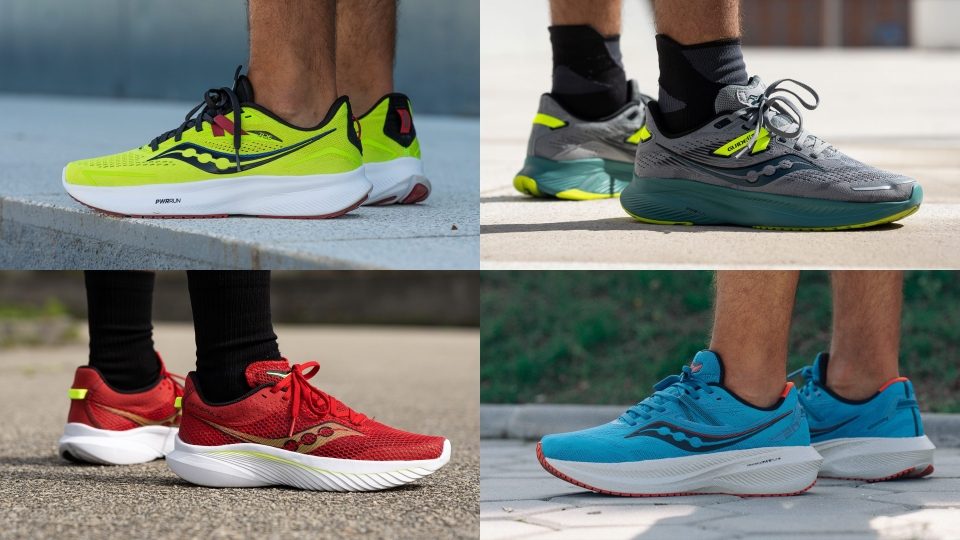
For the Active, Fitness-Focused Walker: Saucony ProGrid Walker
This model bridges the gap between a dedicated walking shoe and a lightweight trainer. It utilizes the ProGrid cushioning system, which is strategically placed to manage impact from both heel and forefoot, making it ideal for walkers who incorporate faster paces, hills, or even short jogging intervals into their routine. The overall design is sleeker and lighter than the traditional structured walker, offering greater flexibility for a dynamic range of motion. The mesh upper is highly breathable, managing moisture effectively during vigorous activity. Fitness influencers on platforms like YouTube often highlight the ProGrid Walker for its versatility, noting that it doesn’t feel “clunky” during faster movement. If your walking regimen is your primary cardio and you value a responsive, energetic feel underfoot, this model exemplifies how a Saucony walking shoe can be both protective and performance-oriented.
Investing in Your Stride: Value Beyond the Price Tag
While the initial cost of a quality pair like a Saucony walking shoe may be higher than a discount store alternative, the investment must be calculated in terms of cost-per-mile and, more importantly, health outcomes. A poorly constructed shoe can wear out asymmetrically, exacerbating biomechanical flaws and leading to injuries that incur their own costs—physical therapy, medical appointments, and lost activity. A well-engineered shoe from Saucony, with its durable compounds and thoughtful construction, will maintain its structural integrity far longer. To maximize your investment, be strategic about purchases. Sign up for brand newsletters and follow authorized retailers to catch seasonal sales; it’s common to find previous colorways discounted by 20-30%. Additionally, consider purchasing two pairs and rotating them. This allows the midsole foam to fully decompress between uses, dramatically extending the life of both pairs. As the saying goes in the world of endurance sports, “Don’t skimp on what separates you from the ground.” Your shoes are that interface, and choosing a scientifically-designed pair is a direct investment in your mobility and long-term well-being.

The journey to finding the perfect walking companion ends not with a single, universal answer, but with a personalized alignment between your body’s mechanics and a shoe’s engineered purpose. Saucony’s range provides that spectrum of solutions, from cloud-like comfort to unwavering support. By applying the knowledge of your own gait and understanding the technology built into each model, you move from being a passive consumer to an informed participant in your own foot health. Lace up a pair that matches your stride, and you’ll feel the difference with every step—not as a conclusion, but as the beginning of a more supported, energized, and sustainable path forward.
