

The Ultimate Guide to Ryka Walking Shoes for Women
In the vast landscape of athletic footwear, finding a shoe that genuinely understands and caters to the unique biomechanics of a woman’s foot can feel like a quest. This is not merely about scaling down a men’s design or adding a splash of color; it’s about foundational engineering. For the woman who walks for fitness, for tranquility, or simply as her primary mode of daily movement, the right shoe is the cornerstone of her routine. It’s the difference between a rejuvenating stride and a punishing one. This guide delves into the world of Ryka walking shoes for women, a brand conceived by and for women, to explore why their approach has garnered a dedicated following and how their scientific principles translate into tangible benefits on the pavement, the trail, and the treadmill.
The Anatomical Imperative: Why Women’s Feet Demand Specialized Design
The argument for gender-specific footwear is rooted in irrefutable anatomical and biomechanical differences, a fact supported by research from institutions like the University of Virginia’s Motion Analysis Laboratory. On average, women have narrower heels relative to the forefoot, a higher arch, and a different Q-angle (the angle between the quadriceps muscle and the patellar tendon) which influences gait and alignment. A study often cited in podiatric literature notes that these structural variances mean women are more prone to specific injuries, such as patellofemoral pain syndrome and stress fractures, when using footwear designed on a male-centric last. Ryka walking shoes for women begin with this fundamental truth. Their lasts are sculpted from data on women’s foot shapes, ensuring a secure heel cup that minimizes slippage—a common complaint in unisex or adapted men’s shoes—and a forefoot that accommodates the natural splay without pinching. This isn’t a marketing gimmick; it’s an application of orthopaedic science. When you slip into a pair, you’re not just wearing shoes; you’re engaging with a platform built from the ground up to align with your skeletal and muscular framework, promoting a more natural and efficient walking gait from the very first step.

Deconstructing the Devotion X: A Case Study in Biomechanical Support
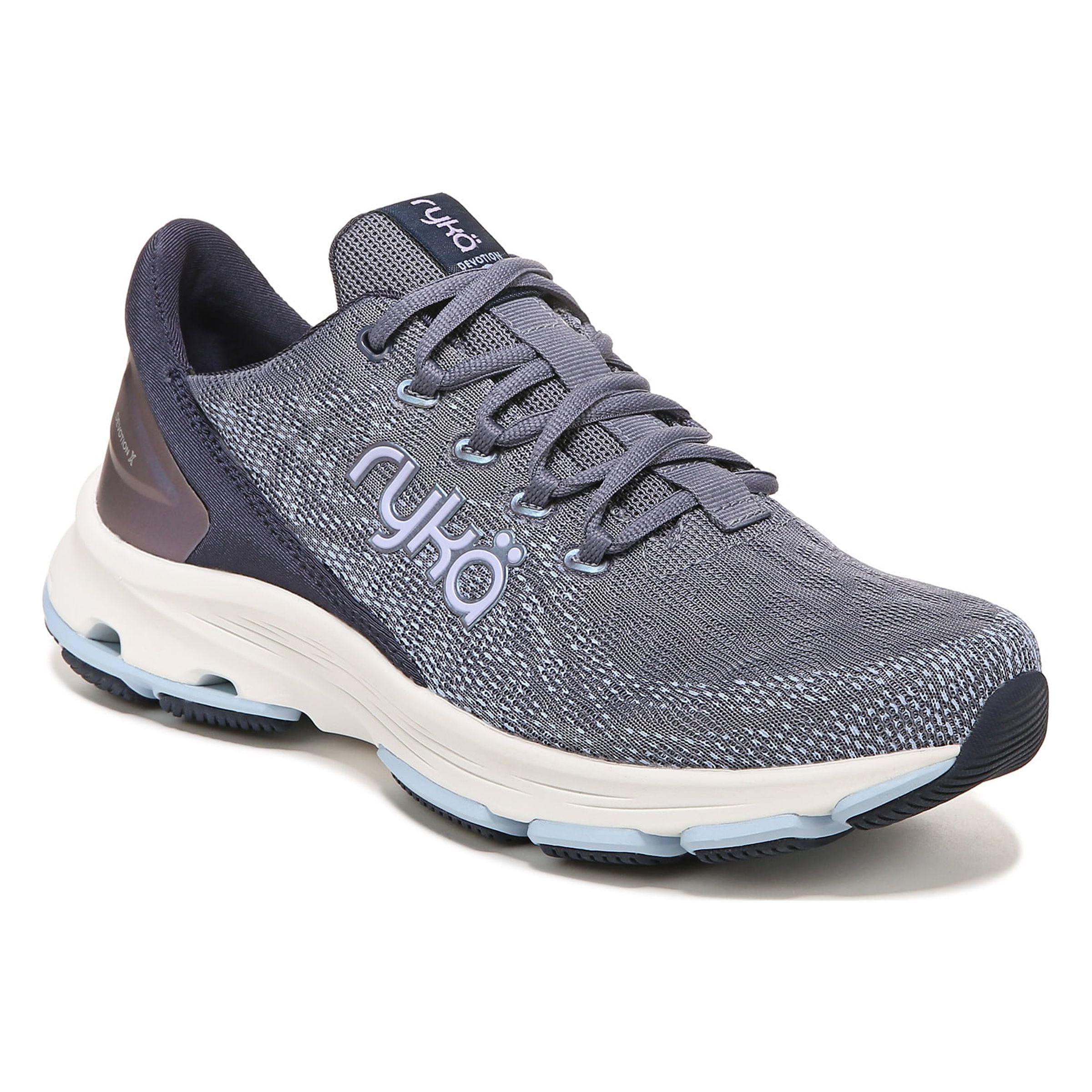
To understand Ryka’s philosophy, let’s examine a flagship model like the Devotion X, frequently highlighted by fitness influencers on platforms like YouTube for its balance of cushioning and stability. The core of its design lies in a dual-density midsole. A firmer medial post, a concept validated by the American Podiatric Medical Association for controlling overpronation, is integrated to provide subtle guidance to the foot, preventing the ankle from rolling excessively inward—a motion that can lead to a cascade of issues from plantar fasciitis to knee pain. Surrounding this is a lighter, responsive foam that absorbs impact. This combination addresses a critical need: shock attenuation. Every step generates a force of approximately 1.5 times your body weight, which travels up your kinetic chain. As noted by Harvard Medical School publications on walking for health, proper cushioning is essential for joint preservation over miles and years. The outsole’s strategic flex grooves aren’t random; they facilitate the foot’s natural rocker motion, propelling you forward with less effort. Wearing the Ryka walking shoes for women like the Devotion X is akin to having a personal, silent coach embedded in your stride, constantly making micro-corrections to promote healthier movement patterns.

Beyond the Footbed: The Psychological and Performance Resonance
The impact of a well-designed shoe extends beyond physical mechanics into the psychological realm of performance. This concept is echoed in the world of professional athletics and even in popular culture. In her book “The Champions Mind,” sports psychologist Dr. Jim Afremow discusses how optimal equipment fosters a “flow state,” removing distractions and allowing full focus on the activity. When your feet are comfortable, secure, and supported, the mental energy typically spent on anticipating discomfort or adjusting your gait is liberated. You become more present in your walk, whether it’s a mindful meditation or a power walk. Furthermore, the aesthetic design of Ryka walking shoes for women, often featuring sophisticated color palettes and streamlined silhouettes, taps into what cultural analysts call “enclothed cognition”—the systematic influence that clothes have on the wearer’s psychological processes. A shoe you feel confident in can elevate a routine chore into a purposeful, empowering ritual. It’s the difference between “having to walk” and “getting to walk.” This holistic benefit—where biomechanical science meets cognitive and emotional well-being—is what transforms a footwear purchase into an investment in one’s overall health regimen.
Navigating the Market: A Comparative Lens and Value Proposition
In a market saturated with options from giants like Nike, Brooks, and Hoka, Ryka’s singular focus is its greatest differentiator. While other brands offer excellent women’s lines, Ryka’s entire corporate and design ethos is exclusively feminine. This specialization often translates to a more accessible price point without a sacrifice in technology. For instance, advanced features like moisture-wicking linings, reflective details for safety, and high-rebound cushioning systems are standard in many Ryka models. From a value perspective, consider this: a premium walking shoe from a generalist brand might retail for $160 or more. Ryka walking shoes for women frequently deliver comparable, if not more targeted, biomechanical support in a range of $80 to $120. Retailers and the brand’s own site often run promotions, bringing quality footwear into an even more accessible bracket. This democratization of specialized gear is crucial. It aligns with the public health advocacy seen in sources like the CDC’s recommendations on physical activity, which emphasize removing barriers to regular exercise. By providing professional-grade support at a discounted price, Ryka effectively removes a significant financial barrier, making the path to consistent, injury-free walking more attainable for a broader demographic.
The Verdict from the Ground Up: Synthesizing Expert and User Perspectives
What does the collective evidence suggest? The consensus from podiatrists, biomechanists, and a legion of everyday walkers points toward the efficacy of a dedicated design. On platforms like Quora and specialized running forums, the recurring praise for Ryka walking shoes for women centers on the “immediate difference in heel hold” and “relief from arch fatigue.” These anecdotal reports are the real-world validation of the brand’s scientific premises. As one certified personal trainer and YouTube content creator specializing in women’s fitness stated in a review:
“After analyzing gait patterns for years, I recommend shoes that work with the body’s natural geometry. Ryka’s commitment to a female-specific last isn’t just a detail—it’s the entire foundation. For my clients transitioning from general sneakers to a true walking shoe, the reduction in complaints about shin splints and hip tightness is noticeable and consistent.”
This professional observation underscores the transition from theory to practical benefit. It’s not about chasing fleeting trends; it’s about embracing footwear born from a clear, evidence-based understanding of who you are and how you move.

Your journey is built step by step. The foundation of each of those steps matters profoundly. In choosing a shoe like those from Ryka, you are selecting more than a product; you are aligning with a philosophy that recognizes distinction, champions support, and ultimately, empowers movement. The path forward becomes clearer, more comfortable, and infinitely more sustainable when your equipment is designed with intentionality, from the ground up, specifically for you.
