

The Ultimate Guide to Podiatrist-Approved Walking Shoes
Selecting the right footwear is not merely a matter of fashion or casual preference; it is a foundational decision for your long-term musculoskeletal health. Every step you take sends a shockwave through your body, and the shoe you wear is the primary mediator of that force. This guide cuts through the marketing noise to focus on the objective, biomechanical criteria that define a truly supportive walking shoe, as endorsed by foot health specialists. We are not here to sell you a brand, but to equip you with the knowledge to identify what makes a shoe worthy of being called podiatrist recommended walking shoes. By the end, you will understand the non-negotiable features, recognize the science behind them, and know how to apply this knowledge to find footwear that supports your body’s natural alignment from the ground up.
The Biomechanical Foundation: Why Your Feet Aren’t Built for Modern Surfaces
To appreciate the necessity of specialized footwear, one must first understand the evolutionary mismatch our feet face. The human foot is a marvel of engineering, comprising 26 bones, 33 joints, and over 100 muscles, tendons, and ligaments, designed for variable, natural terrain. However, contemporary life predominantly places us on unyielding, flat surfaces like concrete and asphalt. This creates a problem of repetitive impact without adequate shock absorption or natural foot movement. Dr. Jane Andersen, a past president of the American Association for Women Podiatrists, often notes that “the modern environment is the single greatest challenge to foot health.” This constant, unforgiving impact can lead to a cascade of issues: plantar fasciitis, metatarsalgia, Achilles tendonitis, and even contribute to knee, hip, and lower back pain. The role of a podiatrist recommended walking shoe, therefore, is to artificially recreate the supportive and shock-absorbing conditions our feet evolved for. It acts as an interface, mitigating the harsh realities of man-made ground while allowing the foot’s complex structures to function as intended. This isn’t about adding cushioning blindly; it’s about providing structured support that guides the foot through a healthy gait cycle, from heel strike to toe-off.
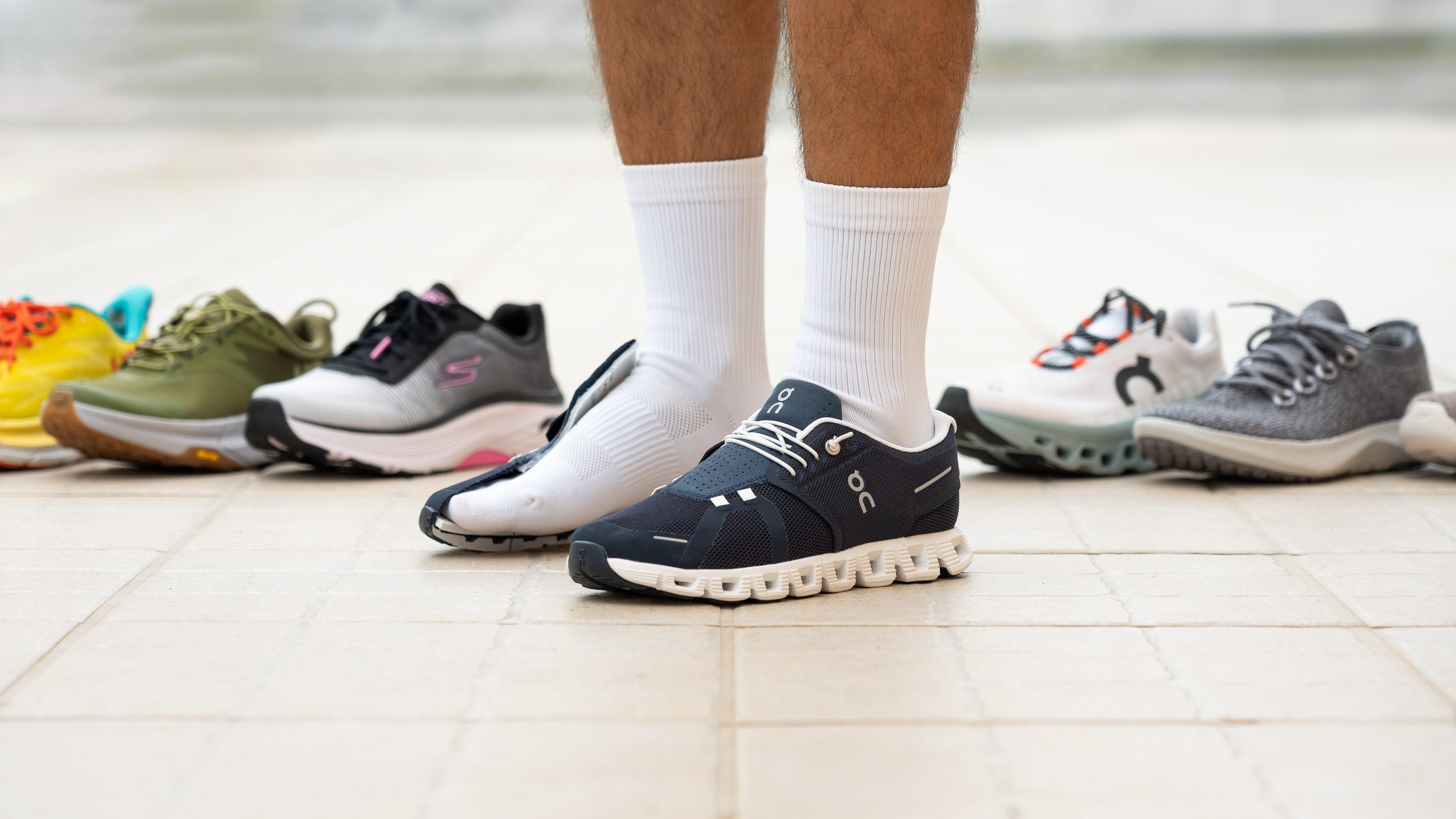
Decoding the Anatomy of a Superior Walking Shoe
What specific elements transform an ordinary sneaker into a podiatrist-endorsed tool for health? The distinction lies in several critical components working in concert. First, the heel counter: this is the firm cup at the back of the shoe that cradles the heel. A study from the University of Virginia’s Biomechanics Lab emphasized its role in controlling rearfoot motion, preventing excessive pronation (inward rolling) or supination (outward rolling), which are primary culprits in overuse injuries. Second, the midsole: this is the heart of the shoe’s cushioning and stability. Materials like EVA (ethylene-vinyl acetate) or polyurethane provide shock absorption, but the design is key. Many podiatrist recommended walking shoes incorporate dual-density midsoles—a firmer material on the inner side to prevent over-pronation. Third, the toe box: it must be deep and wide enough to allow your toes to splay naturally upon weight-bearing, a concept popularized by the “natural foot movement” philosophy seen in resources like Wikipedia’s entry on minimalist shoes, albeit with the crucial addition of structured support. A cramped toe box can lead to neuromas, bunions, and hammertoes. Finally, the flex point of the shoe must align with the natural flex point of your foot (the ball). If it doesn’t, it forces the foot to work against the shoe, causing strain.
The Critical Importance of Arch Support: More Than Just a Curve
Arch support is perhaps the most misunderstood yet vital feature. The arch of your foot is not a rigid structure; it’s a dynamic, spring-like mechanism that stores and releases energy with each step. Its collapse or over-straining is at the root of countless foot ailments. A proper arch support in a podiatrist recommended walking shoe does not merely fill the space under your arch. It provides a contoured, firm platform that sustains the arch’s natural height throughout the gait cycle. This is backed by literature from authoritative institutions like the Mayo Clinic, which states that adequate arch support distributes pressure more evenly across the foot. The type of support needed varies: a person with flat feet (over-pronator) requires a motion-control shoe with a pronounced, medial post to limit inward roll, while someone with a high arch (under-pronator or supinator) needs a neutral-cushioned shoe with a more adaptable arch to encourage natural motion. Ignoring this is akin to using the wrong prescription glasses; it may not cause immediate damage, but the long-term strain is inevitable and detrimental.
:max_bytes(150000):strip_icc()/tal-roundup-podiatrist-loved-shoes-on-sale-tout-bdbf5721fa5642efa38b61f6a5b4ff34.jpg)
Navigating the Market: How to Vet a Shoe Like a Podiatrist Would
Armed with biomechanical knowledge, how do you apply it in a store or online? The process is methodical. First, forget brand loyalty as your primary filter. A brand that works for one foot type may be disastrous for another. Instead, focus on the features. Perform the “flex test”: bend the shoe. It should bend easily at the ball of the foot, not in the middle. Check the heel counter by squeezing it; it should be rigid and not collapse. Examine the interior for a well-defined, contoured footbed that mirrors the shape of a healthy foot. Renowned running coach and biomechanist Jay Dicharry, in his book “Anatomy for Runners,” stresses the importance of shoe “torsional stiffness”—the shoe should resist twisting along its length, promoting stability. When trying on podiatrist recommended walking shoes, do so in the afternoon when your feet are naturally slightly swollen. Wear the socks you intend to walk in. There should be a thumb’s width of space between your longest toe and the end of the shoe. Stand up and walk; the shoe should feel supportive and secure immediately, without a “break-in” period that promises to mold to your foot—that molding should have been done by the designer.
Expert Voices: What the Professionals Are Saying
Beyond the structural components, the endorsement from foot care professionals carries significant weight. These are not casual opinions but conclusions drawn from clinical observations of thousands of patients. On platforms like YouTube, certified podiatrists like Dr. Miguel Cunha of Gotham Footcare consistently highlight specific features over brands. He often points to a robust heel counter and a rocker sole—a design that promotes a smooth heel-to-toe transition—as hallmarks of therapeutic footwear. Similarly, on Quora and professional forums, podiatrists frequently cite brands like Brooks, New Balance, Asics, and Hoka not as blanket recommendations, but as companies that consistently incorporate the necessary biomechanical principles into specific models. For instance, the Brooks Addiction Walker is often mentioned for its exceptional motion control, a direct result of its extended diagonal rollbar technology. This consensus isn’t about marketing; it’s a pattern of clinical evidence. When multiple independent experts, from private practices to university sports medicine departments, converge on the same design principles, it forms a compelling body of evidence for what constitutes a true podiatrist recommended walking shoe.

Investing in Your Foundation: The Cost-Benefit Analysis of Quality Footwear
It is a common hesitation: high-quality, biomechanically sound shoes often carry a higher price tag. However, this is a profound case where an upfront investment yields disproportionate long-term returns. Consider the alternative cost: the price of orthotics, physical therapy sessions, co-pays for doctor visits, anti-inflammatory medications, and the intangible cost of pain and reduced mobility. A well-constructed pair of podiatrist recommended walking shoes is a preventive health measure. The good news is that value is accessible. First, prioritize last season’s models. Shoe technology evolves incrementally; a model from a year ago will offer 95% of the benefits at a 30-50% discount. Second, shop at reputable outlets and during major sales events. Brands frequently offer discounts on their direct websites. Third, remember that durability is part of the value equation. A shoe with a quality rubber outsole and robust construction will last for 500 miles or more, while a cheaply made alternative may degrade in half that distance, costing you more per mile walked. View this not as a fashion expense, but as an essential investment in your physical infrastructure, as crucial as a good mattress or ergonomic office chair.
Putting Knowledge into Action: Your Path to Better Steps
The journey to healthier walking begins with a conscious choice to prioritize function over fleeting trends. You now possess the criteria: a secure heel counter, a supportive midsole with appropriate density, a roomy toe box, proper arch alignment, and a design that facilitates a natural gait. Use this checklist dispassionately when evaluating any shoe. Remember that the most expensive shoe is not necessarily the best for you; the correct shoe is the one that addresses your unique biomechanical needs. Listen to the consensus of experts who treat foot ailments daily, and let their clinical experience guide you toward reliable models. Do not be swayed by celebrity endorsements that lack podiatric credibility. Instead, seek out the quiet endorsements from medical professionals. Finally, act on this knowledge. Your feet are your base of mobility, your connection to the world. Equip them with the respect they deserve. Choose podiatrist recommended walking shoes not as a luxury, but as a non-negotiable component of an active, pain-free life. The right pair is out there, waiting to become the foundation for every step of your journey forward.
:max_bytes(150000):strip_icc()/shp-best-brooks-walking-shoes-tout-f67df3ab5afa4c08a24a63ae6dca3444.jpg)
