

Discover the Best Podiatrist Recommended Walking Shoes for All-Day Comfort
Your feet are your foundation, and the shoes you choose can either support that foundation or undermine it with every step. The quest for all-day comfort isn’t merely about finding a soft insole; it’s an engineering challenge that balances biomechanics, material science, and individual physiology. This is where the guidance of a podiatrist—a medical specialist in foot, ankle, and lower extremity health—becomes invaluable. Podiatrist recommended walking shoes are not a marketing gimmick but a category born from clinical observation and a deep understanding of gait pathology. They are designed to prevent the cascade of discomfort that begins at the heel and travels up to the knees, hips, and back. This article distills professional podiatric wisdom into a practical guide, helping you navigate the critical features that transform a simple shoe into a tool for sustained well-being, all while considering how to find these essential items at the most advantageous value.
:max_bytes(150000):strip_icc()/podiatrist-recommended-walking-shoes-e1b90077185d4e6cadbf6327c4d17db7.jpg)
The Podiatric Blueprint: What Defines a Truly Supportive Shoe?
To understand why a podiatrist recommended walking shoe stands apart, we must first deconstruct the anatomy of support. From a podiatric standpoint, a shoe is a mobile orthotic. Key features are non-negotiable. First, a rigid heel counter: the firm cup at the back of the shoe that stabilizes the calcaneus (heel bone), preventing excessive pronation (inward roll) or supination (outward roll). As noted in biomechanics literature from institutions like the University of Washington’s Department of Orthopaedics, controlling rearfoot motion is the first line of defense against plantar fasciitis and Achilles tendinopathy. Second, adequate torsional stability: the shoe should resist twisting along its longitudinal axis, providing a stable platform for the midfoot. Third, a well-contoured arch support that matches your foot type—neutral, low-arched, or high-arched—to distribute pressure evenly. The celebrated running author and biomechanist Dr. Mark Cucuzzella often emphasizes that “the foot needs a platform, not a pillow.” This principle directly translates to walking shoes; excessive, unstructured cushioning can allow the foot to collapse, while a firm, guided platform promotes natural, stable movement. Finally, a rocker sole—a gently curved forefoot—is a feature frequently endorsed by podiatrists for patients with conditions like hallux rigidus (stiff big toe) or metatarsalgia (ball-of-foot pain). It facilitates a smoother roll-through from heel strike to toe-off, reducing strain on vulnerable joints.
Material Matters: Engineering Comfort from the Ground Up
The composition of a shoe is as critical as its shape. Modern podiatrist recommended walking shoes leverage advanced polymers and textiles to achieve specific therapeutic goals. The midsole, typically made from EVA (ethylene-vinyl acetate) foam or polyurethane, is the heart of cushioning and stability. Brands like Brooks and ASICS often use layered or dual-density EVA, where a firmer medial (inner) post is embedded to control overpronation. The outsole rubber must offer durability and strategic flexibility; carbon rubber in high-wear areas like the heel and blown rubber in the forefoot for flexibility is a common podiatric-approved configuration. The upper material is equally vital. Seamless, engineered mesh reduces friction points that can lead to blisters and neuromas, while providing breathability to manage moisture and temperature—a key factor in preventing fungal infections. As Dr. Jacqueline Sutera, a New York City-based podiatrist, has stated in numerous media interviews, “A shoe should feel secure in the heel, roomy in the toes, and supportive through the arch from the moment you put it on.” This immediate comfort, devoid of a “break-in” period, is a hallmark of a well-designed shoe that aligns with podiatric principles, ensuring protection from the first step to the ten-thousandth.
Decoding Your Gait: The Personal Fit Imperative
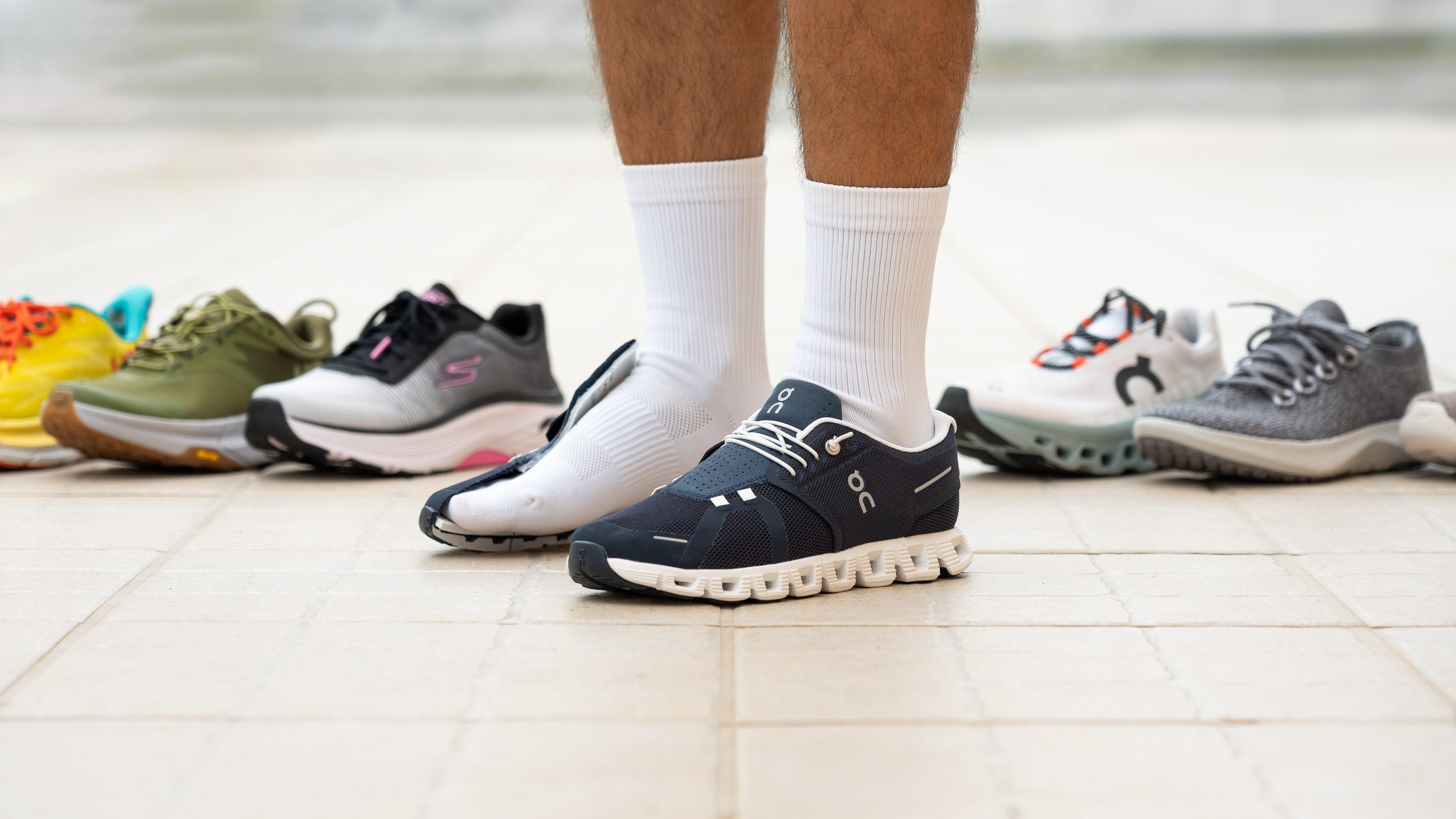
One of the most critical insights from podiatry is that there is no single “best” shoe—only the best shoe for your unique biomechanics. Your gait pattern is your fingerprint. A podiatrist’s recommendation always starts with an assessment, which you can emulate through self-awareness or a professional gait analysis offered at many specialty running stores. Are you a pronator, whose arch flattens excessively inward? This requires a stability or motion-control shoe with that firm medial post. Are you a supinator, with a high, rigid arch that rolls outward? You need a neutral shoe with ample cushioning and flexibility to aid in shock absorption. Foot shape is another dimension. A wide forefoot or a bunion necessitates a shoe with a spacious toe box, often found in brands like Altra or Topo Athletic, which employ a “foot-shaped” last. Ignoring this fit can compress nerves and joints, leading to chronic pain. The renowned Harvard Medical School publication “Walking for Health” underscores that proper footwear is the most important investment for a sustainable walking routine, preventing injuries that could derail your fitness goals. Therefore, selecting podiatrist recommended walking shoes is an act of personalization, not just purchase.
Beyond the Brand: Evidence-Based Features Over Hype
In an era of aggressive marketing, it’s essential to focus on evidence-based features rather than brand loyalty or aesthetic trends. For instance, the concept of “minimalist” or “barefoot” shoes, popularized by books like Christopher McDougall’s “Born to Run,” has passionate advocates. However, the podiatric community offers a crucial caveat: this transition requires a very gradual adaptation and is unsuitable for individuals with certain structural issues or insufficient foot strength. A systematic review in the British Journal of Sports Medicine concluded that while minimalist shoes can strengthen foot muscles, they also increase loading rates, potentially raising injury risk for unprepared individuals. Conversely, maximalist shoes with extreme cushioning, like some Hoka models, are frequently podiatrist recommended walking shoes for those with arthritis or who require significant shock attenuation, but they still must contain the stabilizing features discussed earlier. The viewpoint from platforms like Quora and expert Q&A sessions often highlights this balance: technology should serve biomechanics. A feature is only beneficial if it addresses your specific needs, a principle echoed by podiatrists on social media platforms like YouTube, where they dissect shoe designs for therapeutic merit rather than hype.
:max_bytes(150000):strip_icc()/I-Asked-Podiatrists-for-Their-Fall-Shoe-Recommendations-These-Are-Their-Top-8-Picks-8fbdf9d65f3a4228ae63f6e5253dc08c.jpg)
The Long-Term Investment: How Quality Shoes Save Money and Pain
Viewing podiatrist recommended walking shoes as a mere expense is a short-sighted perspective; they are a long-term investment in your musculoskeletal capital. Consider the alternative: ill-fitting shoes can lead to plantar fasciitis, requiring months of physical therapy, orthotics, and possibly even medical interventions. The cost of custom orthotics alone can exceed $500, not to mention lost time and productivity from pain. A quality pair of therapeutic shoes, typically ranging from $120 to $160, acts as preventive medicine. Furthermore, the construction quality of these shoes means they are built to last. A robust outsole and durable upper materials maintain their supportive properties over 300-500 miles of walking, whereas cheaper shoes break down internally long before they look worn out, offering diminishing protection. The economic principle of cost-per-wear strongly favors investing in a correctly prescribed pair. As the ancient proverb, often cited in wellness circles, reminds us: “The bitterness of poor quality remains long after the sweetness of low price is forgotten.” This is profoundly true for footwear, where the “bitterness” manifests as physical pain.
Navigating the Market: Finding Value Without Sacrificing Science
Acquiring the right pair of podiatrist recommended walking shoes need not break the bank. Strategic shopping can bridge the gap between professional-grade quality and budget consciousness. First, consider previous seasons’ models. Shoe technology evolves incrementally; last year’s top-rated stability or neutral walking shoe from a reputable brand like New Balance, Saucony, or Brooks will offer 95% of the benefits of the newest version, often at a 30-50% discount. Second, explore reputable online retailers that specialize in discounted athletic footwear, ensuring they are authorized sellers to avoid counterfeits. Third, sign up for newsletters from brands and specialty stores; they frequently announce sales and clearance events. Fourth, if you require specific features due to a diagnosed condition, check with your health insurance or flexible spending account (FSA/HSA) to see if therapeutic footwear is a covered expense. The goal is to apply the same prudence to purchasing health-supportive gear as you would to any other investment—researching, comparing, and timing your purchase to maximize value. This approach brings professional-grade foot health within practical reach, allowing you to prioritize your well-being intelligently.
:max_bytes(150000):strip_icc()/tal-10-podiatrist-approved-open-toed-shoes-tout-00bd6ff1c36a49cdbbff486b0b54fb27.jpg)
Your journey toward all-day comfort begins with a single, well-supported step. The science is clear, and the expert consensus from podiatrists worldwide is unified: intentional footwear choice is a cornerstone of proactive health. By prioritizing a rigid heel counter, appropriate arch support, torsional stability, and a fit that respects your unique gait and foot shape, you are not just buying shoes—you are investing in a pain-free, active future. Let this understanding guide you past marketing claims and toward the engineered solutions that truly support your body’s architecture. Seek out those podiatrist recommended walking shoes, use savvy strategies to find them at the best value, and feel the profound difference that comes from giving your foundation the respect it deserves.
