

What Burberry Heels Can Handle, Season by Season
My first proper pair of heels came from a Burberry outlet in 2016, bought at a discount I’ve never seen again. They were tan leather with a 75mm block heel and a check lining you only noticed when you took them off. I wore them through four winters and resoled them twice. That’s roughly £4 per wear, which is the only fashion maths that has ever made sense to me.
Not a sensible purchase at the time. Still the best one I’ve made.
So this isn’t an advert. It’s what those shoes did well, what they didn’t, and how to wear a pair through the year without destroying them by March.

What you’re actually paying for
Burberry started in gabardine, a weatherproof cloth invented for trench coats, and that inheritance shows up in the shoes: leather that takes a scuff without dying, soles that can be replaced, stitching that doesn’t wander. It’s not that this is the only brand doing it. It’s that the construction is consistent enough to plan around, which matters if you’re spending real money.
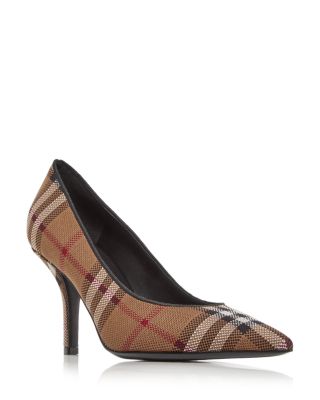
The check, when it appears, is usually used sparingly: a strip inside the heel, piping along the sole edge, a tonal weave on a boot. That restraint is part of why the shoes stay wearable for years instead of dating in one season.
Two things to know before you buy. Sizing tends narrow, so try before you commit if your feet are wide. And the price is genuinely high, which means the care advice below isn’t optional if you want your money back in wears.
Shape matters more than the label. A 75mm block is the height I’d recommend to anyone who walks to work. A 100mm stiletto looks sharper in photographs and gets worn about twice a year. Pointed toes lengthen the leg but pinch after an hour if the fit is mean; almond toes are the compromise that actually gets worn.
Spring: pastels, prints, damp pavements
Spring is the season of wet pavements and unpredictable wind, so this is where a nude leather block heel earns its place. It grips better than a stiletto on slick stone, and the colour lengthens your leg. Wear it with a floral midi in silk or chiffon and the structure of the shoe balances the softness of the dress.
If you want something less obvious, a blush or pale blue heel under a crisp white trouser suit works. Pastels reflect light, and in March that’s worth something.
A check trim at the heel becomes the focal point when everything else is monochrome: a plain shift dress, or straight-leg jeans and a fine-gauge knit. Keep the rest quiet and let one detail do the work.
Spray them before the first wear. A tenner spent on a protector coat saves a thirty-pound clean later, and it makes rain run off new leather instead of soaking in.

Summer: tan sandals and long evenings
A strappy tan sandal is the summer workhorse. Tan goes with almost everything, from a maxi dress to linen shorts and a camisole, and it doesn’t look precious if you spill something on it.
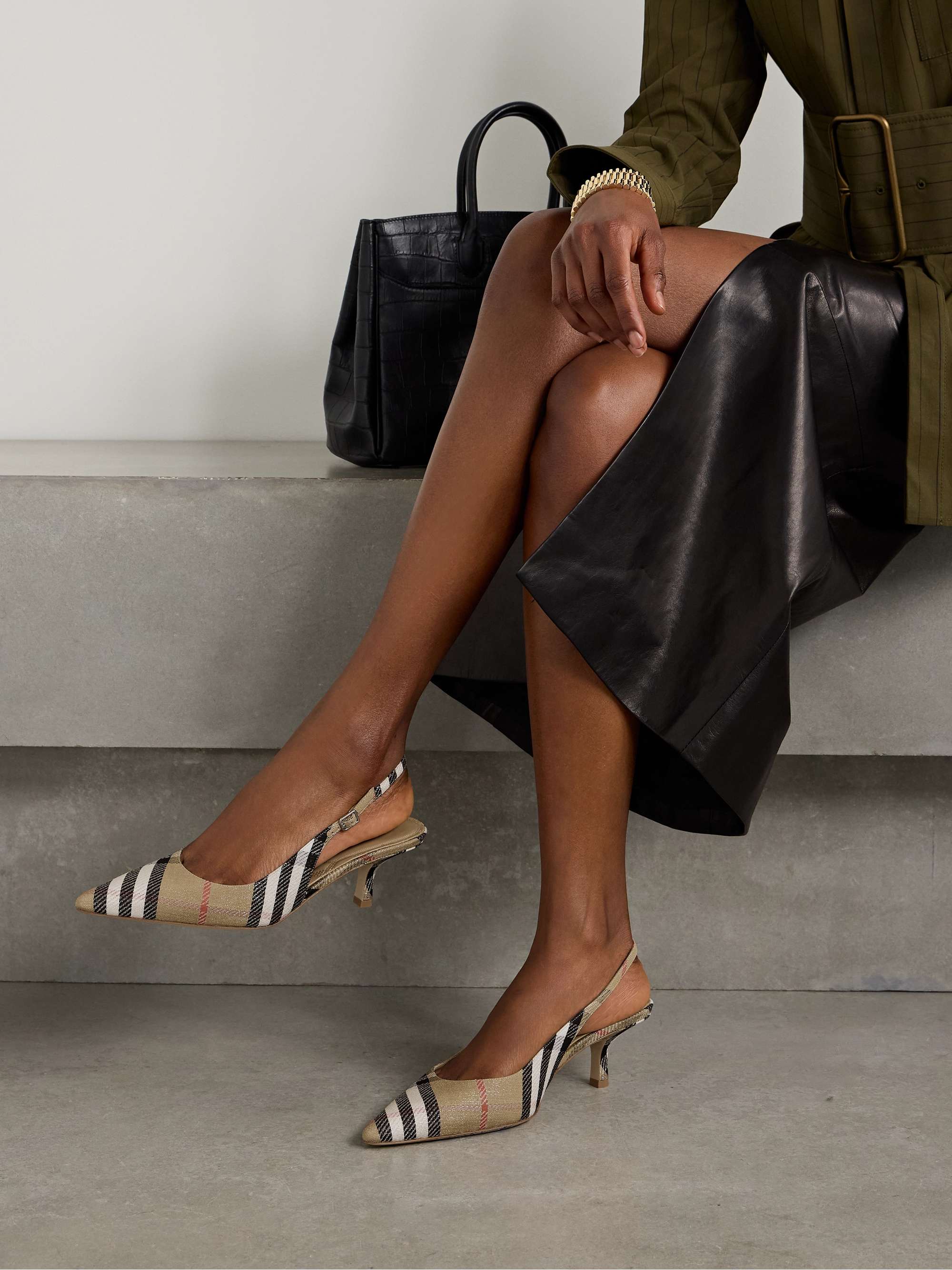
For a garden party or a warm evening, a slingback with a moderate heel gives you more stability than a mule and still looks light. Look for a metallic finish at the heel or an ankle tie; small details read well in evening light, which is when most photos get taken anyway.
The mistake in summer is over-doing it. If your dress is busy, keep the shoe plain. If the shoe has a check or a crystal, keep the dress simple. Hot weather already adds texture to everything.
One summer problem worth planning for: leather lining, bare feet and 28 degrees make a shoe that sticks. Rotate two pairs and let each dry for a day. Never dry them on a radiator, which cracks the leather faster than wear does. Mine also survived two weddings abroad and a beach bar, and a cloth brought them back each time.
The money question
Full price is hard to justify, and you don’t have to pay it. Burberry runs seasonal sales after the main collections land, and authorised stockists discount too. Resale is the other route: well-kept pairs hold value better than most designer shoes, so a second-hand pair in good condition is often the sensible buy.
One opinion that goes against the grain. The heavy check-print shoes are the ones that age worst and resell lowest; the plain leather pairs outlive them and look better doing it. If you’re buying for a decade, buy the quiet version.
Check the sole before you buy secondhand. Worn-through toes mean a full resole, which eats most of the saving. Scuffed toes and a flattened inner heel are cheap fixes; a collapsed insole isn’t.
Add in resoling every couple of years, roughly £70 to £90 at a decent cobbler, and the maths still works out better than replacing a cheap pair annually.
Keep a small kit by the door: a horsehair brush, a suede brush, a tin of neutral cream. Two minutes on a Sunday separates a pair that lasts six years from one that lasts two. Most people skip it and then blame the brand when the leather cracks.
Autumn: suede, earth tones, tights
Autumn is where these shoes make most sense to me. Burgundy, olive, deep black: a suede block heel under a tweed midi skirt and a cashmere sweater, with 60 denier tights, is the outfit I reach for in October without thinking.
Suede against tweed, wool against leather: the textures do the styling for you, and the heel gives you a stable base on wet leaves. For something sharper, a leather bootie with wide-leg trousers and a structured coat works as well in an office as it does at dinner.
One honest limitation. Suede and rain don’t mix. I wore a suede pair to a client meeting in November, five minutes from the car to the door, and came home with water marks on the toe that never fully lifted. If the forecast is bad, leather or a polished finish, every time.
Match the shoe to your coat rather than to your skirt. Burgundy shoes under a camel coat look deliberate. The same shoes under a grey skirt and a black coat look like an accident.
Winter: slush, boots, and the check
Heels in winter sound like a bad idea until you try a heeled ankle boot in polished black leather. It goes under tailored wool trousers for work and with a pencil skirt and opaque tights for the evening, and it keeps your feet dry in a way a pump never will.
Burberry leathers usually get a water-resistant treatment, which matters more than any design detail once there’s salt on the pavement. A boot with a tonal check, worn with a camel, navy or black coat, is the easiest way to look deliberate in a grey month.
Watch the sole. Smooth leather soles on ice are dangerous, and a rubber topy fitted at a cobbler in October costs far less than a fall. Keep the heel chunky too: a thin stiletto in slush is a balancing act, and a 60mm block under a wool midi looks just as sharp.
Where I’ve got to
Four seasons out of one pair isn’t a slogan, it’s a maintenance habit: brush them, store them on trees, get the soles done before they’re gone. The shoes have lasted because I treated them like tools rather than trophies.
If you buy one pair, buy the black leather ankle boot and wear it forty times before you consider anything else. That’s the version that pays for itself.
