

You see them in a shop window and your first thought is “those look like my mum’s shoes from 1998”. Then you try a pair on and your toes stop touching each other for the first time all week.
That’s the whole square toe story in two sentences. Square toe dress shoes women keep coming back because they solve a problem pointed toes create, and they go away again because they make a leg look shorter if the proportions are wrong.
Get the proportions right and they’re the most comfortable dress shoe shape you can buy. Get them wrong and you look like you borrowed shoes from a different decade.
Why the shape keeps returning
Square toes aren’t new and they aren’t a trend cycle artefact. They show up whenever hemlines and trousers get wider, because a wide leg needs a wide shoe to balance it. Think about the shape of a bootcut jean against a stiletto and you can see the problem immediately.
The last proper revival was around 2019, when Bottega Veneta put a padded square-toe mule on every second fashion page and the high street copied it within a season. Before that it was the late 90s, and before that the 60s. Each time it arrives for the same reason: it looks deliberate next to wide trousers.
What’s different now is the sole. Contemporary versions often sit on a thin sole with a low block heel, which makes them wearable for a full day instead of a photo. The 1998 version was usually a 60mm blade heel with a sole like a credit card, and your feet paid for it.
I bought my first pair in 2019 and wore them to death. The second pair, bought in 2021, had a slightly rounded square and I never liked them half as much, which taught me that the exact shape of the toe matters more than the label.
There’s a practical reason the shape survives outside fashion too. A square toe is easier to construct than a point. There’s less lasting, less waste at the toe, and the upper stays symmetrical when it’s lasted. Cheap factories can make a decent square toe. They struggle badly with a fine point.
That’s why you’ll find good square toe shoes at 60 and bad pointed ones at 300. The shape is forgiving of a lower price point, and that’s worth knowing if your budget is tight.
It also means the toe shape tells you almost nothing about quality. Look at the lining, the shank, and the heel counter instead, the same three things that matter on every other pair of shoes you own.
Proportions: where the square actually sits
The single thing that decides whether a square toe works on you is where the flat edge lands relative to your toes. It should sit roughly 8 to 12mm past your longest toe, and the corners should be wider than the ball of your foot, not level with it.
If the square starts too early, your toes get compressed into a box that’s the wrong length and you get the same pressure you were trying to avoid. If it’s too long, the shoe looks like a clown shoe and trips you on stairs.
A quick visual check in the mirror: the toe should look like a rectangle about as wide as your forefoot. Not wider, not narrower. Anything more than about 15% wider than the ball of your foot starts to read as a costume.
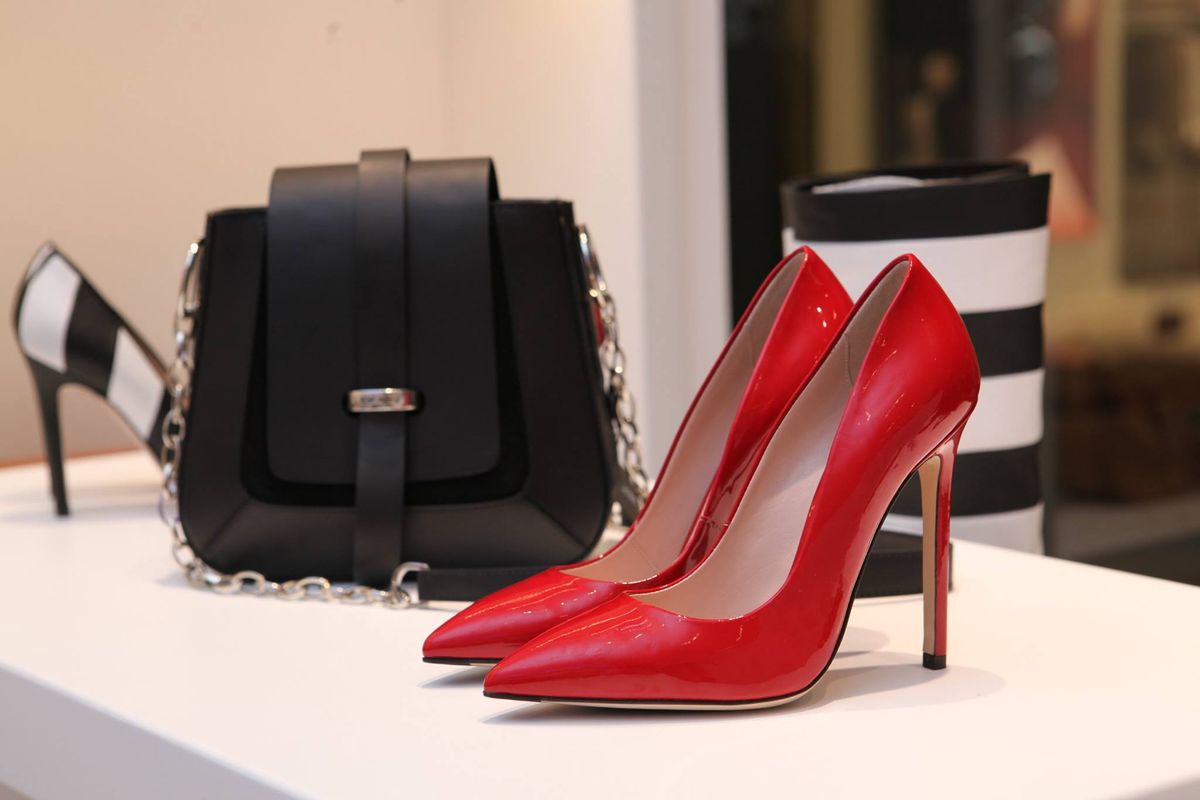
Heel height changes the read of the whole thing too. A 70mm heel with a square toe looks intentionally fashion-forward. The same toe on a 20mm heel looks like office wear from a decade ago. That’s not a rule anyone wrote down, it’s just how the proportions stack up.
Measure the toe extension in the shop. If you can’t measure it, use your thumb: the flat part in front of your toes should be about one thumb width. Less than that and your toes are doing the work. More and you’ve bought a shoe that will catch on every stair.
The vamp matters as much as the toe. A low-cut vamp shows more of your foot and makes a square toe look lighter. A high vamp plus a wide toe reads heavy, and heavy is the failure mode of square toe dress shoes women end up regretting.
If you’re between sizes, look at the side profile rather than the top. The top view always looks fine on a shoe one size too big. The side shows you whether your heel is sitting at the back of the counter or floating in the middle of it.
The width advantage nobody talks about
Here’s the practical case for square toe dress shoes women actually wear more than once: the toe box is a rectangle, and feet are closer to rectangles than to triangles.
You get roughly 4 to 6mm more room at the widest part of the toe box compared to an almond toe on the same last. That doesn’t sound like much. It’s the difference between your little toe sitting inside the shoe and sitting under the upper.
People with a wide forefoot, a bunion, or a second toe longer than the big toe get the most out of the shape. The last of those is more common than you’d think, and it’s the reason some people can never get comfortable in pointed shoes no matter how well they fit elsewhere.
What the shape doesn’t fix is length. If your longest toe touches the front edge standing up, a square toe won’t save it. You’ll just get a flat pressure instead of a pointy one.
If you want the background on how heel shapes have shifted over the last century and why certain silhouettes keep coming back, the history of high-heeled footwear is a genuinely interesting read and explains a lot about why shoe shapes cycle instead of progress.
One caveat on width: the extra room only helps if the shoe is the right length. A half size too small in a square toe is worse than a half size too small in a point, because your toes have nowhere to splay and they push against each other sideways instead.
So size for your longest toe and accept that the heel might be a touch loose. That’s a solvable problem with a heel grip. A compressed toe box isn’t solvable at all, and it’s the reason so many people give up on dress shoes and live in trainers.
Heel choices: block, kitten, or slingback
Square toe plus the wrong heel is where most of these shoes fall apart, so it’s worth being specific.
- Block heel, 40 to 55mm: the safest pairing, works with trousers
- Kitten heel, 25 to 35mm: reads 90s, best with midi skirts
- Slingback, any height: good in summer, rubs in winter
- Stiletto, 70mm plus: sharp but narrows the shoe visually
A block heel keeps the whole silhouette grounded. The wide toe and the wide heel talk to each other, and the shoe looks intentional rather than accidental. This is the version I’d buy first.
Kitten heels are trickier. A 30mm kitten heel with a square toe is very of-the-moment in a 1998 way, and it works with a bias-cut skirt or straight-leg jeans. It doesn’t work with tailoring, where it reads as a shoe that gave up.
Slingbacks are a summer-only proposition for me. The strap sits right where my heel rubs, and by the third wear in October I’m reaching for a plaster. If you have a narrow heel, they’re great. If you don’t, they slip.
Stilettos with a square toe are the hardest to get right. The thin heel makes the toe look bigger than it is, so you need a shorter toe extension, which is the opposite of what most brands do. Try before you buy, always.
If you’re choosing one pair, pick the heel that matches your week rather than your wardrobe. If you commute on foot or stand a lot, the block is the only version that survives a Tuesday, and it still looks good with the trousers you already own.
Height numbers to hold in your head: 25mm reads flat, 40mm reads sensible, 55mm reads deliberate, 70mm reads evening. Square toe dress shoes women buy and keep are almost always in the 40 to 55mm band, because that’s where the shape looks intentional without needing an occasion.
If you’re weighing a thicker sole instead of a taller heel, this piece on how a platform sole changes the way you walk is the relevant read before you commit.
Three outfits that actually work
Enough theory. Here’s what I’d wear them with, and why.
Wide-leg trousers and a square toe block heel. This is the combination the shoe was invented for. The trouser hem breaks over the toe and the width of the shoe stops the whole look reading as a column. Keep the trouser at or just above the ankle bone so the shoe doesn’t disappear.
Straight-leg jeans, cropped, with a 30mm kitten heel. The crop shows the ankle and the square toe gives the outfit a bit of 90s awkwardness that stops it looking generic. Roll the hem once, no more.
A midi skirt with a bit of volume and a slingback. The volume in the skirt needs a solid shape at the foot, otherwise you look like you’re floating. Square toes anchor that better than a point does.
What I’d avoid: skinny jeans with a square toe. The narrow ankle and the wide toe fight each other and the leg looks like it’s standing in a box. It’s the one pairing that never works on me, at any heel height.
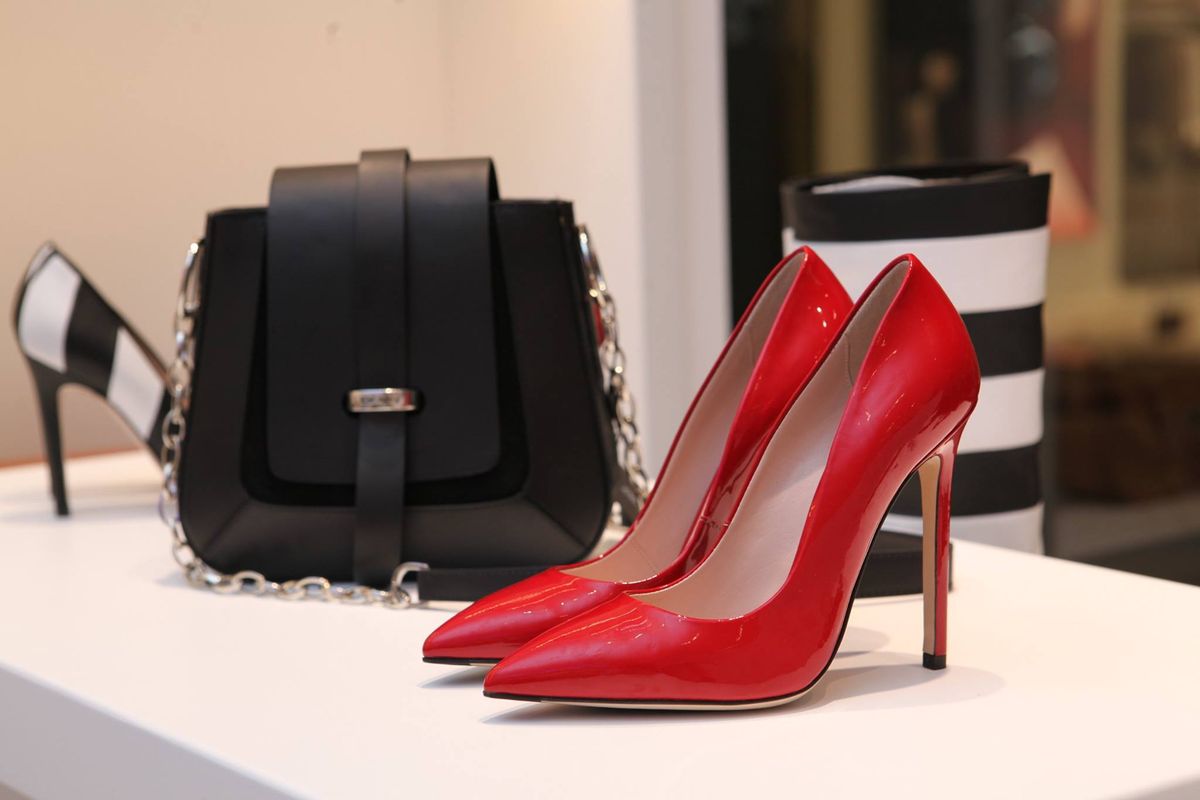
Also avoid a square toe with a very round bag or a very round sleeve. The shoe is angular, so the rest of the outfit should have at least one other straight line in it. Usually that’s the trouser or the jacket shoulder.
Socks change the read more than you’d expect. A visible white sock with a square toe heel is a deliberate look and it works if you commit. A sheer sock with the same shoe looks accidental. Pick one and mean it.
For colour, treat the square toe like a loafer rather than a heel. Black, dark brown, and cream carry most outfits, and a bright pair dates fastest because the shape is already doing a lot of talking. If you want one fashion pair, buy it cheap and enjoy it for two seasons.
Where square toes look wrong
Honest list, because this shape isn’t universal.
Very formal settings. A square toe is a fashion shape, and it reads slightly casual next to a sharp suit. If you need a shoe for a formal interview or a conservative office, an almond toe will always be safer and nobody will notice it, which is the point.
Small feet. On a shorter foot, a wide square toe makes the whole shoe look oversized, and the leg looks shorter because the visual weight sits at the bottom. If you’re under a UK 4, look for a narrower square with a longer toe extension.
Very long toes. Counterintuitive, but the extra width can make a long toe box look like a paddle. Check the side profile in the mirror, not just the top view.
One more situation to think about: a wedding where you’ll be standing for six hours. Square toes are fine for that, but only in the block version, and only if you’ve worn them for a full day beforehand. A new pair of any shape on a long day is a gamble, and square toe dress shoes women buy for events specifically tend to be the ones that never get worn again.
None of that is a reason to skip the shape. It’s a reason to buy the block heel, in a colour you already wear, and to test it on a normal Wednesday before it goes anywhere near an occasion.
Because the shape is having a moment again, the square-toe heel with a rhinestone trim is the version I’d look at first if you want the trend without the full 1998 reference. For something softer, there’s a suede retro pair with a rounded square that wears more like a normal shoe.
Both sit in the heel range if you want to compare toe shapes side by side. And if you’re pairing them with a pale outfit, this piece on matching beige heels to your undertone is more useful than it sounds.
How to break them in without ruining them
Square toe shoes crease differently from pointed ones. The crease runs straight across the toe box instead of diagonally, and it shows more because the surface is flat and wide.
That means two things. Wear them indoors for an hour at a time for the first week, and use shoe trees from day one. A cedar tree holds the toe box shape while the leather cools, and it’s the difference between a clean fold line and a crumpled mess by month two.
Suede needs a brush before the first wear, not after. A light brushing lifts the nap and stops the toe picking up marks from the box. Spray protector before you wear them outside, not after the first scuff, which is when most people remember.
Skip the stretching tricks. Square toes don’t stretch into shape, they stretch into a slightly bigger square. If they’re tight across the top of the foot, that’s a fitting problem, and you should return them rather than fight them.
Storage matters more than it should. A wide toe box with nothing inside it collapses sideways in a wardrobe, and once the toe loses its shape the shoe looks cheap even if it wasn’t. Keep the paper shapers that came in the box, or stuff the toes with tissue between wears.
One general background note if you want to read further: the basic anatomy of a shoe explains the counter, the shank, and the welt, which are the three words that make shop conversations a lot shorter.
Resoling is worth it on a good pair. A 45mm block with a proper sole can be repaired twice for the price of one new pair, and the upper usually outlasts the sole by years. Ask a cobbler before you throw anything out.
The pair I kept longest was a 45mm block in black suede, worn with wide trousers and nothing else. No inserts, no tricks, no breaking-in drama. That’s the version of this shoe worth owning. The rest are just trend pieces, and trend pieces are fine as long as you know that’s what you’re buying.
