

You’re standing at the front door with a bag in one hand and a coffee in the other, and your shoes have laces. That’s the entire case for slip-ons, and it’s a strong one.
Then you walk two miles in them and your heel is sliding up and down like a piston, and by the time you get home there’s a hot spot the size of a coin.
Both things are true of slip on walking shoes for ladies, and the difference between the two experiences is almost entirely in three details you can check in the shop. They’re genuinely convenient, and most of them fit badly, because a shoe with no laces has nothing to pull your heel back into the cup. The fix isn’t complicated: buy for heel hold first, check the elastic panels, and accept that a slip-on should feel snugger at the back than a laced shoe does.
The heel is the whole problem
Laces do two jobs. They close the shoe, and they pull your heel back into the heel counter. Remove them and you lose the second job entirely, which is why so many slip-ons rub.
The fix starts with accepting that a slip on walking shoe will never hold like a laced one, and choosing the one that comes closest. Two things do most of that work: a deep heel cup and a collar that sits above your heel bone rather than below it.
Test it before you buy. Put the shoe on, then try to walk out of it by dragging your heel backward along the floor. If it comes off, it will come off on a wet kerb, on a steep downhill, and on the escalator.
Then measure the movement. Press your thumb between your Achilles and the back of the shoe while you lift your heel. More than 5mm of vertical slide and it’s a no, even if everything else feels right.
Some slide is normal. A slip-on that’s totally locked will be too tight across the instep and you’ll fight to get it on. You’re looking for a shoe that grips without clamping.
There’s a quick way to tell whether a slip-on was designed for walking or just for looks. Press down on the back of the heel counter with one finger. A walking shoe pushes back. A fashion slip-on folds flat, and a folding counter is what turns a small amount of heel movement into a blister.
This is why the best slip-ons borrow tricks from laced shoes: a higher, padded collar at the back, a deeper heel cup, and a slightly narrower throat opening. None of that sounds exciting on a product page. It’s the difference between a shoe you wear for years and one that lives by the door unused.
The slip-on shoe has been around for centuries in one form or another, and the design hasn’t changed much because the problem hasn’t either. No laces, no lockdown. The elastic panel is the workaround.
Two small elastic panels beat one big one
Elastic gussets are how slip-ons get on and off without falling off. Where they sit matters more than how much there is.
This is also the part of a slip on walking shoe that wears out first in daily use, so it’s worth checking even when the rest of the shoe looks solid.
You want a small panel on each side, usually over the instep near the top two eyelet positions. That placement lets the throat open wide enough to get your foot in, then closes back onto the top of your foot.
One large panel across the whole instep, common on cheaper shoes, stretches out within months and stops gripping anything. That’s the single most common reason a slip on walking shoe goes from comfortable to unusable in a year.
Squeeze the panel in the shop. It should feel springy and firm. If it feels like an old sock, it’ll behave like one.
- Two side panels, firm: best lockdown and the longest life.
- Single wide gusset, firm: acceptable on a light walking shoe.
- Elastic straps across the instep: good hold, more adjustment.
- Stretch knit collar with no panel: fine for slippers, poor for miles.
Elastic does age, and it ages faster in heat. A pair kept in a hot car or a hallway radiator will lose its snap in a season or two. If you notice yourself pulling the shoe on with less resistance than you used to, the panel is done, not your foot.
Check the stitching where the panel meets the upper, too. That seam takes the full stretch load every time you put the shoe on, and it’s the first thing to split on a cheap pair.
If a slip-on has no elastic at all and just relies on a wide opening, it’s a house shoe. Treat it as one.
Size: the half-size question nobody answers properly
You’ll read advice telling you to size down in slip-ons, and advice telling you to size up. Both are wrong as blanket rules, because the issue isn’t length, it’s volume.
If the shoe is a little loose in the heel, going down half a size fixes it. If it’s tight across the top of your foot, going down half a size makes it worse and you need a wider or deeper fit instead.
There’s a third variable people forget: the shape of the opening. Two slip-ons in the same size can have throats 8mm apart, and that 8mm decides whether you can get your foot in at all. Compare the openings side by side if you’re trying several pairs in one trip.
So measure, then decide. Stand on paper at the end of the day, mark your longest toe and the widest point of each foot, and write the numbers down. Compare them against the brand’s chart, in centimetres, not in the vague “fits true to size” language.
Feet swell through the day, and slip-ons have no laces to loosen when they do. That’s the argument for shopping late and for choosing a shoe with a little depth at the instep.
Width behaves differently in a slip-on than in a laced shoe. With laces, a slightly narrow shoe can be loosened across the forefoot. Without them, the upper is fixed, so the width you buy is the width you get forever. Go wide rather than long if you have to choose.
If you have a high instep, slip-ons are genuinely harder. Look for a deeper throat, a soft knit collar, or a pull tab at the back. If you have a narrow heel and a wide forefoot, you’re the hardest fit of all, and a laced shoe with elastic laces will serve you better than any true slip-on.
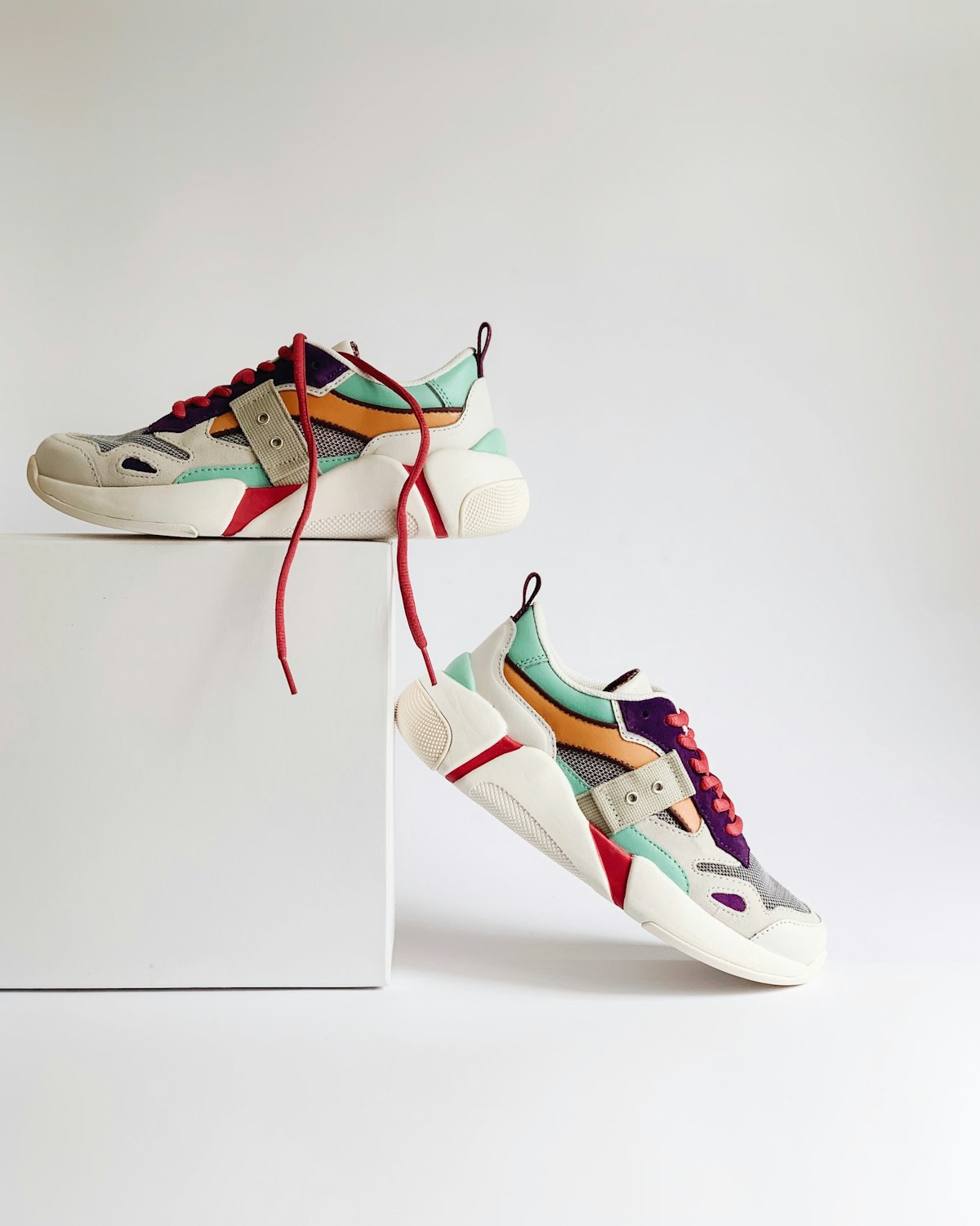
Sole shape: flex at the ball, resistance in the middle
Most of what makes a walking shoe work has nothing to do with the closure. Bend the shoe at the ball of the foot and see where it folds. It should crease exactly where your toes bend, not in the middle of the arch.
Then twist it lengthwise. A slip-on with a floppy middle will roll under your foot on uneven ground, and you’ll feel it in your arch after a mile.
Heel stack matters as much here as anywhere. Under 20mm and every paving slab comes through. Between 25 and 30mm you get enough cushioning without the shoe feeling like a platform you might step out of.
Drop should sit close to 10mm for daily walking. Flat slip-ons with almost no difference between heel and toe feel easy at first and hard on your calves after a week.
Weight is worth checking too, because slip-ons that feel featherlight in the hand are usually featherlight in the midsole as well. Under 250g sounds great until mile three, when you can feel every crack in the pavement through the sole.
The outsole is where slip-ons often cut corners, because the whole point is a light, simple shoe. Look for rubber under the heel rather than exposed foam. A slip-on with a foam-only heel is a three-month shoe.
One shape that works better than most: a slip on walking shoe with a slightly rockered toe and a flat heel. The rocker helps the shoe roll forward without your toes having to bend as much, and the flat heel keeps you planted when you stop at a crossing.
Tread depth of 3mm or more at the heel is what keeps you upright on wet pavement. Press a coin into the grooves on a new pair and you’ll see immediately whether the pattern is real or decorative.
Where slip-ons actually win
Being honest about the use case makes the choice easier. Slip-ons are excellent at a specific set of jobs and mediocre at everything else.
- Airport security and long days of travel, where you’re taking shoes off and on repeatedly.
- The commute, especially if you change into heels at the desk.
- Errands under a mile, school runs, the shop on the corner.
- Gym and Pilates, where you’re in and out of shoes on a mat floor.
- Anything involving a bag in each hand.
The common thread is short trips with interruptions. Every time you’d otherwise bend down, a slip-on earns its place. Every time you’d walk five miles, it costs you.
They’re also the friendliest option if bending down is difficult, which is why so many women over 60 end up there. That’s a legitimate reason, and it’s worth reading the senior walking shoe checklist before you pick a pair on convenience alone.
There’s a version of this shoe that works much better for travel than the classic flat slip-on: the slip-on walking trainer, with a proper midsole and an elastic gusset where the tongue would be. It looks like a trainer, goes on like a slipper, and holds your foot closer to how a laced shoe does. If you only buy one pair, buy that shape.
For the same reason, they’re the shoe most people reach for on a half-day of shopping, where you’re in and out of fitting rooms and standing on hard floors for an hour at a time.
There’s a social reason too, which nobody writes about. In some workplaces and some houses, taking your shoes off at the door is expected, and a slip-on makes that a two-second habit instead of a small production. Any shoe that gets worn more often is a better shoe, as long as it holds your heel.
One more win nobody mentions: slip-ons are quieter. No laces slapping, no eyelets creaking. In an office or a library, that’s worth something.
Where they let you down
Long distances, hills, wet weather, and anything where you need to change direction quickly. A slip-on gives you less control at the heel, and heel control is what stops your ankle rolling when you step off a kerb.
If you’re walking more than three miles a day, a laced shoe with elastic laces will do everything a slip-on does and hold your foot better. It’s a five-dollar change and most people never consider it.
Pavement seams and tram tracks are the other quiet hazard. A slip-on with a shallow heel cup tends to twist when your foot lands on an edge, and the twist is what rolls an ankle. If your route includes broken paving, pick a shoe with a wider outsole rather than a rounder one.
Rain is the other weak point. Slip-ons usually have a wide opening and a low collar, so water comes in over the top rather than through the upper. If you walk in wet weather, choose a higher collar and a water-resistant upper.
There’s a middle option worth knowing about: a slip on walking shoe with a removable footbed. You keep the convenience and add a supportive insole, which is the one modification that turns a mediocre slip-on into something you can walk a few miles in. Just don’t size up to make room for the insole, or you’ll lose the heel hold you paid for.
And if you have plantar fasciitis, be careful. The shoes that feel easiest to put on are often the ones with soft, unstructured heels, which is the opposite of what an irritated fascia needs. Start with what to look for in a plantar fasciitis shoe and only then decide whether a slip-on version exists that meets the bar.
What I would not do is wear them for a full day of sightseeing. That’s the classic mistake: pack one pair of slip-ons for a city break, walk 20,000 steps, and spend day two buying plasters at a pharmacy. Bring a laced pair for the long days.
My honest view: slip-ons are the right shoe for about 30 percent of the walking most people do. Buy them for that 30 percent, not as your only pair.
A six-point check before you pay
Five minutes, in this order.
- Drag test: try to walk out of the shoe. It should stay on.
- Heel slide: lift your heel with a thumb at the collar. Under 5mm.
- Panel squeeze: firm and springy, not soft and tired.
- Ball flex: creases at the toes, resists at the arch.
- Collar check: padded, and high enough to sit above your heel bone.
- Hard floor walk: two minutes on tile, then turn a corner.
Don’t skip the walking test because the shoe feels comfortable standing still. Standing still tells you nothing about heel movement, and heel movement is the one flaw you can’t fix later.
Socks make a bigger difference than people expect. Thin liner socks reduce friction and stop the hot spots that come from a moving heel. Cotton holds sweat and softens the skin, which is how blisters start; the mechanics of that are covered in how blisters form. A thin wool or synthetic liner is the cheap fix.
If the shoe is nearly right and the heel still lifts slightly, a heel grip strip costs almost nothing and fixes it. That’s a far better outcome than a return, and it’s what I’d try before giving up on a pair that fits everywhere else.
Then break them in slowly. An hour at home, then a short walk, then a full day. If a hot spot appears on day one, don’t push through it. Rub some wax or barrier balm on the spot, or add a heel grip, and give the shoe a week.
If you’d rather have laces that behave like a slip-on, look at the velcro walking shoes guide for the closure that holds best without any tying. Otherwise, these casual walking shoes and the lightweight sport pair both sit low enough to step into without a fight. The full range is in the walking shoes section.
Two last habits that make any pair last longer: undo them with your hand rather than standing on the other heel, and let them dry at room temperature if they get wet. Both sound fussy and both add a year to the shoe.
Buy the pair that grips your heel, not the pair that looks easiest by the door. You’ll still get the convenience, and you’ll stop paying for it in plasters.
