

Your mother’s walking shoes were probably a pair of black leather slip-ons bought once a decade. They looked tidy and they were quietly dangerous, especially on wet paving.
You’re not shopping for that. You’re shopping for the pair that keeps you upright on a slope, doesn’t need you to bend double to fasten anything, and still looks like a shoe rather than a piece of medical equipment.
Most of the best walking shoes for senior women share the same unfashionable set of numbers, and knowing them makes the whole shopping trip shorter.
The useful spec: a heel stack of 25 to 30mm with a heel drop around 10mm, a tread pattern at least 3mm deep, a collar you can step into without a shoehorn, and a weight under 300g per shoe. Below is how each one affects whether you stay steady on your feet.
Falls, not comfort, is the number that matters
Roughly one in three people over 65 falls each year, and most of those falls happen while walking on flat ground in familiar places. Not on stairs, not on ice. On the way to the kitchen.
The World Health Organization’s falls fact sheet puts falls as the second leading cause of unintentional injury deaths worldwide, with adults over 60 in the highest-risk group. That’s not a reason to panic. It’s a reason to treat footwear as equipment rather than decoration.
Most of those falls involve no stairs and no ice, which is what the research on falls in older adults keeps finding. Familiar ground, familiar rooms, one moment of poor balance.
Footwear contributes in three specific ways. Slippery soles on wet surfaces. Tall, soft stacks that wobble the ankle. Loose shoes that make you grip with your toes to keep them on, which throws off your balance before you’ve taken a step.
Each of those is fixable at the point of purchase, and none of them costs extra. You just have to know what to look for.
Balance also depends on how much information your feet get from the ground. Very thick, very soft soles blur that feedback, which is one reason a firm shoe feels more secure even when it seems less comfortable in the shop.
For the record, the best walking shoes for senior women are rarely the most cushioned ones on the shelf. Cushioning feels wonderful and does very little for stability. A firm, grippy shoe with a wide base will feel less plush and keep you safer.
Indoor falls count as well, and the shoe you wear at home deserves the same scrutiny. Loose slippers with a smooth sole are responsible for a surprising share of kitchen and bathroom falls. A pair of closed-back house shoes with a rubber sole costs very little and removes one whole category of risk.
If you’ve fallen once already, the stakes go up. That first fall is the strongest predictor of a second one, which makes footwear the cheapest intervention available to you.
Stack height: 25 to 30mm, and not a millimetre more
Tall soles became fashionable, and they’re a poor choice once balance is a consideration. Every extra 10mm of stack raises your centre of gravity and gives your ankle more leverage to roll over.
Under 20mm and you lose cushioning, which matters because the fat pad under your heel thins with age. Around 25 to 30mm is the sweet spot: enough material to absorb the pavement, not enough to make you feel like you’re standing on a box.
Heel drop should sit near 10mm. That’s the difference between the heel and the forefoot, and a moderate drop is easier on the calf and the Achilles than a flat shoe, especially if you’ve worn heels or flat slippers for years.
Put the shoe on a table and look at it from the side. If the heel and the toe look almost level, the drop is low. If the heel looks noticeably raised and the sole is thin at the front, that’s the shape you want.
- 20 to 30mm stack, 8 to 12mm drop: the sensible zone.
- 35mm plus: reduces ground feel and stability.
- Under 15mm: harsh on a thinned heel pad.
- Rockered soles: personal, and worth a proper test walk.
Height isn’t the only variable. Where the stack sits matters too. A shoe that’s tall at the heel and thin at the front tips you forward, and one that’s tall at the front and thin at the heel tips you back. Even thickness through the middle of the sole is what feels planted.
If you’re replacing a pair you loved, measure the old sole before you throw it out. Twenty-eight millimetres at the heel and ten at the toe is a rough guide, and matching a number beats trying to remember how a shoe felt two years ago.
One exception worth knowing: some women with arthritis in the big toe do better in a shoe with a slight rocker, because it reduces how much the toe joint has to bend. If that’s you, test both shapes on the same day rather than guessing.
Grip: tread depth you can measure with a coin
This is the most overlooked part of the shoe and the one most directly linked to falling. A worn, smooth outsole on a wet pavement is a genuine hazard, and most people keep wearing shoes long past the point where the tread has gone.
Take a coin and press it into the grooves on the sole. If the groove is shallower than the coin’s thickness, the tread is too worn for wet weather. New walking shoes usually have 3 to 5mm of tread depth at the heel and forefoot.
Rubber compound matters too. Soft rubber grips better on wet ground and wears faster. Hard compounds last years and can be treacherous on smooth tile. For everyday walking, a medium compound with a deep, directional pattern is the practical choice.
One thing to ignore: the word “non-slip” on a box. It means nothing without a test or a standard behind it. Tread depth and compound are what actually grip.
Pattern shape counts. Look for tread that sheds water sideways rather than trapping it, and for a heel block with a defined edge rather than a smooth curve. Fine lines moulded into the sole for looks do nothing.
Wet leaves and painted metal are the two surfaces that catch almost everyone, and no tread grips painted metal well. Slow down on both, and take the ramp instead of the steps when it’s raining.
Indoor floors deserve a mention too. Polished tile and smooth laminate are slicker than pavement, which is why a shoe with a hard, shiny outsole is a poor choice for a shopping centre. Press your thumbnail into the rubber in the shop. If it doesn’t leave a mark, the compound is hard.
Replace rather than resole. Walking shoes are not built for repair, and a cobbler’s patch on a compressed midsole just moves the problem.
Easy entry without losing lockdown
Bending down to tie laces gets harder, and the obvious solution, a slip-on, is often a bad one. Slip-ons let the heel move, and a moving heel makes you grip with your toes to keep the shoe on. That’s a balance problem disguised as convenience.
Better answers, in order of how well they work:
- Velcro straps. Two or three of them, adjustable, no bending past the knee. They hold the midfoot properly and you can tighten them with one hand.
- Elastic laces fitted to a normal shoe. You keep the laced structure and never tie anything again. A five-dollar conversion.
- A wide, padded collar with a pull tab. You step in without a shoehorn and the collar still grips the ankle.
- True slip-ons. Fine for the house, poor for a two-mile walk.
Socks are part of the fit. Thin nylon socks let the foot slide forward inside the shoe and jam the toes, especially on a downhill stretch. Cotton socks hold moisture and get clammy. A thin wool or bamboo sock with a little grip at the heel is the boring answer that works.
If you have arthritis in your hands, ask someone in the shop to show you the one-handed fastening options. Some velcro straps are much easier than others, and the difference is obvious within seconds once you try.
If you do go for a slip-on, at least test it properly. Put it on, then try to walk out of it by dragging your heel backward. If it comes off, it’ll come off on a wet kerb too.
Elastic laces are the option most people overlook. They cost a few dollars, fit any laced shoe, and turn a normal pair into a step-in that still holds your midfoot. If you already own a comfortable laced pair, try the conversion before you buy anything new.
Our piece on what velcro straps actually do for a walking shoe goes through the fit details, and it’s the closure most women over 60 end up preferring once they’ve tried it.
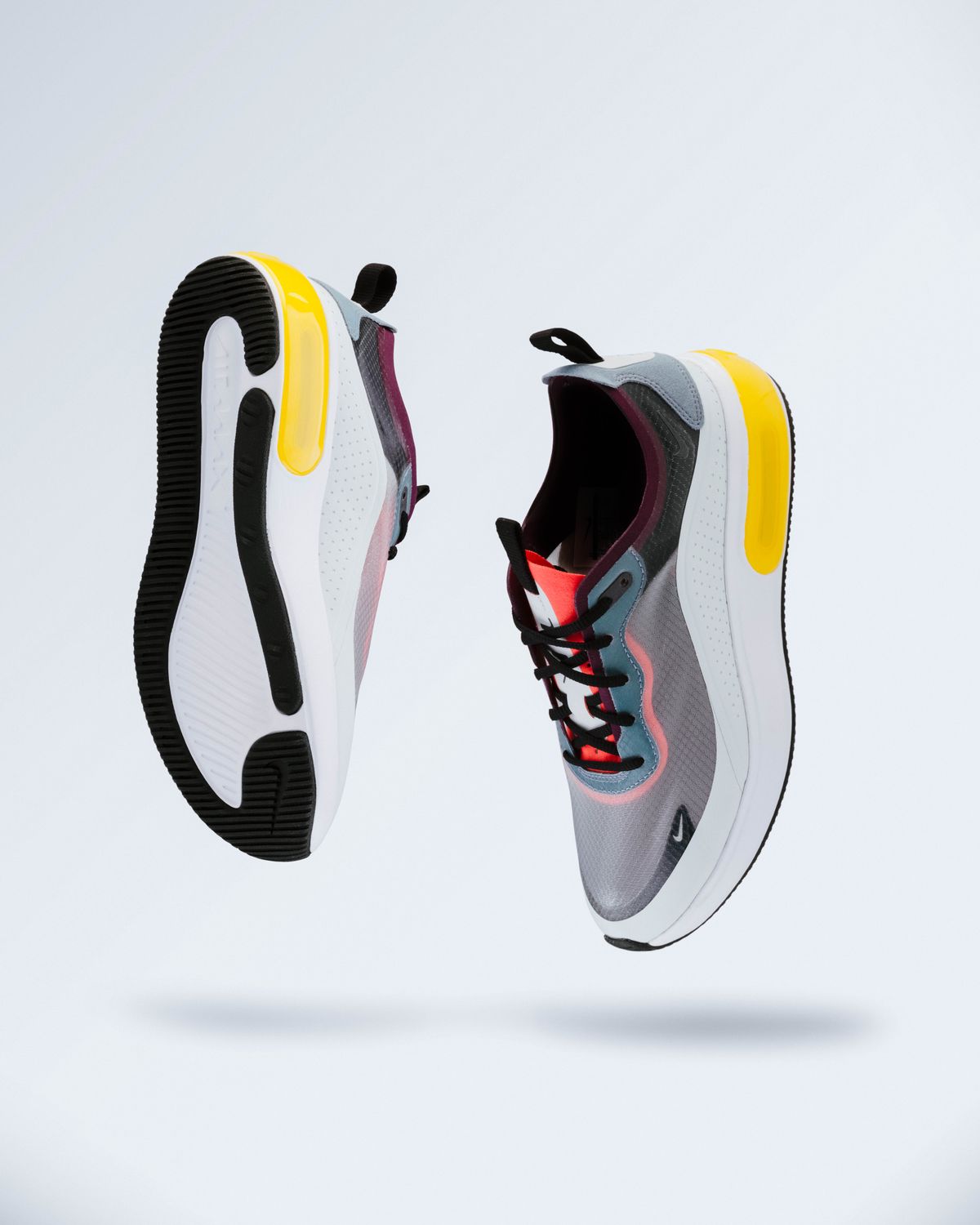
Your feet changed while you weren’t looking
Feet get longer and wider with age. The arch flattens slightly, the ligaments loosen, and the fat pad under the heel thins out. Most people are wearing a shoe one size smaller than they need by their sixties, and they blame their feet for hurting rather than the shoe.
Measure both feet, standing, at the end of the day. Write the numbers down. Do it again in a year. It’s the single most useful thing you can do for foot comfort, and it takes two minutes with a piece of paper and a pencil.
Swelling matters too. Ankles and feet swell through the day, more so in warm weather or if you’re on medication for blood pressure. A shoe bought at 9am can be tight by 3pm. Shop late, or at least try the shoes on late.
Toe clearance is where age shows up most. Toes spread, and a shallow toe box starts pressing on the tops of them. Look for a box deep enough that you can lift your toes inside the shoe while standing. If you can’t, size up or change shape.
Nails and calluses change fit too, and they’re worth dealing with before you buy shoes rather than after. A thickened nail needs a deeper toe box, and a callus on the side of the foot needs width in one specific spot.
If you have diabetes, be more careful than this article can cover. Reduced sensation means you may not feel a rubbing seam until there’s a wound, and daily checks of both feet matter more than any shoe spec.
Bunions and hammertoes need room at specific points rather than an overall bigger shoe. A wide fit helps, and so does a soft, stretchy upper over the joint. Where extra width needs to sit covers that in detail.
Weight: under 300g per shoe
Heavy shoes make you lift your feet less, and lifting your feet less is how toes catch on kerbs. A pair of walking shoes at 400g each adds nearly a kilo to every step cycle across a walk, and the fatigue shows up late in the day when balance is already worse.
Most decent walking shoes land between 240 and 320g in a UK 5. Above 350g you’re carrying unnecessary structure unless you need it for a specific reason.
Lighter isn’t automatically better, though. The very lightest shoes tend to have thin midsoles and soft heel counters, and you’d be trading stability for grams. The goal is the lightest shoe that still passes the firmness checks.
Where the weight sits is as important as the total. A shoe that’s heavy at the front makes you catch your toe. One that’s heavy at the back pulls your heel down and makes the whole leg work harder. Light uppers with a solid sole are the combination you want.
The best walking shoes for senior women also tend to have a firm heel counter without a stiff, tall collar. That combination keeps the heel in place while letting the ankle move, which is what keeps you steady on uneven ground.
Weigh them if you’re ordering online and the number is listed. If it isn’t, read reviews for words like “clumpy” or “heavy” and take them seriously. People rarely complain about lightness.
There’s a trade-off to accept here. The lightest shoes save your legs and lose some support, so you’re looking for the lightest pair that still passes the firmness checks rather than the lightest pair full stop. Anyone selling you a 180g walking shoe for a 75-year-old is selling you a shoe built for a different person.
Buying the best walking shoes for senior women often means ignoring the category labels entirely and reading the spec, because the marketing is written for runners half your age.
Ten minutes in the shop, in order
Go in the afternoon, with the socks you’ll wear, and do these in sequence.
- Press a coin into the tread. Grooves shallower than the coin mean the sole is worn.
- Squeeze the heel counter. Firm, not foldable.
- Twist the shoe. Resistance in the middle, flex near the toes.
- Step in without using your hands. If you need a shoehorn, the collar is too tight.
- Fasten, then try to walk out of the shoe. It should stay on.
- Walk the length of the shop on a hard floor and turn a corner.
Take your time with the turn. Corners are where most trips happen, because the shoe has to grip while your body changes direction, and a loose heel fails exactly there.
Then wear them at home for an hour before committing to a full day out. New shoes and older feet need a short introduction, and that first hour tells you most of what you need to know.
If you’re buying your first pair in years, don’t shop alone. A second pair of eyes at ankle height spots a wobbling heel faster than you’ll feel it, and the best walking shoes for senior women are usually the ones that look boring and feel planted. Bring a friend, walk the shop together, and let them watch you turn a corner.
If your feet hurt in a way that isn’t just stiffness, get them looked at. Neuropathy, circulation problems and arthritis all change what shoe works, and a podiatrist can save you from buying three more pairs that don’t. The walking shoes category lists closure type and sole depth on most styles, which narrows things down before you leave the house.
For a starting point, these casual walking shoes have a low, stable platform, and the thick-soled dad shoes suit anyone who wants a wider base without a towering stack. If morning heel pain is part of your picture, read the plantar fasciitis guide before you buy anything with a soft heel.
One last habit worth building: keep two pairs and alternate. Foam recovers in 24 hours, the shoes last longer, and on a wet morning you always have a dry option by the door.
