

Rain in a city you don’t know is a specific kind of misery. You’ve got a map open, a bag with a laptop in it, and 800 metres to the station. Your shoes take on water in the first 200 and then you’re walking in two cold sponges for the rest of the day, and there is nowhere to sit down and change.
So you go looking for the best women’s waterproof walking shoes for travel, and the labels don’t help. “Water resistant.” “Weatherproof.” “Hydrophobic upper.” Three phrases that sound identical and mean completely different things.
I’ve tested this the tedious way, through four wet trips and one genuinely awful week in Glasgow where it rained sideways for six days. Some of what follows is technical. Most of it is about what you’ll notice at hour three, when the shoe’s marketing has stopped mattering.
Waterproof, water resistant, and water repellent aren’t the same job
Water repellent means the surface beads water and sheds it. A spray, a coating, a waxed finish. It handles drizzle, a wet pavement, a splash from a passing car. It does not handle standing water or twenty minutes of steady rain, because the water has to go somewhere and eventually the fabric soaks through.
Waterproof means there’s a membrane inside the shoe that water can’t pass at normal pressure. That’s a physical barrier, not a surface treatment. It’s the difference between a raincoat and a bin bag, and it’s why waterproof shoes cost more.
Water resistant is the fuzzy middle, and it’s the word to distrust most, because there’s no standard behind it in most retail contexts. Treat it as “water repellent, but the brand wanted a stronger word.”
- Repellent: drizzle, wet grass, splashes. Reapply every season.
- Resistant: marketing term. Assume repellent.
- Waterproof: a membrane plus sealed seams. Rain, puddles, wet stone steps.
One more term you’ll see: “waterproof leather.” That usually means leather treated during tanning plus a sealed construction, and it works well until the leather creases at the toe. The crease line is where water gets in, and no treatment fully restores it. Expect two good winters from a treated leather walking shoe, then a slow decline.
If you want the underlying mechanics rather than the marketing, the entry on waterproof fabrics and how they’re constructed covers the membrane and coating families without any brand influence.
Worth knowing before you spend anything: no shoe is waterproof forever. The barrier is a material that flexes thousands of times, and flexing is what breaks it. A good pair gives you two or three winters of dry feet. A cheap one gives you one wet afternoon and a lesson.
That’s why the honest shortlist of waterproof walking shoes for women is shorter than the shelf suggests. Most of what’s on offer is repellent with better copywriting.
What failed, and what didn’t, in actual rain
The failures were boringly consistent. A pair of coated canvas trainers let water through the toe within fifteen minutes, and once the foam midsole was wet they weighed about 200g more per shoe and never fully dried in a hotel room. Two days later they smelled like a canal.
A pair of treated leather boots held out for an hour, then leaked at the seam where the tongue meets the upper. That’s the classic weak point, and it’s invisible until you’re standing in it. Look at that joint in the shop. If the tongue is a separate flap with a single row of stitching and no gusset, water will find it.
What worked: a pair with a proper membrane, a gusseted tongue, and a rubber toe bumper. Ugly words for a reason. The bumper isn’t decoration, it’s the part that stops the toe from soaking and the part that takes the scuffing when you kick a kerb in the dark.
Six wet days, one pair, dry socks every evening. That’s the standard, and it’s achievable at a mid price. You don’t need the most expensive option on the shelf.
The other thing that failed wasn’t waterproofing at all. It was drying time. A soaked shoe that takes 36 hours to dry is useless on a trip where it rains two days running, and no membrane helps once the inside is wet from your own sweat or from water that came in over the collar.
So test two things, not one. Water resistance from outside, and how fast the lining dries when it does get damp. A pair that dries overnight forgives a lot of mistakes.
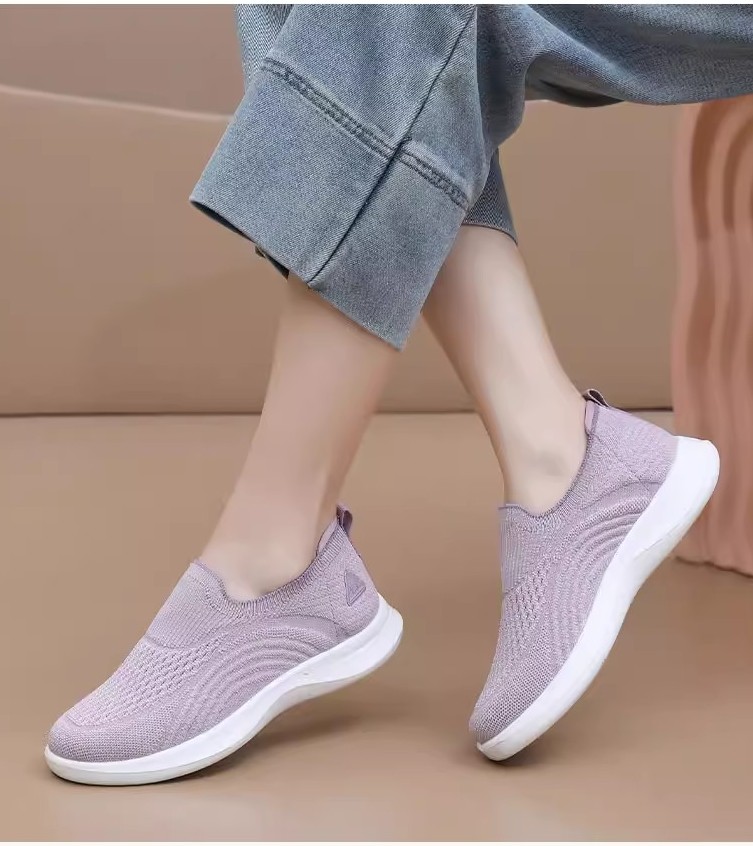
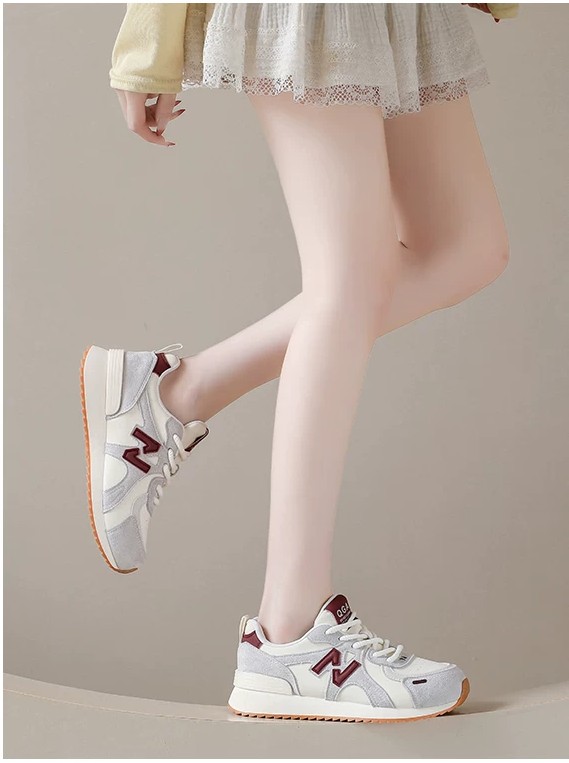
If you’re shopping and want a shape that already leans this way, this flat-soled breathable pair with a thick rubber sole is the right silhouette for a rainy city, and the soft leather sports style handles wet pavements better than suede ever will.
Membrane or coating: which one survives a second winter
A membrane is a thin film laminated inside the shoe. Water can’t get through it, vapour can. It sits behind the upper, so the upper can wet out and look soaked while your foot stays dry. That’s normal and it confuses people.
A coating is a layer on the outside of the fabric. It’s cheaper, it works immediately, and it dies. Abrasion at the toe, flexing at the crease, and washing all strip it. Six to eighteen months of regular wear is realistic, then it needs reapplying or replacing.
The catch with membranes is that they only work if the shoe is built around them. Every seam has to be taped. Every stitch hole is a potential leak. That’s why cheap “waterproof” shoes leak at the stitching rather than through the fabric, and why the expensive ones look plainer. Fewer seams, fewer failures.
The membrane most people know is expanded PTFE, and its history is worth ten minutes if you like that sort of thing: the story of how ePTFE became the default waterproof layer explains why the material is breathable at all. What matters when you’re buying is simpler. A membrane shoe with taped seams beats a coated shoe every time on a long wet day, and a coated shoe beats nothing at all.
For travel, I’d take a membrane. Not because it’s better in a shower, but because it doesn’t need reapplication mid-trip, and reapplying a coating in a hotel bathroom with a can you bought at a hardware shop is not how anyone wants to spend an evening.
There’s a sustainability angle too, and it’s not just marketing. Water-repellent finishes have historically relied on fluorinated compounds, which is why the OEKO-TEX testing standards exist in the first place. If that matters to you, look for a brand that says which chemistry it uses rather than one that says “eco” and nothing else.
The breathability trade-off nobody quotes
Here’s the part the labels skip. A waterproof shoe is warmer than the same shoe without a membrane, and on a humid 24°C day your foot will notice. Membranes pass vapour, but slower than open mesh, and the difference is real once you’re walking at pace.
So a waterproof walking shoe is a trade you make for a season, not a year-round purchase. In northern Europe from October to March, it’s the right call. In July, it’s a foot sauna, and you’ll be better off with a quick-drying mesh shoe and a spare pair of socks.
Practical numbers help. On a wet 12°C day, a membrane shoe keeps your feet dry and comfortable for a full day out. On a dry 24°C day with 10,000 steps, the same shoe runs noticeably hotter than a mesh alternative, and you’ll want a thin wool sock rather than cotton.
If you run hot, look for a shoe with a membrane and a mesh outer rather than leather. You get the barrier plus some airflow, at the cost of looking sportier. If you’re mostly walking to a station and back in winter, leather plus membrane is warmer and holds up better to slush.
There’s a simple test for whether a pair is too warm for your trip. Wear them for an hour indoors at home, in the socks you’d travel in, and see how your feet feel. If they’re clammy at 21°C in your living room, they’ll be unbearable at 26°C on a station platform.
The reverse is also true, and I learned it the hard way. A pair I bought for a mild autumn trip turned out to be so breathable that they were cold by November, and cold feet on a wet day are almost as miserable as wet ones. Match the shoe to the season you’re actually travelling in, not to the season you hope for.
For most travellers that means one pair of waterproof walking shoes from October to April, and a lighter mesh pair from May to September. Two pairs, both used, beats one pair that’s wrong for half the year.
Grip on wet stone is the test that matters
Waterproofing keeps water out. It doesn’t stop you falling over. Wet stone, wet tile, wet painted lines and metal drain covers are the surfaces that actually hurt people, and they’re all over older European cities.
What you want is soft rubber with siping, those thin cuts across the tread blocks that give water somewhere to go. Hard rubber compounds, which last longer, are exactly the wrong choice on wet stone. This is the one place where a shorter-wearing sole is the safer sole.
Press a thumbnail into the tread in the shop. If it barely marks, the rubber is hard and it will skate on wet paving. If it leaves a slight dent, that’s a softer compound and better grip.
- Good: deep lugs with fine siping, soft compound, a defined heel brake.
- Bad: flat, smooth sole with a printed tread pattern and no depth.
- Worst: hard rubber plus a worn heel edge, which is how most slips happen.
Test the heel specifically. Walk down a ramp or a slope in the shop if there is one. The heel is where you commit your weight, and a sole that’s smooth at the back is the one that takes your feet out from under you on a wet step.
Also check tread depth at the time of purchase, not after a winter. Around 3mm at the heel is the point where wet grip falls off sharply, and most people keep wearing them for another six months after that.
One more thing about wet surfaces: width of contact matters. A wider sole puts more rubber on the stone and gives you more margin when the surface is slick. Narrow soles look better with tailored clothes and are less forgiving on wet steps. If you’re choosing between two pairs for a rainy city break, the wider one is the safer bet.
Sizing runs differently once there’s a membrane inside
A membrane adds a layer, and a waterproof shoe is usually slightly less roomy than the same brand’s mesh version. If you’re between sizes, go up. If you’re buying online and can’t compare, order the larger one first.
The other change is stiffness. Waterproof uppers are less forgiving for the first week, especially around the instep, so break them in before you fly. Ten days and three walks, same as any other pair, but expect the leather or synthetic upper to feel firmer for the first two.
Watch the toe box depth specifically. Membranes don’t stretch, so a shoe that’s shallow at the toes stays shallow at the toes. If your big toe touches the top, size up or choose a different last. You cannot break in depth.
This is where most of the bad reviews for waterproof walking shoes come from. Someone orders their usual size, the shoe arrives with a firmer upper than expected, and the toe feels tight on day one. Half a size up would have fixed it. Instead they write that the brand runs small, which is sometimes true and sometimes just the membrane.
Socks matter more with a membrane. Thin cotton gets damp and stays damp against the skin. A thin merino sock moves moisture away and keeps its insulation even when wet, which is the whole reason hikers wear it. Pack two pairs for a wet trip. They’ll dry overnight; the shoes won’t.
There’s a fit check specific to waterproof shoes that’s worth doing at home. Put them on with your travel socks, stand up, and press down on the top of your toes through the upper. If you can feel your toenail against the inside, the shoe is too shallow. Membrane uppers don’t give, so that pressure becomes a bruise by day three.
Heel hold deserves its own check. Walk ten steps fast on carpet. In a stiff waterproof upper, a slipping heel is both more noticeable and more damaging than in a soft trainer, because the upper doesn’t deform to catch you. If the heel lifts, try a heel-lock lacing pattern or a half size down in a wide fitting.
Care that keeps the membrane working
Three things kill waterproof shoes: heat, dirt, and repeated washing machines. All avoidable.
Never dry them on a radiator or by a fire. Heat degrades the membrane and the adhesives holding the seams. Stuff them with newspaper, change it once, and leave them somewhere with air moving. A hotel room with the window cracked is fine.
Keep the upper clean. Dirt abrades the coating and clogs the breathable surface, so the shoe both wets out faster and gets hotter. A brush and a damp cloth once a week during winter is enough.
Re-proof the outer every season with a spray designed for the upper material. This isn’t about making the shoe waterproof again, since the membrane does that. It’s about stopping the outer from soaking up water and turning the shoe into a cold, heavy sponge.
Skip the washing machine entirely. Even on a gentle cycle, the agitation breaks seam tape and the spin crushes the midsole. If they smell, use a shoe-specific cleaner and air them properly.
Check the seams once a year by running a finger along the inside of the toe box. Taped seams that feel rough or lift at the edge are failing, and a cobbler can re-tape them for a fraction of a new pair.
Store them dry, loosely packed, and never in a plastic bag. A sealed bag holds moisture against the upper and is the fastest way to grow mildew in a leather lining. If you’re packing them in a suitcase, use a cotton shoe bag and leave the laces loose.
For the rest of the buying decision, the walking shoes category covers the non-waterproof options too, and this piece on walking shoes for travel handles packing and airport days. If you’re comparing closures, there’s a separate look at women’s velcro walking shoes and what the straps do to fit.
If you only take one thing from all of this: buy waterproof walking shoes in person if you possibly can, in the socks you’ll travel in, late in the day, and walk a lap on a hard floor. Almost every complaint about this category traces back to a fit that was never tested properly.
Buy the pair that keeps your socks dry through a real downpour, not the pair that beads water for ninety seconds in the shop. The difference shows up in your third city, on the day you didn’t check the forecast.
