

It’s 4:50am and there are two pairs of shoes by the door. One looks good in photos. The other one you can actually walk in. You’ve got a flight at 8:15, a layover in a terminal the size of a small town, and four days of sightseeing at the other end. Pick wrong and the whole trip limps.
Walking shoes for travel are a different animal from the pair you wear to the office or the ones you keep for the gym. They have to get through a security line, ninety minutes of polished tile, a pressurised cabin, and then fifteen thousand steps a day on streets laid down before anyone thought about arches. That’s a lot to ask from one pair.
It’s doable. I’ve done two-week trips with a single pair and zero blisters. I’ve also spent five days in Rome hobbling because I packed for the photographs instead of the pavement, and that trip cost me a taxi to a pharmacy. The difference came down to five decisions, none of them expensive.
Work out your real daily step count before you buy anything
Open your phone and look at last week. Not your best day, the average. Most women I know guess low by about a third. Then multiply by 1.4, because travel adds walking you never plan: wrong platform, closed museum entrance, the restaurant that turned out to be four blocks further.
An 8,000-step week at home becomes 11,000 to 14,000 steps abroad. That number should decide what you buy. Under 10,000 steps a day, almost anything with a decent rubber outsole will do. Past 14,000, on hard surfaces, the shoe either has real cushioning or it has your knees.
Three rough profiles help here:
- City trip, pavement and museums: medium cushion, 8mm drop, 280g or less.
- Old towns with cobbles and stairs: firmer sole, deeper tread, a slightly wider toe box for downhill braking.
- Hot climate, 30°C plus: mesh upper, thin sock, and a shoe you can rinse and dry overnight.
Cushioning is not the same as softness. Soft foam feels wonderful in the shop and packs down by day three, which is why so many people come home with sore heels and a shoe that suddenly looks a size too big. Press a thumb into the midsole under your arch. It should give a little and spring back, not dent and stay dented.
If you have flat feet, high arches, or a history of plantar pain, spend ten minutes on the American Podiatric Medical Association site before you shop. Not because you need a medical shoe, but because knowing which part of your foot complains first tells you what to look for in a sole.
One more number worth knowing: your shoe’s weight. Under 280g for a women’s size 38 is light enough that you stop noticing it. Past 340g and by hour six you’re lifting a small brick with every step. Shops rarely have scales, so hold two pairs in one hand and compare.
The airport is the harder test, not the cobblestones
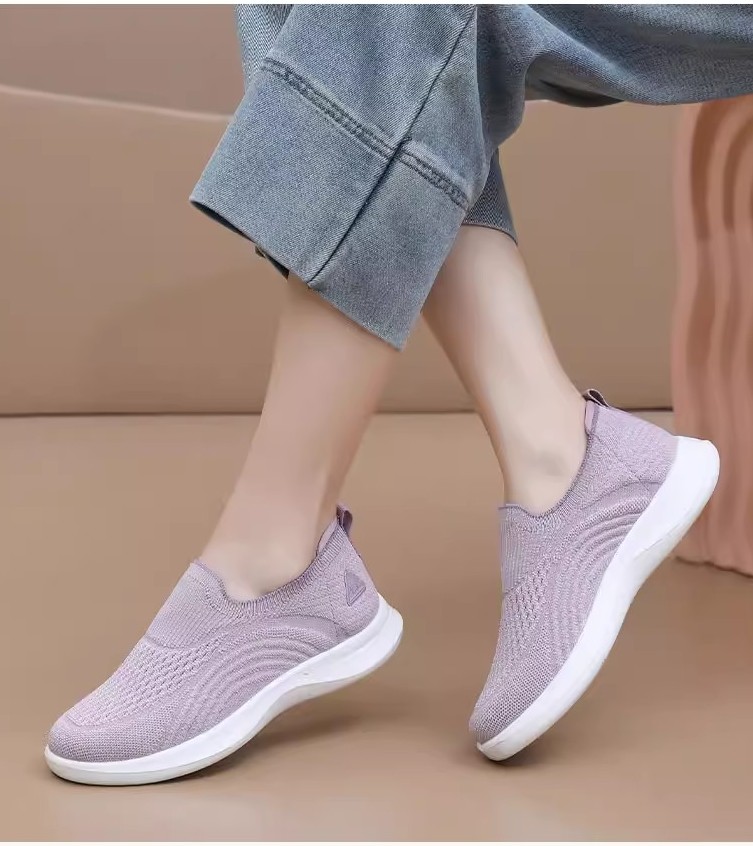
Everyone worries about the old town. The airport is worse. You stand in a queue, then stand in another queue, then walk a terminal that’s often over a kilometre from check-in to gate, all on tile or terrazzo with no give in it whatsoever. Then you sit for eight hours and your feet swell, and then you do it again at the connection.
What survives that is boring: laces you can loosen fast, a heel you can slip in and out of at security, and an upper that doesn’t press on the top of your foot when your feet are at their biggest. Slip-on styles are tempting. They’re also the reason half the women on a long-haul flight are walking to the bathroom in their socks.
Here’s my rule for the outbound day. Wear the heaviest, most supportive pair onto the plane and pack the light one. You get the support exactly when you’re standing the most, and your luggage gets lighter, not heavier, as the trip goes on.
Security is its own little test. Take your shoes off and on four times in one morning and you’ll understand why zips, straps, and buckles on a travel shoe are a tax on your patience. A pair with a simple lace and no hardware goes back on in about eight seconds.
If you’re building a shortlist, a breathable flat-bottomed pair with a thick sole is the shape that handles tile well. Flat enough to feel stable, thick enough that the concrete doesn’t come through after twenty minutes.
Also bring a spare pair of socks in your carry-on. Not for comfort. For the moment your foot gets wet in a bathroom sink or a puddle outside the gate, and you have seven hours left in a cold cabin. Twenty grams of wool saves the first day of your trip.
One pair, not three: the packing math
Three pairs of shoes for a ten-day trip sounds sensible until you weigh them. A pair of everyday trainers is roughly 600g. Add a pair of sandals and something for dinner and you’ve got 1.6kg in a bag that charges by weight or runs out of space for the actual reason you’re travelling.
The better math: one pair you can walk in all day, one pair that folds or flattens. That’s it. Everything you wear has to work with both, which quietly simplifies your packing too, because you stop bringing the trousers that only work with one shoe.
- Wear the supportive pair on travel days.
- Pack the flat pair in a cloth bag, sole to sole.
- Rinse both in the shower once per trip, dry on a towel near a window.
Colour matters more than people admit. One neutral walking shoe in bone, taupe, or black covers a museum morning, a casual lunch, and most dinners that don’t have a dress code. A bright pair is fun for two days and then it’s the only thing in every photo.
This is where leather earns its keep. A soft leather sports shoe that feels broken in from day one wipes clean, doesn’t look like gym gear at dinner, and holds its shape after being squashed in a bag for a week. The trade-off is weight and drying time. Leather gets heavy when wet and takes a full day to dry, so it’s a poor choice for a monsoon-season trip.
Do a practice pack before you leave. Put the two pairs in the bag, add your clothes, close it, and carry it around the block. If you’re already shifting weight to one shoulder, the third pair you were considering is not coming.
This is the part where walking shoes for travel earn their place in the bag rather than in the wardrobe. A shoe you’d wear twice a week at home has to work five days straight abroad, in heat, after a flight, on surfaces it has never seen. Treat the choice like packing a coat, not like picking an accessory.
Your feet swell at altitude, so size for hour eight, not hour one
Fluid shifts towards the lower body when you sit still for hours, and the cabin doesn’t help. By the end of a long flight most people’s feet are measurably wider than they were at check-in. You can read the general mechanism on the oedema overview here if you want the physiology, but the practical version is simpler.
Shop in the late afternoon. Try shoes on with the socks you’ll actually travel in, not the paper-thin ones the shop lends you. And if the pair feels snug at 5pm in a warm shop, it will feel like a vice at hour seven of a flight.
Lacing does more work than sizing. A shoe that’s slightly too wide can be locked down with a heel-lock knot at the top two eyelets. A shoe that’s too short cannot be fixed at all, and no insole saves you. Length first, width second, lacing third.
Watch for one specific thing on the plane: pressure across the top of your foot. Loosen the top two eyelets before you sit down. It sounds fussy. It’s the difference between arriving able to walk and arriving with a numb spot that lasts two days.
Compression socks are not a fashion statement and nobody will see them under trousers. On anything over six hours, they’re the cheapest comfort upgrade available, and they make the swelling argument mostly go away.
There’s a second-order effect that nobody warns you about. If your walking shoes for travel are laced tightly at takeoff because they felt right on the ground, the same lacing becomes a tourniquet two hours in. Loosen them at the gate, not mid-cabin, and you’ll avoid the marks across your instep that take a day to fade.
For long-haul, most airlines keep the cabin around 20°C and quite dry. Dry feet slide less, which sounds fine until the friction turns into a hot spot on the ball of your foot. A thin wool sock handles both problems better than cotton, which holds sweat against the skin and stays damp for hours.
When the pretty pair is fine, and when it isn’t
Here’s the admission: I still pack a pair of thin ballet flats for dinners, and I’ve never regretted it. The key is honest accounting. If your evening involves 400 steps between the hotel and a restaurant, a flat with no support is completely fine. If it involves a 25-minute walk each way over medieval stone, it’s a bad idea wearing a nice colour.
Where pretty shoes fail is transition. The walk to the restaurant is longer than the walk inside it, and that’s the part your feet remember. Take a taxi one way, or wear the walking pair and change at the door.
A few honest limits on cheap flats and heeled sandals:
- No rubber at the heel means slipping on wet stone steps, which is how most travel injuries actually happen.
- Thin soles transmit every pebble; after 3,000 steps your metatarsals will file a complaint.
- Straps that look delicate cut into the instep once your feet swell in the evening heat.
I bought a pair of woven leather flats in Lisbon in 2024 that looked perfect and gave me a blister above my right heel within an hour. I still wore them, because I’m stubborn, and I spent the rest of the trip with a plaster. They were not worth the photographs. That’s the whole review.
One genuinely useful exception: a low block heel of 40mm or less with a rubber cap is a decent dinner shoe and can survive a real walk. Anything above 70mm on cobblestones is a decision you’ll pay for on day two.
Be equally honest about the other direction. Shoes that are purely functional can look wrong in a restaurant in a way that no amount of confidence fixes. Neutral colours, a slim sole, and an upper without reflective panels get you most of the way. That’s why the walking shoes for travel that actually come home in one piece tend to look slightly boring.
Break them in before you leave: ten days, three walks
New shoes on a trip is the single most common mistake I see, and it’s easy to avoid. You need roughly ten days and three walks, and none of them have to be long.
Walk one, day one: twenty minutes around your own block in the socks you’ll travel in. You’re looking for heel slip and any pressure on the toes. Walk two, day four: forty-five minutes, ideally on pavement rather than a treadmill, because treadmills hide the way a sole grips.
Walk three, day eight: ninety minutes, and take a water bottle so you can stop and check your feet halfway. If you feel a hot spot, that’s the moment to fix it, not at 30,000 feet. The NHS guidance on blisters is blunt about it: friction plus moisture equals a blister, so dry socks and a properly laced shoe do most of the work. The clinical description of how friction blisters form says the same thing with more numbers attached, and the numbers are miserable: a hot spot can turn into a full blister inside twenty minutes of walking.
While you’re at it, scuff the soles. New rubber on smooth airport tile is genuinely slick, and a minute with sandpaper on the heel and forefoot saves you a fall on day one.
If a shoe still rubs after ninety minutes, it will rub on holiday. Return it. No insole, no plaster, and no amount of hope changes the shape of a last that doesn’t match your foot.
While you’re breaking them in, use them for the errands you normally avoid: the supermarket run, the walk to the post office, the 20 minutes waiting for a train. That’s a better test than a treadmill because it includes standing, turning, and the small stops that real walking is made of.
Waterproofing is the one upgrade worth doing at home. A spray treatment on leather or suede takes five minutes and buys you a rainy afternoon without wet socks. Skip it on mesh uppers, where it does almost nothing except trap heat. Test any spray on a hidden patch first, since some darken pale leather permanently.
Finally, pack a second insole if you already use one at home. Walking shoes for travel get compressed faster than everyday pairs, and swapping the insole halfway through a trip makes day eight feel like day one for about the price of a coffee.
The checklist I screenshot before every trip
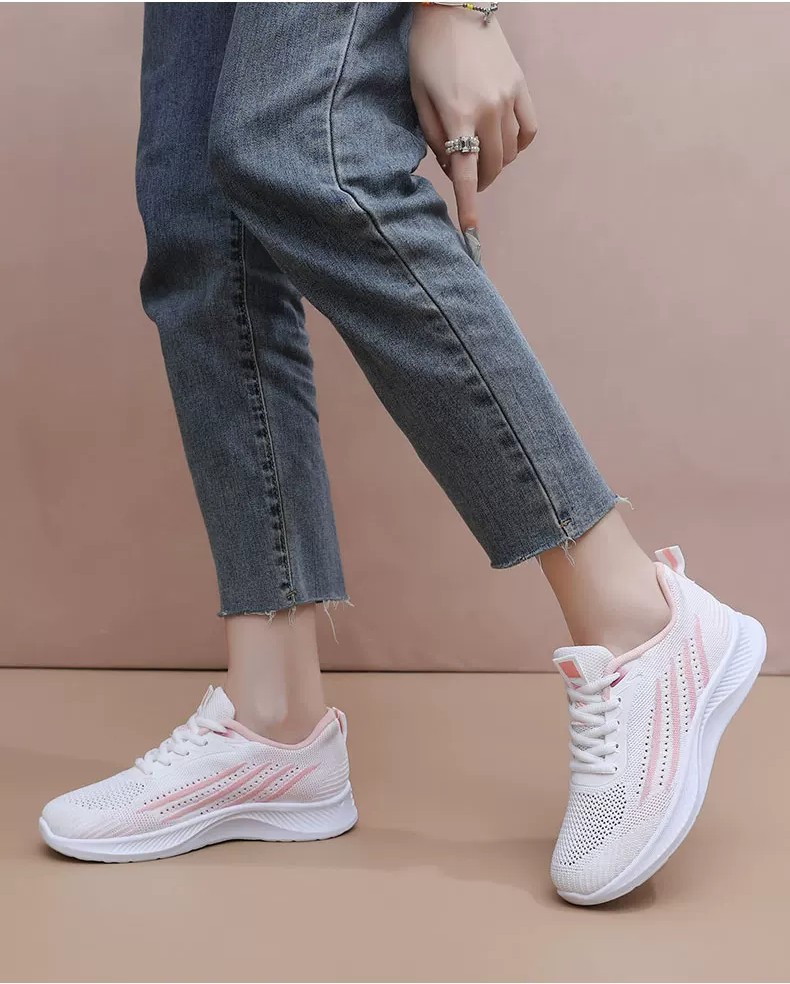
This takes two minutes and it has saved me twice. Run through it the night before, with the shoes actually on your feet rather than in a photograph.
- Can you wiggle your toes standing up? If not, wrong length.
- Does your heel lift out on a fast step? If yes, try a heel-lock lace.
- Have you walked 90 minutes in them at least once?
- Are the soles scuffed, not glossy?
- Is there a spare pair of socks in your carry-on?
- Do both pairs work with every outfit you packed?
If you tick all six, you’re done and you can stop thinking about it. Most travel foot problems are decided before you leave the house, not on the trip.
One thing that doesn’t fit neatly on a checklist: how the pair behaves when you’re tired. At the end of a long day you stop picking your feet up properly, and that’s when a loose heel or a stiff sole turns into a stumble. If a shoe only works when you’re walking well, it’s not the right shoe for a trip.
There’s also the question of what you’ll do with them afterwards. A pair that survives two weeks of 12,000-step days usually has another season in it, which is the quiet argument for spending a bit more up front. Cheap pairs tend to die at the end of the trip, and then you’re shopping again in a city where you don’t know the sizes.
So the useful test isn’t whether the shoes look right in a mirror. It’s whether you’d still choose them on the last morning, when your feet are sore and the flight home is nine hours away. If the answer is yes, buy them and stop reading reviews.
And if you’re still shortlisting, the walking shoes category has plenty of flat, low-profile options that photograph fine, and this piece on walking shoes that don’t look like gym gear covers the styling side. For treadmill days at home, there’s a separate write-up on shoes for treadmill walking that’s worth a read before you buy a second pair.
Pack the boring pair. Wear it on the plane. Save the pretty one for the 400-step dinner, and put a plaster in your bag anyway, because you’re human and so am I.
