Every wardrobe argument I’ve had started with the same sentence: “but what do I wear with this?” And every time, the answer was a shoe category nobody had named out loud. You don’t need more shoes. You need to know which of the dozen shapes is doing which job.
Types of women shoes break down by three things, not by brand. How high the heel is, how much of the foot is enclosed, and how the shoe stays on. Once you can name those three, picking a pair takes about 40 seconds instead of a 40-minute scroll.
Here’s the field guide, with the honest bits about which ones hurt. It won’t list every pair on the market, because the types of women shoes that matter are shapes rather than products, and shapes don’t change with the season.
Heels: it’s the base, not the millimetres
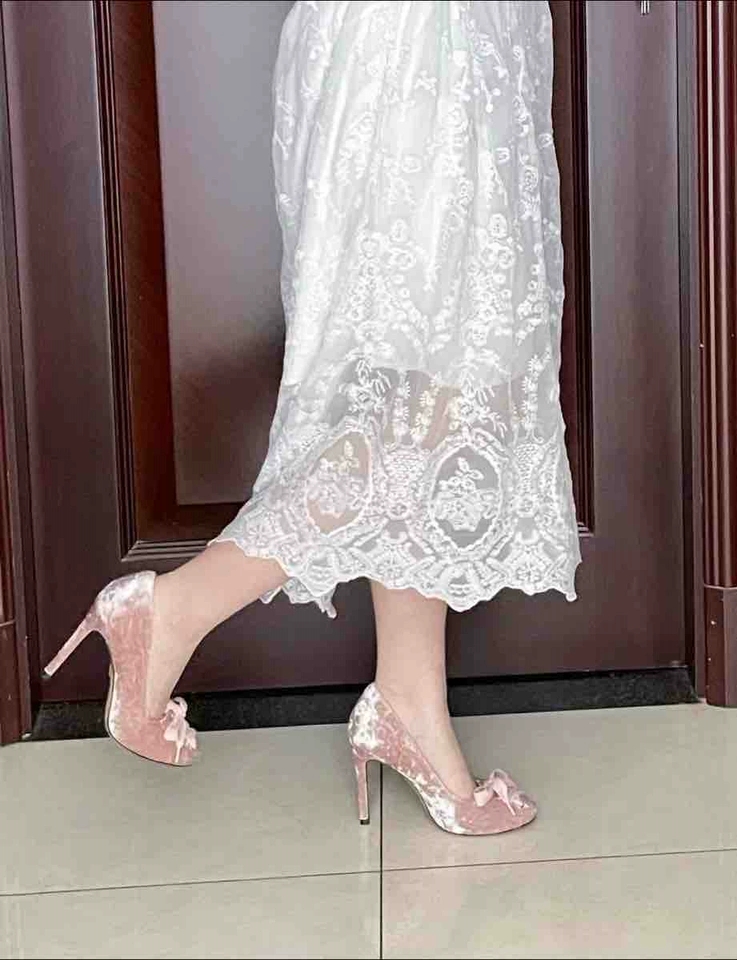
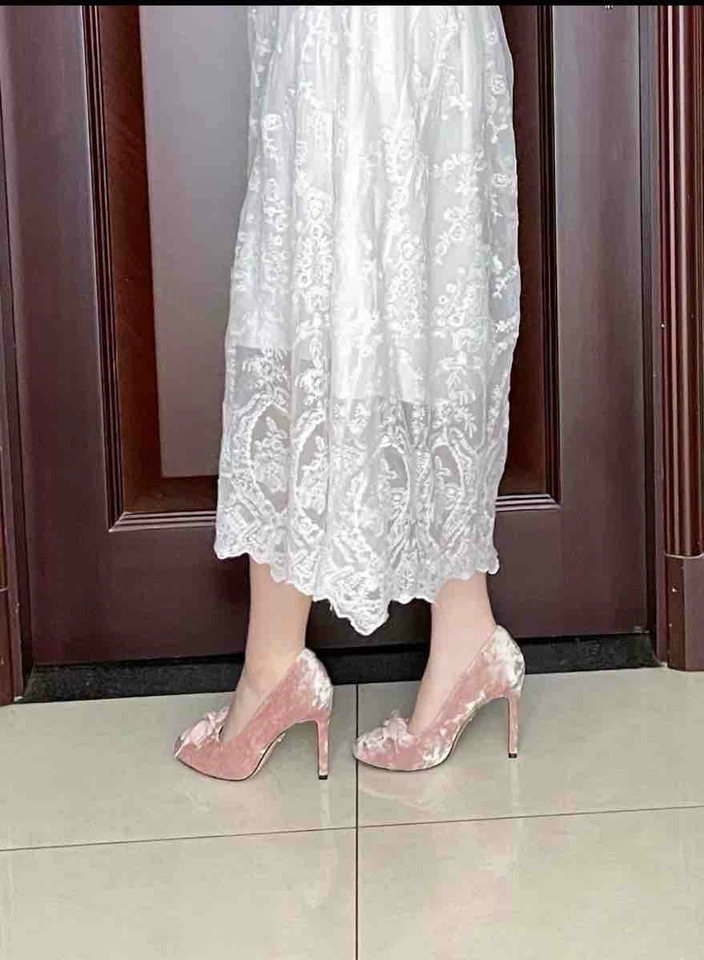
Stiletto, block, kitten, cone, flare. Five names, one family, and the only difference that matters on pavement is the area of the heel base. A 90 mm stiletto puts your weight on a patch the size of a five-pence coin. A 90 mm block spreads it over something closer to a stamp, which doesn’t sound like much until you’ve walked 800 m in each.
Kitten heels sit at 35 mm to 50 mm and are the only heel height most women can wear for a full working day. Stilettos above 80 mm are a taxi-to-table shoe. That’s not a moral judgement, it’s just what the geometry allows.
Block heels are the workhorse. They’re stable, they survive cobblestones, and they don’t sink into grass at a garden wedding. The trade-off is visual weight, since a chunky heel reads more casual than a slim one, so if the outfit is silk, a block heel will drag it down a notch.
Wedge heels solve the same problem differently. A wedge supports the whole foot, so a 70 mm wedge is easier to walk in than a 50 mm stiletto. Downside: wedges look dated fast. They come back every six or seven years, and in between they look like 2011.
Flats: four shapes, four different feet
Ballet flats are the classic and the least supportive. A thin sole, no structure, and a low vamp that cuts across the top of the foot. If your feet are wide, the vamp will bite. If you have high arches, the flat sole will ache by lunchtime.
Loafers are the practical flat. A penny loafer or a horsebit loafer holds the heel, has a proper sole, and works with trousers and skirts. Look for a rubber sole rather than leather if you walk to work, because leather soles are slippery on wet paving and cost £40 to resole. The history of the loafer is mostly a story about men’s shoes until the 1950s, which is why the last is often wider than a women’s specific shoe.
Mary Janes have a strap across the instep and a round toe. The strap holds the shoe on, which makes them good for narrow heels that slip out of everything else. The downside is that the strap cuts across the highest point of your instep, so if that area is sensitive, size up or skip.
Pointed flats look sharp and fit badly. The taper starts before your toes end, so your little toe sits on the slope. If you love the look, buy a size up and add a heel grip, or accept that they’re a two-hour shoe.
Sneakers: three types pretending to be one
The word covers running shoes, court shoes, and lifestyle trainers, and they’re not interchangeable. A running sneaker has a rocker sole and a soft heel, which is great for forward motion and terrible for standing still. A court sneaker has a flat sole and a stiff upper, which is the opposite.
Lifestyle trainers sit in the middle. Canvas or leather upper, flat rubber sole, no arch support worth the name. Fine for a 3 km walk to the office, not fine for a museum day.
If you want one sneaker to do everything, look for a leather upper with a cushioned insole and a 20 mm to 25 mm sole height. That’s enough foam to stand on and enough structure to look deliberate with a coat. The women’s sneaker collection is where I’d start, and the chunky ones here are a good example of a casual dad shoe that adds height without a heel.
Boots: ankle, mid-calf, knee-high
Ankle boots are the most useful and the most faked. A good one has a shaft that ends below the ankle bone, so it doesn’t cut when you walk. A bad one ends right on the bone and rubs through a sock in an hour. Measure your ankle bone height before you buy, then check the shaft measurement in the listing.
Mid-calf boots flatter fewer legs than the marketing suggests, because the top edge lands on the widest part of the calf for most women. If you’re 165 cm or under, a knee-high boot will usually look more balanced than a mid-calf one.
Knee-high boots need a calf measurement, not a shoe size. Anything under 36 cm circumference fits most women; above that, look for a wide-calf option or an elastic panel. Buying a size up to fit your calf gives you a boot that flaps at the ankle.
The one boot rule I’d keep: heel height under 60 mm if you plan to walk more than a kilometre. A knee-high boot with a 70 mm heel looks fantastic and is a car-to-bar shoe.
Sandals, mules, and the backless problem
Sandals split into flat, block-heel, and heeled. Flat sandals with a moulded footbed are the ones you can actually walk in. Flat sandals with a hard sole and no arch are decorative.
Mules and backless loafers are the current default for smart-casual, and they share one flaw: your heel has to grip to keep them on, which means your toes claw slightly with every step. Over 4 km, that’s a cramp. Wear them for dinner, not for a commute.
Slingbacks are the better backless option because the strap does the work your toes were doing. If you want the look without the claw, that’s the shape to pick.
Espadrilles are summer flats with a rope sole. They’re comfortable for about 3 km and then the rope compresses and the sole feels like a plank. They also don’t survive rain at all, which is worth remembering before you pack them for a holiday in April.
Match the shoe to your week, not your wardrobe
Count your actual week before buying anything. Most women I know spend five days in one mode, two in another, and own twelve pairs for a life they don’t live.
- Five days commuting and desk work: one loafer, one leather sneaker, one 35 mm block heel
- Standing job: two cushioned walking shoes, rotated, plus one smart flat for meetings
- One dressy event a month: one heel you can walk 500 m in
- Weekend: one flat sandal or sneaker that survives 8 km
That’s five pairs covering roughly 95% of occasions. Everything else is a want, and there’s nothing wrong with wants. Just don’t buy them while telling yourself they’re needs, because that’s how you end up with nine pairs of heels and nothing to walk in.
If your week is mostly standing, the walking shoe range covers the base better than any flat. And if you need one heel for events, a suede block-heel design will get you through a wedding without the wobble.
Fit rules that apply to every type
Try shoes at the end of the day. Your feet swell up to 5%, and a shoe that fits at 9 a.m. can be a size too small by 6 p.m.
Check the ball of the foot, not just the length. The widest part of your foot should sit at the widest part of the shoe. If it sits forward of that point, the shoe will pinch across the toes no matter what size you buy.
Walk on a hard surface for 20 steps. Carpet hides everything, including a heel that slips and a sole that won’t flex.
And check the heel counter with your thumb. It should be firm. A soft counter means the shoe relies on laces or straps to stay on, and backless styles with a soft counter will flap.
One thing worth knowing about shoe construction in general: the basic anatomy of a shoe is a sole, an upper, and a heel, and price mostly buys you better materials in the first two. It doesn’t buy you a better fit. That’s the one part you have to do yourself.
Sizing shifts between categories
Your size in a sneaker is not your size in a heel, and this catches out almost everyone. Heels are usually cut half a size small because the pointed toe eats room at the front. Boots are cut half a size large to allow for thick socks. Loafers sit in between, and slip-ons run narrow through the instep.
So keep two numbers in your phone: your sneaker size, and the size that fits in a pointed heel from a brand you trust. Everything else you can guess from those two with reasonable accuracy.
- Sneakers: your true size, add 8 mm of toe room
- Pointed heels: half a size up from your sneaker size
- Ankle boots: half a size down if you wear thin socks
- Loafers: true size, but check the instep depth
Width is the number nobody publishes. If a brand offers a wide fit, take it when your forefoot measures more than 95 mm across. Under that, standard is usually fine. Measure by standing on a sheet of paper, marking the widest points, and using a ruler. It takes two minutes and saves a return.
One more category quirk: sandals and mules should fit snug at the heel, because there’s no lacing to pull them back. If a mule slips when you walk, it will always slip, and no insole will fix it.
How the heel shape changes the way you walk
A heel doesn’t just raise you. It changes when your foot leaves the ground and which part of the sole takes the load. A stiletto lands on the outside edge of the heel first and rolls inward faster, which is why ankles turn in them. A block heel lands flat and stays flat until push-off.
Wedges remove the heel strike almost entirely, because the sole is continuous. That’s why they feel easy on the calf and hard on the shin, since your tibialis anterior does the work your calf would normally share.
Kitten heels are the compromise that actually works. At 40 mm, the ankle angle is small enough that your calf doesn’t shorten noticeably, and the heel base is usually wide enough to land flat. If you have to stand for an hour at an event, that’s the shape.
The practical upshot: pick the heel by the surface, not by the dress. Grass, gravel, and cobbles want a block or a wedge. Indoor carpet and tile can take a stiletto. Anything with a 300 m walk between the car and the door wants a kitten heel or a flat, and there’s no way around that.
Where most people get it wrong
Treating the types of women shoes as a list to collect. They’re a toolkit, and a toolkit with twelve tools you never use is just clutter by the door.
Buying for the outfit instead of the walk. The pair that goes with everything is usually the pair you can’t walk in, and it sits by the door until you resent it.
Assuming expensive means comfortable. I’ve worn €240 heels that were worse than a €60 pair, because the last was too narrow for my foot. Price correlates with materials and finish. It doesn’t correlate with your arch.
Buying one pair per category and expecting it to work for every version of that category. A stiletto and a block heel are both heels and they are not the same shoe.
Ignoring the sock. A shoe that fits barefoot will be tight with a wool sock, and half the fit complaints I hear trace back to that.
If you only buy three
When you’ve named the shapes you actually need, the types of women shoes you keep coming back to are usually the boring ones. One leather sneaker with a 20 mm sole. One loafer you can walk 2 km in. One heel at 35 mm with a base wide enough to stand on.
Those three cover work, weekends, and anything with a dress code. Everything else is optional, and knowing that is worth more than another pair.
None of the types of women shoes here is better than another. They just do different jobs, and the trick is knowing which job your week actually contains.
So: which of the twelve shapes is missing from your week right now? That’s the pair to buy, and it’s probably not the one in your basket.