

Most people walk into a shoe department with one picture in their head and walk out with something completely different. That gap between intention and purchase almost always comes down to vocabulary. We say “heels” as if it were a single object, when the category actually splits along heel height, heel shape, toe shape, back construction, and material — and each of those variables changes how the shoe feels at 9 a.m. versus 6 p.m. A 70mm slingback and a 100mm stiletto are not variations on a theme; they behave like different products that happen to share a silhouette family.
Sorting out the types of ladies shoes in a useful order is the fastest way to shop well, because once you know what a shoe is built to do, you stop buying pairs that only work for the fifteen minutes you try them on in the store. Heels are the branch with the most sub-species and the most confusion, which is why they get the detailed treatment here. If you want to browse the whole range while you read, the heels collection and the wider women’s shoes section are the places to start, and one practical example of a wearable high pair is the not-tiring thick heel pump, which shows how a wider heel base and a softer insole change the entire experience.
Start With Heel Height, Not the Label
Heel height is the only measurement that reliably predicts whether a shoe will survive a workday. Everything below roughly 40mm behaves like a flat with a lift: your weight stays close to the ground, your calf doesn’t shorten much, and the shoe is genuinely walkable. From 50mm to 70mm you enter the zone most podiatrists consider sustainable for regular wear — the American Podiatric Medical Association has repeatedly advised keeping everyday heel height at about two inches or less and alternating with flatter shoes, which lands right in the middle of that band. Above 80mm, the geometry changes: the ankle plantarflexes, the forefoot takes a much larger share of body weight, and the shoe becomes a piece of occasionwear that happens to be shaped like footwear.
What makes height confusing is that two shoes at the same measurement can feel a world apart. A 90mm block heel distributes load across a wide surface and feels far more stable than a 90mm stiletto, which puts the same load on a tip the width of a pencil. Platform height also counts differently: a 100mm heel with a 30mm front platform gives an effective pitch closer to 70mm, which is why platforms read as “high” in photographs but walk like something much lower. When you’re comparing the types of ladies shoes on a shelf, the number printed on the box is only half the story — the surface area of the heel and the height of the toe platform decide the rest.
Pumps and Pointed Toes: The Backbone of a Working Wardrobe
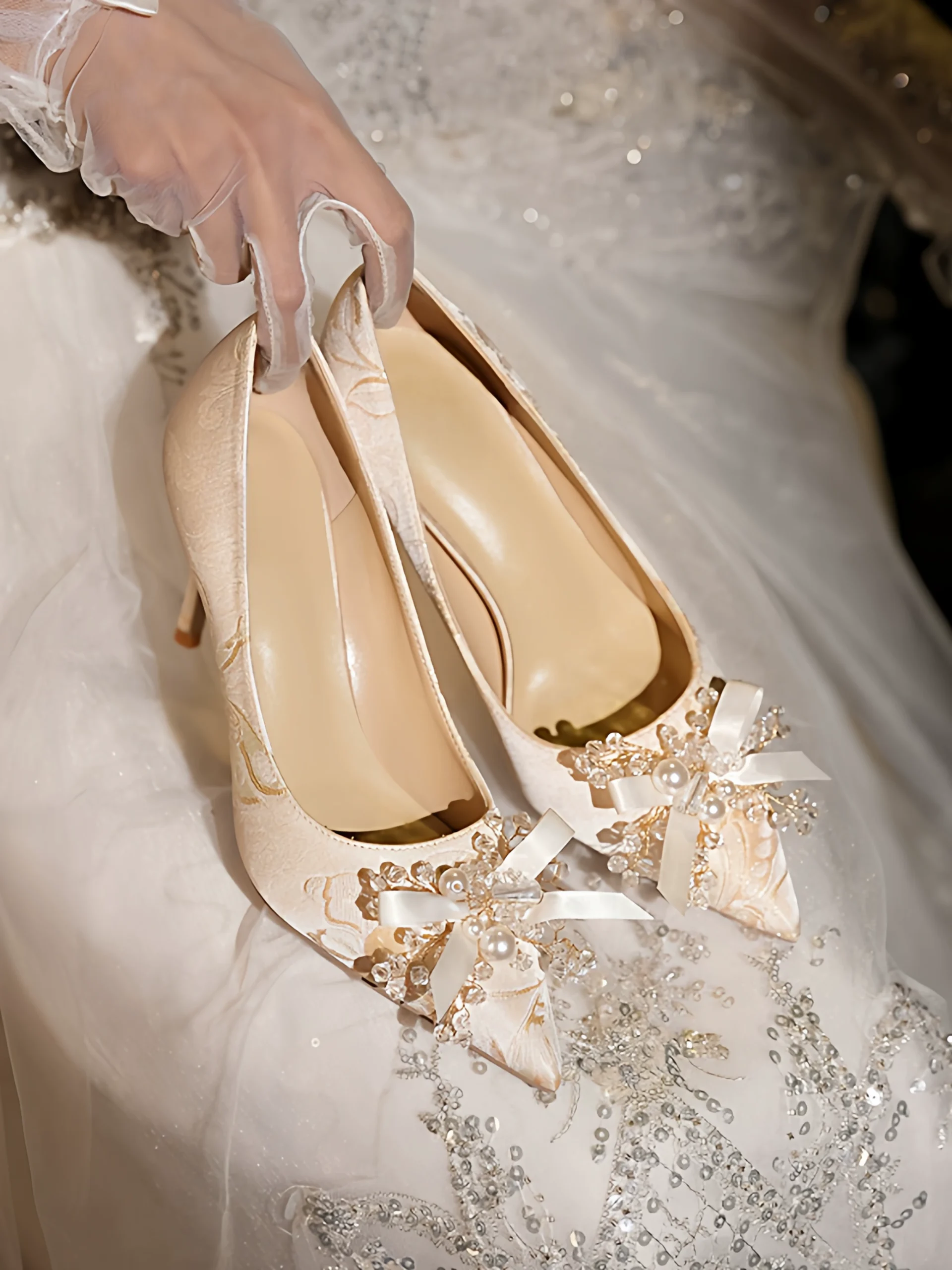
The pump is the reference shoe of the whole category: closed toe, closed back, no fastening, a heel somewhere between 50mm and 90mm. Its virtue is that it disappears. There’s no strap to fidget with, no buckle to sit on a bone, no ankle cuff to argue with a trouser hem, which is why it remains the default choice for interviews, courtrooms, and any room where you’d rather not be remembered for your footwear. A pointed toe extends the visual line of the leg and reads sharper with tailoring; an almond toe is more forgiving across the metatarsals and generally kinder if you have a wide forefoot or a bunion.
Fit problems with pumps almost always come from the toebox rather than the heel. Pointed toes that taper too aggressively squeeze the toes together, and the fix isn’t sizing up — it’s choosing a slightly rounder point or a half size up with a heel grip inserted. Leather stretches a little with wear; patent and most synthetics don’t stretch at all, so buy those to fit on day one. Nude shades remain the most versatile because they extend the leg without drawing attention, while black and deep burgundy handle winter tailoring better. If you’re building from scratch, a pointed nude at 60–70mm and a black almond toe at 50mm will cover more outfits than any other two pairs in this list of ladies shoes styles.
Stilettos: High Risk, High Reward, Still Standing
The stiletto — a long, slender heel typically under 10mm across at the tip — is the shape most people picture when they hear the word “heels,” and it has survived every prediction of its death for seventy years. It lengthens the leg, forces a different posture, and makes almost any outfit look deliberate. The trade-off is mechanical: a tiny contact patch under a concentrated load, very little shock absorption, and a forefoot that absorbs pressure it wasn’t designed for. On carpet and in a car, that’s manageable. On cobblestones, wet tile, or a trade-show floor after six hours, it isn’t.
Where stilettos genuinely earn their place is in short, controlled settings: dinners, weddings, presentations where you’ll be standing for twenty minutes rather than two hours. Practical rules that make them survivable include choosing a heel with a metal or reinforced tip so it doesn’t chip, keeping a pair of foldable flats in your bag, and rotating them with lower shoes rather than wearing them on consecutive days. Material matters more here than anywhere else — a stiletto in soft calfskin molds to the foot, while a stiff patent pair will punish the same foot all evening. The history is worth knowing too: high heels arrived in Europe through Persian cavalry boots and were worn by men at court long before they became a women’s style, as the Wikipedia entry on high-heeled shoes documents. The stiletto as we know it is a twentieth-century invention built on a steel shank, and that shank is the only reason the shoe holds its shape at all.
Kitten Heels and the Quiet Return of Low Heels
Kitten heels sit between 35mm and 50mm, usually with a slight taper and a delicate profile. For two decades they were treated as a compromise shoe — the thing you wore when you couldn’t manage the real thing — and then the cycle turned, as it always does. Designers reintroduced them as a deliberate choice rather than a fallback, and the reasoning is hard to argue with: they give you lift and a clean line without asking your calves or your metatarsals to fund the difference. Fashion coverage has tracked the shift consistently, with Footwear News reporting low-heel silhouettes gaining shelf space while extreme heights consolidate into occasionwear.
What makes kittens genuinely useful is their tolerance for distance. A 45mm slingback will get you through an airport, a full day of meetings, and a dinner without a change of shoes, which is a claim very few 90mm pairs can make. They pair naturally with wide-leg trousers, midi skirts, and the kind of tailoring that looks wrong with a stiletto. The catch is proportion: a very low kitten under a very long, full skirt can look bottom-heavy, so keep hemlines within an inch or two of the ankle or go deliberately cropped. If your feet have been through a few years of high heels and you’re trying to step down without losing the polish, a kitten heel is the sensible bridge — and the sheer range of types of ladies shoes available at this height now means you’re not stuck with one conservative shape.
Slingbacks, Mules and Open-Back Shapes
Slingbacks replace the closed heel counter with a thin strap that crosses the back of the ankle. For anyone whose heels slip out of pumps — a very common fit issue, especially with narrow heels and wider forefeet — the slingback solves the problem without adding a buckle at the front. The strap also lets the shoe breathe and makes the silhouette look lighter, which is why slingbacks read as summer footwear even when they’re made of leather. The one thing to check is strap tension: too loose and the foot slides forward onto the toes, too tight and it saws at the Achilles. A slingback with an elasticized or adjustable strap is almost always the better buy.
Mules remove the back entirely. They’re the easiest heeled shoe to put on, which matters more than it sounds when you’re leaving the house in a hurry, and they suit wide feet because there’s nothing constraining the heel. The trade-off is grip: without a back, the foot relies on the sole and your gait, so a mule with a block heel and a slightly cupped footbed stays on far better than a backless stiletto. Open-back shapes generally work best when the heel counter area is either fully open or properly closed — the half-measures are what cause blisters. Between slingbacks, mules, and backless loafers, this family covers the largest share of warm-weather types of ladies shoes that still give you height, and they’re the ones most likely to get worn three times a week rather than saved for an event.
Wedges, Platforms and Block Heels: The Comfort Math
A wedge fills the space between heel and sole with a continuous piece of material, so the foot sits on an inclined plane rather than balancing on a post. That single design decision removes most of the instability of a thin heel and spreads impact across the whole sole, which is why wedges remain the default heeled sandal for travel, outdoor events, and anyone who has to stand on grass. The front platform matters as much as the back height: a 90mm wedge with a 25mm platform walks like a 65mm shoe, and a wedge with no platform at all puts the full incline into your ankle.
Block heels offer a similar benefit with a more traditional profile — a wide, usually squared post that can be anything from 40mm to 100mm. They’re the most forgiving high shoe for uneven ground and the easiest to walk in for long stretches, which is why they dominate commuter footwear and teacher-and-nurse wardrobes. Platforms take the idea further by raising the entire foot, reducing the effective pitch while adding visible height; the risk is stiffness, since a thick sole doesn’t flex with your foot. Look for a platform with a slight rocker at the toe and a flexible forefoot. In practice, if you want one pair that handles a wedding on grass, a long dinner, and a walk back to the car, a block-heel sandal or a modest wedge will outperform anything with a narrower heel — a point the American Podiatric Medical Association makes repeatedly when it recommends wider heel bases for stability.
Booties, Mary Janes and the Seasonal Edges
Heeled ankle boots and booties are the cold-weather answer to everything above. A 60–70mm block-heel bootie covers the ankle, keeps feet dry, and works with jeans, midi skirts, and tailored trousers, which makes it one of the highest-utilisation shoes a person can own. The fit rules shift slightly: you need room for a sock or tights, the shaft shouldn’t cut into the ankle bone, and the instep needs to be high enough that you can actually get your foot in. Pull-on styles with elastic gussets are more forgiving than zip styles for high insteps; zip styles hold the ankle more securely if you have narrow feet.
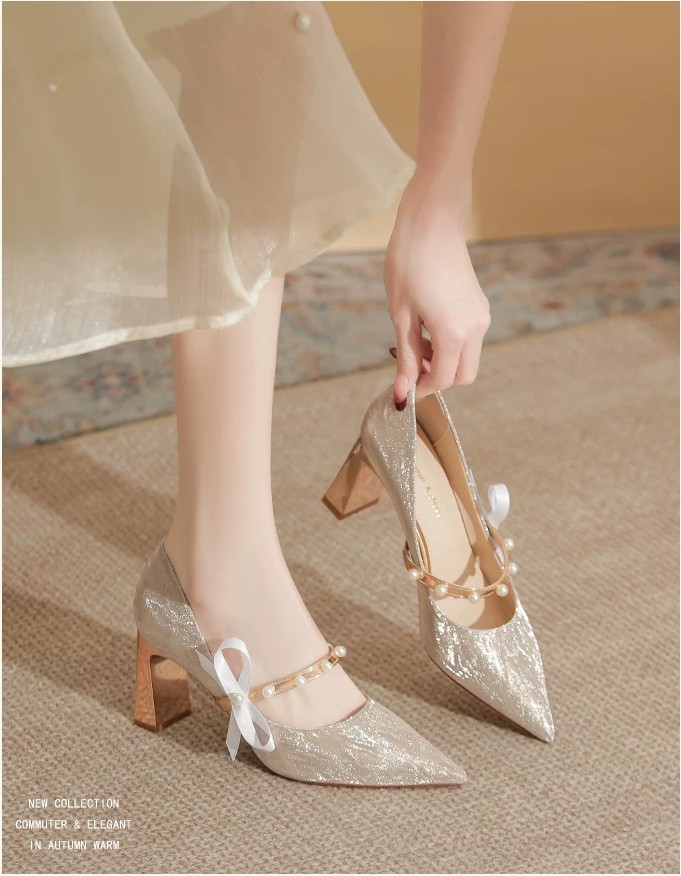
Mary Janes sit at the other end of the mood spectrum — a closed toe, a low or moderate heel, and a strap across the instep — and they’ve moved from school-shoe territory into everyday wear, often on a chunky block or a sculpted kitten. The strap is functional as well as decorative: it holds the foot back into the heel cup, which makes a Mary Jane unusually secure for its height. Add in heeled loafers, peep-toe pumps, and heeled sandals with ankle straps, and the remaining types of ladies shoes all follow the same logic — the more structure above the foot, the more height the shoe can carry comfortably. Ankle straps in particular are the cheapest stability upgrade available, because they stop the foot from sliding forward into the toe box.
Fit, Material and What Your Feet Will Tell You Later
Almost every complaint about heels traces back to fit rather than design. The heel should sit deep in the heel cup without gaping; the widest part of your forefoot should line up with the widest part of the shoe; and your longest toe should have roughly a thumb’s width of space in front of it, which is more than most people allow. Try heels late in the day when feet are at their largest, and try them on both feet — most people are half a size apart. Leather linings absorb moisture and mold to the foot; synthetic linings trap heat and cause the slipping that leads to blisters. A padded insole and a slightly thicker sole are worth more than any marketing claim about “comfort technology.”
Material choice also determines lifespan. Full-grain leather creases rather than cracks and can be resoled; suede needs protection before its first wear and doesn’t handle rain; patent shows scuffs immediately but wipes clean. Rotating pairs matters more than most people expect, because leather needs a full day to dry out between wears and a shoe worn daily will break down at the heel counter first. If you already have forefoot pain, a metatarsal pad and a heel no higher than 50mm will do more than any insert marketed for high heels. The APMA’s consistent advice — vary heel height through the week, keep the everyday pair under about two inches, and stretch calves regularly — is unglamorous and correct, and it’s the reason a well-chosen rotation outlasts a single expensive pair.
How Many Pairs You Actually Need
A workable rotation is smaller than the internet suggests. Start with one pair of pointed or almond pumps at 50–70mm in a neutral shade, because they cover interviews, weddings, and office days. Add a block-heel sandal or wedge for warm weather and uneven ground. Add a heeled ankle boot for the colder half of the year. Then, if your life includes evenings out, one pair of stilettos or a sculptural high sandal that exists purely for the pleasure of it. Four pairs, chosen by heel height and heel shape rather than by trend, will handle more situations than twelve pairs bought on impulse — and each will last longer because none of them is being worn into the ground.
The last thing worth saying is that none of these categories is inherently better than another. A 100mm stiletto and a 40mm slingback are both correct answers; they just answer different questions. The mistake is buying the shoe that photographs well instead of the one that matches the way you actually spend your days. Once you can name what you’re looking at — heel height, heel shape, toe shape, back construction, lining — the wall of boxes stops being overwhelming and starts being a menu. That’s the whole point of learning the types of ladies shoes: not to follow a rule, but to stop guessing.
