

The colour on the box and the colour at 3pm
In this trade you see the same thing every spring. A tri-colour shoe goes up on a listing, the photo is shot under a softbox at 5600K, and it looks like a flag on a sunny day. The customer opens the box on a grey Tuesday, holds it up against the window, and thinks: that’s not the red I ordered.
It usually is the red they ordered. What changed is the light. Red, white and blue sit at three different points on the colour spectrum, and they don’t shift at the same rate when the light goes from daylight to office LED to a warm restaurant lamp. Blue cools down and starts to look navy. Red warms up and heads towards orange. White picks up whatever is around it, which in most rooms means a yellow cast. That’s why a pair photographed in a studio looks like a different shoe by the time you get it home.
If you’re shopping for red, white and blue shoes for women and you’ve been disappointed once already, that’s the reason. Not the factory, not the photo editing, not your eyes.
So here’s what actually determines whether a pair like this works: how the red behaves under your light, whether the white is warm or cool, and how the blue reads next to denim. Get those three right and the shoe is easy. Get one wrong and it fights every outfit you own.
Tri-colour shoes sell fast and come back fast
Return rates tell you more about a product than any review average. Across the categories I watch, a plain black heel comes back at roughly one in twenty. A bright red or tri-colour version of the same last comes back at closer to one in eight.
The reasons repeat. The colour is louder in person than on screen. The white section shows a mark from the first wear. And the pair doesn’t go with the wardrobe the buyer actually has, which they only realise when they get it home and stand in front of the mirror with three outfits.
None of that means the shoe is bad. It means tri-colour is a decision with a narrower wardrobe fit, and the shops that sell it rarely say so.
What I’d tell you before ordering: pull out five outfits you wear regularly and hold the colour against them in your head. If it clashes with three, it will stay in the box. If it works with three, you’ll wear it more than you expect, because a loud shoe with a plain outfit is one of the easiest ways to look deliberate.
The other pattern worth knowing: buyers who order two sizes and return one keep the shoe far more often. People who order one size and hope tend to return the whole thing, because a fit problem plus a colour surprise is two disappointments in one parcel.
Red is the hard colour, and it’s a chemistry problem
Red dye is less lightfast than blue or black. That’s not an opinion, it’s a well-documented property of many red pigments, and it explains why a red suede or red patent shoe fades towards pink at the toe after a summer of sunlight while the navy pair next to it looks untouched.
You’ll see this fastest on the part of the shoe that faces the sun: the top of the toe and the outer side of the heel. Two summers of daily outdoor wear is enough to notice. How textile dyes bond to fibre is the technical side of it, and the short version is that some reds sit closer to the surface than blues do.
What to do about it. Buy red in leather or coated finishes rather than suede or fabric, because the finish slows fading. Store them away from a window. And accept that a red shoe has a season count, maybe 60 to 90 wears before the toe starts telling on you.
White is the second hard colour, for a different reason: it’s not a colour, it’s a reflector. Any dirt, any dye transfer from dark trousers, any scuff shows immediately. White sections on a shoe are also usually the first part to yellow, because the finish oxidises.
Blue is the easiest of the three and the one people underrate. Navy and mid-blue hide scuffs, don’t fade visibly, and pair with almost everything. If you want the look without the maintenance, put blue in the dominant position and keep red as a small detail.
What photographs well and what wears well
Photos are shot at three-quarter angle, under even light, on a clean surface. That hides the two things that decide whether you’ll still like the shoe in month four: the toe scuff and the heel drag.
A pointed toe in a light colour shows every scuff, because the point takes the contact. A rounder toe spreads the wear. If you’re choosing between two red, white and blue shoes for women and one has a sharper toe, the sharper one will look older sooner. That’s not a quality difference, it’s geometry. There’s a simple way to check before you buy: look at where the sole meets the upper at the toe. That edge is what takes the first knock, and on pale colours it shows immediately.
Heel drag is the other one. Look at the back edge of the heel on any shoe you’ve worn for a year. It’s chewed up on the outside corner. On a two-tone or tri-colour shoe, that damage is more visible because it breaks the colour block.
What photographs well and wears well do overlap in one place: block heels and stacked heels. They take knocks on a replaceable surface and they don’t wobble. Worth the slight loss of elegance.
Material matters less than people think here. Coated leather and patent both photograph brilliantly and both scuff visibly. Matte leather photographs flatter and hides more. Suede photographs best of all and ages the worst of the three if you wear them in the rain.
What the colours actually pair with
Red, white and blue is a loaded combination. It reads as sporty, preppy, or national flag depending on the shade and the cut, and that’s the whole problem and the whole appeal.
Warmer red with a soft white and a mid-blue reads preppy and works with chinos, white shirts, and denim. Cooler red with a stark white and deep navy reads sharper and works with tailoring. Same three colours, completely different shoe.
Pairing rules that hold up in real life:
- Keep the rest of the outfit to one colour from the shoe. If the shoes are red, white and blue, wear blue jeans and nothing else competing.
- Avoid a second bright colour anywhere. One loud element per outfit is the ceiling for most people.
- Let the white section carry the light. If your outfit is all dark, the white is what makes the shoe look intentional rather than accidental.
What doesn’t work, in my experience watching people try: tri-colour shoes with a patterned dress. The pattern and the colour block fight, and the outfit reads as busy rather than considered.
Also worth saying plainly: these are not office shoes in a strict dress code, and they’re not formal event shoes. They live in the space between, which means weekends, casual Fridays, travel days, and any day you want to look like you made an effort without wearing a heel you’ll regret at 6pm.
For a sense of how much the same shoe changes with the outfit around it, this piece on slip-on heels and a 7:52 commute is a good reminder that the shoe is never the whole picture.
Fit notes for a louder shoe
Colour changes how a shoe fits your eye, and that has a practical consequence: people buy loud shoes slightly too small because a bright shoe looks bigger than a plain one.
It’s an optical effect and it’s consistent. A red shoe on the shelf looks about half a size larger than the same last in black. Buyers compensate without realising, order down, and end up with a pair that pinches at the widest part of the foot.
So order your normal size. Then check three points: the width at the ball of the foot, the depth over the instep, and the heel hold. On a tri-colour shoe you can actually see all three, because the colour blocks usually mark where the panels change. Use that. If the seam between the white toe and the red body sits right on the flex point of your foot, that seam will rub, and it will rub more than a shoe with no panel break there.
One more: light-coloured shoes show creasing more. Every flex crease across the vamp will read as a pale line within a month on white, and within two months on red. That’s not poor quality, it’s how leather moves. If creasing bothers you, choose a matte finish and a rounder toe, which flexes in fewer places.
And for sizing, err on the side of trying two pairs if the shop allows it. As above, the keep rate is much higher, and you’ll know within a day rather than a fortnight.
Cleaning a shoe with three colours
One thing people don’t expect: a tri-colour shoe is harder to clean than a single-colour one, because anything you use on the red will touch the white.
Clean by section, not by shoe. A damp microfibre cloth, barely wet, wiped in one direction on the white, then a second cloth for the red, then a third for the blue. Three cloths sounds fussy and takes four minutes. One cloth smears red into the white and you’ll see it for the life of the shoe.
For scuffs on the coloured sections, a matching cream polish is the only thing that works. Neutral polish on red makes the scuff lighter, not gone. Buy the closest shade you can find and dab it on with a fingertip, then buff.
White sections get a different treatment. Mild soap, warm water, a soft brush, and patience. Anything harsher takes the finish off and the white turns chalky, which is worse than the mark you were trying to remove.
Storage matters more than cleaning. Store them with a shoe tree or crumpled paper in the toe so the vamp doesn’t crease, and keep them out of sunlight. A window-facing shelf is the fastest way to fade the red, and the fade happens slowly enough that you won’t notice until you compare them to a photo.
If the white has yellowed, there’s no reliable home fix. Yellowing is oxidation in the finish, not dirt, and no soap reaches it. This is the honest reason I’d steer most people towards a shoe where white is a stripe rather than a whole panel.
Where they earn their space: travel and weekends
Here’s the case for owning a pair, and it’s narrower than the marketing suggests.
Red, white and blue shoes for women work hardest in three situations. Weekend city trips, where you want one pair that looks like you tried and still handles 12,000 steps. Casual Fridays in a relaxed office, where a plain pair reads flat and a coloured pair reads intentional. And summer weddings with a relaxed dress code, where a bright shoe solves an outfit that would otherwise need a new dress.
They fail in three others. Any formal event with a strict dress code. Any day with heavy rain, because the white section will look dirty by the time you arrive. And any outfit that already has a pattern, because the shoe competes rather than finishes.
For travel specifically, they’re better than they look. One bright pair plus one neutral pair covers a week, and the bright pair is what makes the photos look like a holiday rather than a work trip. Pack them in a cloth bag and put them at the top of the case so the heel doesn’t press into anything.
My own view, having watched this category sell for a few seasons: most people should own one loud pair, not three. The one you buy first should have blue as the largest colour block, red as an accent, and as little white as the design allows. That combination gets worn the most and ages the slowest.
Buying them without regret
Three checks before you pay, in order of how much they save you.
First, look at the shoe under a window, not under the shop lights. If you can’t, ask for a photo taken near a window. Most shops will do it and the difference is often a full shade of red.
Second, ask what the white part is made of. Painted or coated white leather will crack at the flex point within a season. White leather with a pigment finish holds up better. White rubber or EVA is the most durable option and also the most casual.
Third, check whether the sole edge is coloured or natural. A coloured sole edge scuffs to white, which shows badly on a dark shoe. A natural or dark edge scuffs invisibly.
Then the honest part. Red, white and blue shoes for women are a small-rotation item. You’ll wear them maybe 20 to 30 times a year, more if your wardrobe is denim-heavy. At 600 yuan that’s about 20 to 30 yuan per wear, which is reasonable. At 1,500 yuan it’s 50 to 75 yuan per wear, and you can do better with a plain pair you’d wear 100 times.
Spend where you’ll wear them. If you already own the jeans and the white shirt and the navy knit, this shoe slots in and earns its price. If you’d have to buy clothes to go with it, buy the plain pair first. That’s the test I’d apply to any loud purchase, and it’s the one that keeps a wardrobe from filling up with things you admire but never wear.
Colour standards exist for exactly this reason, so that a red in Shanghai and a red in Milan are measurable rather than mood. Pantone’s colour matching system is the framework factories work to, and it’s why two pairs of the same style from different production runs can still differ slightly.
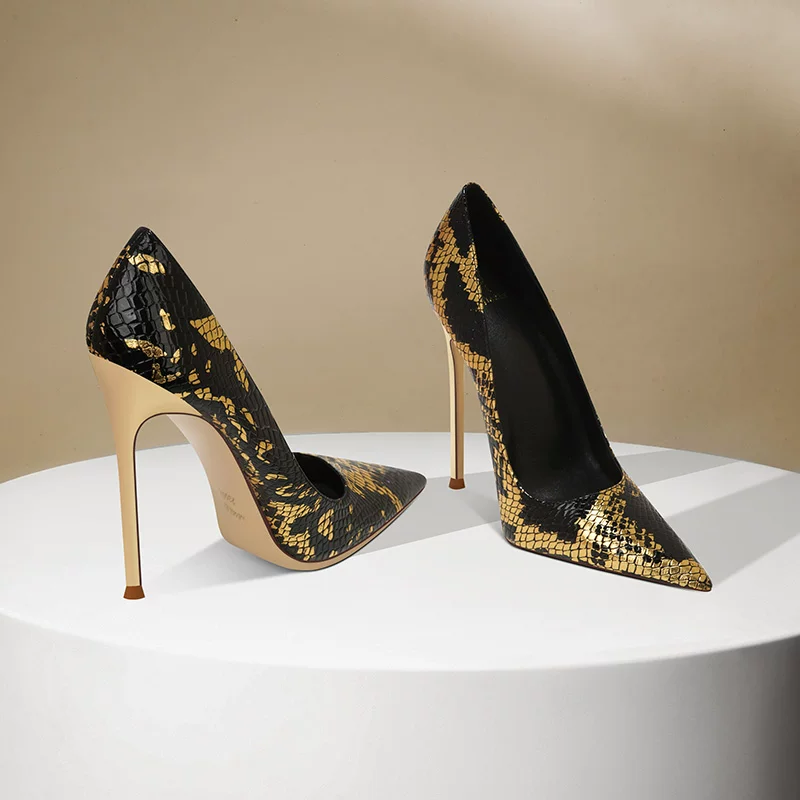
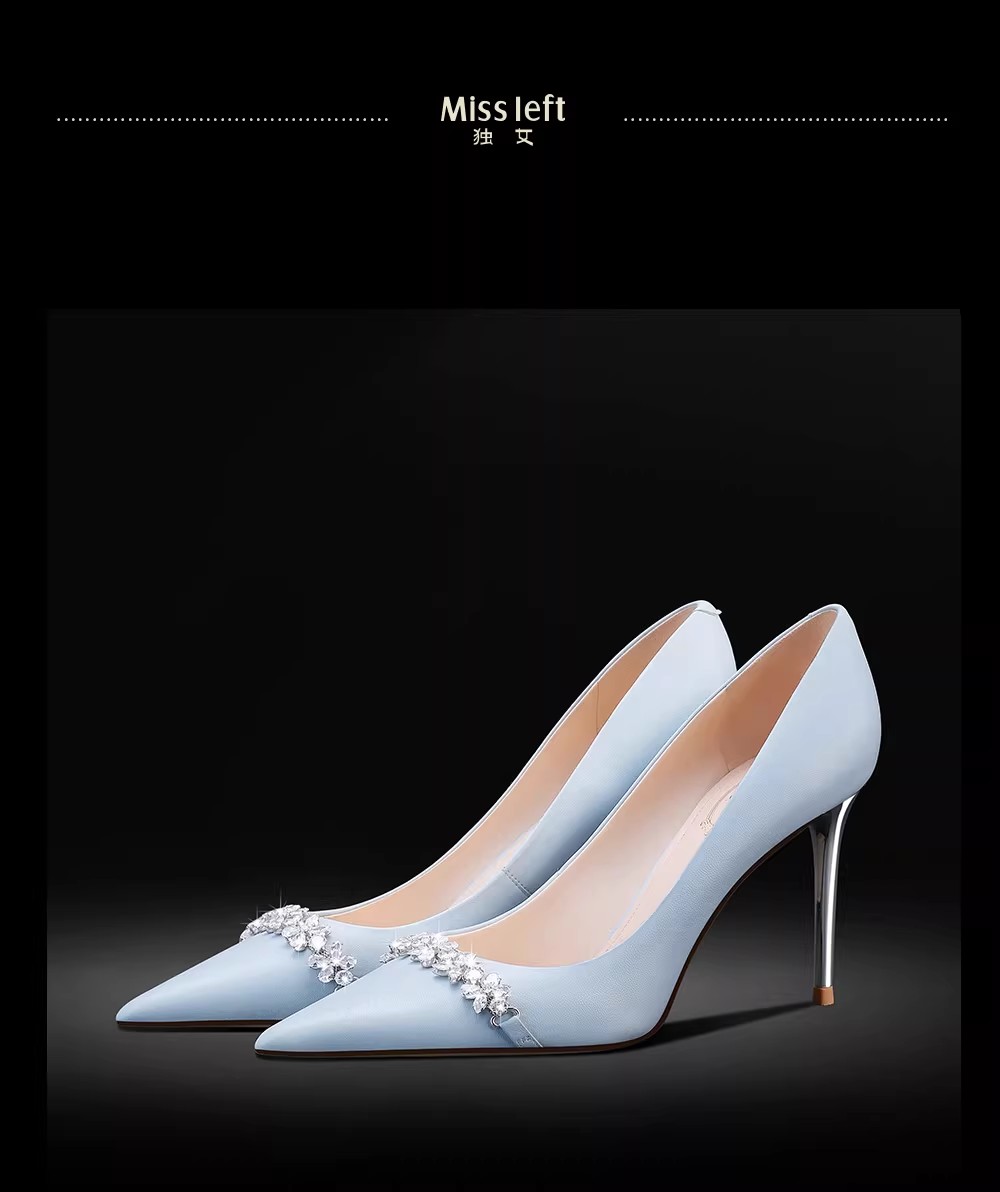
Two blue-leaning examples worth looking at side by side if you’re deciding: a snake-patterned blue heel with a slim shaft and a pale blue pointed leather heel. Same family, and one will suit your wardrobe while the other won’t. That’s the decision to make, not the flag on the box.
Last thing, and it’s the one most guides won’t say: the colour that disappoints people isn’t the red. It’s the white. White on a shoe is a maintenance commitment, and if you’re not going to wipe it down after a wet day, buy the version where white is a small stripe rather than a whole toe. Red, white and blue shoes for women reward the person who checks the light before ordering, and punish the one who clicks buy on a Tuesday night.
