

The $18 pair that taught me how to read suede
November in Shanghai is a miserable month for suede. It rained four days that week, the pavements near Jing’an were slick with leaf mush, and I was standing at a Sunday market stall holding a pair of grey suede loafers with a tag reading 120 yuan. The seller told me they came from Italy. They did not come from Italy. But the nap was thick and even, the stitching sat straight, and the soles had maybe 200 kilometres left in them.
I bought them. Two winters on, they’re still in rotation, and they’ve cost me less than one dinner. That pair taught me more about suede shoes for women than any product page ever has, mainly because I had to judge them with my hands instead of a photo shot under studio light.
Most people get this backwards. They buy new suede at full price, panic about rain, spray it twice, and then never wear the shoes again. Or they buy used suede, love it for a month, and watch the toes go shiny and grey.
Your call, but the material rewards a bit of homework. Below is what I check now, what I’d pay, and the one thing about fit that suede will never tell you until it’s too late.
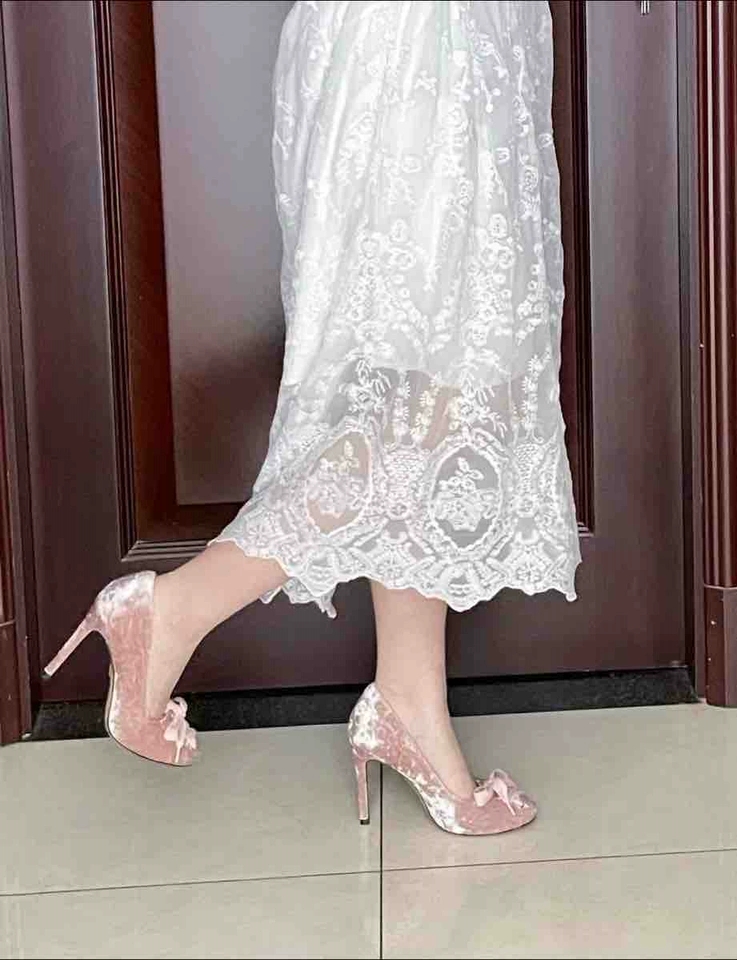
Suede has a nap, and the nap runs one way
Suede is leather that has been sanded on the flesh side, which leaves a fuzzy surface of short fibres. Those fibres lie in one direction. Rub your palm down the shoe and it feels smooth and looks lighter. Rub up and it darkens and feels rough. That’s the nap, and it’s the whole personality of the shoe.
Why does this matter to you? Three reasons, all practical.
- Colour reads differently depending on which way you brush it, so two shoes in a pair can look slightly mismatched even when they’re fine.
- Marks show up where the nap is flattened, which is why the toes and the outer heel go shiny first.
- Cheap suede has a short, uniform nap that feels almost like felt, and it flattens within weeks and stays flat.
Good suede has a nap with some depth, roughly a millimetre, and it springs back when you brush it. If you press a thumb into the surface and the dent stays there like a footprint in wet sand, walk away. The standard description of how suede is finished explains the sanding process, and it’s worth knowing because it tells you why thin suede can’t be rescued later.
One more thing people get wrong. Suede and nubuck are cousins, not twins. Nubuck is sanded on the grain side, so it has a tighter, finer surface and handles rain a little better. If you want the suede look with fewer panic attacks, nubuck in a dark colour is the quieter choice.
Ten seconds of handling tells you most of what you need
When I pick up a suede shoe now, new or used, I do the same five checks. It takes less time than reading the label, and it has saved me from three bad purchases this year alone.
First, bend the shoe. Push the toe up towards the heel with your thumbs. The leather should crease in soft folds rather than crack along a hard line. A hard line means the material is thin and coated, and it will split there in a season.
Second, look at the welt and the edge of the sole. Any gap between upper and sole, any glue visible in a wobbly line, and you’re looking at a shoe that will let water in by January.
Third, press the heel counter at the back. It should hold its shape with a little give. If it collapses like a sock, there’s no support and your ankle will do all the work.
Fourth, check the inside. A used pair with a deeply compressed insole has already taken the shape of someone else’s foot, and it will not take yours. Look for a footbed that still has visible depth at the ball of the foot.
Fifth, smell it. I’m serious. Suede that has been soaked and dried badly smells of damp cellar, and no amount of spray fixes that.
Ten seconds, five checks, and you’ll know whether the pair in front of you is a 200-yuan shoe or a 20-yuan shoe wearing a nice colour. The checks cost you nothing and they work on both new and used pairs, which is more than I can say for most buying advice.
One comparison point that helps: if the toe already looks polished and the sides still look fuzzy, someone has been resting their feet on the desk in those shoes. That’s a worn pair, not a bargain, and the price should reflect roughly half the listed figure. For a sense of how much shape is normal in a used heel, this piece on six pairs of black closed-toe heels and what each one cost is a decent reality check.
What new suede actually charges you for
New suede shoes for women at 600 to 1,500 yuan are usually paying for three things: the hide, the lasting, and the brand’s margin. The first two you can feel. The third you can’t.
Hide quality shows up in the nap and in how evenly the colour sits. Full-grain suede from the shoulder area is denser and holds shape. Split suede from further down the hide is stretchier and fades faster. Most mid-priced shoes use split, which is fine, but it means you should size for a little give rather than expecting the shoe to hold its exact shape for five years.
The lasting is how the upper is pulled over the last and fixed to the sole. A properly lasted shoe has a smooth transition at the toe and no puckering at the sides. Cheap lasting shows as tiny wrinkles radiating from the toe cap, and those wrinkles become cracks.
What you’re rarely paying for, despite the language on the box, is waterproofing. Almost no suede shoe leaves the factory sealed. The spray is on you. If you want to know what’s actually being tested on the hide before it reaches a workshop, OEKO-TEX publishes the limits for harmful substances in leather and textile finishes, and those limits are the reason cheap suede sometimes smells strongly of chemicals for a week.
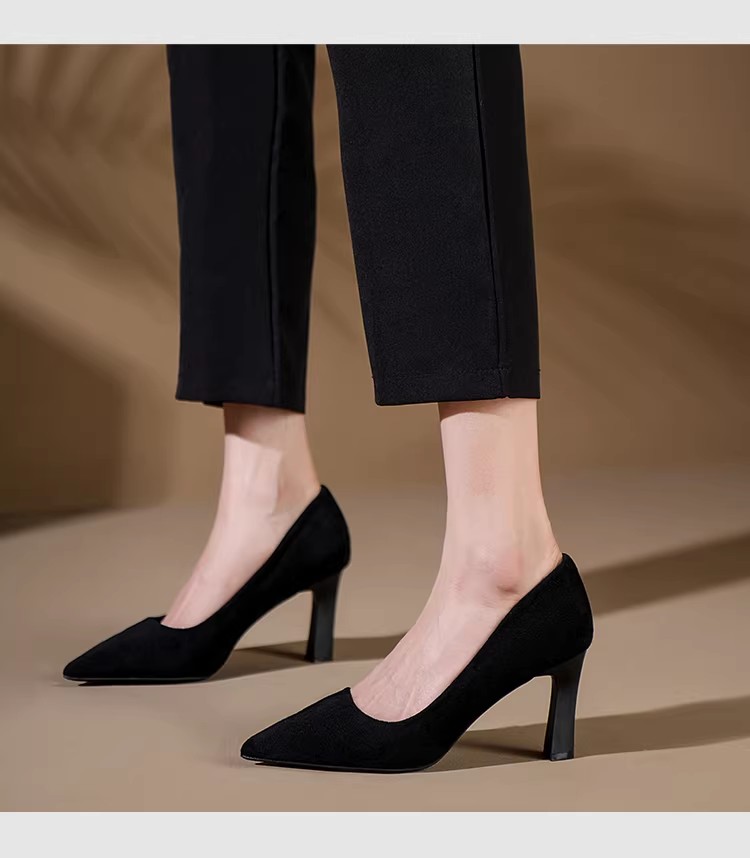
My honest position: above roughly 1,200 yuan, you’re buying design and comfort engineering rather than better suede. Below 400 yuan, expect the nap to flatten in two months. The middle is where most people should shop, and where a pair like these retro suede heels with a rounded square toe sit comfortably.
If you’re comparing finishes before you commit, the heels category is a useful place to see how suede photographs next to smooth leather and patent in the same silhouette. Suede shoes for women almost always look softer and more expensive in pictures, which is exactly why the material is so popular in listings and so unforgiving in real weather.
Where second-hand suede is worth the hunt
Used suede is the best value in footwear, and it’s also where most people get burned. The difference is entirely in what you’re willing to walk away from.
Buy used when the shape is still intact and the nap is patchy only at the toe. Skip used when the heels are worn unevenly on the outside edge, because that’s not a shoe problem, it’s a gait problem, and the shoe has already been trained by someone else’s ankles.
Prices I’d consider fair, based on a year of watching listings: 80 to 200 yuan for a solid used pair with life left, up to 400 for something with a designer name and a clean footbed, and basically nothing for anything with a visible crack across the vamp.
The counterintuitive part, and I’ll defend it: a ten-year-old pair of well-made suede shoes is often a better buy than a new pair at the same price. The leather has finished shrinking and settling. What you lose is the return policy, so measure your foot properly before you commit.
Clean used suede before the first wear, not after. A soft brush, a suede eraser on marks, and a light spray once it’s dry. If the previous owner’s foot shape bothers you, a thin leather insole resets the feel for about 30 yuan.
One warning. Never buy used suede that has been machine washed. The fibres mat together and the shoe goes stiff at the flex point. You can see it in photos once you know to look, usually as a dull, felted patch across the ball of the foot.
Rain, salt, and the two-week test
Suede and water are not enemies. Suede and repeated soaking without drying properly are enemies, and winter salt is worse than either.
Here’s the routine that has kept my pairs alive. Spray new suede twice, four hours apart, outdoors or by an open window. Let it cure overnight. Then walk in light rain on purpose, once, before you decide the shoes are too precious. That single damp walk tells you more about the finish than a year of dry days.
If they do get wet, stuff them with newspaper, change the paper after two hours, and dry them away from heat. Radiators and hairdryers shrink the leather and harden the nap, and there’s no reversing that.
Salt stains are the ones people give up on. A mix of one part white vinegar to one part water, dabbed on with a cloth, then brushed out once dry, handles most of it. Do it the same day if you can. Left for a week, the salt pulls the dye and you get a pale ring that no brush will fix.
Where suede fails honestly: pale colours. A cream or sand suede shoe will show every splash and every drop of coffee, and after about 15 wears it stops looking intentional. I still own a pair. I wear them maybe six times a year and I’ve made peace with that.
Dark grey, chocolate, navy and black forgive almost everything. If this is your first suede purchase, start there.
The fit problem suede never warns you about
Suede stretches. Not a lot, but enough to matter: roughly half a size across the width over the first month of regular wear. This is the single most common reason people end up with suede shoes they don’t wear, and it’s why the pair that felt perfect in the shop ends up flapping by March.
So buy suede snug, not comfortable-but-roomy. Your toes should touch the front lightly when you stand. If there’s a full centimetre of space at the toe in the shop, there will be 15 millimetres in six weeks and the shoe will slap when you walk.
The exception is a pointed toe. Pointed suede has no give at the tip, so buy your normal size and check that your longest toe isn’t pressing the seam. Pressing at the tip doesn’t stretch out. It just hurts, permanently.
Wide feet and high insteps have a harder time. Suede uppers are more forgiving than patent or smooth calf because the material has some flex, but the lasting still decides. If the shoe pinches across the top of your foot in the shop, it will keep pinching, because that area is under the laces or the vamp and doesn’t stretch the way the sides do.
Break-in for suede is short and mostly painless. Two or three wears of an hour each, indoors first, then a short walk. If a pair needs more than a week to stop hurting, it’s the wrong last for your foot, not a pair that needs patience. This is where a soft-soled black suede commuter pump earns its keep, because the padded footbed buys you the break-in period without a blister.
Colours that survive real life
Colour is where most suede regrets start. The shade that looks incredible in a photograph is usually the shade that ages worst, and the shade that looks boring on the shelf is the one you’ll still wear in three years.
Ranked by how much weather they forgive, from toughest to fussiest:
Black and dark chocolate come first. They hide salt lines, they hide rain spots, and when the nap flattens the colour barely shifts. Grey is next, especially a mid-grey with some blue in it, because fading just makes it look lighter rather than dirty. Navy is fine until it scuffs, and then the scuff reads white and stays visible.
Then comes the danger zone. Tan and camel show water marks as dark rings that dry lighter than the surrounding leather. Red holds up better than people expect but fades towards pink at the toe. Cream, sand and pale pink are, in my experience, one-season shoes unless you only wear them indoors.
Here’s the part I got wrong for years. I assumed dark suede was the safe choice, so I bought black and grey and wore them with everything, and eventually I noticed I was avoiding them because they read as heavy with summer clothes. Suede shoes for women work best when there’s some contrast against the outfit, and a mid-tone does that better than black does.
If you’re buying one pair, buy grey-brown. It sits between tan and charcoal, forgives marks like a dark colour, and picks up the warmth of denim, wool and linen equally well.
Two pairs, then: one dark for rain days, one lighter for dry weeks. That split means you actually wear both instead of saving one for best, which is how most people end up with a cupboard of shoes and nothing to put on.
Brushing is the whole maintenance routine
Do one thing for suede and it’s this: brush it. A stiff suede brush, ten strokes in one direction, after every two or three wears. That’s the whole routine. It lifts the flattened nap, moves dust out of the fibres, and restores the colour shift that makes suede look like it cost more than it did.
Store suede with space around it. Crammed into a shoe rack against other shoes, the nap flattens on the contact side and stays flat. A cloth dust bag beats a plastic box, because plastic traps moisture.
For marks, use a suede eraser first and a brush second. Water and vinegar only for salt. Never rub hard in circles, which is how people create bald patches.
When the shoes are genuinely finished, the toe shiny and the nap gone flat across the vamp, that’s the end. Suede doesn’t get resoled back to life the way a good leather boot does, not at a price that makes sense. Accept the two-to-four-year lifespan for daily wear and buy accordingly.
That’s the trade, and it’s a fair one. Suede shoes for women look better than almost anything else in the same price bracket, and they ask for ten minutes of brushing a month in return. My 120-yuan market pair is on year three. The trick wasn’t luck. It was checking the nap before I handed over the cash.
Next time you’re holding a pair, brush the toe with your thumb and watch the colour move. If it moves, you’re onto something. If it doesn’t, put it down.
